


Planning a New Jersey escape and debating between New Brunswick and Princeton? These two central New Jersey towns sit less than 20 miles apart, but they deliver very different travel experiences. One is a lively, multicultural small city built around a major public university; the other is a polished college town centered on one of the world’s most famous campuses. This guide walks through how each destination feels on the ground so you can decide which one better matches your travel style, budget, and plans.
Get the latest updates straight to your inbox!
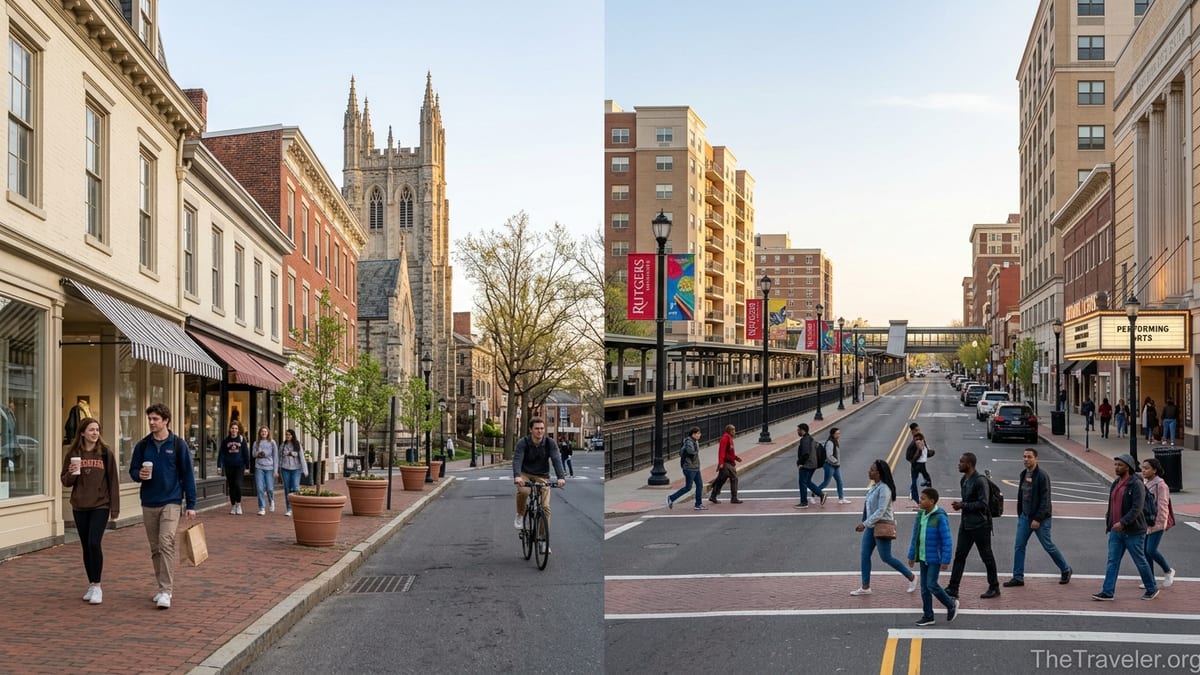
First Impressions: Vibe, Scale, and Who Each Town Suits
New Brunswick feels like a compact mini city. It is the historic “Hub City,” perched on the Raritan River with mid-rise apartment buildings, a cluster of theaters, and a busy train station that links directly to New York and Philadelphia. Rutgers University’s largest campus surrounds the city, so you will notice students in hoodies hustling between buses, local commuters grabbing coffee before catching a train, and families out for dinner in the downtown restaurant district.
Princeton, by contrast, presents as a storybook college town. Its downtown is smaller and more concentrated, centered on Nassau Street and Palmer Square, where boutiques, cafes, and the historic Nassau Inn face the stone walls and gothic arches of Princeton University. The atmosphere is quieter and more upscale, with well-kept sidewalks, brick townhouses, leafy streets, and a steady mix of students, visiting academics, and day-trippers browsing shops or photographing campus gates.
For travelers who love urban energy, a multicultural food scene, and nightlife within walking distance of a main train station, New Brunswick usually fits better. If you prefer atmospheric strolls, manicured architecture, polished cafes, and a slower pace, Princeton tends to win. Because they are relatively close, some travelers base in one and day-trip to the other, but the overall feel of each place is distinct enough that it is worth choosing based on what you enjoy most.
Both towns are anchored by universities with long histories. Rutgers in New Brunswick spreads across multiple campuses and integrates deeply into the urban grid, with academic buildings, arts venues, and student housing woven into the city streets. Princeton University in Princeton is more contained, with a defined campus directly across from Nassau Street. That difference in layout shapes how each town feels: New Brunswick leans toward “city with a university,” Princeton toward “university town with a village attached.”
Getting There and Getting Around Without a Car
If you are arriving by public transit, New Brunswick is notably easier. It sits on the busy Northeast Corridor line of NJ Transit, with frequent direct trains from New York Penn Station and Newark Airport, plus connections south toward Trenton and Philadelphia. Step out of New Brunswick Station and you are already in the downtown and theater district, with restaurants and hotels just a few minutes’ walk away. This makes it practical for car-free travelers planning an overnight stay or even a quick stop between major cities.
Rutgers operates an extensive bus system that links the downtown College Avenue area with other campuses and residential neighborhoods. Even visitors can ride these buses to move between the riverfront, campuses, and shopping areas, which can be helpful if you are checking out museums like the Zimmerli Art Museum or the Rutgers Geology Museum on different parts of campus. Many first-time visitors are surprised that you can put together an entire day in New Brunswick without ever needing a rideshare.
Reaching Princeton by rail is slightly more involved but still very workable. Most visitors take NJ Transit to Princeton Junction and then transfer to a short shuttle train, nicknamed the “Dinky,” for the final hop to Princeton’s small station near campus. From there, Nassau Street and Palmer Square are an easy walk. Service is regular during daytime hours but less frequent late at night, so it pays to check schedules in advance if you plan dinner or a performance before heading back.
On foot, Princeton is extremely walkable. You can stroll from the station through campus, then along Nassau Street and into Palmer Square, picking up coffee, stepping into the Princeton University Art Museum’s temporary downtown exhibition spaces, and looping back through residential side streets, all within a few compact blocks. New Brunswick is also walkable in its central core, though the city spreads further in all directions and feels more like a small urban grid than a contained village.
Culture, Museums, and Live Entertainment
New Brunswick stands out for live performance. The New Brunswick Performing Arts Center on Livingston Avenue houses modern theaters used by professional companies and Rutgers’ Mason Gross School of the Arts, so you can often catch plays, dance performances, or concerts with production values higher than you might expect for a town its size. A few blocks away, the historic State Theatre New Jersey regularly hosts touring Broadway shows, big-name comedians, and live music, making downtown feel active on many evenings.
For visual arts, Rutgers’ Zimmerli Art Museum, near the College Avenue campus and not far from downtown, offers free admission and rotating exhibitions from Russian art to American photography. The Rutgers Geology Museum, also in New Brunswick, appeals to both families and science-minded travelers, with fossils, minerals, and interactive exhibits about New Jersey’s natural history. These venues are small enough to fit into a half-day itinerary but significant enough to give the city cultural depth beyond bars and restaurants.
Princeton’s cultural signature leans academic and historical. The Princeton University Art Museum is undergoing a major rebuilding project, but in the meantime it operates free public exhibition spaces in downtown Princeton, where you can see carefully curated shows within an easy walk of cafes and shops. The university’s campus itself functions almost like an open-air museum, with iconic buildings such as Nassau Hall and collegiate gothic courtyards that reward slow exploration and photography.
While Princeton does not concentrate as many large theaters in one downtown block as New Brunswick, there are still regular performances, from university orchestras and chamber ensembles to visiting authors and public lectures. A typical weekend visit might combine a campus architecture walk, a stop at a temporary museum gallery, lunch on Nassau Street, and an evening classical music performance in one of the university halls. Culture here tends to be quieter and more introspective, while New Brunswick emphasizes big-stage entertainment and nightlife.
Food, Nightlife, and What It Actually Costs
Because Rutgers is a large public university with a diverse student population, New Brunswick’s food scene skews affordable and global. Along George Street, Easton Avenue, and the College Avenue area you will find casual taquerias, noodle shops, pizza slices, halal grills, and diners that serve late into the night at student-friendly prices. For a visitor on a budget, it is realistic to find filling meals around the price of a typical city fast-casual spot, with many places offering lunch specials, large portions, and quick service.
The city also has a cluster of destination restaurants around the arts district and riverfront where mains are closer to big-city prices, particularly before a show at State Theatre or the performing arts center. These midrange spots often run pre-theater menus and are popular with both locals and visitors. Bars and lounges near the College Avenue campus can be lively most evenings of the week during the academic year, with drink specials, student crowds, and music spilling onto sidewalks when the weather is warm.
Princeton’s dining scene is more curated and generally more expensive. Around Nassau Street and Palmer Square, you will encounter cafes known for artisanal coffee, bakeries that emphasize local ingredients, and restaurants that lean toward bistro-style menus, seafood, or upscale American cuisine. Many places feel designed for visiting parents, alumni, or tourists on a weekend escape. A sit-down dinner for two can easily land at big-city price levels, especially if you order cocktails and dessert, though there are still pizzerias, sandwich shops, and casual burrito spots aimed at students.
In the evenings, Princeton is more about relaxed conversation than rowdy nightlife. Some restaurants allow bring-your-own-bottle service, a New Jersey quirk that can create a fun yet mellow atmosphere for small groups. You are more likely to end a night with a slow walk across campus under lamplight or a stop for ice cream on Palmer Square than in a loud bar. Travelers who enjoy a bustling late-night scene will probably feel more at home in New Brunswick; those who prefer lingering over dessert and an early stroll may gravitate to Princeton.
Shopping, Streetscapes, and Everyday Wandering
If browsing shops is a major part of how you travel, Princeton offers one of the state’s more polished small-town downtowns. Nassau Street runs along the edge of campus and is lined with bookstores, clothing boutiques, home goods stores, and specialty food markets. Just behind it, Palmer Square operates as an open-air plaza with brick sidewalks, seasonal planters, and a mix of national brands and independent boutiques, anchored by the historic Nassau Inn. You can easily spend a few leisurely hours wandering between these blocks, popping into a gourmet chocolate shop, then a design-forward clothing store, before sitting with a coffee on an outdoor bench.
Side streets like Witherspoon Street and Spring Street add more local flavor, from long-standing Italian markets to busy coffee shops packed with students and remote workers. The overall experience feels curated, compact, and pleasant to walk, especially on clear days when outdoor seating is in demand. Because so many visitors converge here, Princeton can feel busy at peak times, but the scale remains human and the architecture notably cohesive.
New Brunswick’s shopping is more scattered and utilitarian. The downtown core around George Street includes convenience stores, pharmacies, college apparel shops, and a handful of boutiques, but it is not a major retail destination in the same way Princeton is. Instead, New Brunswick puts its energy into dining, entertainment, and student services, while more extensive shopping is found in nearby malls and retail corridors along regional highways.
That does not mean New Brunswick lacks enjoyable streets to explore. The blocks between the train station, College Avenue, and the arts district include historic rowhouses, mural-adorned walls, and glimpses of the Raritan River, giving urban photography enthusiasts plenty to work with. The feel, however, is “small city in motion” rather than “boutique-lined village.” Travelers who like to wander aimlessly through upscale shops will favor Princeton; those who prefer people-watching, street-level murals, and the hum of commuters may appreciate New Brunswick’s streets more.
Nature, Side Trips, and How You Spend Daylight Hours
Both towns offer easy access to green space, but the way you experience it differs. In New Brunswick, the Raritan River provides a natural edge to the city, and Rutgers maintains paths and lawns that give you glimpses of the water and bridges. Nearby parks and campus greens break up the urban grid, so you can combine a morning museum visit with a riverfront stroll or a picnic on one of Rutgers’ lawns. However, nature is more an accent than the defining feature of a trip here.
Princeton leans harder into its “Garden State” setting. Just beyond downtown, you can quickly reach leafy residential neighborhoods, preserved forests, and historic parkland. Many visitors pair a few hours downtown with a walk through Princeton Battlefield State Park or along canals and wooded trails in the surrounding region. The campus itself is dotted with mature trees, sculpture-filled courtyards, and lawns that invite lingering on sunny days. It is easy to build an itinerary that alternates between coffee stops and quiet, reflective walks.
In terms of day trips, New Brunswick makes an excellent base if you want to combine a small-city stay with quick forays to New York or Newark for museums, sports, or major concerts, since trains are frequent and straightforward. You might spend one day seeing a show at the New Brunswick Performing Arts Center and another visiting Manhattan, returning in the evening to a quieter hotel.
From Princeton, popular side excursions include scenic drives to nearby farms, orchards, and countryside towns. Travelers often stop at regional vineyards, u-pick orchards, or preserved historic sites within a short drive. This makes Princeton a natural fit for couples or families who like mixing a culture-filled morning downtown with a rural afternoon picking apples, walking farm trails, or visiting a historic house museum.
Safety, Budget, and Choosing the Right Base
Both New Brunswick and Princeton draw students, families, and out-of-town visitors on a regular basis, and their central districts around universities are accustomed to people exploring on foot. As in any small city environment, New Brunswick’s urban core can feel a bit rougher around the edges than Princeton’s manicured downtown, especially late at night, and you will want to use normal city awareness: stick to well-lit main streets, keep valuables secure, and be mindful after events when crowds thin out. For most visitors focused on the train station, arts district, and university areas, the environment feels active and manageable.
Princeton’s core tends to feel more overtly polished and quiet, particularly in the evenings. The compact scale, tidy sidewalks, and steady presence of visitors and university affiliates contribute to an atmosphere many travelers would describe as comfortable and low-stress. It is a popular choice for travelers who prioritize a sense of calm, whether that is families with younger kids, older travelers, or solo visitors who prefer not to navigate a busier urban setting at night.
Costs, however, lean in opposite directions. New Brunswick generally offers more budget-friendly dining and student-priced services, although hotel rates close to the train station and arts district can still climb on major event nights. Princeton, with its high visitor demand and upscale positioning, often commands higher room rates and restaurant checks in and around Palmer Square. If you are traveling on a tight budget, it may be easier to keep daily spending in check in New Brunswick, while Princeton might suit you better if you are comfortable paying more for mood and aesthetics.
If you are deciding where to base for a multi-day stay, ask yourself whether you value quick train access and nightlife or quiet evenings and a picture-perfect main street. New Brunswick excels at the former, especially for travelers pairing their visit with city day trips. Princeton is ideal if you imagine slow mornings in cafes, afternoons wandering campus lawns, and wine-friendly dinners before an early night.
The Takeaway
Choose New Brunswick if you want a small city with energy, multicultural food at student-friendly prices, and robust live performance options, all wrapped around a major public university and well-connected train station. It suits travelers who do not mind some urban grit in exchange for convenience, variety, and nightlife.
Choose Princeton if you are drawn to postcard-ready streets, ivy-covered architecture, and a compact, walkable downtown that feels carefully composed. It is the better match for visitors who prioritize atmosphere over nightlife, enjoy boutique browsing, and like pairing cultural exploration with quiet green spaces.
Because the two towns are relatively close, you can visit both on a single trip. Spend a day catching a show and sampling global eats in New Brunswick, then devote another to strolling Princeton’s campus and lingering over coffee on Nassau Street. Whichever one you ultimately choose as your base, you will get a distinctly New Jersey blend of college-town character, East Coast access, and a sense of place that feels very different from larger cities nearby.
FAQ
Q1. Which town is better for travelers without a car, New Brunswick or Princeton?
New Brunswick is generally better if you are completely car-free because its NJ Transit station sits directly in downtown, within a short walk of hotels, restaurants, and theaters. Princeton is still accessible via a short shuttle train from Princeton Junction, but schedules are less frequent at night, so you need to plan return trips more carefully.
Q2. Is New Brunswick safe for visitors at night?
The main downtown streets around the train station, arts district, and Rutgers’ College Avenue campus are accustomed to students and theatergoers at night, and many visitors explore them comfortably by sticking to well-lit routes and using normal city awareness. If you are unfamiliar with the area, it is wise to stay on the busiest corridors after dark and use rideshares if you need to travel farther afield.
Q3. Is Princeton worth visiting as a day trip from New York or Philadelphia?
Yes, Princeton works very well as a day trip. Many travelers take a morning train to Princeton Junction, ride the short shuttle train into town, spend the day walking campus, browsing Nassau Street and Palmer Square, visiting temporary art museum spaces, and enjoying a leisurely meal before heading back in the evening.
Q4. Which town has better nightlife?
New Brunswick has more active nightlife, with bars, casual restaurants, and performance venues drawing crowds most nights during the academic year. Princeton is quieter in the evenings and focuses more on relaxed dinners, ice cream runs, and campus walks than on late-night bar-hopping.
Q5. Where will my travel budget stretch further?
Your money generally goes further in New Brunswick, especially for food and casual entertainment. Rutgers’ student presence keeps many prices in an affordable range, while Princeton’s polished downtown and visitor demand tend to push lodging and dining toward a higher price bracket.
Q6. Which is more family-friendly, New Brunswick or Princeton?
Both can work for families, but Princeton’s compact, walkable core and calm atmosphere often make logistics easier with kids, especially if you plan stroller walks or early bedtimes. New Brunswick offers kid-friendly museums and performances but involves a busier small-city environment and more spread-out attractions.
Q7. Can I comfortably visit both towns in one weekend?
Yes, many travelers do. For example, you might stay near New Brunswick’s train station, spend one day exploring its arts district and Rutgers museums, then drive or take regional transit to Princeton the next day for campus walks and downtown browsing before returning to your base.
Q8. Which town has better shopping?
Princeton has the stronger shopping scene for visitors, with bookstores, boutiques, and specialty food shops clustered along Nassau Street and in Palmer Square. New Brunswick’s downtown retail is more practical and oriented toward everyday student and resident needs rather than destination shopping.
Q9. How many days do I need in each town?
You can get a solid feel for either town in a single full day: morning and afternoon exploring, plus dinner before returning to your base. If you want to attend performances, fit in side trips, or split time between museums and nature walks, plan one to two days in New Brunswick and one to two days in Princeton.
Q10. If I like both cities and small historic towns, where should I stay?
If you want an urban base with easy rail access to larger cities plus local culture, stay in New Brunswick and treat Princeton as a day trip. If you prefer a quieter, historic-feeling environment and are comfortable planning your transit more carefully, stay in Princeton and visit New Brunswick for a show or evening out.