


For many travelers, New Brunswick, New Jersey is little more than a name on a college sweatshirt. They know it as home to Rutgers University and a Northeast Corridor train stop between New York and Philadelphia. But step beyond the campus green and you discover a tightly packed river city with waterfront parks, serious food, and a quieter layer of history and culture that most visitors never see. If you are willing to wander a few blocks off the student routes, New Brunswick reveals itself as one of central New Jersey’s most rewarding short-break destinations.
Get the latest updates straight to your inbox!
The City Behind the Campus
Arriving in New Brunswick, most visitors spill out of the train station and head straight for College Avenue or the Rutgers yard. It is easy to assume the city begins and ends with red-and-black banners, lecture halls, and game days at SHI Stadium. Yet look just beyond the campus edges and you are in a compact downtown of brick facades, corner bakeries, and theaters that hint at New Brunswick’s past life as an industrial hub and transportation crossroads on the Raritan River.
Within a 10-minute walk of the station, George Street and Albany Street form the spine of downtown. Here, you will find independent coffee shops buzzing with laptops on weekday mornings, pre-theater crowds queuing outside venues at night, and a mix of long-time residents and students using the same streets for very different purposes. It is this overlap that makes New Brunswick more than just a college town. Rutgers gives the city scale and energy, but the surrounding neighborhoods, riverfront, and regional institutions give it depth.
Practically, this means you can visit without a car, walk between most attractions, and mix classic campus hits with local secrets. A typical weekend might include a Rutgers art museum in the afternoon, a performance in a restored 1920s theater at night, then a quiet walk along the Raritan the next morning. For travelers who like dense, walkable places where you can do a lot in a small radius, New Brunswick is an unexpectedly strong bet.
Raritan Riverfront: Parks, Paths, and Skyline Views
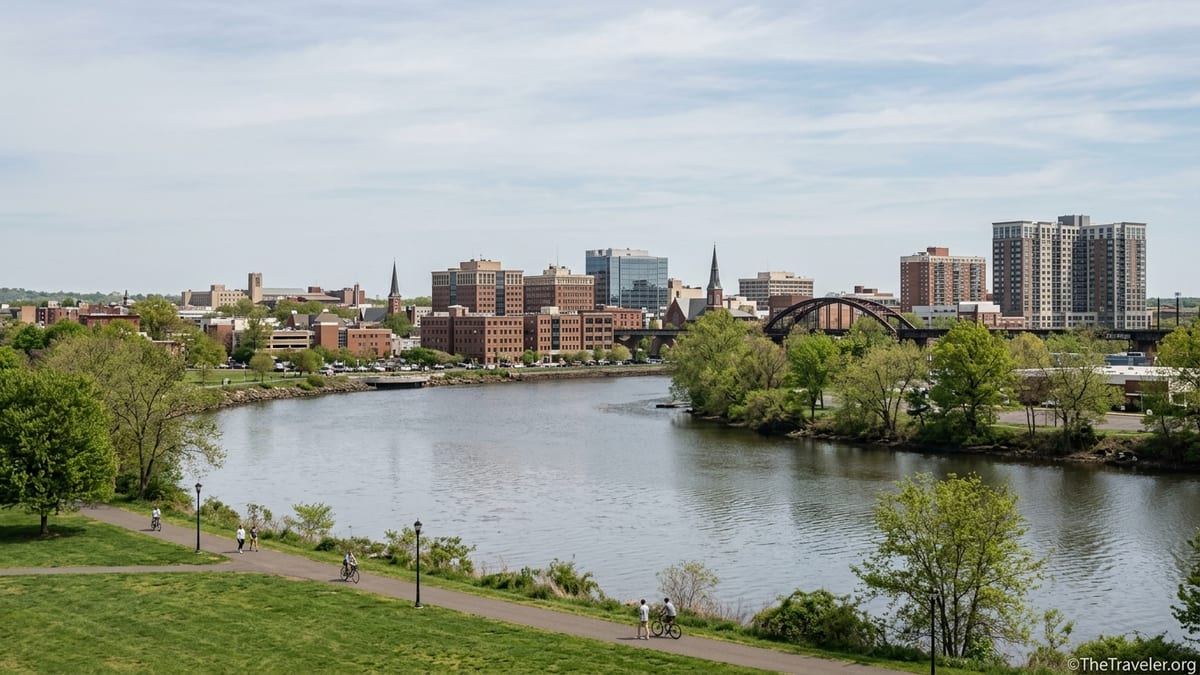
One of New Brunswick’s biggest surprises lies south of the elevated Route 18, where the city meets the Raritan River. Elmer B. Boyd Park unfurls for roughly 20 acres along the waterfront, with open lawns, river overlooks, and a skyline view that takes in both historic church spires and modern apartment towers. Recent rehabilitation work added wide paths and detailed historical signage, so you can pair a stroll or bike ride with stories of steamboats, canal trade, and the days when New Brunswick’s docks were a commercial lifeline.
On a sunny weekend, it is common to see families barbecuing under the picnic shelters while runners and cyclists follow the paved trail that parallels the river. The park’s amphitheater-style lawn occasionally hosts festivals and concerts, especially during late spring and summer community events. If you are coming from downtown or College Avenue, allow about 15 minutes to reach Boyd Park on foot, using one of the pedestrian bridges that cross Route 18. The change in atmosphere is immediate: traffic noise gives way to river breezes and the sound of trains crossing the bridge upstream.
Just upriver, Johnson Park spreads along the opposite bank in Highland Park and Piscataway. This county park offers playgrounds, sports fields, and long riverside paths popular with cyclists and dog walkers. Many visitors pair a morning walk in Johnson Park with a side trip to East Jersey Old Town Village, an open-air cluster of historic buildings that re-creates early Central Jersey life. The combination gives you a feel for the region’s layered history, from colonial settlements to modern commuter towns, all within a short drive or rideshare of central New Brunswick.
Hidden History: Mansions, Villages, and Quiet Streets
For a city closely associated with a modern state university, New Brunswick hides an impressive amount of earlier history in plain sight. One example is Buccleuch Mansion, an 18th-century house set in Buccleuch Park north of downtown. The white clapboard home, owned and interpreted by a local historical society, offers occasional tours that explain its Revolutionary-era roots and the lives of the families who shaped the city’s early years. Even when the house is closed, the surrounding park’s shaded paths and river overlooks make a peaceful counterpoint to campus traffic.
A short drive away in Johnson Park, East Jersey Old Town Village gathers relocated and reconstructed historic structures, including taverns, farmhouses, and a former New Brunswick barracks building. Walking its brick paths feels like stepping into a small film set, but most visitors on their way to Rutgers games or downtown restaurants never make the detour. When the village hosts living-history demonstrations or seasonal events, it becomes one of the most engaging family stops in the region, especially if you are traveling with children curious about colonial life.
Back in New Brunswick proper, wandering residential streets off Livingston Avenue and French Street reveals another side of local history. Here you will find modest row houses, neighborhood churches, and storefronts serving communities that predate the university’s latest growth spurt. On some blocks you can still catch traces of the city’s Hungarian heritage, with social clubs and bakeries tucked next to newer Latin American businesses. It is a reminder that the “Hub City” nickname refers not only to transit connections, but also to a long tradition of overlapping immigrant communities.
Art, Culture, and Nightlife Beyond Game Day
Culture in New Brunswick often starts with Rutgers, but it certainly does not end there. The Jane Voorhees Zimmerli Art Museum, located along the leafy Voorhees Mall on the College Avenue campus, operates more like a mid-sized city museum than a campus gallery. It houses tens of thousands of works spanning American, European, and Soviet nonconformist art, as well as Japanese prints. Exhibitions rotate through major names and lesser-known artists, and admission policies are typically visitor friendly, making it an easy stop for an hour or two before dinner or a show.
Just a few blocks away, State Theatre New Jersey anchors the downtown arts district. The restored 1920s theater presents a steady calendar of touring Broadway productions, concerts, comedy specials, and family shows. On a given month, you might find a national touring musical sharing the seasonal program with a symphony orchestra, a stand-up headliner, and a throwback rock act. Visitors often build an evening around a State Theatre performance, starting with an early dinner on George Street then strolling over for curtain time.
For a more intimate or raucous night out, the Stress Factory Comedy Club on Church Street has brought national comedy names to New Brunswick for more than two decades. The club typically combines ticketed shows with full dinner and drinks service, making it a one-stop night out. Visitors report paying around the cost of a casual sit-down meal for entrees, then adding a modest parking fee in nearby garages for several hours, which keeps the overall price competitive with similar clubs in New York or Philadelphia.
Under the surface, New Brunswick also supports a reputation for basement shows and independent music, particularly in the student-heavy neighborhoods near College Avenue. These informal venues are not listed on tourism brochures, but they speak to a broader creative culture that includes student theater, gallery openings at Mason Gross School of the Arts, and pop-up events in small bars. If you prefer your arts scene scrappy rather than polished, New Brunswick delivers both depending on which doors you choose to walk through.
A Food Scene Shaped by Global Neighborhoods
Ask local residents what out-of-towners miss most, and many will point straight to the food. For a relatively small city, New Brunswick offers an unusually international dining lineup, thanks both to Rutgers’ diverse student body and to long-standing immigrant communities. Easton Avenue, which runs from the edge of campus toward downtown, is the most obvious starting point. Here you will find late-night slices, stuffed bread specialties that have achieved near-legend status among alumni, and a string of casual spots serving everything from Korean fried chicken to Middle Eastern wraps.
Downtown, George Street, Albany Street, and nearby side streets host a second cluster of restaurants and bars. Options range from white-tablecloth Italian rooms, where a weekend dinner for two with appetizers and a shared dessert might land in the moderate-to-splurge range, to relaxed Latin American cafes offering generous plates of rice, beans, grilled meats, and fresh juices for more modest prices. Newer arrivals, including specialty coffee houses and modern bistros, share the block with New Brunswick institutions that have weathered multiple waves of campus change.
Venture farther along French Street and into the Fifth Ward, and the city’s Latin American flavor becomes stronger. Here, small Mexican, Central American, and Caribbean eateries serve tacos, stews, and grilled seafood to a largely local clientele. Menus often feature house-made tortillas, weekend specials, and portions large enough to share. Prices can be noticeably lower than the more central downtown venues, and English and Spanish mix easily between tables. Visitors willing to explore these side streets often end up with their most memorable meals of the trip.
Just outside city limits, the broader Central Jersey region rounds out the picture with farm stands and bakeries. In season, the Rutgers Community Farmers Market program connects local growers to customers in and around New Brunswick, including a market at Rutgers Gardens. Travelers renting a car or staying with friends will sometimes stock up on Jersey-grown produce, baked goods, and flowers for a picnic in one of the riverfront parks. The result is a food experience that ties together campus, city, and countryside in a single weekend.
Green Escapes: Gardens, Preserves, and Campus Walks
When people think of New Brunswick, they often picture buses shuttling between campuses and traffic circling busy intersections. Yet some of the region’s most restorative green spaces sit within a short drive or bus ride of downtown. Rutgers Gardens, located along Ryders Lane a few miles from the main campus, offers landscaped gardens, wooded trails, and a rustic log cabin that serves as an event space. Visitors stroll through display beds of perennials and ornamental grasses, then duck into shaded forest paths that feel much farther from the city than they actually are.
A bit farther out, the Rutgers Ecological Preserve protects several hundred acres of woodland and wetlands. Traversed by hiking and biking trails, the preserve is a favorite training ground for local runners and a quiet birdwatching spot. On any given morning you might share the trail with student trail runners, families introducing children to nature, and faculty members walking dogs before class. The preserve’s streams feed into the Raritan River, making it an ecological counterpart to the riverfront parks closer to downtown.
Even within the urban grid, New Brunswick sneaks in pockets of green. Buccleuch Park, perched on a bluff above the river, combines open fields, walking paths, and views that stretch across to Highland Park. On warm evenings, local residents gather for pick-up games on the fields while dog walkers loop the perimeter paths. The presence of the historic mansion at its center adds a sense of continuity: this was a desirable riverfront vantage point long before the current skyline took shape.
On campus, the shaded lawns of Voorhees Mall and the College Avenue greens function as everyday parks. Prospective students on official tours share the paths with office workers eating takeaway lunches and visitors walking between the train station and the river. For travelers, these spots offer easy picnic opportunities if you have picked up treats from a local bakery or the farmers market.
Planning Your Visit: Getting Around and When to Go
One of New Brunswick’s biggest advantages for travelers is accessibility. The city sits on New Jersey Transit’s Northeast Corridor line, with frequent trains connecting to New York Penn Station and Newark to the north and Trenton and Philadelphia connections to the south. From the station, most downtown hotels, the State Theatre, and many restaurants are within a five- to 15-minute walk. Ride-hailing services and local taxis fill in the gaps for reaching places like Rutgers Gardens or the ecological preserve.
If you are driving, several downtown garages and surface lots serve the arts and restaurant district. Visitors attending a comedy show or performance typically report paying a moderate flat rate to park for several hours, which is competitive by regional standards. Street parking exists in some residential areas, but time limits and permits can be strict, so garages are usually the less stressful option. On Rutgers game days or major events, arriving early helps avoid congestion.
Seasonally, late spring and early fall are the most pleasant times to explore. In May and September, daytime temperatures are comfortable for walking, trees are lush, and campus life is active without the deep winter chill or summer humidity. Summer can still be rewarding, particularly because New Brunswick hosts outdoor festivals and concerts, including weekend cultural events that spill into parks and plazas. Winter visits are quieter but have their own appeal, especially if you plan around indoor activities such as museum visits, theater performances, and cozy restaurant meals.
Safety and comfort follow the usual urban guidelines. Downtown New Brunswick and the campus core stay lively into the evening, especially around events. As in any city, sticking to well-lit streets at night, being aware of your surroundings, and using registered cabs or ride-hailing services from central pickup points is sensible. Travelers unfamiliar with the area often find it helpful to base themselves downtown or near the train station, then explore outward in layers as they get their bearings.
The Takeaway
New Brunswick may appear on maps as “Rutgers, NJ,” but the lived reality is richer and more varied than a quick campus tour suggests. Along the Raritan River, you will find parks that tell the story of canals and steamboats. On downtown streets, a surprisingly global food scene hums late into the evening. In historic houses and reconstructed villages, the region’s colonial and industrial past surfaces in brick and timber instead of textbook footnotes.
For travelers, this means New Brunswick works both as a stand-alone weekend destination and as a rewarding stop between bigger-name cities. You can arrive by train, spend a day sampling galleries and gardens, then close the night with a touring Broadway show or national comedy act, all without ever hailing a cab. Most visitors leave with a different mental picture than the one they arrived with: less of a generic college town, more of a layered small city that rewards curiosity.
If you already know New Brunswick only as a place to watch a game or drop off a student, consider returning with a traveler’s eye. Give yourself time to walk beyond the campus gates, follow the streets down to the river, and say yes to a restaurant whose name you have never heard before. In doing so, you will find the side of New Brunswick that locals quietly appreciate and that most visitors unintentionally overlook.
FAQ
Q1. Is New Brunswick worth visiting if I am not connected to Rutgers?
Yes. The city’s riverfront parks, historic sites, art museum, theaters, and diverse food scene make it a worthwhile destination even if you never set foot in a classroom.
Q2. How long should I plan to stay in New Brunswick?
A full weekend is ideal to see riverfront parks, visit the Zimmerli Art Museum, catch a show, and sample several restaurants, but even a single overnight stop is rewarding.
Q3. Do I need a car to explore New Brunswick?
No. If you stay downtown, you can walk to the train station, theaters, many restaurants, and campus sights. A car or rideshare is helpful for reaching Rutgers Gardens or more distant parks.
Q4. When is the best time of year to visit?
Late spring and early fall usually offer the most comfortable weather and active events calendar, though summer festivals and winter performances can also justify a trip.
Q5. Is New Brunswick safe for visitors?
Central areas around downtown and campus are busy and generally feel comfortable, especially when events are on. As in any city, staying aware and sticking to well-lit streets at night is wise.
Q6. What are some good activities for families?
Families often enjoy walks or bike rides in Boyd Park or Johnson Park, exploring East Jersey Old Town Village, visiting Rutgers Gardens, and attending family-friendly shows at the State Theatre.
Q7. Can I combine a visit to New Brunswick with other New Jersey attractions?
Yes. The city’s train and highway connections make it easy to pair with day trips to the Jersey Shore, Princeton, or nearby small towns like Highland Park and Metuchen.
Q8. Is New Brunswick expensive compared with nearby big cities?
In general, restaurant prices, show tickets, and parking are lower than in New York or Philadelphia, making New Brunswick a more budget-friendly way to enjoy arts and dining.
Q9. What should I wear when exploring the city?
Comfortable walking shoes are essential, as many attractions sit within walking distance of each other. Layered clothing works best given New Jersey’s changeable weather.
Q10. Are there options for visitors who prefer nature over nightlife?
Yes. Rutgers Gardens, the Rutgers Ecological Preserve, Buccleuch Park, Boyd Park, and Johnson Park all offer trails, open space, and river views for a quieter, more nature-focused visit.