


The Church of St Blaise is one of Dubrovnik’s most beloved landmarks, a compact Baroque church that anchors the Old Town’s main square and the city’s spiritual life. For many visitors it is a quick photo stop on the way along Stradun, yet a bit of planning and context can turn a brief visit into one of the most memorable experiences in Dubrovnik. Here is what to know before you step inside.
Get the latest updates straight to your inbox!
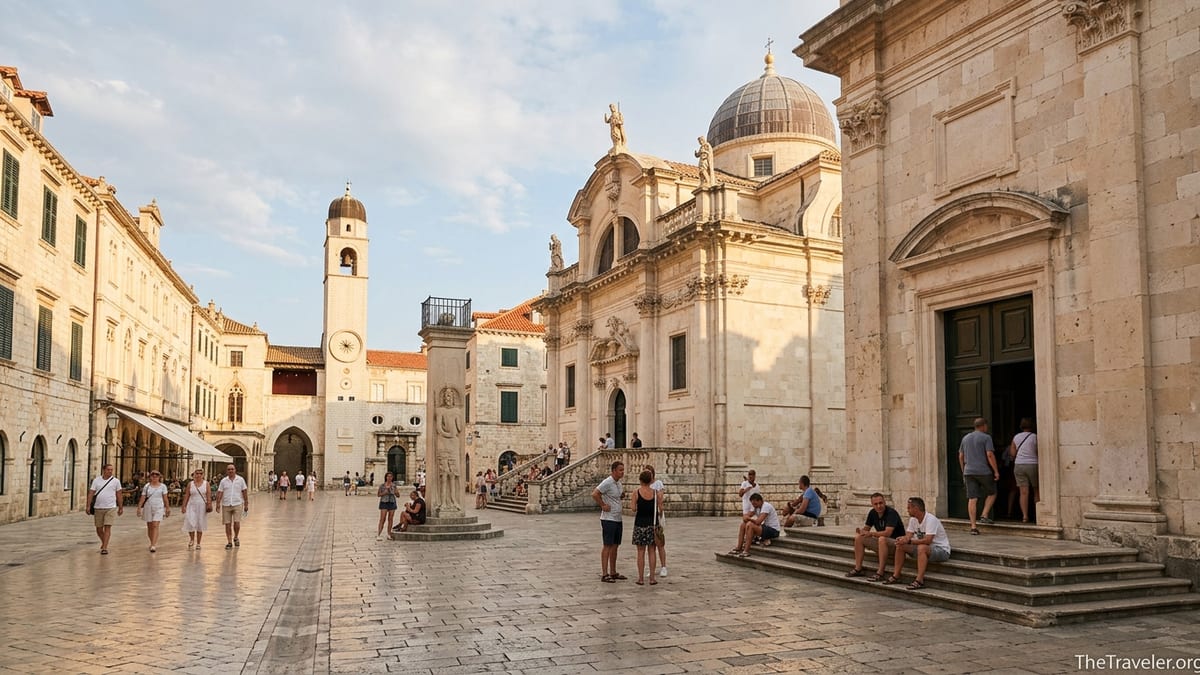
Why the Church of St Blaise Matters to Dubrovnik
The Church of St Blaise is far more than a pretty Baroque facade. Dedicated to Dubrovnik’s patron saint, it stands in Luža Square at the eastern end of Stradun, the Old Town’s main street, and functions as a focal point of civic and religious identity. Local tradition holds that St Blaise appeared in a vision in the 10th century, warning the city of an impending Venetian attack. In gratitude, the former Republic of Ragusa adopted him as protector, and his image still appears on flags, public buildings and even modern souvenirs.
The church you see today was completed in 1715 after a fire destroyed the earlier Romanesque building. Designed by Venetian architect Marino Gropelli, it brought an elaborate Italian Baroque style to a city better known for Gothic and Renaissance palaces. Inside, visitors find a luminous, centralized space with Corinthian columns and a richly decorated main altar that draws the eye as soon as you enter.
At the heart of the interior is a 15th century gilt silver statue of St Blaise holding a model of medieval Dubrovnik in his hands. This masterpiece is one of the city’s most treasured works of art and famously survived the 1706 fire that destroyed much of the original church. Seeing this statue in person connects you directly to centuries of local history, from the republic’s maritime heyday to the modern festival that still centers on this very building.
The church also carries scars and stories from the late 20th century. During the 1991 Siege of Dubrovnik, the Old Town was shelled and St Blaise’s Church suffered damage despite protective wooden coverings placed on its facade. Careful restoration in the 1990s returned it to its former appearance, and subtle variations in the stonework today are reminders of both the destruction and the painstaking repair.
Practical Basics: Location, Hours and Entry
The Church of St Blaise is extremely easy to find. Once you pass through Pile Gate and walk down Stradun toward the old port, you eventually reach the open space of Luža Square. The church stands slightly raised on a stone terrace with a broad staircase, opposite Sponza Palace and near the Orlando Column, Rector’s Palace and the Cathedral. From the main Pile Gate it is about a 7 to 10 minute stroll on the flat, polished limestone street.
As of mid 2026 the church generally keeps daytime visiting hours roughly between 8:00 or 9:00 in the morning and early evening, often around 12:00 for a break and then again approximately 16:30 to 19:00. On many days the posted hours show a pattern such as 8:00 to 12:00 and 16:30 to 19:00, though exact times can shift slightly with the season and with liturgical needs. If you plan a short stay in Dubrovnik, it is wise to swing by the square early in your trip, read the small printed schedule near the entrance and adjust your plans accordingly.
Entry to the nave for casual visitors and worshippers is free, which makes the church an easy and worthwhile stop even if you are watching your budget after buying tickets for the city walls or the cable car. Donations are gratefully received inside, often via a simple box near the entrance. In some years, access to any small exhibitions or to reliquaries has required a modest fee or has been bundled into city-wide passes such as the Dubrovnik Card, but the central space of the church typically remains free and open during visiting hours.
Because the Old Town is car-free, most visitors arrive on foot from hotels and apartments or from cruise ship shuttles that usually drop passengers near Pile Gate. If you are staying outside the walls, city buses stop just uphill from the gate, and it is a short walk down to Stradun and then to St Blaise. There is no entry fee for the Old Town itself, so unlike the famous city walls you can wander into Luža Square at any time, even late at night, and admire the illuminated facade of the church from outside.
What to Look for Inside and Out
Although modest in size compared with large European cathedrals, the Church of St Blaise rewards slow, attentive viewing. Start outside on the terrace, where you can appreciate how the building sits slightly raised above the square. The stone steps are a popular place for people to sit with gelato from a nearby shop or to rest between sightseeing stops, but they also offer an excellent vantage point for photographing the Old Town with Stradun stretching away behind you.
Look up to notice the statue of St Blaise on the facade, gazing out over the square. If you arrive early in the morning, the soft light from the east highlights the sculptural details and the pale stone. In the late afternoon, the golden glow bouncing off nearby buildings gives the church a warm tint that reads beautifully in photographs. Many travelers end up with one of their favorite Dubrovnik shots taken from an angle at the corner of Sponza Palace, with the church framed slightly off-center.
Inside, give your eyes a moment to adjust and then walk slowly toward the main altar. The shimmering silver statue of St Blaise, holding the miniature walled city in his hands, often draws small clusters of locals who pause to pray. The interior decor includes intricate altarpieces, restrained fresco work compared with Italian Baroque churches, and a series of side niches with statues and devotional candles. On a hot summer day, the cool interior can feel like a refuge from the sun and crowds outside.
When there is no service underway, you can usually move around the side aisles quietly to study details such as carved capitals, busts of saints and small votive offerings. Many visitors comment that the church feels surprisingly intimate despite its central location. A simple example is a traveler who arrives from the nearby Rector’s Palace museum, filled with historical artifacts, and then steps into St Blaise to find living faith in action as residents light candles for family members working abroad or serving at sea.
Respectful Visiting: Dress, Behavior and Photography
The Church of St Blaise is an active Catholic parish, not solely a monument, so observing a few basic rules of etiquette matters. While Dubrovnik is a coastal, holiday-oriented city, the expectation for modest dress inside churches still applies. Shoulders should be covered, shorts and skirts should reach at least mid-thigh, and hats should be removed. In the hottest months, many travelers keep a light scarf or linen shirt in their daypack specifically for entering churches like St Blaise and the Cathedral.
Behavior inside should be quiet and respectful, particularly if people are praying or if a Mass is in progress. It is common for tour groups to pause briefly at the back while the guide whispers an explanation, but raised voices tend to echo in the small, domed interior. If you arrive with children, taking a moment outside to explain that this is a place where people come to speak to God can help them understand why running or loud play is inappropriate here.
Photography is generally allowed, but without flash and with sensitivity to worshippers. In practice this means avoiding close-up shots of individuals at prayer and refraining from filming during liturgy unless you have explicit permission. A good compromise is to take a few wide interior shots from the central aisle, capturing the altar and dome, then put the camera away and spend a few moments simply observing. Many visitors find that some of their strongest memories are of the sounds, such as the creak of wooden pews or the murmur of Croatian prayers, rather than of photographs.
Outside on the steps, the atmosphere is more relaxed, and you will see people posing for group photos, wedding parties emerging after ceremonies and local children weaving through the crowd with footballs under their arm. Even here, it is polite not to block the doorway for long periods, especially when Mass has just finished and parishioners are exiting.
Timing Your Visit: Mass, Music and the Feast of Saint Blaise
For many travelers, the most meaningful way to experience the Church of St Blaise is to attend a Mass. Regular schedules can vary slightly through the year, but you can usually expect at least one morning Mass and a late afternoon or early evening service on weekdays, with additional services on Sundays. Times are typically posted on a noticeboard by the door, often in both Croatian and English. If you are staying nearby, check the schedule a day ahead and plan to arrive 10 to 15 minutes early to find a seat.
On Sundays and major feast days the church can be very full, with locals dressed smartly and families spanning several generations filling the pews. A visitor in early summer might find the mid-morning Sunday Mass particularly atmospheric, with sunlight streaming through the windows and doors open to the sounds of the square. Even if you are not Catholic, you are welcome to sit quietly, stand and sit with the congregation and appreciate the music and ritual. Out of respect, visitors who are not practicing Catholics should refrain from receiving Communion.
The most important date in the church calendar is 3 February, the Feast of Saint Blaise, which has been recognized by UNESCO as an element of Intangible Cultural Heritage. Around this date, the entire Old Town fills with processions, banners, traditional costumes and pilgrims from the surrounding region. The relics of the saint are carried from the church through the streets, and the blessing of throats is given with crossed candles as people file past. For visitors who are in Dubrovnik at this time, it is an unforgettable sight, but it also means higher demand for accommodation and very crowded streets around Luža Square.
At other times of year, you might encounter smaller events such as choir performances, organ recitals or weddings. For instance, a summer evening might see the square outside buzzing with tourists, while inside a string quartet rehearses for a concert as part of a local cultural festival. If you happen to hear music drifting out, it is often worth stepping in for a few minutes to listen, keeping to the back so as not to disturb.
Connecting St Blaise with the Rest of Old Town
Because of its central position, a visit to the Church of St Blaise fits naturally into any walking tour of Old Town Dubrovnik. Many travelers start at Pile Gate, walk the length of Stradun, then pause at Luža Square to explore the church before continuing to the Rector’s Palace, Dubrovnik Cathedral and the old port. This cluster of sights is compact, and you can walk between them in a couple of minutes, which makes it easy to duck back into the church if you pass by later in the day.
A practical example is an itinerary that pairs the church with a morning visit to the Rector’s Palace museum and an afternoon stroll to the old port and city walls. You might start your day with coffee at a small bar near the Onofrio Fountain, then walk to St Blaise when it opens, spending 20 to 30 minutes inside. From there it is a short hop to Sponza Palace for its historical exhibits, followed by the Rector’s Palace. After a lunch of grilled fish or a simple pizza in a nearby side street, you could climb the city walls in the cooler late afternoon and return through Luža Square as the church’s facade glows in the golden light.
The church also helps with orientation. If you ever find yourself turned around in the maze of side streets, aiming for the bell towers that rise near St Blaise and Sponza usually brings you back to the main square. In the evenings, the illuminated church acts as both a landmark and social hub, with nearby cafes and ice cream shops staying open late in the warm months. Sitting on the steps and watching the ebb and flow of people is a simple pleasure after a long day of sightseeing.
If you are traveling with limited time, such as a cruise stop of only a few hours, prioritizing a visit to St Blaise along with the city walls and one museum gives a satisfying sense of Dubrovnik’s religious, civic and defensive history. Many quick tours include a brief explanation in front of the church, but you can enrich the experience by stepping inside on your own afterwards, once the group moves on.
Accessibility, Families and Practical Tips
The main challenge for visitors with reduced mobility is the set of steps leading up to the entrance of the Church of St Blaise. The terrace stands a short distance above the square, and there is no ramp directly to the main portal. Inside, the nave is mostly level, with wooden pews and open central space. If you use a wheelchair, it may be possible to receive assistance from a companion or guide to manage the steps, but fully independent access is limited. The surrounding Luža Square, however, is flat and paved, so even without entering you can enjoy close views of the facade and take part in any outdoor festivities.
For families, the church offers a good chance to introduce children to Dubrovnik’s history in a short, manageable visit. Explaining that the silver statue shows the city as it looked centuries ago can spark conversations about why the walls were important and how people lived during the time of the republic. Keeping the stop to 10 or 15 minutes and focusing on a few key details, rather than expecting children to appreciate every artwork, usually works best.
St Blaise is at the center of a very popular route, so in peak season the area can be crowded between mid-morning and late afternoon. If you prefer a quieter experience, aim to visit soon after opening, when tour groups have not yet fully arrived, or in the early evening before dinner. In July and August, temperatures in the Old Town can be high even in the shade, so bringing water and wearing non-slip shoes is important because the polished limestone can be slick.
While there are no shops inside the church itself, the streets around Luža Square are filled with vendors selling everything from saint medallions and rosaries to more generic souvenirs like lavender sachets and magnets featuring St Blaise or the church facade. If you wish to support the parish directly, placing a small donation inside the church is preferable to assuming that outside sellers are connected to it.
The Takeaway
Visiting the Church of St Blaise is not just about ticking off another Old Town landmark. In a city that receives millions of visitors each year, this relatively small Baroque church remains at the core of Dubrovnik’s sense of self. Its silver statue of the patron saint, its role as the focal point of the February festival and its location at the hinge between Stradun and the old port all make it a key to understanding the city.
With a bit of preparation, you can turn a quick photo stop into a richer encounter. Knowing roughly when services are held, how to dress and behave inside, and what details to notice will help you move confidently from casual visitor to engaged observer. From the cool hush of the nave on a hot afternoon to the bustle of Luža Square in the evening, the church offers different moods throughout the day, each revealing another layer of Dubrovnik’s character.
Whether you step in for a few quiet minutes between museum visits, attend a Sunday Mass alongside local families or happen to be there when banners and relics fill the streets for the Feast of Saint Blaise, this church has a way of staying with you long after you have left the city walls behind.
FAQ
Q1. Do I need a ticket to visit the Church of St Blaise in Dubrovnik?
Entry to the main interior of the Church of St Blaise is generally free, with visitors encouraged to leave a small voluntary donation instead of paying a fixed ticket price.
Q2. What are the usual opening hours for the Church of St Blaise?
The church typically opens in the morning and again in the late afternoon, with hours often around 8:00 to 12:00 and 16:30 to 19:00, though times can vary by season and religious events.
Q3. Is there a dress code for visiting the Church of St Blaise?
Yes, modest clothing is expected: shoulders should be covered, shorts and skirts should not be very short, and hats should be removed inside the church.
Q4. Can I take photos inside the Church of St Blaise?
Photography without flash is usually allowed, but visitors should avoid disturbing worshippers, limit taking pictures during services and refrain from photographing people at prayer.
Q5. How long should I plan for a visit to the Church of St Blaise?
Most travelers find that 20 to 30 minutes is enough to see the interior calmly, though you may wish to stay longer if you attend a Mass or special event.
Q6. Is the Church of St Blaise wheelchair accessible?
The church sits atop a short flight of steps, which can make access difficult for wheelchair users, although the surrounding square is flat and accessible for close exterior views.
Q7. When is the Feast of Saint Blaise and what happens then?
The Feast of Saint Blaise is held on 3 February, when processions, traditional costumes, the display of relics and the blessing of throats transform the area around the church into a major celebration.
Q8. How do I get to the Church of St Blaise from Pile Gate?
From Pile Gate, walk straight down Stradun toward the old port for about 7 to 10 minutes; the church stands on a raised terrace in Luža Square at the far end.
Q9. Is it appropriate for non-Catholics to attend Mass at the Church of St Blaise?
Yes, non-Catholics are welcome to attend Mass quietly as observers, joining in sitting and standing with the congregation but refraining from receiving Communion.
Q10. What should I not miss seeing inside the Church of St Blaise?
The highlight is the 15th century silver statue of Saint Blaise holding a model of medieval Dubrovnik on the main altar, along with the elegant Baroque interior and its decorative details.