


Most visitors to Dubrovnik’s Church of St Blaise pause for a few seconds on Luža Square, snap a photo of the Baroque façade, then move on with their walking tour. Yet this compact church, devoted to the city’s patron saint, rewards anyone willing to slow down. With a bit of planning you can turn a two‑minute stop into one of the most meaningful hours of your time in the Old Town.
Get the latest updates straight to your inbox!
Why St Blaise Matters So Much to Dubrovnik
To understand how to experience the Church of St Blaise beyond a quick photograph, it helps to know why this small Baroque building holds such an outsized place in Dubrovnik’s identity. St Blaise, or Sveti Vlaho in Croatian, is the city’s patron and protector. Local tradition tells of the saint appearing to a priest in the 10th century to warn Dubrovnik’s leaders of a surprise attack, cementing his role as guardian of the city and its people.
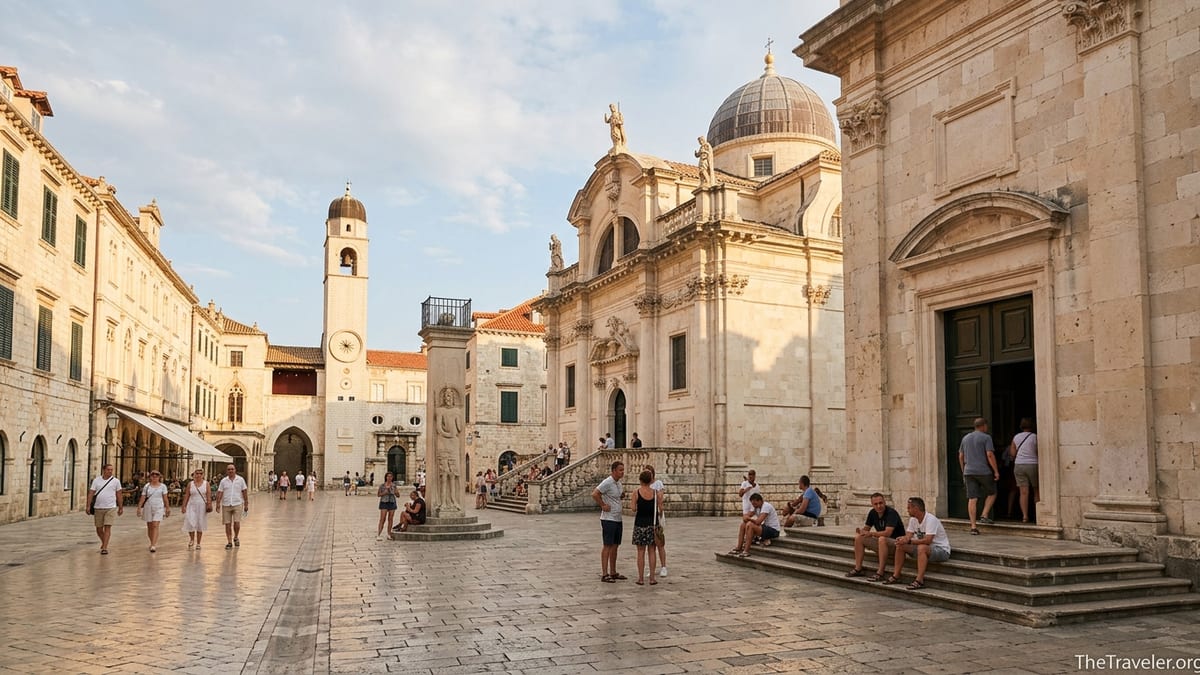
The current church dates from the early 18th century and rises from Luža Square at the eastern end of Stradun, the main limestone thoroughfare through the Old Town. Its ornate façade, central dome, and statue of St Blaise holding a model of medieval Dubrovnik are familiar to anyone who has browsed images of the city’s skyline. But for Dubrovnik’s residents, this is far more than a backdrop. It is the focal point of the annual Festivity of St Blaise every February, when banners, relics, and parishioners in traditional dress fill the square and carry the saint’s image along Stradun.
Knowing that this is a working parish church, not just a monument, shapes how you visit. The same steps crowded with selfie sticks at midday are where locals gather for regular Mass, for blessings before exams or voyages, and for the throat blessing associated with St Blaise. Approaching the space with this in mind encourages you to move from spectator to respectful participant.
Even if you are not religious, seeing how deeply the church is woven into everyday life here changes how you notice details. You will start to see the countless carved images of St Blaise above city gates, on the cathedral, and on street corners, all pointing back to this compact sanctuary on Luža Square.
Choosing the Right Time: Avoid the Crush and Find Quiet
One of the simplest ways to experience St Blaise beyond a photo stop is to choose your timing carefully. Most cruise ship excursions and large walking tours surge through Luža Square between about 9:30 am and 2 pm in peak season, especially in July and August. At those hours the church door is often open, but the interior can feel like a corridor as groups file in, glance up at the altar, and leave within two minutes.
If you can, visit early in the morning. Arriving around 8 am on a weekday often means the marble steps are still damp from overnight cleaning and only a few locals are crossing the square on their way to work. Step inside then and you may find half a dozen people scattered in the pews, the faint smell of incense lingering from the previous Mass, and soft light slanting through the windows behind the main altar. The interior feels more like a living chapel than a tourist attraction.
Late evening is another good window. Between about 7 pm and 9 pm in late spring and early autumn, the day‑tripper crowds thin and the temperature drops. Luža Square fills more with residents out for a promenade along Stradun and fewer organized groups. You are more likely to hear the bells of St Blaise and nearby churches without the competing noise of megaphones and buskers. Inside, candles around the side altars create a warm glow that makes it easier to linger and absorb the carved stone, gilded details, and paintings.
Timing matters most around major festivals. If you are in Dubrovnik on 2 and 3 February, when the Festivity of St Blaise takes place, expect intense crowds in front of the church. On those days, the square becomes a ceremonial stage and the church functions as a backstage for clergy and bearers of relics. A deeper experience then means accepting the crowd and focusing on observing the ritual rather than aiming for quiet contemplation.
Stepping Inside: How to Linger With Respect
Many visitors hesitate at the door, unsure whether they are welcome to enter if they are not part of the congregation. As a rule of thumb, if the door is open and no service is underway, you may step inside. Men should remove hats, and everyone should keep voices low and phones on silent. Photographing the interior is usually tolerated, but flash can feel intrusive, especially if people are praying in the pews.
Instead of immediately raising your camera, take the first couple of minutes just to sit. Choose a pew halfway down the nave, where you can see both the main altar and the dome. Let your eyes adjust from the brightness of the square outside. You will start to notice the rich sculptural details on the columns, the painted ceiling, and the way the statue of St Blaise above the altar seems to hover over the city model he holds. This pause alone separates you from the majority of visitors who barely cross the threshold.
If there are votive candles available, it is common for travelers of any or no faith background to light one in quiet reflection. A small donation box is usually nearby, and contributing a few euros is appreciated. Take a moment to read any small plaques or printed cards by the side chapels. They often describe which guilds or families funded them, tying the artwork directly to Dubrovnik’s merchant history.
During Mass, which typically takes place in the early morning or evening, the church interior fills with local parishioners. If you enter during a service, slip into a back pew if there is space or remain just inside the door. Avoid walking in front of the altar or moving around to take photos. Many travelers find that even 10 minutes of listening to Croatian hymns and organ music, without understanding the words, helps them connect the church to the rhythms of local life.
Connecting Church and City: Exploring Luža Square and Stradun
The Church of St Blaise is best experienced as the heart of a small urban constellation. Directly in front of its steps stands Orlando’s Column, the stone figure that once symbolized Dubrovnik’s freedom and commercial rights. Today, the flag of St Blaise is raised here during the February festivities, visually linking the saint’s church with the city’s civic identity on the square. Watching children play around the base of the column in the evening while older residents chat on the church steps gives you a sense of how this space has functioned as a meeting point for centuries.
To deepen your understanding, spend time simply observing Luža Square at different moments of the day. In the morning, delivery carts rattle over the stone as cafes on the edges of the square set out tables. Around midday in high season, local guides cluster their groups by the steps of St Blaise to explain the surrounding landmarks: the Sponza Palace, the City Bell Tower, and the start of Stradun. Later in the evening, when the stone pavement gleams under streetlights, you might see couples sitting side by side on the steps, using the façade as a backdrop for unhurried conversation rather than selfies.
From the church, walk a short loop that ties together religious and civic symbols. Start by facing the façade, then turn right and stroll a few dozen meters along the side street that leads toward the Rector’s Palace and the cathedral. Here you can see additional reliefs of St Blaise set into building walls. Continue back to Stradun and pause halfway down the main street to look back toward the church dome rising above the rooftops. This simple walking circuit helps you see how the church is woven into the cityscape from multiple vantage points, not only front‑on from Luža Square.
Guided tours can help with context, but you do not need to be part of a big group. Several local companies and licensed guides offer small group or private Old Town walks that include a stop at St Blaise, often costing roughly the same as a restaurant main course. If you choose one of these, ask in advance whether the guide can spend a bit more time discussing the church interior and St Blaise’s significance, rather than only using it as a meeting point.
Experiencing Local Rituals and Festivals
If your visit coincides with the Festivity of St Blaise in early February, you have an exceptional opportunity to see how deeply the church shapes Dubrovnik’s cultural life. On Candlemas, 2 February, white doves are traditionally released in front of the church, and a ceremonial flag of St Blaise is raised on Orlando’s Column. The next day, 3 February, a procession of clergy, laypeople, and banners winds along Stradun and returns to the church, carrying reliquaries associated with the saint. It is a vivid, crowded, and emotional expression of devotion.
As a visitor, the most respectful way to experience these rituals is to stand to the side and watch, rather than trying to push forward for photographs. Many locals wear traditional costumes specific to Dubrovnik and surrounding villages, and the details of embroidery and jewelry are worth observing carefully. Public addresses in front of the church, often by church officials and local leaders, draw connections between the city’s past trials and present challenges.
Outside of February, smaller rituals still take place throughout the year. The blessing of throats, traditionally associated with St Blaise, may be performed around his feast day and sometimes at other moments, when priests cross two candles at a person’s throat and offer a short prayer for health. Even if you simply witness this from a distance, it helps explain why residents speak of St Blaise in such personal terms, as a protector of families and individuals, not only of the city as a whole.
Cultural festivals, including the summer arts events that fill the Old Town with theater and music, often spill into Luža Square. On some evenings in July and August, you might find a classical ensemble or folk group performing nearby, with the lit façade of St Blaise as a backdrop. These performances are usually free to watch from the square. Staying for an entire concert instead of drifting past transforms the church from an architectural feature into part of a lived cultural scene.
Practical Tips: Etiquette, Dress, and Simple Costs
Though there is usually no entrance fee for St Blaise, consider making a small donation if you spend time inside. A few euros placed discreetly in a box near the back of the church contributes to upkeep and signals that you value the space as more than a photo set. If you light a candle or pick up a printed prayer card or small booklet, adding a little more is appreciated.
Dress expectations are relaxed compared with major pilgrimage sites, but modest clothing is still wise. Shoulders covered by a light scarf or T‑shirt and shorts that fall at least mid‑thigh help you blend in with locals attending Mass. During the hottest summer afternoons, it is common to see visitors slip on a linen shirt or shawl just before entering, then remove it again when they step back onto Stradun.
Photography etiquette makes a big difference to how your visit feels. Try capturing a few wide images of the interior after you have already looked around. Avoid standing in the central aisle for long periods or posing in front of the altar. Tripods and large camera rigs can obstruct movement in the small nave, so hand‑held shots are preferable. Outside on the steps, be mindful that residents still use this as a meeting point; leaving clear space by the doorway is courteous.
If you are visiting as part of a tour group, you can still carve out a more personal experience. When your guide allows a short break at Luža Square, ask if you may step into the church quietly for a couple of minutes. Even 5 minutes sitting inside, separate from your group, can shift your impression of the building from generic Baroque landmark to living parish church.
The Takeaway
Experiencing the Church of St Blaise in Dubrovnik beyond a quick photo is less about special access and more about intentional choices. Visiting early or late, stepping fully inside instead of hovering at the door, and taking time to sit in silence all help you see the church as residents do. Connecting your visit to the wider setting of Luža Square and Stradun, and if possible to the February festivities, gives the building narrative depth.
On paper, St Blaise may be just one stop among many in Dubrovnik’s Old Town. In practice, though, the moments you spend on its worn stone steps, under its dome, or watching its bells mark the passing hours can become some of your clearest memories of the city. Treat it as a place to pause, observe, and listen, and this small Baroque church will reveal the layers of devotion and history that still shape Dubrovnik today.
FAQ
Q1. Where is the Church of St Blaise located in Dubrovnik?
The Church of St Blaise stands on Luža Square at the eastern end of Stradun, the main street in Dubrovnik’s Old Town, opposite Orlando’s Column and near the City Bell Tower.
Q2. Is there an entrance fee to visit St Blaise Church?
There is usually no set entrance fee to enter St Blaise Church. Visitors are welcome to step inside respectfully, and a small voluntary donation is appreciated to support maintenance.
Q3. What is the best time of day to visit for a quieter experience?
Early mornings around 8 am or evenings after most cruise excursions finish tend to be the quietest times, especially outside the peak summer months, allowing you to sit and absorb the interior.
Q4. Can non‑Catholic visitors attend Mass at St Blaise?
Yes, non‑Catholic and non‑religious visitors may attend Mass as quiet observers. It is important to dress modestly, keep phones silent, and avoid walking around or taking photos during the service.
Q5. Are photography and video allowed inside the church?
Discreet photography without flash is generally tolerated when no service is underway. Avoid filming or photographing people at prayer, and do not use tripods or stand blocking the central aisle.
Q6. How long should I plan to spend at St Blaise to go beyond a quick stop?
Planning 20 to 40 minutes lets you sit in a pew, look closely at the altar and dome, light a candle if you wish, and then observe life on Luža Square from the steps outside.
Q7. What is special about visiting during the Festivity of St Blaise?
During the Festivity around 2 and 3 February, you can witness processions, the raising of the saint’s flag, and locals in traditional dress, which shows the church’s living role in Dubrovnik’s identity.
Q8. Is the Church of St Blaise accessible for visitors with limited mobility?
The main entrance is reached by a short flight of stone steps, which can be challenging for some visitors. There is no large ramped entrance directly onto Luža Square, so assistance may be needed.
Q9. Can I join a guided tour that includes St Blaise Church?
Yes, many Dubrovnik Old Town walking tours include St Blaise as a stop. For a deeper experience, look for small group or private tours and ask the guide to allow extra time inside the church.
Q10. What should I wear when visiting St Blaise Church in summer?
Light, breathable clothing that covers shoulders and is at least mid‑thigh in length is appropriate. Carrying a thin scarf or shirt to slip on before entering is a practical way to meet local expectations.