


Pisa’s Leaning Tower may get the postcard fame, but it is Pisa Cathedral that truly tells the story of the city’s medieval power and faith. For first‑time visitors, a little preparation goes a long way: from understanding how the ticket system works to knowing when the cathedral actually opens to tourists, there are several practical details that can shape your experience. This guide brings together up‑to‑date information and real‑world examples so you can step into the Duomo di Pisa with confidence rather than confusion.
Get the latest updates straight to your inbox!
Understanding Where the Cathedral Fits in the Piazza dei Miracoli
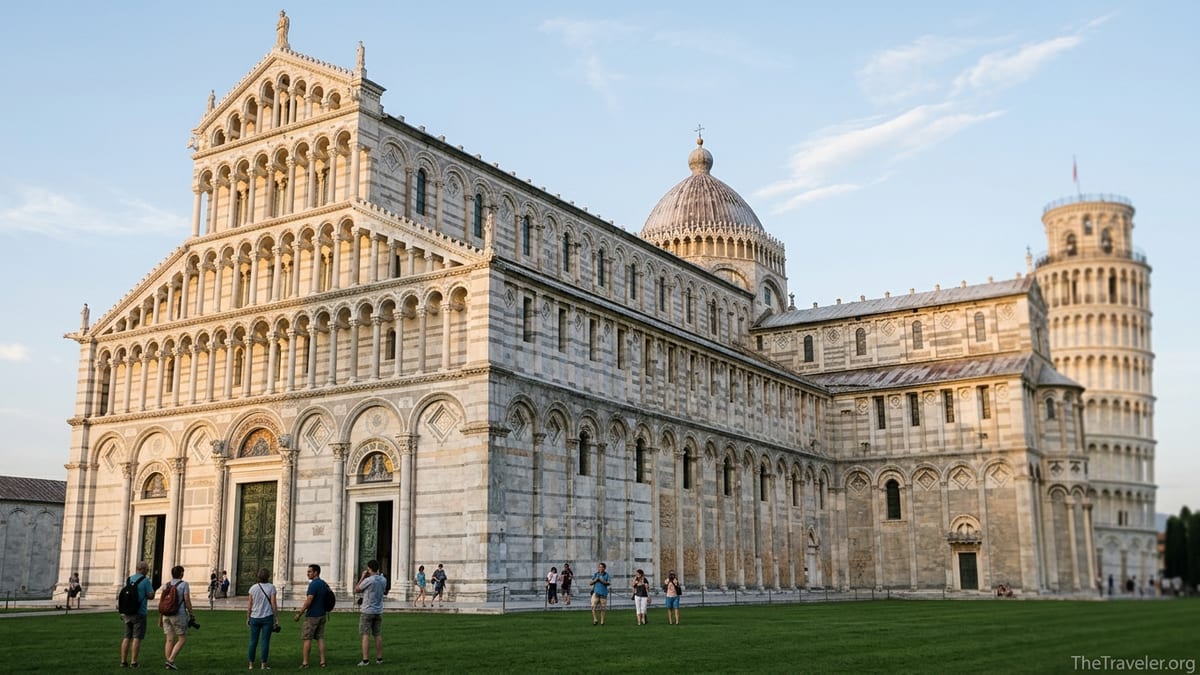
Pisa Cathedral, officially the Cathedral of Santa Maria Assunta, stands at the heart of the Piazza dei Miracoli, the walled ensemble that also includes the Leaning Tower, the Baptistery and the Camposanto cemetery. Many first‑timers arrive focused on the tower and only later realize that the cathedral interior, with its striped marble, golden coffered ceiling and glittering apse mosaic, is the real highlight of the square. Walking into the piazza from Via Roma or from the bus drop‑off near Porta Nova, the cathedral is the large basilica in the center, with the famous bell tower slightly behind it on the south‑east side.
The cathedral and all the other monuments are managed by the Opera della Primaziale Pisana, the church authority that sets opening hours, ticket rules and restoration schedules. In practice, that means that decisions like closing the nave for a special Mass or limiting access to certain chapels can be made at short notice. It is not unusual, especially on major feast days, to find signs posted at the entrance announcing modified visiting times. Treat anything you have read in advance as a guideline, then always check the information boards and staff at the ticket office when you arrive.
The entire piazza is open to the public without a ticket, and you can admire the cathedral’s exterior at any time, including late in the evening when floodlights pick out the arcades and sculpted facades. However, stepping inside the cathedral and visiting the other monuments requires a timed entry ticket. First‑time visitors are often caught out by assuming they can simply join a queue; in reality, access is controlled primarily through the ticket system and time slots printed on your pass.
Because all four major monuments share the same management, planning your cathedral visit should be done in tandem with any plans to climb the Leaning Tower or see the Baptistery. A couple who wants to climb the tower at 10:30, listen to the midday acoustic demonstration in the Baptistery, and still have a quiet half hour in the cathedral nave is effectively building a schedule around coordinated time slots. Thinking of the complex as a single, integrated visit rather than separate sights will help you avoid both long gaps and stressful dashes between monuments.
Opening Hours, Tickets and How Timed Entry Really Works
According to the official calendar published by the Opera della Primaziale Pisana, the cathedral is generally open to visitors from 10:00 until late afternoon or early evening, with extended hours until roughly 22:30 in peak summer, typically mid‑June to the end of August. From 17 June to 31 August 2026, for example, the authority has advertised late openings across the complex, including night access to the tower and Camposanto. Outside high summer, closing time is earlier and can vary month by month; what remains consistent is that last entry is usually 30 minutes before closing.
A crucial detail for first‑time visitors is that the cathedral does not open to tourists first thing in the morning. Before 10:00, the building is reserved for worship, and this pattern generally applies year‑round, although exact times can shift on Sundays and feast days. A traveler who arrives on a Sunday at 9:15 expecting to take photos inside will typically find the main nave closed to visitors, with security staff allowing only people clearly entering for Mass. If you are planning a tight day trip from Florence or La Spezia, this 10:00 opening for tourists is the single most important timing to factor in.
Entry to the cathedral itself is officially free, but it is controlled by timed tickets. The simplest option is a combo ticket that includes the Baptistery, Camposanto and museums, which in 2026 costs around a little over ten euros when purchased directly from the official ticket office for monuments other than the tower. Recent guides that track official pricing note that the separate Leaning Tower climb is priced at about 20 euros for adults in 2026, with no standard discounts for age groups, and that a full “Complete Visit + Tower” pass sold through official channels runs to the mid‑20s in euros. These figures are indicative rather than fixed; prices are adjusted periodically, so think in terms of ranges, not guaranteed amounts.
Timed entry works in two main ways. If you buy any paid monument ticket for the same day, the cathedral is often included and you can book a specific slot to visit it. If you want to visit only the cathedral, staff usually issue a free ticket for a particular time. In practice, this means you might visit the ticket office at 11:00 and be told that the next available cathedral slot is 11:30 or 12:00. On busy days in May or September, those time slots can fill up quickly, leading to waits of an hour or more. Many experienced travelers handle this by booking a mid‑morning Baptistery or Camposanto slot along with their cathedral time, using one monument while they wait for entry to the next.
Respecting Dress Code, Behavior and Photography Rules
Pisa Cathedral is an active place of worship and a major pilgrimage site, and local staff enforce a basic standard of dress. Shoulders and upper arms should be covered, and shorts or skirts are expected to fall to at least mid‑thigh. In the summer heat, it is common to see visitors arriving in strappy tops and being handed disposable paper shawls or ponchos at the entrance, sometimes for a small fee, sometimes provided free. While these paper coverings are functional, they are not particularly comfortable; packing a light cotton scarf or a linen shirt that you can slip on at the door makes your visit far more pleasant.
Hats are generally expected to be removed inside the nave, especially for men. Loud conversations, phone calls and video chats are strongly discouraged once you pass the main doors, and security personnel will usually intervene if someone is speaking on speakerphone or playing music. Even outside formal services, staff members tend to stand at key points along the nave and near the transept watching for disruptive behavior. Visitors who treat the building as a backdrop for noisy social media videos risk being asked to move on.
Photography is allowed, but flash is typically prohibited because it can damage artworks over time and disturb worshippers. Tripods and large camera rigs are almost always refused at the door. A traveler using a mirrorless camera with a 24–70 mm lens, shooting at a wide aperture to handle the relatively low light, will be fine as long as they keep gear compact and do not block aisles. Staff are also quick to stop anyone trying to set up lights or pose in the central aisle during services. For quick, respectful snapshots, a modern smartphone held discreetly is more than adequate and attracts less attention.
During Mass and other liturgies, visitors are usually restricted to specific side aisles or asked to wait outside. It is common, especially around major Catholic feasts, for visitors to be surprised by a procession or choir rehearsal that temporarily closes off the apse or main altar. In those moments, the best approach is patience: find a side chapel to admire in silence or step back outside to enjoy the view of the facade and Leaning Tower until the service ends. Local staff tend to be more lenient with visitors who are clearly being respectful and less tolerant of those who argue, film worshippers at close range or try to push past cordons.
Planning Your Visit: Best Times, Crowds and Weather
Pisa Cathedral is busy throughout most of the year, but daily crowd patterns are predictable. Large group tours from Florence and cruise excursions from Livorno tend to arrive mid‑morning, often between 10:30 and 12:30, and again in the mid‑afternoon. If you want a comparatively calmer experience, aim for the first tourist opening around 10:00 or the final hour before closing. In peak summer, the late evening openings introduced in recent years have been a gift to travelers who stay overnight in Pisa: at 21:30 in late June, you might share the nave with only a handful of visitors instead of shoulder‑to‑shoulder tour groups.
Seasonally, April through October are the busiest months, with July and August seeing the highest daytime temperatures and the thickest crowds. Standing in line on the exposed lawns of the piazza can be uncomfortable during afternoon heat. Many travelers now plan their cathedral slot for late morning, then retreat to the shade of nearby cafés for a long lunch before returning for an afternoon tower climb or Camposanto visit. In cooler months such as November and February, you will find shorter queues and softer light, though you should be prepared for rain and earlier sunset times.
Weather matters inside the cathedral, too. The thick stone walls keep the nave relatively cool even during heatwaves, but entry queues form outside, and there is limited cover near the main door. Packing a compact umbrella or a hat can make waiting more bearable. In winter, the interior can feel draughty, especially if you stand still for long periods admiring the pulpit or mosaics. A light sweater is advisable, even if daytime temperatures seem mild.
It is also wise to build flexibility into your schedule in case of unexpected closures. The Opera della Primaziale Pisana explicitly reserves the right to alter hours or close parts of the complex for security or liturgical reasons. In practice, this might mean that a choir festival uses the nave on a Saturday afternoon or that restoration scaffolding obscures certain chapels. Having a backup plan, such as visiting the Sinopie Museum or exploring the medieval streets around Via Santa Maria, ensures your day in Pisa stays enjoyable even if your ideal cathedral slot moves or a section of the building is temporarily off‑limits.
What Not to Miss Inside: Art, Architecture and Viewpoints
Even if you arrive primarily curious about the Leaning Tower, the interior of Pisa Cathedral rewards slow exploration. The striped marble columns and rounded arches are classic examples of Pisan Romanesque architecture, a style that predates and influenced other Tuscan churches. As you walk up the central nave, look up to the coffered wooden ceiling richly gilded in gold leaf, which replaced an earlier roof destroyed by fire in the late 1500s. Many visitors who rush straight to the apse for a quick photograph never notice the intricate ceiling panels above them.
One of the most significant works inside is the pulpit attributed to Giovanni Pisano, a dense composition of carved figures illustrating scenes from the New Testament. Because it has undergone extensive restoration and relocation over the centuries, parts of the pulpit may at times be protected by barriers or scaffolding. If it is accessible when you visit, circle slowly around its base, paying attention to how the sculptor layered figures and foliage. Travelers who have previously visited the pulpit in the Baptistery of Pisa or similar works in Siena will notice stylistic similarities and differences that speak to the evolution of Tuscan sculpture.
At the far end of the nave, the apse mosaic depicting Christ in Majesty dominates the space, flanked by images of the Virgin and Saint John the Evangelist. Standing in the center of the nave and zooming in with a camera or simply using your eyes, you can see the shimmer of individual tesserae in the mosaic, especially when afternoon light filters through side windows. On bright days, the contrast between the dark marble columns and the luminous gold of the apse creates a powerful visual frame for the main altar.
There are no public rooftop terraces or internal viewpoints in the cathedral itself comparable to the climb in Florence or the tower in Pisa. Your best “view” is the long internal perspective from the entrance toward the apse and vice versa. For exterior vantage points, many photographers favor the edges of the Camposanto or the far corner of the piazza to capture the cathedral, Baptistery and Leaning Tower in a single frame. In recent years, nighttime lighting has been improved across the square, so an evening stroll offers the chance to take atmospheric photos of the cathedral’s facade lit against the dark sky, often with fewer people in the foreground.
Getting There, Security and On‑the‑Ground Logistics
The Piazza dei Miracoli sits on the northern edge of Pisa’s historic center, about a 20‑minute walk from Pisa Centrale railway station for a reasonably fit traveler dragging a carry‑on suitcase. Many first‑time visitors arriving from Florence or Lucca by regional train choose to walk up Via Francesco Crispi and across the river, following signs for “Piazza del Duomo” or “Torre Pendente.” Alternatively, local buses from the station stop near the piazza, a practical option if you are traveling with young children or in hot weather. From the small Pisa San Rossore station, the walk is shorter, making it a handy arrival point for those staying near the cathedral.
Security screening in recent years has become more structured, especially for the Leaning Tower. While the cathedral usually has less intense checks, you should still expect bag inspections at or near the entrance. Large backpacks, suitcases and bulky camera bags may be refused entry or redirected to storage facilities linked to the tower visit. A traveler who arrives straight from the airport with a 60‑liter hiking pack may be asked to leave it in a supervised cloakroom if they plan to climb the tower, while a small daypack with a camera, water bottle and light jacket will usually be allowed into the cathedral itself.
Inside, movement tends to follow a loose circuit from the central nave toward the right‑hand side chapels and then back down the opposite aisle. On busy days, staff may use barriers to create one‑way flows, especially near the main entrance and apse. Signs request silence and ask visitors not to sit on the steps or lean on the altar railings. Practical touches such as low‑level lighting, clearly marked exits and multilingual information panels reflect the fact that the cathedral receives international crowds year‑round.
Restrooms are not located inside the cathedral but can be found in designated facilities within the piazza complex, often near the ticket buildings. They can be busy just before and after timed entries, so plan accordingly. Food and drink are not allowed inside the cathedral, and while snacks are tolerated in the open lawns outside, local authorities periodically enforce bans on picnicking directly on the grass to protect the UNESCO site. More relaxed options for eating and drinking lie just beyond the walls, along Via Santa Maria and surrounding streets, where trattorias, gelaterias and cafés cater both to tourists and locals.
The Takeaway
Visiting Pisa Cathedral for the first time is as much about logistics as it is about art and architecture. The building sits within a tightly managed monumental complex where tickets, time slots and liturgical schedules all shape your experience. Knowing that tourist access generally starts around 10:00, that you will likely need a timed ticket even for the free cathedral entry, and that dress and behavior are taken seriously allows you to plan a smoother visit.
Approach the cathedral not simply as an appendix to the Leaning Tower, but as the centerpiece of the Piazza dei Miracoli. Give yourself enough time to move slowly through the nave, to look up at the gilded ceiling and apse mosaic, and to trace the carvings on Giovanni Pisano’s pulpit. Build in flexibility in case of unexpected closures or schedule changes, and consider staying into the evening to enjoy the quieter atmosphere of the illuminated piazza.
With a bit of preparation and a respectful attitude, your first encounter with Pisa Cathedral becomes more than a quick sightseeing stop. It turns into a memorable moment of connection with one of Italy’s most important Romanesque churches, framed by the green lawns of the square and the unmistakable silhouette of the Leaning Tower just beyond.
FAQ
Q1. Do I need a ticket to enter Pisa Cathedral?
The cathedral itself is officially free, but in practice you need a timed entry ticket, which is often bundled with paid tickets for other monuments in the Piazza dei Miracoli.
Q2. What are the usual opening hours for Pisa Cathedral?
Tourist access typically begins around 10:00 and runs until late afternoon or early evening, with extended hours to about 22:30 on some summer dates. Exact times vary by season and religious calendar.
Q3. Is there a dress code inside Pisa Cathedral?
Yes. Shoulders should be covered and shorts or skirts should reach at least mid‑thigh. Hats are removed inside and staff may provide paper shawls if your clothing is too revealing.
Q4. Can I take photos inside the cathedral?
Non‑flash photography for personal use is generally allowed, but flash, tripods and bulky camera setups are usually prohibited. During services, staff may ask you not to photograph at all.
Q5. How far in advance should I book tickets if I also want to climb the Leaning Tower?
For visits in spring and summer, it is wise to reserve tower tickets several days or even weeks ahead, then choose a cathedral time slot that fits around your tower climb and other monuments.
Q6. How much time should I plan inside Pisa Cathedral?
Most visitors spend 20 to 40 minutes inside, but if you are interested in art and architecture, allow at least an hour to appreciate the pulpit, mosaics, chapels and overall space.
Q7. Are children allowed inside, and is the visit family‑friendly?
Children are welcome, but parents are expected to keep them quiet and close by. Strollers are usually permitted, though maneuvering them can be tricky when the nave is crowded.
Q8. What happens if there is a Mass during my visit?
During Mass or other services, visitor access may be restricted to certain areas or temporarily paused. You can usually wait in a side aisle or return later when the liturgy has finished.
Q9. Can I visit only the cathedral without seeing the tower or Baptistery?
Yes. You can request a free, timed ticket for just the cathedral at the ticket office, though on busy days the next available slot may be some time later than your arrival.
Q10. Is Pisa Cathedral accessible for visitors with limited mobility?
The main entrance involves minimal steps and the interior is mostly level, but some side areas may have uneven flooring. It is advisable to speak with staff on arrival for the most suitable access route.