


Airport parking is one of those line items travelers often leave to the last minute, only to discover eye-watering rates at the terminal and lots that are already full. Platforms like Flyparks, which let you compare and pre-book off-airport parking, promise an easier, cheaper alternative. But they are not the right answer for every trip or every airport. Understanding when Flyparks actually makes sense can help you avoid overpaying without adding unnecessary hassle to your journey.
Get the latest updates straight to your inbox!
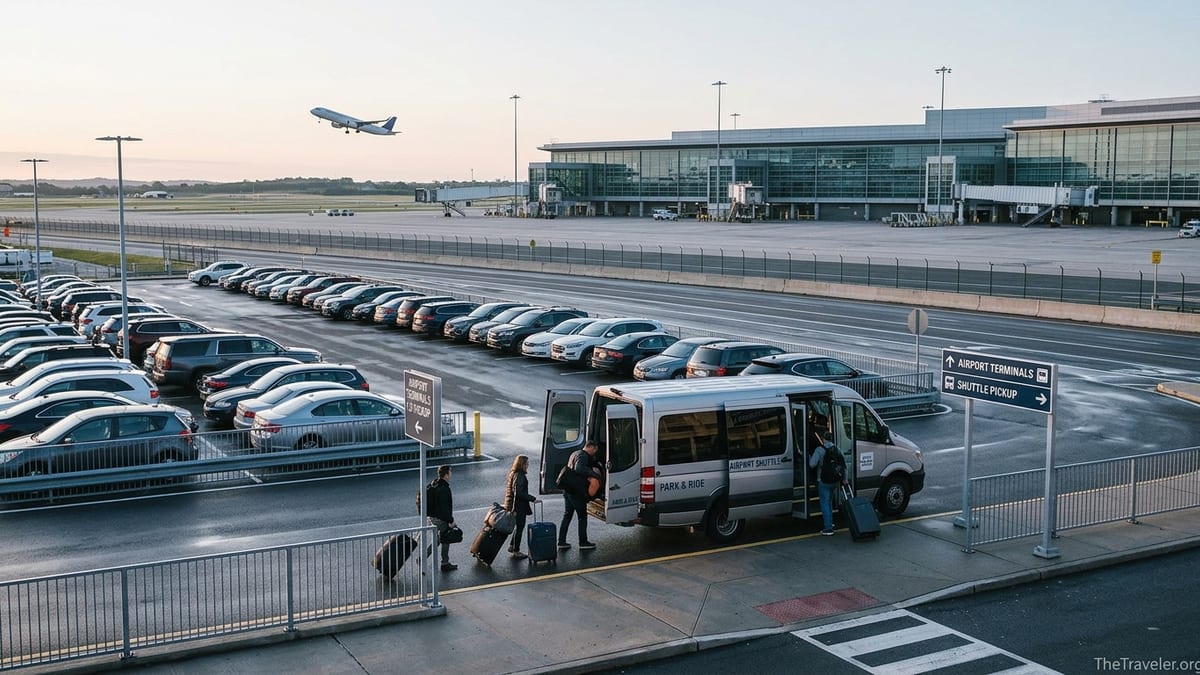
What Flyparks Is and How It Fits Into the Airport Parking Landscape
Flyparks is an online comparison and booking platform that focuses on airport parking, primarily at airports across Australia and New Zealand. Rather than operating its own car parks, it aggregates independent lots around major airports and lets you compare pricing, distance, shuttle frequency and services like covered parking or valet before you book. It fills the same role in Australasia that brands like The Parking Spot, ParkVia or Way have taken in North America and Europe, giving travelers a way to shop around instead of defaulting to the airport’s own car parks.
On Flyparks, a traveler flying out of Perth, Sydney or Auckland can see several nearby lots, often with lower daily rates than the on-airport garages, and book a space in advance. The platform typically shows whether the lot is fenced or monitored, how often shuttles run, and roughly how long the transfer to the terminal takes. For example, Flyparks’ Australian site highlights that its aim is to help people “compare and book affordable, secure, and reputable airport parking” in just a couple of minutes, taking much of the guesswork out of finding long-term parking close to a major airport.
In practice, Flyparks sits in the same decision space as taking a rideshare to the airport, booking an off-site hotel park-and-fly package, or simply driving up to the airport’s own economy lot. For a three-day city break, a week-long resort stay, or a month abroad, each of these options will have a different cost profile and convenience level. Flyparks is most helpful when parking will be a significant share of your trip budget or when demand at the airport is high enough that drive-up parking is genuinely risky.
Understanding these trade-offs is crucial because airport parking prices range widely. Recent data for major U.S. airports, for instance, shows terminal garages running from about 30 to more than 70 dollars a day, while economy or remote lots often sit between roughly 10 and 20 dollars per day, and off-airport shuttle lots as low as about 4 to 15 dollars per day when pre-booked. Similar spreads exist in Australian and New Zealand markets, although the exact figures differ. This variation is what creates room for comparison platforms like Flyparks to deliver real savings, especially for longer trips.
When Flyparks Shines: Longer Trips and High-Cost Airports
Where Flyparks-style booking really pays off is on trips long enough for the daily rate difference to matter. At large U.S. hubs, an on-airport daily garage for a week can easily cost over 200 dollars, while a pre-booked off-airport lot might be closer to 50 to 90 dollars for the same period. Many analyses of airport parking costs suggest that off-airport shuttle lots can be 40 to 60 percent cheaper than on-site garages, and sometimes even beat the airport’s economy lot by 30 to 50 percent. The same pattern generally holds in markets where Flyparks operates, particularly at busy Australian hubs such as Sydney or Melbourne and at popular New Zealand gateways like Auckland.
Consider a traveler from Perth flying to Europe for two weeks in peak season. If the on-airport long-term lot is charging the equivalent of around 30 to 35 Australian dollars per day during that period, a 14-day stay quickly climbs above 400 dollars. A Flyparks-listed off-airport lot at, say, 18 to 22 dollars a day with a shuttle transfer will bring that total into the mid-200s. The traveler trades a 10- to 15-minute shuttle ride for perhaps 150 to 200 dollars in savings, which becomes very worthwhile on a long-haul holiday where accommodation and flights are already expensive.
A similar scenario plays out at high-cost airports. In North America, some premium terminal garages in congested markets now top 60 or 70 dollars a day, while nearby private lots sold through intermediaries remain in the teens or low 20s. In Australia, major capitals often push up rates close to school holidays and Christmas. Travelers leaving from Sydney or Melbourne at those times regularly report that on-airport parking prices surge, while some off-airport operators hold lower pre-booked rates through comparison sites. For a family leaving their car for ten days over Christmas, booking via a Flyparks-style marketplace can mean the difference between paying something comparable to a domestic flight and keeping parking as a modest line item.
These examples highlight a general rule: the longer you are away, or the more expensive your airport, the more sense it makes to compare and lock in parking before you arrive. Flyparks is built for exactly that, surfacing smaller operators that might not rank highly in a generic search engine query and letting you filter by distance, price or extras such as covered bays and EV charging.
Real-World Scenarios: When Flyparks Is Worth the Extra Step
While price alone is persuasive, travelers rarely make decisions on cost alone. Convenience, predictability and perceived risk all play a role. The clearest cases where Flyparks tends to deliver good value are long trips from suburban or regional bases, families with bulky luggage, and travelers departing at peak times when on-airport lots may fill up. The platform gives these travelers the ability to reserve a guaranteed space, see shuttle frequency in advance and avoid circling airport roads hoping to find a spot.
Imagine a family driving from a regional town outside Melbourne for a 12-day school-holiday trip to Fiji. They want to arrive at the airport once, unload, and not think about the car again. By using Flyparks a week beforehand, they might find a fenced off-airport lot about 5 to 10 minutes from the terminal that offers a shuttle every 20 minutes and charges a mid-range daily rate. Booking that online lets them build parking into their overall budget and gives peace of mind that there will be a space waiting when they arrive. Compared with paying the walk-up rate in the main airport garage, they may save enough to cover the airport meals for a family of four.
Another common scenario is the frequent business traveler. Someone based in Perth flying to Sydney twice a month for three days at a time may be less sensitive to saving 10 dollars per day and more focused on speed. For that traveler, Flyparks might still make sense if it reveals a nearby valet lot with a fast shuttle and quick exit from the freeway, even if the cost is similar to the airport’s own daily car park. Knowing precisely where to drive, where to leave the keys and how long the transfer will take can save time on both ends of the trip, especially for early morning departures when public transport options may be limited.
There are also edge cases where Flyparks is not just an option but a practical necessity. During major events or peak holiday weekends, airports in both Australia and New Zealand have seen on-airport car parks reach capacity, leaving drive-up customers scrambling. A traveler heading to Auckland Airport on a summer Saturday, for example, may encounter full on-site long-term lots by mid-morning. Booking through an off-airport provider listed on Flyparks, which operates its own yard and shuttle, can serve as a backup plan. Even if the transfer time is slightly longer, the assurance of a space can be invaluable when flights are already tight.
When Flyparks Might Not Be the Best Choice
Despite its advantages, Flyparks is not automatically the best solution for every traveler. On very short trips of one to two days, the time overhead of parking off-site and taking a shuttle can outweigh the savings, especially at smaller airports where on-site parking is already reasonably priced. For example, at some U.S. regional airports, average daily parking rates sit closer to 10 to 15 dollars per day, with the terminal just a short walk from the lot. In such cases, copying that pattern in Australia or New Zealand, driving straight into the airport’s own car park for an overnight stay may be the simplest and marginally more expensive but still acceptable choice.
Travelers with extremely tight connections on both ends of the trip may also lean toward official airport parking. While many Flyparks-listed operators run shuttles every 10 to 20 minutes, unexpected traffic or a crowded return shuttle can introduce a small delay. For someone landing late at night and needing to drive several hours home, shaving even 15 minutes off the ground-side process by parking within walking distance of the terminal can matter more than saving a few dollars per day.
Rideshares, taxis and public transport can also undercut off-airport parking in specific situations. A solo traveler living 15 minutes from the airport might pay less for a round-trip rideshare than for three or four days of parking, even at a discounted Flyparks rate. In cities like Sydney, where rail links connect the airport to the central business district, hotel guests often skip parking entirely and arrive by train. In such cases, Flyparks is useful mainly for those who live far enough away that driving remains the obvious option.
Finally, there is the question of complexity. Some travelers simply prefer to deal with one provider: the airport itself. Booking through Flyparks adds another brand into the mix, along with separate confirmation emails and sometimes additional terms, such as penalties for late returns. For occasional flyers who find travel logistics stressful, simplifying the chain of providers may be more important than trimming their parking bill to the lowest possible number.
Comparing Flyparks to Other Parking Strategies
To understand when Flyparks makes sense, it helps to place it alongside other common strategies for reducing airport parking costs. One widely used alternative is the park-and-fly hotel package, where a night at an airport hotel includes up to a week or two of parking in the hotel’s lot, with a shuttle to the terminal. In many North American cities, these packages can bring the effective daily parking cost down to single digits when spread over a week-long trip. In Australian and New Zealand markets, similar deals exist at some airport hotels, though availability and pricing vary by season and demand.
Another approach that has gained traction is using third-party aggregators focused on individual markets. In the United States, for example, platforms highlight off-airport lots at Denver or Chicago starting around 7 dollars per day, connecting travelers with brands like WallyPark or The Parking Spot and stress that off-airport shuttle lots can beat on-site economy by a significant margin. Flyparks occupies a roughly equivalent position in the Australian and New Zealand ecosystem, serving as a gateway to family-run and independent operators around airports such as Perth, Brisbane, Wellington and Christchurch.
In practice, a savvy traveler might combine these approaches. Someone departing from Auckland could first check Flyparks to see what off-airport options are available and compare those with hotel park-and-fly offers and the airport’s official long-term rates. If Flyparks reveals a secure, monitored yard with 24-hour shuttles and a daily rate that undercuts both the airport and hotel packages, it becomes the natural choice. If not, the traveler still benefits from having benchmark data to evaluate other options.
It is also worth noting that booking through Flyparks can offer a level of screening. The platform’s business model depends on maintaining a catalog of reliable operators. While this is not a guarantee against poor experiences, many travelers take some comfort in using a marketplace that has already vetted providers for basic standards like shuttle operation, security fencing and payment systems, rather than handing their keys to an unreviewed lot they discovered at the last minute.
How to Use Flyparks Effectively: Practical Tips
When you decide that Flyparks is a good fit for your trip, there are several steps you can take to get the most value from the platform. First, consider your exact arrival and departure times. If your flight leaves at 6 a.m., you will want a lot that runs shuttles around the clock, with a clear indication of how early you need to arrive to make your plane comfortably. Reading recent customer reviews on Flyparks or the operator’s own site can provide concrete insight into whether shuttles are reliably on time or occasionally backed up during peak hours.
Second, pay attention to the total cost rather than just the headline daily rate. Some operators include extras like terminal drop-off, luggage assistance, or basic exterior car washes in their pricing, while others charge separately for add-ons like covered parking or EV charging. A lot charging a couple of dollars more per day but including these services might represent better value than the cheapest option listed. Similarly, check for any surcharges for very early or late pickups and for what happens if your return flight is delayed by a day.
Third, factor in the transfer time realistically. A lot advertised as 5 minutes from the airport may take longer during peak traffic, especially if it involves multiple traffic lights or a congested approach road. Build a buffer into your schedule, particularly if you are unfamiliar with the airport’s landside layout. Most frequent users of off-airport parking, whether booked through Flyparks or other marketplaces, recommend arriving at least 30 minutes earlier than you would if you were being dropped curbside.
Finally, keep an eye on seasonal pricing. At many airports, official and off-airport parking operators adjust rates in response to demand. School holidays, long weekends and major sporting or cultural events can all push prices higher. Booking through Flyparks well in advance of these periods can sometimes lock in lower rates before price increases filter through. Even when that is not possible, simply seeing a range of options side by side can help you decide whether it might be cheaper to adjust your travel dates slightly to avoid the most expensive days.
The Takeaway
In a world where airport parking costs are rising, comparison and booking platforms like Flyparks offer a useful tool for travelers who drive to the airport, especially in Australia and New Zealand. They are particularly effective for longer trips, high-cost airports and peak travel periods, where the difference between on-airport and off-airport rates can easily run into hundreds of dollars. For these journeys, taking a few minutes to compare options and secure a space in advance is often one of the simplest ways to reduce the total cost of travel without sacrificing comfort.
However, Flyparks is not a one-size-fits-all answer. For very short trips, travelers with tight time constraints, or those who live close enough for rideshare and public transport to be more sensible, the platform’s advantages diminish. The key is to treat Flyparks as one tool among many, alongside airport-owned parking, park-and-fly hotel deals and alternative transport. By understanding its strengths and limitations, airport travelers can decide when the platform genuinely enhances their trip and when a different strategy will serve them better.
Ultimately, Flyparks makes the most sense when you value both savings and predictability, and when parking is a meaningful part of your travel budget. In those cases, comparing and booking ahead can turn a traditionally stressful part of air travel into a straightforward, even forgettable, step in your journey from home to gate.
FAQ
Q1. What exactly is Flyparks and where does it operate?
Flyparks is an online platform that lets travelers compare and pre-book airport parking, primarily at airports across Australia and New Zealand. It works with independent off-airport parking operators rather than owning its own car parks, and focuses on major hubs such as Perth, Sydney, Melbourne, Brisbane, Auckland, Wellington and Christchurch.
Q2. When does using Flyparks usually save the most money?
Flyparks tends to save the most money on longer trips of a week or more and at airports where on-site parking rates are relatively high. The daily rate difference between an airport’s own long-term lot and an off-airport provider can add up to substantial savings over 7 to 14 days, especially during peak holiday periods.
Q3. Is Flyparks worth it for short trips of one or two days?
Often, no. For very short trips, the time spent riding a shuttle and waiting for transfers can outweigh relatively small savings on the daily rate. At smaller or less expensive airports where official parking is already reasonably priced and close to the terminal, many travelers prefer the simplicity of parking on-site for one or two nights.
Q4. How much time should I allow if I use a Flyparks-listed car park?
As a general guideline, plan to arrive at the parking lot at least 30 minutes earlier than you would if being dropped at the terminal. This covers time to park, check in, wait for a shuttle and travel to the airport, with a buffer for traffic. At very busy airports or during holidays, adding an extra 15 minutes is sensible.
Q5. Are Flyparks operators as secure as airport-owned parking?
Most operators listed on Flyparks offer basic security measures such as fencing, monitored access and regular staff presence, and the platform highlights these features so you can compare. While security levels vary by operator, choosing a lot with clearly described monitoring and positive recent reviews can provide a level of reassurance close to that of airport-owned parking.
Q6. What happens if my return flight is delayed and I come back late?
Policies differ by operator, but many Flyparks partners allow some flexibility for delayed flights, often charging an additional daily or partial-day fee if you overrun your original booking. It is important to read the terms before confirming, and to contact the operator as soon as you know your plans have changed to avoid misunderstandings at pickup.
Q7. Can Flyparks help if airport parking is sold out?
In some cases, yes. During peak travel times when on-airport car parks reach capacity, off-airport lots listed on Flyparks may still have availability. Booking in advance through the platform gives you a guaranteed space at a specific lot, which can be a practical solution when you know drive-up options at the airport itself are likely to be full.
Q8. How does Flyparks compare with park-and-fly hotel packages?
Both options can be good value, but they serve slightly different needs. Park-and-fly hotel packages are ideal if you want a night near the airport plus parking, whereas Flyparks focuses on stand-alone parking bookings. For a typical week-long trip, comparing a Flyparks quote with any hotel-inclusive offers available at your airport will show which is better for your particular dates.
Q9. Are there extra fees I should watch for when booking through Flyparks?
Some operators may add charges for covered parking, EV charging, oversized vehicles or very early or late shuttle runs. The Flyparks listing usually spells these out in advance, but it is wise to read the full description and confirmation email carefully so you understand the total cost before you travel.
Q10. How far in advance should I book airport parking on Flyparks?
Booking at least one to two weeks ahead is sensible for most trips, and even earlier for major holidays or school breaks. Early booking can secure lower rates and a wider choice of lots. Last-minute bookings are often still possible, but availability may be limited and prices higher when demand is strong.