


Post Office Travel Insurance is one of the best-known options for UK holidaymakers, often bought in a hurry while booking flights or picking up currency. Yet complaints about travel insurance remain high, and many problems stem from people not fully understanding what they have actually bought. Before you click “buy” on a Post Office policy, it pays to look closely at what is and is not covered, and how well that matches the trip you are taking.
Get the latest updates straight to your inbox!
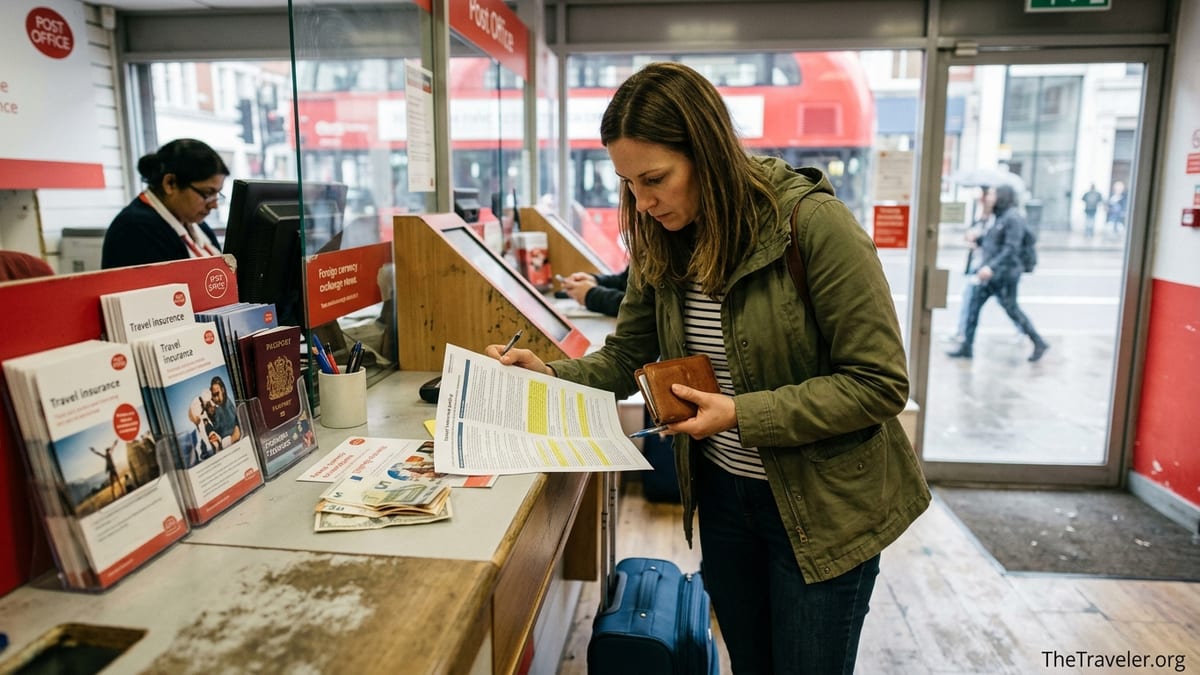
Understand the Different Levels of Post Office Cover
Post Office Travel Insurance currently offers tiered levels such as Economy, Standard and Premier, each with different limits and excesses. For example, policy documents show that Economy cover typically includes up to around £5 million for emergency medical treatment and £1,000 for cancellation, while Premier can offer up to about £15 million for medical and £5,000 for cancellation. These headline limits are important because they tell you, in broad terms, how much financial protection you are buying for the price.
To see why this matters, imagine a family of four booking a two‑week summer holiday to Orlando worth £5,500 in total. If they choose an Economy policy with cancellation cover of £1,000 per person, that might sound like enough at first glance. But if the booking is largely non‑refundable, they could find that a serious illness forcing them to cancel leaves them several thousand pounds out of pocket because the total trip cost is higher than the cancellation limit. In that scenario, moving to Premier cover, with higher cancellation ceilings, may cost a little more upfront but save a significant sum if something goes wrong.
Prices vary depending on age, destination and trip length, but independent reviews in early 2026 suggest a one‑week trip to the United States for a traveller in their 30s can cost roughly between £50 and £100 with the Post Office, depending on the cover level and add‑ons chosen. For a short city break in Europe, the Economy option may be adequate if you are mostly concerned about basic medical and baggage cover, while a more expensive, complex trip is often better matched with Standard or Premier. The key is to compare the cover limits with the real cost and risk profile of your own holiday, rather than just picking the cheapest price on the screen.
It is also worth checking whether you need a single‑trip or annual multi‑trip policy. Post Office single‑trip cover can insure one journey of up to 365 days for travellers up to a certain age, while annual policies cover multiple shorter trips across a year. Someone who flies to Spain every Easter, takes a summer break in Greece and visits family in Ireland at Christmas may find that a multi‑trip policy works out better value than buying three separate single‑trip policies, provided each individual trip falls within the duration limits set for their age group.
Check Medical Cover, Pre‑Existing Conditions and Exclusions
The most expensive claims in travel insurance almost always involve medical emergencies abroad. Post Office policies typically include high overall medical limits, frequently quoted in the tens of millions of pounds, which should be enough for most realistic scenarios. However, what really determines whether a claim is paid is not just the limit but whether any relevant medical conditions were fully disclosed and accepted when you bought the policy. The Financial Ombudsman Service continues to receive many complaints where insurers decline claims because of missing or inaccurate medical information.
Consider a traveller in their 60s with high blood pressure and type 2 diabetes who buys a Post Office Standard policy for a cruise in the Caribbean. If they fail to declare both conditions during the online screening process, then suffer a related complication at sea requiring an emergency air evacuation to a US hospital, the insurer could argue that the claim falls outside cover. Even if the policy advertises up to £10 million medical cover, non‑disclosure of conditions may mean the policy provides no help with what could easily be tens of thousands of pounds in costs. To avoid this, answer every medical screening question carefully, and call the medical screening line if you are unsure whether something counts as a pre‑existing condition.
Exclusions also matter for everyday scenarios. A common example is alcohol‑related incidents. If you fall after drinking heavily on a night out in Prague and break your ankle, the insurer might reduce or refuse your claim if the medical report suggests alcohol was a major factor. Similarly, many policies exclude claims arising from travelling against Foreign, Commonwealth & Development Office advice, or from ignoring medical advice not to travel. Before buying any Post Office policy, read the sections on general exclusions and medical exclusions and check whether they realistically fit how and where you plan to travel.
In addition, check how the policy handles ongoing investigations or tests. For instance, if you are waiting for hospital results or a consultant appointment when you take out the policy, the insurer may treat any related claim as foreseeable and therefore not covered. If you are unsure, it is often better to contact the medical screening team and obtain written confirmation that they accept your situation on cover terms, even if this increases the premium slightly.
Look Closely at Cancellation, Curtailment and Trip Value
Cancellation and curtailment cover is where many travellers either under‑insure themselves or misunderstand what events are actually covered. Post Office policies typically offer varying cancellation limits according to the level of cover: broadly speaking, Economy around £1,000, Standard a few thousand pounds and Premier towards £5,000 per person. These figures matter because cancellation cover is designed to pay up to the amount you insured if you must cancel or cut short your trip due to specific reasons outlined in the policy wording.
Imagine you book a ski holiday for £1,800 per person in the French Alps, including flights, accommodation and lift passes. If you choose an Economy policy with £1,000 cancellation cover, you are effectively self‑insuring the remaining £800 per person. Should you break a leg in the UK a week before your departure and be declared unfit to travel, the insurer would not simply pay the full trip cost; it would be limited to the cancellation amount set out in the schedule. For many travellers, it is safer to select a policy where the cancellation sum insured matches, or slightly exceeds, the non‑refundable total of the trip.
You should also check which reasons for cancellation and curtailment are accepted. Typical covered reasons include serious illness or injury, death of a close relative, being called for jury service, certain types of redundancy, or your home becoming uninhabitable because of events like fire or flood. What they usually do not cover is simply changing your mind, fear of travelling or dissatisfaction with travel arrangements. Post Office policies follow this general market pattern, so it is unwise to rely on insurance to bail you out of a holiday you no longer feel like taking due to voluntary changes in plans.
Timing is important. Travel insurance cover for cancellation usually starts from the date you buy the policy, not the date you travel. In real terms, if you book a £4,000 family holiday in January for an August departure and only buy your Post Office travel insurance in July, you have effectively gone six months with no cancellation protection. If an insured event such as a serious illness occurs in March, you will not be able to claim on a policy that was not yet in force. Buying cover as soon as you commit non‑refundable money to a trip is therefore a key practical step that many travellers overlook.
Understand Excesses, Optional Excess Waiver and Real Claim Costs
Every travel insurance policy includes an excess, which is the amount you agree to pay yourself towards a claim. For Post Office Travel Insurance, the standard excess varies by cover level. Recent product information indicates that Economy policies may carry an excess of around £125, Standard close to £99 and Premier roughly £50 on many claim types. Some claims such as small travel delay benefits can have no excess, but larger sections like medical expenses, baggage and cancellation often do.
In practice, this means if you have a Standard policy and make a £400 claim for stolen belongings in Barcelona, you might receive only about £301 after a £99 excess is deducted. For a £150 medical bill for a minor clinic visit in Greece, a £99 excess may leave you with only £51 reimbursed. Understanding the excess amount before you buy allows you to judge whether claiming is worthwhile for smaller incidents, or whether you would effectively be self‑insuring minor losses.
The Post Office also offers an optional excess waiver on some policies, where you pay a higher premium to remove or reduce the excess when you claim. This can be attractive for travellers taking high‑risk or high‑cost trips, such as a long‑haul tour covering several countries in Asia, where the risk of multiple small claims is higher. For example, a couple planning a six‑week backpacking trip through Thailand, Vietnam and Cambodia might decide that paying a modest additional premium for an excess waiver is worthwhile, particularly if they are concerned about medical bills for minor injuries, repeated flight delays or lost belongings that would otherwise fall close to the excess threshold.
Before deciding on an excess level or waiver, compare the cost difference at checkout and consider your own risk tolerance. A younger traveller with a tight budget might accept a higher excess to keep the premium cheap, essentially betting that they will not need to claim for anything small. A family travelling with children and expensive kit such as car seats, prams and tablets may feel more comfortable with a lower excess, even if that increases the upfront cost of the policy.
Match Add‑Ons to Your Actual Trip: Winter Sports, Cruises and Gadgets
Like many big insurers, the Post Office offers a series of optional add‑ons to tailor cover to specific types of trips. Winter sports cover, cruise cover, gadget cover, enhanced disruption benefits and cover for certain higher‑risk sports or activities can usually be added for an extra premium. These options matter because standard policies often exclude the very things that create the biggest financial shocks in real‑world travel.
Take winter sports. A standard Post Office policy may not automatically cover you for skiing or snowboarding in the Alps. Without the winter sports upgrade, a broken leg on the slopes near Chamonix that requires helicopter rescue and mountain medical treatment may fall outside cover, even if those costs quickly run into thousands of pounds. With the correct winter sports add‑on, the policy is more likely to include piste closure benefits, ski equipment cover and liability for accidents on the slopes, as well as emergency medical treatment associated with those activities.
Cruise travellers should pay particular attention to cruise‑specific options. Many standard policies, including some from the Post Office, have limited or no cover for issues that are unique to cruises, such as missed ports due to bad weather, cabin confinement due to illness or the need for medical evacuation from a ship. A British couple taking a two‑week Mediterranean cruise who do not add cruise cover might find that being quarantined in their cabin with norovirus does not trigger the same benefits they expected, whereas the cruise extension often includes daily compensation and better support for medical evacuation or onward travel.
Gadget cover is also a key consideration. While Post Office policies include some baggage and valuables cover, the single‑item and total valuables limits may not be enough to fully cover a £1,000 smartphone, a new laptop and a high‑end camera in the same bag. In some cases an optional gadget pack provides higher limits, accidental damage cover and protection against theft from locked accommodation. A realistic example would be a digital nomad flying to Lisbon with a £1,200 MacBook, a £900 phone and a mirrorless camera. Without gadget cover, a theft from a hostel locker could exceed the standard valuables cap, leaving them several hundred pounds short of what they need to replace their gear.
Pay Attention to Destination, Trip Length and Who Is Covered
Post Office Travel Insurance, like most UK providers, splits the world into regions such as Europe, worldwide excluding the USA, and worldwide including the USA, Canada and certain Caribbean islands. Premiums rise as you move into higher‑risk or higher‑cost medical regions, especially North America, where healthcare costs can be extremely high. Buying a cheaper Europe‑only policy and then adding a few days in Florida on the same trip without changing your cover could result in a major gap, as any claim occurring in the United States would likely be declined.
Trip length is another area where details matter. The Post Office allows relatively long single trips for younger travellers, up to around 365 days for those aged up to and including 70 on some single‑trip policies, but this drops sharply for older ages. Travellers between 71 and 75 may be restricted to trips of around 90 days, and those over 76 to about 31 days. If a 74‑year‑old books a 100‑day winter escape to Spain but buys a policy capped at 90 days, they could find that they are completely uninsured for the last 10 days unless they arrange an extension or alternative cover.
Check who is actually insured on the policy. Post Office policies are sold on a per‑person or group basis, but not every traveller in your party is automatically covered unless named. A common scenario is a parent buying an annual family policy that covers themselves, a partner and dependent children under a specified age. If an 18‑year‑old son is travelling independently to Australia and is no longer classed as a dependent under the family policy wording, he may need his own separate policy. Similarly, grandparents travelling with grandchildren should confirm whether the kids are included or whether a different family or group policy arrangement is required.
Finally, think about side trips and activities. If you buy cover for “Europe” but book a day trip to Morocco from Spain, or a stopover in Dubai on the way to Asia, you should check whether those destinations fall within the same geographic zone. If not, you may need to adjust your cover region. The same applies to activities such as scuba diving, hiking at high altitude or volunteering with animals, which may or may not be automatically covered under a Post Office policy, depending on their risk profile.
Customer Support, Claims Handling and Complaints Trends
It is easy to focus solely on limits and prices when buying travel insurance, but customer support and claims handling are equally important. The Post Office brand is familiar on the high street, yet the travel insurance itself is underwritten and administered by specialist insurance partners. Independent reviews indicate that Post Office Travel Insurance holds decent ratings for value and policy features, but feedback on claims experiences is mixed, similar to many large insurers across the market.
The Financial Ombudsman Service has reported that complaints about travel insurance remain higher than pre‑pandemic levels, with common issues including disputes over non‑disclosed medical conditions, dissatisfaction with emergency assistance and disagreements about what counts as a missed flight or delayed departure. While these statistics are not specific only to Post Office policies, they offer a useful warning: most disputes arise where the customer’s expectations do not match the fine print of the policy wording. Taking time to read the key sections before you buy dramatically reduces the odds of a later dispute.
Consider a traveller whose outbound flight from Manchester to Dubai is delayed by five hours because of an airline technical problem. They may assume that they can claim for all associated costs from their travel insurer, but many policies, including those from the Post Office, only pay travel delay benefits after a specified minimum delay, often around four hours, and up to a daily or overall limit. They also typically require that any expenses are reasonable and not already compensated by the airline. If the airline provides hotel accommodation and meal vouchers, the insurer may only pay a modest fixed benefit or nothing at all, depending on the wording.
When assessing any insurer, it is worth checking how to contact the 24‑hour emergency assistance team, what documents are needed for claims and how to escalate complaints if necessary. Post Office claims guidance emphasises the importance of keeping booking invoices, medical reports, police reports for thefts and receipts for any emergency purchases. In practical terms, this means photographing important documents on your phone and backing them up securely before you travel, as you will often be asked for evidence when you later submit a claim.
The Takeaway
Buying Post Office Travel Insurance can provide solid protection for many UK travellers, particularly because the brand is widely recognised and policies offer high medical limits and a variety of useful add‑ons. However, the decision should never be based purely on price or brand familiarity. The real value lies in how well the specific policy you choose matches your health profile, the cost and nature of your trip, the destinations you are visiting and the activities you plan to enjoy while you are away.
Before you buy, work through a simple checklist. Confirm that the cancellation limit at least equals your non‑refundable trip cost. Disclose every relevant medical condition and medication, and ask questions if you are unsure. Check the excess amount and decide whether an excess waiver would give you peace of mind. Add winter sports, cruise or gadget cover where appropriate, and make sure your geographic region and trip length reflect your actual plans. Finally, familiarise yourself with how to contact emergency assistance and what documents you will need if you ever have to claim.
No insurance policy can remove all of the risks of travel, but an appropriately chosen Post Office policy can turn a crisis into an inconvenience rather than a financial disaster. By reading beyond the headlines and matching the cover to your real‑world needs, you can travel with far greater confidence, knowing that you have taken reasonable steps to protect yourself, your companions and your wallet.
FAQ
Q1. Is Post Office Travel Insurance good for long trips or gap years?
Post Office single‑trip policies can cover trips up to around 365 days for younger travellers, but the maximum duration drops with age, and annual multi‑trip policies usually cap each individual trip at much shorter lengths. For a gap year, check the age‑related limits and consider whether a specialist backpacker policy might offer more flexible terms for frequent moves and adventurous activities.
Q2. Does Post Office Travel Insurance cover Covid‑19 disruption?
Post Office policies have evolved since the pandemic, and many now include some cover for Covid‑19‑related medical expenses and certain cancellation scenarios, such as testing positive before departure. However, not all Covid‑related disruption is covered, especially broader travel restrictions or changes in government advice. Always read the most recent policy wording or summary for the specific Covid‑19 sections before you buy.
Q3. Do I need to tell the Post Office about minor medical issues like high blood pressure?
Yes. Even common conditions such as high blood pressure, high cholesterol or controlled diabetes usually need to be declared during the medical screening process. If you are taking regular medication or are under investigation for a condition, assume it must be disclosed unless the questions specifically say otherwise. Failure to disclose could lead to a claim being reduced or refused later.
Q4. Are my phone and laptop fully covered under standard Post Office baggage insurance?
Not necessarily. Standard baggage cover has single‑item and total valuables limits that can be lower than the combined value of modern electronics. A phone, laptop and camera can quickly exceed these caps. If you travel with expensive gadgets, look at adding Post Office gadget cover if available, or consider separate specialist gadget insurance to bridge any gaps.
Q5. When should I buy my Post Office Travel Insurance policy?
It is usually best to buy travel insurance as soon as you pay any non‑refundable costs for your trip, such as flights, accommodation or a cruise deposit. That way you are protected if an insured event, like serious illness, forces you to cancel before departure. Waiting until just before you travel leaves you exposed to unexpected problems that arise in the meantime.
Q6. Does Post Office Travel Insurance cover me if I miss my flight because of traffic?
It depends on the circumstances and the wording of your policy. Many policies cover missed departure if it is caused by specific, sudden events such as a major accident on the motorway or the breakdown of the vehicle you are travelling in, but not if you simply left home too late. You will usually need evidence such as police or breakdown reports to support this type of claim.
Q7. Will Post Office Travel Insurance pay out if my airline goes bust?
Cover for airline insolvency varies and is not always included as standard. In many cases, the first port of call is your card provider under chargeback or Section 75 rules, or the airline’s own bonding scheme if one applies. Some higher‑tier or add‑on covers may include limited protection for supplier failure, but you should not assume this is the case without checking the summary of cover.
Q8. Can I upgrade my Post Office policy to add winter sports or cruise cover after booking?
In some cases, yes, but it depends on the timing and the insurer’s rules. It is generally easiest and safest to add winter sports or cruise cover at the time you first take out the policy. If your plans change later, contact the Post Office or the insurer’s customer service team as early as possible to see whether an upgrade is permitted and what extra premium will apply.
Q9. What documents will I need if I have to make a claim?
You will typically need your policy schedule, booking invoices showing dates and costs, medical reports if you were treated by a doctor or in hospital, police reports for theft, and receipts for any emergency purchases or additional travel costs. Keeping digital copies of key documents and receipts while you travel makes it much easier to submit a complete claim promptly.
Q10. How do I complain if I am unhappy with a Post Office Travel Insurance decision?
First, use the formal complaints process outlined in your policy documents, giving the insurer a chance to review and respond. If you remain dissatisfied after receiving a final response, and you bought the policy in the UK, you can usually take your case to the Financial Ombudsman Service, which looks at whether the insurer has treated you fairly and followed its own terms and conditions.