


Every traveler eventually faces the same dilemma: do you drag your bags around for hours, or pay someone to look after them so you can enjoy your day? Radical Storage, a global luggage-storage network with thousands of partner locations in more than a thousand cities worldwide, has turned that choice into a simple tap on your phone. Yet the real question remains: when does paying for Radical Storage make more sense than carrying your bags yourself?
Get the latest updates straight to your inbox!
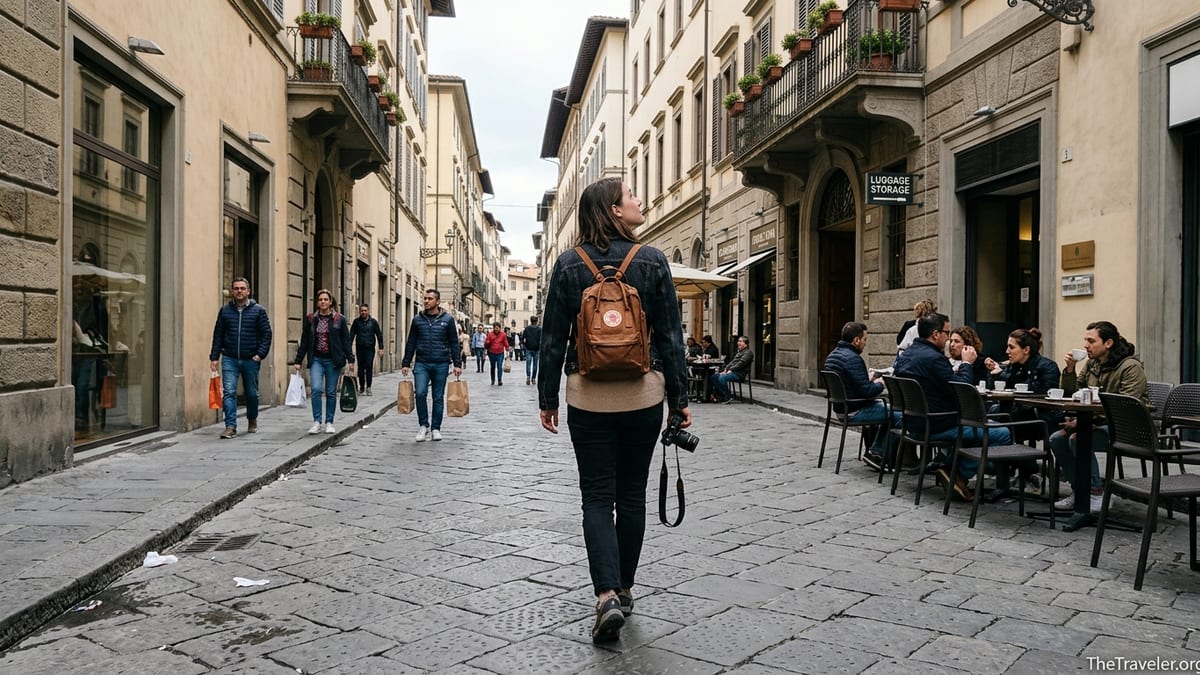
What Radical Storage Actually Offers Travelers
Radical Storage connects travelers with vetted local businesses such as hotels, cafes, and small shops that will hold luggage for a set period. The service is now present in over a thousand cities worldwide and has stored millions of bags, particularly in major hubs like London, Paris, Rome, New York, Barcelona, and Tokyo. Instead of hunting for a rare station locker, you open the app, choose a nearby “Angel” location, and pay a flat daily price per bag that is typically similar to or lower than traditional station lockers.
The appeal is as much about convenience as cost. Many Radical Storage locations are a short walk from major train stations and landmarks, which means you can step off a train at London King’s Cross or Roma Termini, drop your suitcase at a nearby hotel partner, and be on your way in minutes. For example, travelers passing through Milan’s Centrale station have reported using hotel partners a five-minute walk away to leave a single suitcase for the day, avoiding the crowds at the official station left-luggage office and often paying less for the same time window.
The company also emphasizes guarantees and support. Each stored bag is covered by insurance up to an advertised amount in local currency, and customer support is available if anything goes wrong with check-in, check-out, or directions. While travelers should always read the latest terms in the app before booking, this combination of coverage, location density, and online booking is what makes Radical Storage a serious alternative to simply dragging your suitcase from cafe to museum to station.
Layovers, Early Arrivals, and Late Checkouts
One of the clearest situations where paying for Radical Storage beats carrying your bags is the gap between accommodation and transport. Imagine arriving in Rome at 9 a.m. on an overnight train with check-in at your Airbnb not until 3 p.m. You could sit in a cafe for six hours guarding a roller bag and a backpack, or you could walk five minutes from Roma Termini to a Radical Storage partner, pay a modest per-bag fee, and spend the morning wandering through the Monti neighborhood hands-free. Many travelers use the service precisely for these awkward windows.
The same logic applies on departure day. Consider a couple checking out of a hotel near Barcelona’s Plaça de Catalunya at 11 a.m., with a 9 p.m. flight out of El Prat. They want to visit the beach, have a proper lunch, and maybe tour the Gothic Quarter. Hauling two 23-kilogram suitcases across the metro and into busy restaurants is unrealistic. Using Radical Storage, they can stash both bags at a partner store near the Aerobús stop for the whole day. The cost, spread across ten free hours, often works out to the price of a couple of coffees each, while the value of a stress-free final day in the city is far higher.
Layovers in unfamiliar cities are another classic scenario. Travelers on long daytime layovers in places like Barcelona, New York, or Tokyo often want to escape the airport or station but are stuck with checked bags. Instead of remaining landside in a terminal for eight hours, a visitor to New York might bus into Midtown and use a Radical Storage partner near Port Authority to hold a suitcase while they walk the High Line or visit Times Square. At that point, the storage fee is buying you a day of sightseeing that would not have been practical otherwise.
When Storage Wins on Time, Comfort, and Safety
Beyond the obvious check-in and checkout gaps, there are subtler calculations where Radical Storage can be worth the money. Time is one of them. In dense city centers, walking speed drops sharply when you are maneuvering a large suitcase through crowds or up and down metro stairs. A solo traveler in Paris who wants to see both Montmartre and the Latin Quarter in a single afternoon will realistically cover less ground if they are dragging a large roller bag. Storing that bag near Gare du Nord or Châtelet can easily return an extra museum or viewpoint to your itinerary.
Comfort matters just as much. In cities with lots of stairs such as Lisbon or hilltop neighborhoods like Istanbul’s Galata, carrying luggage quickly becomes exhausting. Even a backpacker might find that a fully loaded 60-liter pack turns a pleasant walk into a slow slog. In these conditions, paying for a few hours of storage near a metro hub is like paying for an upgrade in mobility. You will arrive at your evening bus or train less sweaty, less tired, and more alert, which can be a real safety benefit when you still need to navigate a big station at night.
Security is another key factor. Tourist-heavy areas like Rome’s Termini, Barcelona’s La Rambla, or the surroundings of Paris’s major stations are notorious for petty theft. If your travel day involves juggling passports, tickets, and phones while watching two heavy bags, your risk of a distraction theft rises. Storing large bags in a staffed shop or hotel reception lets you keep only a small daypack in crowded spaces. For some travelers, especially solo visitors or older travelers, that peace of mind is easily worth the storage fee.
Comparing Radical Storage With Lockers, Hotels, and DIY Options
Before deciding to pay for Radical Storage, it is worth comparing it with the alternatives available on any given day. Many European rail stations such as Paris Gare du Nord, Amsterdam Centraal, or Zurich Hauptbahnhof still offer coin-operated or electronic lockers. These are convenient if you are already at the station and they are not full. However, lockers often charge by size and hour, and larger bags may not fit at all. In some cities, like certain UK stations or New Orleans on Amtrak, traditional lockers have been removed or replaced by staffed luggage rooms with flat fees that can actually be higher than app-based services.
Hotels can be a good free option, but with limitations. If you are already staying at a hotel, most properties will keep bags behind reception before check-in or after checkout at no extra cost, although tipping staff is customary in some countries. Where Radical Storage becomes competitive is when your transit hub and your accommodation are far apart. A traveler staying in Long Island City in New York but catching a bus from Manhattan might not want to ride the subway back and forth just to use hotel storage. In that case, paying to store a bag near the bus terminal in Manhattan lets them explore right where they need to be later.
DIY options like carrying every bag all day or asking a random cafe to watch your suitcase have hidden costs. Carrying everything may save money but can lead to missed experiences: skipping a viewpoint because there are too many stairs, or cutting museum time short because you are worried about your bag in an unattended corner. Leaving a bag informally in a bar or cafe can also raise issues of responsibility if something goes missing. Radical Storage’s model of vetted partners with clear booking records and insurance is purpose-built to avoid those gray areas.
Real-World Price Scenarios: When It Adds Up
While exact prices change over time and by city, Radical Storage generally uses a flat rate per bag per day with no hourly breakdown. That is important when you compare it with options that add charges every hour or charge by locker size. For example, in some European stations, a large luggage locker for a full day can exceed the cost of leaving the same suitcase at a nearby hotel or shop listed on a storage app. Travelers in Oxford have reported paying roughly the cost of a simple lunch to leave a suitcase all day in a small Indian diner near the station that works with Radical Storage, which was cheaper and closer than the limited official options.
For multi-day needs, storage apps can still be competitive. A traveler leaving a single suitcase in Milan for eight days found that some locker-style services with per-bag minimums and fees for “up to two bags” worked out more expensive than a Radical Storage partner hotel a few minutes from Milano Centrale. When your trip involves leaving seasonal gear behind for side trips, an arrangement like that can save both money and hassle compared with carrying everything to every destination.
You should also factor in local transport. If free storage is only available at your hotel, but your activities and onward transport are in a different part of the city, the extra metro or rideshare journeys both cost money and consume time. Paying a modest fee to store your bag directly next to where you plan to spend the day can offset those extra transfers. Even when Radical Storage is slightly more expensive than the absolute cheapest locker, the saved subway ride or taxi and the regained sightseeing time can make the overall equation positive.
City Snapshots: How Travelers Use Radical Storage in Practice
In London, visitors often encounter the time gap problem around major rail terminals. Suppose you arrive at London Victoria from Gatwick mid-morning, but your short-term rental in Shoreditch is not available until late afternoon. Rather than dragging two large suitcases on the Victoria line and Overground with multiple staircases and busy platforms, you can drop them at a Radical Storage partner near Victoria. With bags sorted, you might walk to Buckingham Palace, explore St James’s Park, or have lunch in Belgravia before heading across town lightly with just a backpack.
In Paris, the system can turn a messy transfer into an enjoyable day. A traveler catching a night train from Gare de l’Est but checking out of accommodation near the Eiffel Tower at 11 a.m. could use the app to find storage close to Gare de l’Est. They ride the metro once with bags, drop them at a nearby hotel or shop, and then have the entire afternoon free to explore the Canal Saint-Martin area or visit the Marais. When departure time approaches, they simply walk five minutes back to collect their suitcase and roll it straight into the station.
Outside Europe, similar patterns appear. In Seoul, visitors who find coin lockers full at the main station sometimes turn to app-based storage to hold larger checked luggage for the day while they explore nearby neighborhoods. In New York, travelers arriving by intercity bus at Port Authority or by train at Penn Station often use Radical Storage or similar services in Midtown to make it feasible to attend a Broadway matinee or walk Central Park without suitcases in tow. In each case, the value lies in unlocking experiences that might otherwise be too awkward with luggage.
How to Decide: A Simple Framework for Travelers
Deciding whether to pay for Radical Storage can be boiled down to a few practical questions. First, ask how many hours you will actually gain. If storing your bag turns three dead hours in a station waiting room into three hours in a museum, a park, or a neighborhood you care about, that is already a strong argument. Next, consider your route. If you can drop the bag once, in a central location near your onward transport, and then move freely all day, you avoid doubling back and wasting time and tickets.
Then think about your physical comfort and any mobility issues. A 25-year-old solo backpacker might be willing to carry a bag around Prague’s old town for half a day to save money, but a family with children or an older couple might find that same situation stressful and tiring. In hot, humid cities, the effort of moving heavy baggage between air-conditioned spaces can quickly sap your energy. In those contexts, the cost of storage is small compared with the cost of a miserable day and the risk of tempers flaring or mistakes being made.
Finally, weigh security. If your day plan involves crowded markets, festivals, or public transport at rush hour, it often makes sense to shed any nonessential bag. A small crossbody or daypack is much easier to watch than a rolling suitcase and a duffel bag. If Radical Storage lets you enter those environments with fewer valuables on display and your main luggage insured in a staffed location, the fee effectively buys a lower-risk travel day.
The Takeaway
Paying for Radical Storage makes the most sense when it buys you back time, comfort, and safety that you would clearly lose by carrying your bags yourself. Typical examples include long gaps between check-in and checkout, daytime layovers in major cities, days that involve climbing hills or navigating crowded metro systems, and itineraries where your hotel is far from your final transport hub. In these cases, the combination of vetted partner locations, straightforward pricing, and included insurance turns a small expense into a meaningful upgrade to your travel experience.
On the other hand, if your hotel is right next to your station, you are traveling light, and your schedule does not require much backtracking, you might not need any paid storage at all. The real power of services like Radical Storage comes when they unlock experiences you would otherwise skip: a final stroll along a riverfront, an unhurried museum visit, or a relaxed dinner before a late flight. Travelers who learn to recognize those moments and value their own time tend to see luggage storage less as an extra cost and more as a tool for making each travel day count.
FAQ
Q1. Is Radical Storage safe to use for valuable luggage?
Radical Storage partners are vetted local businesses such as hotels and shops, and bookings include insurance up to a specified amount per bag. While no service can remove all risk, using an established, staffed location with a clear digital record is generally safer than leaving bags unattended or in informal arrangements. Always keep irreplaceable items like passports, cash, and electronics in a small bag you carry with you.
Q2. How much does Radical Storage usually cost compared with station lockers?
Prices vary by city and over time, but Radical Storage typically charges a flat daily rate per bag that is competitive with or lower than many large station lockers, especially for bigger suitcases. Because the fee is not broken into hourly segments, it can work out cheaper for full-day storage than lockers that charge in shorter blocks.
Q3. When should I choose my hotel’s luggage room instead of paying for storage?
If your hotel or guesthouse offers free luggage storage and it is near where you plan to spend the day and catch your onward transport, the hotel option makes the most sense. Paid storage becomes more attractive when your hotel is far from the areas you want to visit or from the station or airport you are leaving from, because it can save you extra trips across the city.
Q4. Can I store luggage for several days with Radical Storage?
In many cities, partner locations accept multi-day storage, although maximum durations and conditions vary. This can be useful if you want to leave a suitcase in a hub like Milan or Barcelona while you take a short side trip with a smaller bag. Always check the specific location’s details in the app and confirm opening hours for both drop-off and pickup days.
Q5. What happens if I am late collecting my bag?
If you realize you will arrive close to closing time, contact the storage partner or Radical Storage support through the app as soon as possible. Some locations may be flexible by a few minutes, while others have strict closing hours. In many cases, arriving significantly late may mean collecting your bag the next day and potentially paying for an extra day of storage.
Q6. Are there size or weight limits for bags stored with Radical Storage?
Most Radical Storage locations accept standard suitcases, backpacks, and duffel bags. Oversized items such as surfboards or very large sporting equipment may not be accepted everywhere, and extremely heavy items could be refused for safety reasons. Check each partner’s description in the app for any listed restrictions and, when in doubt, message them before booking.
Q7. Is Radical Storage better for solo travelers or for families and groups?
Both can benefit, but the value is often greatest for families and groups. A family with multiple suitcases and strollers will find navigating stairs, metros, and crowded sidewalks much easier if most of their luggage is stored for the day. For solo travelers carrying only one small bag, the decision is more about personal comfort and how much they value moving quickly and freely.
Q8. How far in advance should I book a Radical Storage spot?
In many cities you can book on the same day, even shortly before arrival, because the system shows real-time availability. However, during peak travel seasons, big events, or in smaller cities with fewer partners, it is wise to reserve earlier in the day to ensure you have a confirmed spot near your station or main sights.
Q9. Does Radical Storage operate inside airports and train stations?
In some destinations, Radical Storage partners are located just outside or within a short walk of major terminals and stations rather than inside the building itself. That often means you can leave the terminal, walk a few minutes to a nearby hotel or shop, and store your bag in a less crowded environment. Always check the address and description in the app to see exactly where the location sits relative to your arrival or departure point.
Q10. How do I decide if paying for storage is worth it on a particular day?
Ask yourself three questions: How many extra enjoyable hours will I gain by being luggage-free, how much physical effort or discomfort will I avoid, and does storage reduce my risk of loss or theft today? If the honest answer to all three is significant, then paying for Radical Storage is likely a smart investment in the quality of your travel day.