


More news on this day
Russia’s Nordwind Airlines is maintaining a monthly passenger route between Moscow and Pyongyang, preserving one of the world’s rarest international air corridors into tightly controlled North Korea.
Get the latest news straight to your inbox!
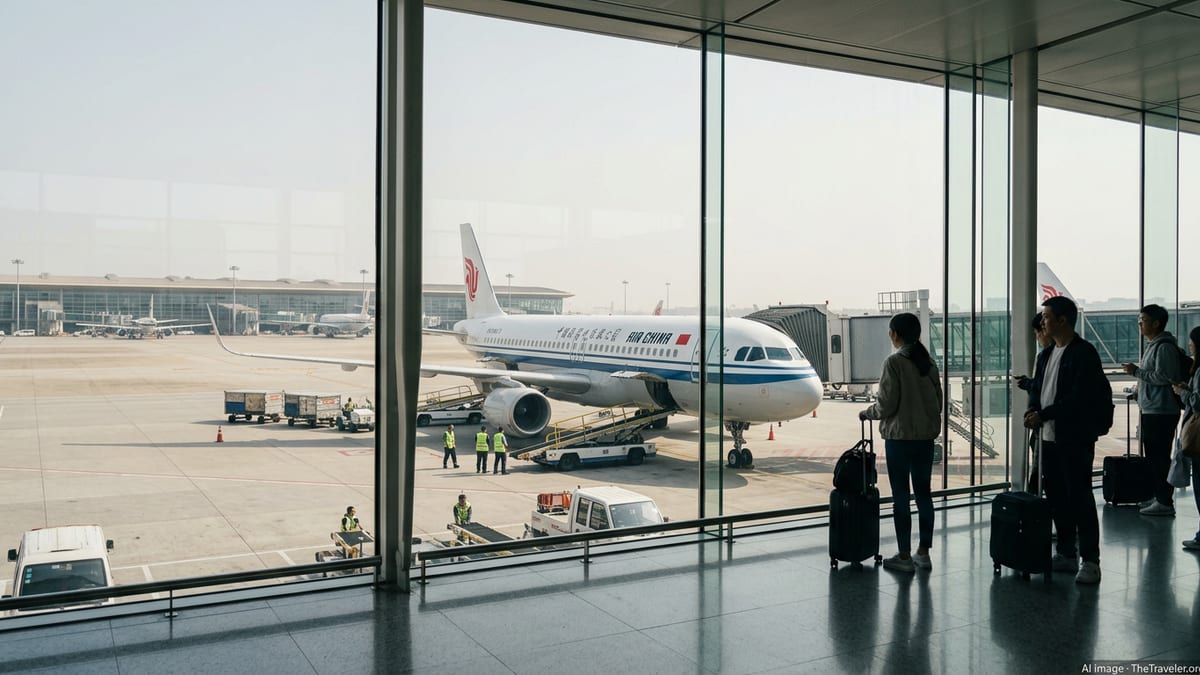
A rare gateway into isolated North Korea
The Moscow–Pyongyang service operated by Nordwind Airlines has emerged as one of the few regularly scheduled international air routes into North Korea, a country that only gradually reopened its borders after pandemic-era closures. Publicly available flight data and specialist aviation coverage indicate that the service, which launched in July 2025, continues to appear in schedules as a limited but recurring connection between the two capitals.
North Korea’s air links remain sparse even after the resumption of some services to Beijing and Vladivostok. Against that backdrop, the continuation of Nordwind’s Moscow flights gives Russia an additional channel into Pyongyang at a time when rail and overland routes remain tightly managed and largely oriented toward trade and official delegations. For international travelers, the route is primarily relevant to those joining tightly controlled tour programs, often arranged in coordination with Russian or regional agencies.
Travel industry material describing the connection emphasizes that the flight is not a mass-market tourism route but rather a niche product serving a narrow pool of passengers. Russia-based tour operators and aviation observers treat the monthly rotation as a specialist option, often bundled with escorted itineraries in Pyongyang and regional North Korean cities.
The service has also become a point of fascination for aviation enthusiasts, who track the aircraft on flight‑monitoring platforms whenever it crosses Russian, Chinese and North Korean airspace. Discussions on enthusiast forums portray the Nordwind flight as both a geopolitical symbol and a logistical curiosity, given the country’s limited radar coverage and the small number of foreign carriers allowed to land in Pyongyang.
From inaugural flight to sustained monthly pattern
Nordwind’s route began in mid‑2025, when Russian aviation authorities granted the carrier permission to operate direct services between Moscow’s Sheremetyevo Airport and Pyongyang. Initial announcements described the license as allowing up to twice‑weekly flights, but transport ministry briefings and subsequent reporting clarified that operations would start at a much lower frequency, with one rotation per month to “build stable demand” before any possible expansion.
Reports from the first departures in July 2025 depicted the service as the first regular direct air link between Moscow and Pyongyang in decades, following years in which travelers needed to route via Beijing, Shenyang or Vladivostok. Footage from Russian state media and specialist Korea‑focused outlets showed an almost celebratory atmosphere on board the inaugural flight, with officials, media crews and a mix of Russian and North Korean passengers.
Despite the ceremonial launch, subsequent coverage suggested that passenger loads were uneven, with some flights reportedly departing with significant numbers of empty seats. Aviation industry analysts interpreted this as evidence that the route was being sustained for political and strategic reasons at least as much as for commercial demand, particularly given the complex visa processes and limited tourism capacity on the North Korean side.
By 2026, data compiled by route‑tracking services and flight‑spotting communities indicated that the Nordwind rotation had settled into a pattern of roughly monthly operations, with departures advertised on specific dates and sold through the airline’s booking channels and partner agencies. That schedule aligns with the highly choreographed nature of North Korean tourism, which typically revolves around set‑date group tours rather than flexible individual travel.
Strategic ties drive an unusual air connection
The continued operation of Nordwind’s Pyongyang service is widely framed by analysts as part of a broader deepening of ties between Russia and North Korea. Since Russia’s 2022 invasion of Ukraine, Moscow has leaned more heavily on a small cluster of partners, with Pyongyang emerging as one of the most politically aligned. Reports from international media and think tanks describe expanded military and economic cooperation, from suspected arms transfers to new rail links and cross‑border trade initiatives.
In that context, the air route functions as more than a transportation link. It offers a recurring, predictable channel for delegations, technicians, students and select tourists to move between the two countries without transiting through China. The schedule, though limited, provides a framework around which official visits and high‑profile exchanges can be organized, complementing occasional special flights by North Korea’s own carrier, Air Koryo.
Observers note that the route also underscores Russia’s efforts to show that its aviation sector can still open new connections despite extensive Western sanctions. While most major global airlines have withdrawn from Russian markets, the launch and retention of a new international route, even one as niche as Moscow–Pyongyang, allows Moscow to present an image of resilience and alternative partnerships.
For North Korea, hosting a foreign airline on a regular schedule through Pyongyang International Airport highlights a cautious reopening to select partners. After several years in which almost all passenger traffic disappeared, the visible presence of a Russian jet on the tarmac provides a tangible sign of renewed external engagement, even as the country maintains strict controls over who can enter and exit.
What the route means for travelers and tourism
For most travelers, Nordwind’s monthly flights do not signal a new era of easy access to North Korea. Entry to the country remains highly restricted, with most visitors required to travel on pre‑approved group tours accompanied by local guides at all times. Tour organizers typically arrange flights as part of a package, and independent booking of tickets into Pyongyang is often discouraged or practically unworkable due to visa and permit requirements.
Nevertheless, the route changes the calculus for Russia‑based and some third‑country travelers. Instead of routing via Chinese hubs such as Beijing or Shenyang, visitors joining organized trips from Moscow can in some cases fly directly to Pyongyang in a single eight‑hour sector. For tour operators, that can simplify logistics, particularly for large groups, and may allow for itineraries themed around Russia–North Korea relations or Soviet‑era heritage.
The service also introduces a potential, though limited, alternative for North Koreans traveling outward, whether for study, work or official assignments. Travel data and academic research on North Korean mobility suggest that this group remains small, and most journeys are still arranged via China, but the presence of a regular Russian option could gradually reshape patterns among specific state‑approved categories of travelers.
Onboard experience reports from early passengers describe a standard medium‑haul service, with Russian‑language announcements and Korean‑language support, as well as tightly managed arrival procedures in Pyongyang. Photography restrictions, controlled airport transfers and mandatory group processing are all recurring themes in traveler accounts, reinforcing the reality that, despite the existence of a scheduled flight, North Korea remains one of the most regulated destinations on the global tourism map.
Outlook for one of the world’s rarest routes
Looking ahead, aviation analysts see several factors that could influence the future of Nordwind’s Moscow–Pyongyang link. Sustained demand will depend not only on tourist interest but also on the volume of official and semi‑official travel between the two countries. Any changes in international sanctions regimes, North Korea’s border policies or Russia’s aviation constraints could also reshape the viability of the route.
Industry publications note that Russia’s aviation regulator has kept in place approvals that would theoretically allow Nordwind to increase frequency beyond monthly operations, but there has been little sign so far of a shift to the twice‑weekly level envisaged in initial licensing. The cautious approach reflects both commercial realities and the unpredictability of North Korea’s own decisions on inbound visitors.
For now, the continuation of the monthly rotation underscores how geopolitical realignments can reshape even the most niche corners of the travel map. While the route is unlikely to become a mainstream option, its persistence offers a rare, regularly scheduled window into one of the world’s most closed states, and a reminder that air corridors often carry political weight far beyond the number of passengers on board.