


More news on this day
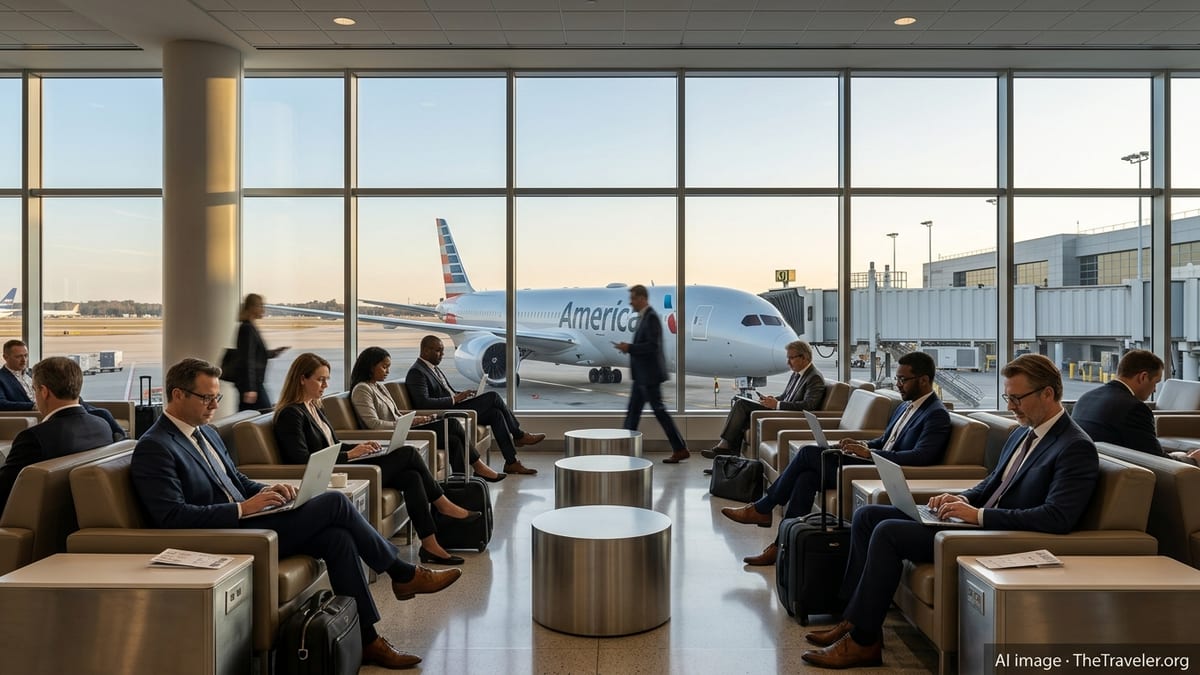
American Airlines is embarking on a broad cabin upgrade program that boosts the number of premium seats across its fleet and expands access to high-speed in-flight Wi-Fi, signaling a strategic tilt toward higher-yield travelers while seeking new revenue from onboard connectivity.
Get the latest news straight to your inbox!
Fleet-wide push toward more premium seating
Recent industry coverage indicates that American is in the midst of a multi-year effort to increase the share of premium seats on both its narrowbody and widebody aircraft. The initiative includes retrofitting older jets and taking delivery of new long-haul aircraft with larger business and premium economy cabins, while keeping overall seat counts broadly in line with previous configurations.
Analyses of the airline’s fleet plans show that refurbished Boeing 777-300ERs and incoming 787-9s and A321XLRs are being configured with more lie-flat business seats and expanded premium economy sections. This aligns with earlier announcements that American intended to phase out traditional international first class in favor of higher-density premium cabins that can generate stronger unit revenues on long-haul routes.
On domestic and short-haul international routes, American is also shifting capacity from smaller single-class regional jets to dual-class aircraft that feature first class and extra-legroom seating. Publicly available planning documents suggest that, over the next few years, the carrier expects the proportion of premium seats on many key business routes to rise significantly, particularly at major hubs such as Dallas Fort Worth, Miami and Charlotte.
Industry observers note that this move follows a broader trend among large U.S. airlines, which have increasingly focused on higher-yield customers to offset volatile fuel costs and competitive pressure on basic economy fares. By devoting more cabin space to premium products, American is aiming to capture a larger share of corporate and affluent leisure demand while maintaining price-sensitive travelers in main cabin.
Cabin refresh brings new interiors and amenities
The premium seat expansion is being accompanied by a wider cabin refresh that introduces new seat designs, finishes and inflight amenities. Coverage of American’s retrofit program describes brighter, more uniform interiors across fleet types, with upgraded seat coverings, redesigned headrests and improved storage solutions in premium cabins.
Long-haul aircraft are gaining updated business-class suites with closing doors on select models, along with redesigned premium economy seats that more closely resemble domestic first class. Reports indicate that these seats feature larger entertainment screens, expanded recline, leg rests and enhanced privacy elements, reflecting the growing importance of premium economy as a distinct and lucrative cabin.
In economy, American is not significantly expanding seat pitch, but it is working to standardize features such as personal device holders, power outlets and upgraded lighting. The airline has already introduced a rotating collection of premium amenity kits and new bedding in higher cabins, and recent program changes allow loyalty members to earn miles and points when they purchase cash upgrades into premium seats.
By bringing a consistent design language to both new and refurbished aircraft, American is attempting to reduce the variability that frequent flyers often encounter from one tail number to another. More predictable product attributes can make it easier to market specific cabins, particularly on high-profile routes where business travelers compare offerings among several competitors.
High-speed Wi-Fi rollout and new connectivity options
Alongside seating changes, American is continuing to expand high-speed satellite Wi-Fi across its mainline and regional fleets. Public information on the rollout indicates that hundreds of aircraft are now equipped with gate-to-gate connectivity, with the carrier positioning itself as one of the largest providers of high-speed inflight internet among U.S. airlines.
On dual-class regional jets, American is working toward full-fleet coverage with satellite-based systems that support streaming, VPN use and real-time messaging. Reports on the program highlight plans to complete Wi-Fi installation across this segment in the next phase of the upgrade effort, effectively bringing mainline-level connectivity to shorter routes that previously had limited or no service.
The airline has also introduced more flexible ways for customers to pay for inflight Wi-Fi, including options to redeem loyalty miles for access on certain narrowbody aircraft. At the same time, some trade publications note that American is experimenting with sponsored or ad-supported access tiers, giving travelers the choice between complimentary, lower-bandwidth connections and higher-speed paid plans.
Enhanced connectivity is a key component of the broader premium strategy. Business travelers increasingly expect the ability to work seamlessly in the air, and high-speed Wi-Fi can make premium cabins more attractive when paired with larger personal screens, power at every seat and quieter, more secluded seating layouts.
Competitive and financial motivations behind the upgrades
Industry analysts frame American’s premium and Wi-Fi upgrades as part of a wider effort to narrow profitability gaps with rivals that already derive a substantial share of revenue from high-yield passengers. Coverage from aviation trade outlets notes that the carrier has lagged some peers on metrics such as premium revenue per available seat mile, particularly on transatlantic and transpacific routes.
By devoting more floor space to higher-fare cabins, American is betting that incremental revenue from premium tickets and paid upgrades will outweigh the loss of a small number of economy seats on certain aircraft. Premium cabins typically provide a disproportionate share of total revenue on long-haul flights, and a modest increase in paid premium occupancy can have an outsized effect on route profitability.
There are, however, trade-offs. Cabin retrofits and Wi-Fi installations require aircraft downtime and substantial capital investment, and some consumer advocates have expressed concern that economy passengers may face tighter cabins or reduced access to lower fares as airlines chase premium yields. Environmental researchers have also pointed out that premium-heavy configurations can raise per-passenger emissions unless offset by improvements in aircraft efficiency.
For now, American appears focused on using premium seats and connectivity to reinforce its position on key business and leisure corridors, from transcontinental services to flagship international routes. The success of this strategy will depend on sustained demand from corporate accounts and high-spend leisure travelers, as well as the airline’s ability to deliver a consistently reliable onboard experience that justifies higher fares.
What travelers can expect as planes are reconfigured
As the retrofit program progresses, travelers are beginning to see more aircraft with revamped interiors, especially on long-haul and hub-to-hub routes. Passengers booked months in advance may notice equipment swaps that bring them upgraded cabins, while in some cases ongoing work can result in last-minute changes to seat maps as older layouts are phased out.
For those in premium cabins, the most visible changes will be larger suites or recliners, improved privacy and upgraded entertainment systems, supported by more reliable Wi-Fi and universal power. In economy, differences are subtler, centered on refreshed seat materials, better device storage and more consistent access to in-seat power and connectivity.
Loyalty program members and frequent flyers are likely to find more opportunities to use miles or cash for last-minute upgrades as the number of premium seats increases. At the same time, competition for the most desirable seats, particularly in new business-class suites, remains intense on popular routes during peak travel periods.
While the full scope of American’s premium and Wi-Fi transformation will take several years to complete, the direction is clear. The carrier is reshaping its cabins to lean more heavily into premium travel and always-on connectivity, aiming to capture travelers who place a high value on comfort, productivity and consistency at 30,000 feet.