


More news on this day
Frontier Airlines is rolling out first class style seats, inflight Wi‑Fi and richer loyalty perks as it tries to pivot from a bare bones ultra low cost carrier to an airline passengers actively choose, not just tolerate for the cheapest fare.
Get the latest news straight to your inbox!
A Budget Carrier Chases Premium Flyers
Publicly available information shows that Frontier has spent the past two years reshaping its product under a strategy it calls “The New Frontier,” centered on clearer pricing, bundled fares and more comfort at the front of the cabin. The airline introduced UpFront Plus seating in early 2024, offering extra legroom and a guaranteed empty middle seat in the first rows for an added fee, signaling a move toward European-style business class without abandoning a single cabin layout.
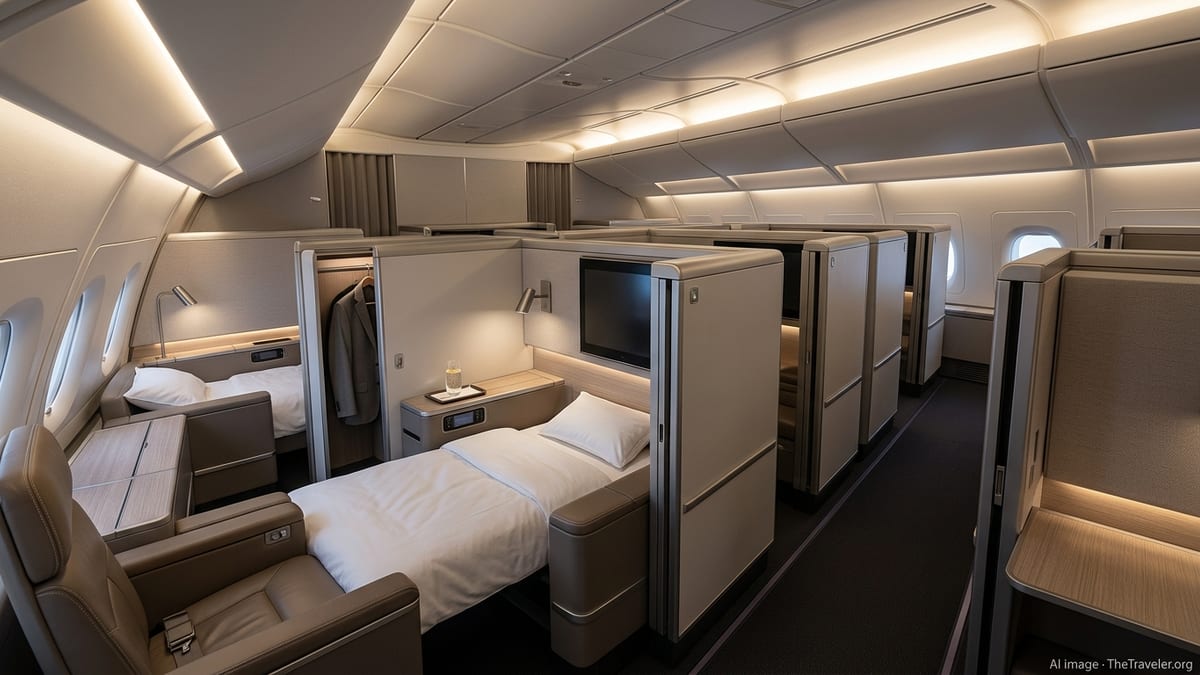
According to published coverage and company materials, that evolution is now advancing into true first class seating, with larger recliner-style chairs in the first two rows gradually replacing UpFront Plus through 2026 and 2027. The new seats are designed to compete with domestic first class products at major network airlines, but at a lower price point that Frontier describes as accessible to leisure travelers willing to pay more for comfort.
Frontier’s latest financial filings and earnings commentary outline a strategy built on remaining an ultra low cost carrier while becoming what executives describe as a “high value airline of choice.” The plan depends on persuading customers to trade up from the lowest bare fare into higher-yield bundles and premium seats, capturing more revenue per passenger without abandoning the airline’s reputation for inexpensive base fares.
First Class, Bundles and Wi‑Fi: What Is Actually New
Frontier’s new first class section is being introduced alongside a simplified set of fare bundles labeled Basic, Economy, Premium and Business. Basic remains a stripped-down option with limited inclusions, while Economy and Premium add elements such as advance seat assignments, bags and flexibility on changes. The Business bundle, aimed at frequent travelers, includes extras like two checked bags and an upgraded seat in the forward cabin.
Frontier’s seating guide indicates that first class will sit at the top of this hierarchy, offering the largest seats and most generous pitch in the first two rows. UpFront Plus, Premium and Preferred extra-legroom seats will continue behind it, creating a dense ladder of paid upgrades throughout the aircraft. The model closely mirrors trends seen at larger U.S. carriers, where a growing share of revenue comes from premium cabins and extra-legroom seats rather than standard economy.
Another major change is connectivity. Company disclosures and investor presentations highlight a fleetwide rollout of inflight Wi‑Fi, a significant shift for an airline that long eschewed onboard internet to keep costs low. Frontier has promoted its adoption of a high-speed satellite system as part of a broader digital upgrade that also includes a refreshed mobile app and website designed to steer customers toward bundles and add-ons more transparently.
The carrier is also leaning heavily into its Frontier Miles loyalty program, which was revamped into a revenue-based scheme that awards points on dollars spent rather than distance flown. Higher tiers increasingly come with upgrade opportunities, priority services and even complimentary companion travel on select fares, positioning the program as another lever to encourage customers to spend more per trip while feeling they are “getting it all for less.”
Can Ultra Low Cost and First Class Coexist?
Industry analysts quoted in travel and business media note that Frontier’s push into premium seating reflects a wider shift among low cost and hybrid carriers. Extra-legroom seats, blocked middle seats and front-cabin upgrades have proved to be lucrative, particularly as domestic first class fares have climbed across the industry in recent years. Frontier is effectively betting that many price-sensitive travelers will still pay a modest premium for more space and flexibility if the offer is simple and clearly explained.
However, the airline’s existing customer base is accustomed to rock-bottom fares and a pay-for-everything model. Online forums and passenger commentary suggest a mix of curiosity and skepticism, with some travelers expressing interest in affordable upgrades and others questioning whether a carrier known for tight seating and strict fees can deliver a first class experience that feels materially different.
The economics are delicate. Ultra low cost carriers rely on high seat density and strong ancillary revenue from bags, seat assignments and other fees. Introducing larger first class seats at the front of the cabin could reduce the number of revenue-generating seats per aircraft unless offset by substantially higher fares in the premium rows. Frontier’s recent filings emphasize continued focus on cost control and high aircraft utilization, signaling that any premium expansion must still fit within a rigid low cost framework.
There is also the question of operational reliability and service. Industry coverage frequently points out that schedule disruptions, tight turn times and limited interline agreements can weigh more heavily on passengers when flights are full and options are few. Even a generously sized first class seat may not be enough to sway travelers if they perceive the overall operation as less dependable than legacy competitors on the same route.
Competitive Pressures and Traveler Perceptions
Frontier’s shift toward premium offerings comes as several U.S. airlines rework their cabins and fare structures. Larger network carriers have expanded domestic first class and premium economy sections, while rival low cost and hybrid airlines are upgrading cabins and exploring new forms of extra-legroom or “business class lite” products. Frontier’s move into first class therefore positions it less as an outlier and more as a participant in a broader race to monetize the front of the plane.
At the same time, the competitive landscape in the ultra low cost segment has tightened, with carriers facing higher fuel, labor and airport costs. Public financial data show that many discount airlines are under pressure to improve margins after years of intense price competition. For Frontier, providing more ways for passengers to spend on comfort and flexibility may be essential to shoring up profitability without sacrificing the marketing appeal of low lead-in fares that draw attention in search results.
How travelers interpret these changes will be critical. If first class seats and enhanced perks are seen as genuine value upgrades that do not compromise affordability, Frontier may succeed in broadening its appeal to small business travelers, families and leisure customers willing to pay a bit more. If, instead, passengers view the new offerings as confusing or as a rebranding of existing fees, the strategy could struggle to gain traction.
Surveys and anecdotal feedback in consumer travel media already point to a persistent perception gap. Many travelers still associate ultra low cost brands with cramped cabins, aggressive ancillary charges and limited customer service options. Reversing that image while maintaining a bare-bones cost structure may prove as challenging as installing new seats or launching Wi‑Fi.
Will Travelers Actively Choose Frontier?
Frontier’s management has framed its current strategy around becoming an airline customers choose intentionally rather than reluctantly. That ambition goes beyond hardware upgrades into how the product is presented and delivered, from transparent pricing displays to policies on changes, cancellations and family seating. The airline has highlighted the elimination of traditional change fees on many bundled fares and introduced measures that guarantee adjacent seating for children and accompanying adults on all fare types when certain conditions are met.
Whether those moves resonate will depend on execution over the next two years as first class seating rolls out and Wi‑Fi installations ramp up. Travelers will be comparing not only the headline fare and seat size but also the booking journey, the clarity of rules and the experience when flights are delayed or plans change. For an airline seeking to shift its reputation, missteps in any of those areas could undermine the story of a more customer-friendly Frontier.
If the carrier can align its new premium hardware with consistent service and clear, predictable fees, it could carve out a niche as a hybrid option that blends ultra low base prices with accessible comfort at the top of the cabin. If not, first class seats and new perks may be remembered as cosmetic upgrades that did little to change why most passengers choose Frontier today: because it is cheap, not because it is their first choice.