


Tampa can be a surprisingly spread-out city for first-time visitors. Attractions are clustered along the downtown waterfront, in historic Ybor City, and in walkable pockets like Hyde Park and Seminole Heights, while the powdery Gulf beaches sit across the bay. Choosing the right base will shape how much time you spend exploring versus sitting in traffic or paying for rideshares. This guide breaks down the main areas visitors consider, with real-world examples of what it is like to stay in each, typical price ranges, and who each neighborhood suits best.
Get the latest updates straight to your inbox!
How to Choose the Best Area in Tampa for Your Trip
Before you dive into hotel names, think about how you plan to spend your days. If this is your first visit and you want to walk the Tampa Riverwalk, step into museums, and catch a Lightning game or a concert, Downtown Tampa and the adjacent Water Street district usually make the most sense. Families combining Busch Gardens, ZooTampa, and the Florida Aquarium may accept more driving in exchange for lower room prices. Travelers here for a convention or a short business trip often gravitate to Downtown, Water Street, or the Westshore and airport area for easy logistics.
Budget and style also matter. In peak winter season and around events, waterfront properties like Tampa Marriott Water Street and JW Marriott Tampa Water Street can easily run into the high 200s and 300s per night for standard rooms, while solid midrange chains near Tampa International Airport or in Westshore might hover closer to the mid-100s depending on dates. Boutique options, such as Hotel Haya in Ybor City or the Epicurean Hotel in South Tampa’s SoHo corridor, appeal to travelers willing to pay a bit more for character, good on-site dining, and nightlife on the doorstep.
Finally, consider whether you actually want a beach base. Tampa itself sits along the bay and riverfront rather than the open Gulf of Mexico. If your mental image of this trip involves walking straight from your hotel to a long sandy beach, you may be happier staying in nearby beach towns like Clearwater Beach or St. Pete Beach and visiting Tampa as a day trip.
Downtown Tampa: Riverwalk, Entertainment, and Convenience
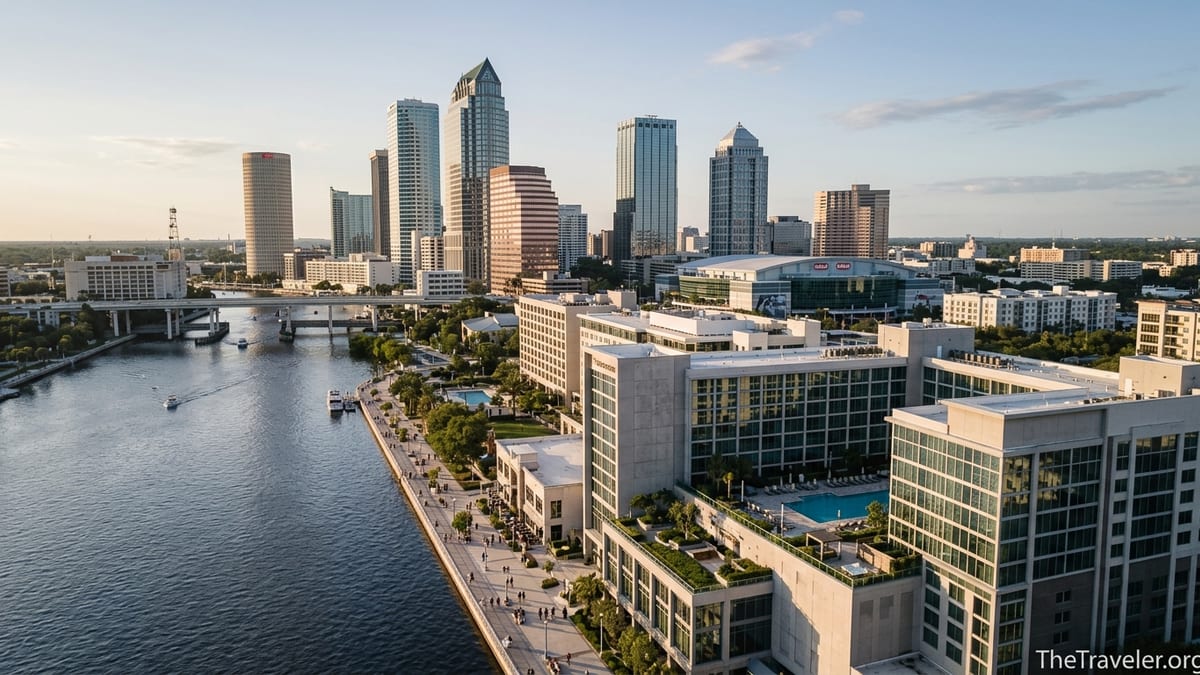
For a classic first-timer experience, Downtown Tampa is hard to beat. The compact core hugs the Hillsborough River and Garrison Channel, tied together by the Tampa Riverwalk, a paved waterfront promenade that connects the Tampa Museum of Art, the Straz Center for the Performing Arts, Curtis Hixon Waterfront Park, and the Sail Plaza near the convention center. Staying here puts you within walking distance or a short streetcar ride of the Florida Aquarium, Amalie Arena, Sparkman Wharf, and a growing cluster of restaurants, bars, and rooftop venues.
Downtown’s hotel stock ranges from businesslike to upscale. The Tampa Marriott Water Street, a high-rise property beside the convention center, offers river and city views, a pool deck, and direct Riverwalk access. Just upriver, Hotel Tampa Riverwalk provides a more relaxed vibe while still sitting right on the promenade. A bit inland, chains like Hilton Tampa Downtown, Embassy Suites near the convention center, and several Hyatt and Marriott select-service properties fill in the midrange, with nightly rates that often land in the 170 to 230 dollar range outside major events.
Downtown is particularly convenient if you are not renting a car. The free TECO Line Streetcar runs from the central business district through the Channel District to Ybor City, and many visitors pair it with rideshares for trips to Busch Gardens or the airport. The trade-off is cost and atmosphere. Weeknights can feel quiet once office workers go home, and parking fees add up if you do drive. If you want a lively, resort-style environment and are willing to pay for it, you may prefer staying in the newer Water Street neighborhood right next door.
Water Street Tampa: New, Walkable, and Upscale
Immediately southeast of the historic downtown core, Water Street Tampa has emerged as one of the city’s most desirable bases for visitors. This master-planned waterfront neighborhood focuses on wide sidewalks, ground-floor restaurants, and easy access to the arena and convention center. For first-time travelers who value walkability and a polished environment, it can feel like Tampa’s version of a modern, mixed-use urban district.
The big-name hotels here are firmly in the upscale and luxury categories. The JW Marriott Tampa Water Street and the Tampa Marriott Water Street are connected and effectively function as a combined resort footprint, with guests at one often able to use amenities like pools and facilities at the other. Typical rates for standard rooms at the JW often start around the high 200s and can climb much higher during Lightning games, concerts, or convention weeks, while the Tampa Marriott sometimes prices slightly lower. Nearby, the Tampa Edition brings a boutique-luxury feel, complete with a rooftop pool and Michelin-recognized dining, commonly commanding rates well above most other Tampa options.
Water Street works especially well if you are in town for events at Amalie Arena, a convention at the Tampa Convention Center, or if you simply want to park the car and forget about driving. From here you can stroll to Sparkman Wharf’s open-air food and beer garden concept, hop on the Riverwalk toward museums, or catch the streetcar into Ybor City for a night out. The downside is cost and a somewhat curated feel. Budget-conscious visitors or those seeking a more historic or bohemian atmosphere may feel more at home in Ybor City or Seminole Heights.
Ybor City: Historic, Nightlife-Heavy, and Character-Filled
Ybor City, northeast of downtown and easily reached by the TECO Line Streetcar, offers a very different experience. Once the center of Tampa’s cigar industry, it retains brick warehouses, iron balconies, and old factories converted into bars, clubs, and cigar lounges. During the day you can tour a small cigar workshop, browse independent shops along 7th Avenue, and grab Cuban sandwiches or café con leche at long-running spots. At night, the main strip turns into one of the region’s liveliest nightlife districts.
Accommodation here is a mix of boutique hotels and small inns. Hotel Haya, a design-forward property blending mid-century lines with Cuban influences, is the standout, typically pricing somewhere in the mid- to upper-200s per night in busy seasons. A few chain hotels sit just outside the most congested blocks, and there are also loft-style vacation rentals in converted historic buildings. Staying in Ybor gives you immediate access to nightlife and a walkable grid of bars, breweries, and restaurants, which appeals to younger travelers, festival-goers, and anyone visiting for concerts or club weekends.
The trade-off is noise and a more urban edge. On weekend nights, music and crowds can run late, and while many visitors have a problem-free stay, some blocks feel rowdier and less polished than areas like Hyde Park or Water Street. Families with young kids and very light sleepers often prefer to base themselves downtown or in Hyde Park, using the streetcar or rideshares to sample Ybor’s energy for an evening instead of sleeping in the middle of it.
Hyde Park and SoHo: Leafy, Upscale, and Local-Focused
Across the river from downtown, Hyde Park and the adjacent SoHo corridor form one of Tampa’s most pleasant residential-feeling bases. Streets lined with historic bungalows and shaded oaks lead toward Bayshore Boulevard, a long waterfront sidewalk prized by runners and walkers for its skyline and bay views. In the heart of the neighborhood, Hyde Park Village functions as an open-air lifestyle center, with boutiques, cafés, and restaurants that draw more locals than tourists.
Hyde Park does not have as many hotels as downtown, but the properties it does have are distinct. The Epicurean Hotel, part of a lifestyle collection, sits in the SoHo area and leans heavily into food and wine, with a culinary theater, a rooftop bar, and a highly regarded restaurant. Rates often align with upper-upscale city hotels, landing in the mid-200s and above. Smaller inns and vacation rentals in the surrounding streets offer alternatives for visitors who want to live like a local, especially for longer stays.
This area is ideal if you want a quieter base with walkable dining and nightlife but do not need to be right on the Riverwalk. It is a short rideshare or scooter ride into downtown, Water Street, or Ybor City, and shuttles and small transport services sometimes link Hyde Park to other core neighborhoods. The compromise is that you will likely rely on cars or rideshares for most sightseeing, and first-time visitors without a vehicle may find downtown slightly more convenient.
Westshore and Tampa Airport: Practical, Connected, and Shopping-Friendly
Just west of downtown, the Westshore district and Tampa International Airport area form the city’s main commercial and hotel cluster outside the urban core. Tampa International sits less than five miles from downtown and is connected by interstates and arterial roads, so airport hotels are not as isolated as in some cities. Many properties offer free shuttles, and ride-hail trips into downtown or Water Street are typically short unless traffic is very heavy.
For visitors focused on shopping at International Plaza and Bay Street or WestShore Plaza, attending events at Raymond James Stadium, or needing quick airport access for early or late flights, this area makes logistical sense. Brand-name hotels are everywhere, ranging from full-service properties with pools and meeting space to midscale chains with free breakfast. Price-wise, it is often possible to find standard rooms in the 140 to 200 dollar range outside of major game days, concerts, or peak conventions, which undercuts many waterfront hotels closer to downtown.
The main drawback is atmosphere. While some hotels have attractive pools overlooking small bays or lagoons and a handful of restaurants sit within walking distance of certain clusters, Westshore still feels like a classic business and shopping district with wide roads and big parking lots. First-time vacationers who imagine strolling along the water or wandering historic streets may feel disappointed if they base themselves here for an entire trip, but for a quick stopover or a budget-conscious visit focused on sports and shopping, the convenience is hard to ignore.
Seminole Heights: Hip, Residential, and Food-Centric
North of downtown along the Hillsborough River, Seminole Heights has evolved into one of Tampa’s trendiest neighborhoods. It is known for early-20th-century bungalows, large canopy trees, and an independently minded dining and bar scene. Breweries, coffee roasters, food trucks, and creative restaurants have clustered along Florida Avenue and nearby streets, attracting locals who prefer a less polished, more bohemian atmosphere than you will find in Water Street or Westshore.
Accommodation options in Seminole Heights are more limited and skew toward small-scale. You will find a handful of renovated motels, bed-and-breakfasts in historic homes, and short-term rentals tucked into residential blocks. These can be excellent bases for travelers who want to explore Tampa’s food scene and feel embedded in a neighborhood where locals actually live, but they require more research. Bedding quality, parking, and proximity to busy roads vary widely, and nightly rates can range from budget-friendly to surprisingly high depending on how stylish and newly renovated a particular property is.
Staying in Seminole Heights works best if you are comfortable driving or taking rideshares to major attractions. Busch Gardens and ZooTampa are a relatively short drive away, and downtown is close enough for evening Riverwalk strolls or arena events. However, public transit options are limited, and there are fewer big-box conveniences within immediate walking distance compared with downtown or Westshore. For first-timers who love craft beer, independent restaurants, and a lived-in city feel, it can be an appealing alternative to more corporate hotel zones.
Beach Alternatives: Clearwater Beach, St. Pete Beach, and Beyond
Many travelers discover only after booking that central Tampa does not sit directly on a broad ocean beach. If your priority is waking up to the sound of waves and spending full days on sand, basing yourself on the Gulf Coast and visiting Tampa as a day trip may be the right call. The region’s best-known beaches, including Clearwater Beach and St. Pete Beach, lie roughly 30 to 60 minutes west of central Tampa by car, depending on traffic and exactly where you stay.
Clearwater Beach offers a wide, lively strand with a family-friendly feel, a pier with nightly sunset festivities, and a dense strip of hotels and resorts facing the Gulf. You will find everything from large full-service properties with pools and on-site restaurants to smaller motels and condo-style suites. In busy spring and summer periods, nightly rates at well-located waterfront resorts can run from the upper-200s into the 400s and beyond, though slightly inland properties or those across the street from the sand may price lower.
Farther south, St. Pete Beach and nearby communities like Treasure Island and Madeira Beach skew slightly more relaxed, with a mix of classic Florida motels, renovated boutique hotels, and big-name resorts lined up along the barrier islands. Travelers who choose a beach base typically rent a car so they can spend one or two days in Tampa visiting attractions like the Florida Aquarium, zoo, or Ybor City. This approach can work well for longer trips where you want both city and beach without checking in and out of multiple hotels, but it does mean more driving than if you stay in downtown Tampa itself.
The Takeaway
For first-time visitors, the simplest rule is this: if you want to focus on Tampa’s urban waterfront, arenas, museums, and historic districts, stay in or very near Downtown or Water Street. If you care most about a leafy neighborhood with local restaurants and nightlife, Hyde Park, SoHo, and, for more adventurous travelers, Seminole Heights and Ybor City are compelling options. If your priority is convenience to the airport, stadiums, and shopping, Westshore delivers value and logistics, even if it lacks the charm of older neighborhoods.
Those who picture a classic Florida beach vacation should consider basing themselves on the Gulf beaches and visiting Tampa as a side trip, rather than the other way around. Because driving times across the region can be longer than they appear on a map, building your itinerary around where you stay can save you hours over the course of a visit.
Tampa’s neighborhoods each tell a different story. By matching your base to the trip you actually want, you can spend more time wandering the Riverwalk, savoring Cuban coffee in Ybor, or watching the sun sink over the Gulf, and far less time wondering if you picked the wrong part of town.
FAQ
Q1. What is the best area to stay in Tampa for first-time visitors?
The best all-around base for most first-time visitors is Downtown or Water Street, which put you on the Riverwalk and within easy reach of the Florida Aquarium, Amalie Arena, and many museums and restaurants.
Q2. Is Downtown Tampa walkable?
Yes. Downtown Tampa is one of the city’s most walkable areas, especially along the Riverwalk, with museums, parks, and many hotels connected by a continuous waterfront path.
Q3. How far is Tampa International Airport from Downtown?
Tampa International Airport sits roughly 15 to 20 minutes by car from Downtown under normal traffic, and many visitors use rideshares or hotel shuttles instead of renting a car just for this segment.
Q4. Is Ybor City safe to stay in?
Ybor City is a popular historic and nightlife area with many visitors. It has a lively, late-night scene, so it suits travelers comfortable with urban environments who choose centrally located, well-reviewed hotels.
Q5. Where should I stay if I want nightlife but a quieter place to sleep?
Consider staying in Downtown, Water Street, or Hyde Park, then using the streetcar or rideshares to visit Ybor City and the SoHo bar scene, returning to a calmer hotel area at night.
Q6. What area is best for families visiting Busch Gardens?
Families visiting Busch Gardens often choose budget-friendly hotels in North Tampa, near the park, or base in Downtown or Westshore and drive, trading slightly longer commutes for more dining and hotel choices.
Q7. Are airport hotels in Tampa a good option for tourists?
Airport and Westshore hotels can be a smart choice for short trips, early flights, or travelers focused on shopping and sports events, though they lack the waterfront atmosphere of Downtown and Water Street.
Q8. How far is Tampa from the nearest beaches?
Popular Gulf Coast beaches like Clearwater Beach and St. Pete Beach generally sit about 30 to 60 minutes by car from central Tampa, depending on traffic and exact location.
Q9. Do I need a car to get around Tampa?
You can manage without a car if you stay in Downtown, Water Street, or Ybor City and rely on the streetcar and rideshares, but a car is helpful if you plan to visit beaches and outlying attractions.
Q10. Which Tampa neighborhoods feel most local rather than touristy?
Hyde Park, Seminole Heights, and some parts of South Tampa feel more residential and local, with independent restaurants, cafés, and bars that attract people who live in the city as well as visitors.