


Few places capture modern Tampa as vividly as the Tampa Riverwalk. This 2.4-mile waterfront promenade traces the Hillsborough River and Garrison Channel through downtown, linking parks, museums, restaurants, and some of the city’s best sunset and skyline views. Whether you are in town for a single evening or building a longer Tampa itinerary, the Riverwalk is one of the easiest ways to experience the city’s food, culture, and waterfront in one walkable corridor.
Get the latest updates straight to your inbox!
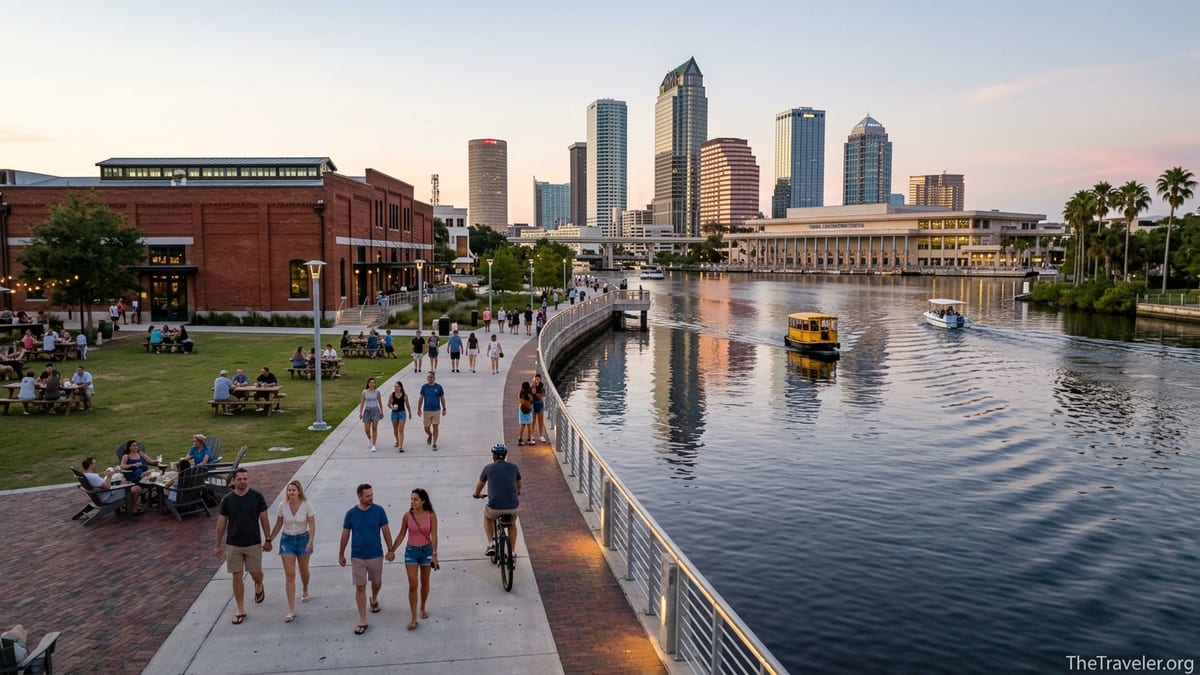
What and Where Is the Tampa Riverwalk
The Tampa Riverwalk is a continuous paved path running roughly 2.4 miles along the Hillsborough River and Garrison Channel, connecting Water Works Park and Armature Works in the north with the Channel District and Florida Aquarium in the south. It is wide, mostly flat, and designed for pedestrians, strollers, and cyclists, with frequent benches, shade structures, and ramps. In practice, visitors often treat it as Tampa’s “main street on the water,” dipping on and off to visit museums, bars, and parks along the way.
For first-time visitors, it helps to imagine the Riverwalk as a simple north–south route. On the north end, Tampa Heights and Armature Works feel younger and more local, with a food hall, lawn games, and views toward downtown. In the central section around Curtis Hixon Waterfront Park you find museums and family activities. On the south end near the Tampa Convention Center and Florida Aquarium, the vibe becomes more resort-like, with hotels, boat tours, and cruise terminals. You can start at either end and follow the water; you will not get lost as long as you stay along the river.
The Riverwalk is open year-round and does not require a ticket or reservation. It is busiest on mild winter and spring weekends, during hockey games at the downtown arena, and on nights with special events like the holiday lighted boat parade. Summer afternoons can be very hot and humid, so many travelers plan their longer walks for early morning or after sunset and rely on boat taxis, scooters, or rideshares during the hottest hours.
Because the Riverwalk links so many major sites, it is also a practical way to get around downtown without a car. You can step off a cruise ship, walk to the aquarium, continue to Sparkman Wharf for lunch, then follow the path to the museums and end at Armature Works for dinner, all without driving or figuring out complex transit.
Planning Your Route and How Long to Spend
Walking the full length of the Tampa Riverwalk one way, without stops, takes about 45 to 60 minutes at a relaxed pace. Most visitors break it into sections and turn it into a half-day or full-day outing by adding museums, meal breaks, or a boat ride. A common route is to start late afternoon at Armature Works, walk south through Water Works Park and Curtis Hixon Waterfront Park, then reach the convention center and finish with cocktails by the water or dinner near Sparkman Wharf or the aquarium.
If you only have a couple of hours, focus on the central and southern sections. You might begin at Curtis Hixon Waterfront Park, visit one museum such as the Tampa Museum of Art, walk along the river past the Straz Center and hotels, then continue to the convention center and the Sail Plaza bar for sunset drinks. Another efficient option is to use the Pirate Water Taxi or other boat services to hop between a few stops instead of walking the full distance, which can be helpful with kids or in hot weather.
Families with younger children often plan on three to six hours along the Riverwalk, combining playground time at Water Works Park or Curtis Hixon, a visit to the Glazer Children’s Museum or Florida Aquarium, and several shorter walking segments. Couples or solo travelers may stretch the experience into a full day, adding in long lunch breaks at Armature Works, craft cocktails at Water Street bars, and an evening harbor or tiki boat cruise.
If you drive, there are garages and lots throughout downtown. Many visitors park once near Armature Works or near the Tampa Convention Center and do an out-and-back walk along part of the Riverwalk, then retrieve the car later by boat taxi, scooter, or a short rideshare. This can be more relaxing than moving your car several times, especially on busy event nights when parking near the arena or convention center fills quickly.
Best Stops and Attractions Along the Riverwalk
One of the Riverwalk’s main strengths is the sheer variety of attractions packed into a relatively compact corridor. Culture lovers gravitate toward the Waterfront Arts District around Curtis Hixon Waterfront Park, where the Tampa Museum of Art, Glazer Children’s Museum, and Florida Museum of Photographic Arts cluster within a short walk. The Henry B. Plant Museum, inside a former luxury hotel with distinctive minarets across the river, adds a dose of Gilded Age history and architecture.
Farther south, the Tampa Bay History Center near the Garrison Channel explores local history from Indigenous communities to the cigar industry and modern sports. Just beyond, the SS American Victory Ship, a preserved World War II cargo vessel berthed close to the Florida Aquarium, lets visitors walk the decks and peer into cabins for a tangible sense of maritime history. These attractions are frequently bundled into discounted passes such as the Tampa Riverwalk Attraction Pass or broader city passes, which can make sense if you plan to visit several in a single day.
For many travelers, the Riverwalk’s green spaces are just as memorable as its museums. Water Works Park at the north end features a large splash pad, playground, and open lawns right on the river, along with a boat dock and easy access to Armature Works. In the middle, Curtis Hixon Waterfront Park offers broad grassy steps down to the water, interactive fountains, and seasonal events like outdoor movies and yoga. On the west side of the river, Julian B. Lane Riverfront Park provides sports courts and more open space with skyline views, though it requires a brief detour off the main Riverwalk path.
Public art is another quiet highlight. As you walk between Water Works Park and the museum district, look for sculptures, murals, and a colorful glass installation integrated into pedestrian bridges and walls. In the evening, the Riverwalk’s subtle lighting along the railings and bridges, combined with illuminated art pieces, helps transform the entire path into a scenic linear park that feels inviting for a long stroll.
Armature Works, Florida Aquarium and Food-Focused Stops
Armature Works, at the Riverwalk’s northern end, has become one of Tampa’s signature gathering places. This restored brick streetcar warehouse now houses a large indoor food hall with dozens of vendors, from handmade pasta and ramen to barbecue and poke. Casual counter-service meals with a drink typically run in the range of 15 to 25 dollars per person, depending on what you order. Outside, a broad lawn overlooks the Hillsborough River, with Adirondack chairs, shade umbrellas, and frequent events like outdoor markets, fitness classes, and car shows.
Just across from Armature Works, the restaurant Ulele fronts the river with a patio that is especially popular at sunset. It focuses on native-inspired dishes and Florida ingredients, with many diners choosing local seafood, bison, or house-brewed beer. Expect entrees commonly in the low to mid 30 dollar range at busy dinner hours. Even if you do not dine there, the stretch of Riverwalk between Ulele, Water Works Park, and Armature Works is one of the prettiest for late-afternoon light and skyline views.
On the southern end, the Florida Aquarium anchors the Channel District side of the Riverwalk. It is a substantial attraction that can easily fill two to three hours, with exhibits that highlight Florida ecosystems, coral research, and sea turtle rehabilitation. Ticket prices vary by season and advance purchase, but many visitors report paying roughly 40 to 50 dollars per adult at the gate, with discounts available online or through combination passes. Families often combine an aquarium visit with a short walk to nearby Sparkman Wharf, where a rotating collection of shipping-container kitchens, beer gardens, and lawn seating provides a relaxed outdoor dining scene.
Throughout the Riverwalk corridor you will find additional places to eat and drink directly on the water, from casual coffee windows to sit-down hotel restaurants. Near the Tampa Convention Center, The Sail Plaza is a popular open-air bar and snack stand set directly along the Riverwalk, known for frozen drinks and views of passing boats. Closer to Water Street, newer restaurants and cafes cater to both office workers and visitors, so it is easy to grab everything from artisanal ice cream to sushi within a short detour from the main path.
Boat Rides, Water Taxis and On-the-Water Experiences
One of the most enjoyable ways to break up a long Riverwalk day is to get out on the water. Several operators run out of docks along the Riverwalk and nearby, offering everything from narrated sightseeing rides to floating tiki bars. The Pirate Water Taxi is among the most visible options, running bright yellow boats that hop between multiple stops like Armature Works, Curtis Hixon Park, the convention center, and the aquarium area. All-day hop-on, hop-off passes typically cost somewhere in the range of 30 to 40 dollars per adult, with cheaper evening-only or one-way tickets on some schedules.
Travelers looking for something more intimate often book small-boat or pontoon tours that focus on sunset views, manatee spotting in season, or skyline photography. Prices vary widely, but shared sunset cruises on smaller boats commonly start around 35 to 60 dollars per person, while private charters are substantially higher. Some tours allow you to bring your own snacks or drinks, which can make them feel like a floating extension of your Riverwalk picnic or happy hour.
For active visitors, outfitters along the channel offer water bikes, kayaks, and small powerboat rentals. These are best tackled in cooler months or earlier in the day, since paddling or pedaling in full summer sun can be intense. Expect hourly rates that are roughly comparable to other Florida waterfront cities, often in the 25 to 40 dollar range for single-person craft, with tandem kayaks or specialty equipment priced higher.
More relaxed options include larger dinner cruise vessels that depart from the vicinity of the convention center, combining buffet-style or plated meals with a slow loop around the bay and back. These tend to be higher-priced, more structured experiences suited to special occasions, but they provide some of the broadest views of the Tampa skyline and Riverwalk from the water, especially when the buildings and bridges are fully lit after dark.
Best Restaurants, Bars and Evening Views
As afternoon slides into evening, the Tampa Riverwalk shifts from a family-friendly park corridor into one of the city’s most appealing night-time promenades. Lights along the path, color-changing illumination on several bridges, and reflections of downtown towers in the river make even a simple stroll feel atmospheric. Many visitors time their walk so they are near Armature Works, Curtis Hixon Park, or the convention center about 30 to 45 minutes before sunset to watch the sky change over the water.
Food-wise, Armature Works is a reliable choice if you want variety without planning ahead. Groups can split up to order tacos, sushi, burgers, or vegetarian bowls from different vendors, then reconvene at communal tables inside or on the riverside lawn. When events are happening, live music or DJ sets add to the energy. On the opposite end, Sparkman Wharf offers a similar choose-your-own-meal experience with container kitchens, craft beer, and a large lawn frequently filled with families and groups playing yard games. Both spots are casual enough for flip-flops but stylish enough for an evening out.
Cocktail-focused travelers often explore the newer bars and hotel lounges around Water Street and the convention center. Rooftop venues in the district provide elevated city and harbor views, though some may enforce dress codes or have age restrictions in the evenings. For a more relaxed waterfront drink, many people gravitate to The Sail Plaza by the convention center or the outdoor bars at nearby hotels, where you can watch stand-up paddleboarders and small boats gliding past as the city lights flicker on.
Nighttime events can add another layer to the experience. Holiday periods often bring special lighting displays and a boat parade, during which decorated vessels move along the Riverwalk corridor, drawing crowds to the parks and railings. During hockey season, game nights at the downtown arena create a festive, packed atmosphere in the nearby sections of the Riverwalk, with fans in team jerseys streaming to and from the stadium and spilling into adjacent bars and patios before and after the match.
Safety, Practical Tips and Whether It Is Worth Visiting
For most travelers, the Tampa Riverwalk feels safe and well-maintained, particularly during daylight and early evening hours when families, joggers, and couples are out in significant numbers. The path is lit at night and patrolled regularly, and there are emergency call boxes at intervals. As in any urban environment, it is still wise to keep typical precautions in mind, especially late at night, such as staying in well-trafficked areas, keeping valuables secured, and being aware of your surroundings.
Weather is one of the biggest practical considerations. From late spring through early fall, midday heat and humidity can be strong, and afternoon thunderstorms are common. Light clothing, sunscreen, hats, and refillable water bottles make a big difference. There are fountains and indoor stops where you can cool off, like museums, hotels, and food halls. In winter and early spring, by contrast, the Riverwalk can be delightfully mild, with many visitors spending full days outside with only light layers.
Accessibility is generally solid. The walkway is mostly level and paved, with ramps and gradual slopes connecting to streets and building entrances. Wheelchairs and strollers are common sights, and boat taxis typically note which of their vessels and docks are accessible. Cyclists are allowed, though it is courteous to ride slowly near crowded sections and yield to pedestrians, especially on weekends and event nights when the path can feel busy.
Is the Tampa Riverwalk worth visiting? For most travelers, the answer is yes, especially if you enjoy walkable waterfront areas and want a feel for Tampa without renting a car or planning complicated logistics. Even a one- or two-hour stroll gives you skyline views, a sense of local life, and access to food and drinks. If your time is limited, pairing a Riverwalk segment with either Armature Works or the Florida Aquarium delivers a satisfying cross-section of Tampa’s character in half a day. Those who are indifferent to walking or urban waterfronts may be happier prioritizing beaches or theme parks, but as an accessible, flexible, and low-cost activity, the Riverwalk is one of Tampa’s best-value experiences.
The Takeaway
The Tampa Riverwalk weaves together many of the city’s strongest assets into a single, coherent experience: a lively waterfront, evolving skyline, cultural institutions, and a fast-growing food scene. In just a few hours on foot, you can move from historic redbrick warehouses and splash pads to art museums, outdoor bars, and a modern aquarium, all while the river and its changing light anchor the route.
Whether you plan a structured day with timed tickets and dinner reservations or simply wander until something catches your eye, the Riverwalk makes Tampa feel approachable. It invites repeat visits at different times of day: coffee and joggers in the morning, families and museum-goers midday, and couples and groups enjoying sunsets and night lights after dark. If your travels bring you anywhere near downtown Tampa, setting aside time to follow this ribbon of pavement along the water is one of the most reliable ways to understand why the city keeps drawing more attention each year.
FAQ
Q1. How long is the Tampa Riverwalk and how much time should I plan?
The Tampa Riverwalk is roughly 2.4 miles one way. Walking the full length without stops takes about 45 to 60 minutes, but most visitors plan three to six hours including meals, museums, or a boat ride.
Q2. Where should I start my walk on the Tampa Riverwalk?
Many people start at Armature Works on the north end or near the Tampa Convention Center or Florida Aquarium on the south end. Both directions are scenic, so choose based on where you plan to eat or which attractions you want to visit.
Q3. Is the Tampa Riverwalk free to visit?
Yes. Walking the Riverwalk itself is free and open year-round. You only pay for specific attractions, food, drinks, or boat rides along the way.
Q4. Is the Tampa Riverwalk safe at night?
The Riverwalk is generally well-lit and busy in the evening, especially near major parks, hotels, and restaurants. As with any city, it is wise to stay in populated areas, keep valuables secure, and use usual urban safety precautions.
Q5. Can I visit the Florida Aquarium or museums directly from the Riverwalk?
Yes. The Florida Aquarium, Tampa Museum of Art, Glazer Children’s Museum, Tampa Bay History Center, and several other institutions are either directly on or within a very short walk of the Riverwalk.
Q6. What are the best places to eat along the Tampa Riverwalk?
Armature Works and Sparkman Wharf are standout choices for variety and atmosphere, while Ulele, riverside hotel restaurants, and casual spots like The Sail Plaza near the convention center offer memorable waterfront meals or drinks.
Q7. Are there boat tours or water taxis connected to the Riverwalk?
Yes. Services like the Pirate Water Taxi and various small-boat and sunset cruise operators use docks along the Riverwalk, allowing you to combine walking with on-the-water sightseeing.
Q8. Is the Tampa Riverwalk stroller and wheelchair friendly?
Most of the Riverwalk is flat, wide, and paved, with ramps and gentle slopes. It is commonly used by families with strollers and visitors using wheelchairs, though some connecting streets and older structures may require brief detours.
Q9. When is the best time of year and day to visit?
Late fall through early spring offers the most comfortable weather. In hotter months, mornings and evenings are better than midday. Sunset and early evening often provide the best combination of light, temperature, and activity.
Q10. Is the Tampa Riverwalk worth it if I only have one day in Tampa?
Yes. Even in a single day you can walk part of the Riverwalk, visit one or two key attractions like Armature Works or the Florida Aquarium, and enjoy sunset views over the river, giving you a strong sense of Tampa in a short time.