


More news on this day
Airlines across Europe and beyond are adjusting schedules, trimming routes and, in some cases, scrapping thousands of flights as a tightening jet fuel market and higher prices ripple through global travel, even as easyJet issues fresh assurances that its summer operations remain broadly intact.
Get the latest news straight to your inbox!
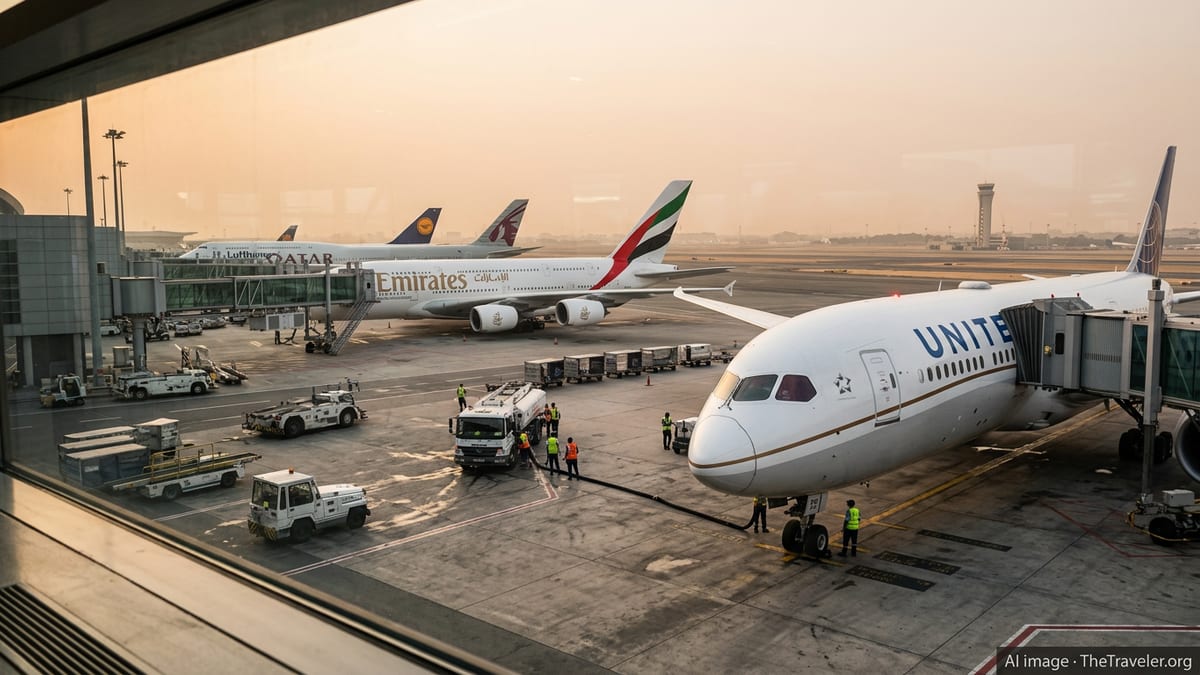
EasyJet outlines fuel position amid mounting scrutiny
easyJet has become one of the most closely watched carriers in the current fuel crunch because of its heavy exposure to UK and European leisure travel. Publicly available information indicates that the airline has secured a substantial proportion of its summer 2026 fuel needs through hedging, a financial strategy that locks in prices in advance. Industry coverage suggests this hedged position is helping the carrier limit the need for large scale, last minute cancellations.
Reports from UK and European travel outlets in April and May describe easyJet focusing on tactical schedule adjustments rather than sweeping cuts. Executives have signalled that any fine tuning of timetables in key holiday markets such as Spain’s Balearic Islands is more likely to reflect demand and occupancy than an immediate inability to source fuel.
At the same time, consumer-facing travel alerts have warned that easyJet and other low cost rivals face higher operating costs as jet fuel prices surge in the wake of the conflict affecting oil flows through the Strait of Hormuz. While these notices highlight the risk of disruption if supply tightens further into the peak season, they also underline that, so far, the carrier’s summer programme remains largely intact, with only targeted cancellations or retimings.
Travel analysts note that easyJet’s public messaging appears intended to reassure holidaymakers who have grown wary of booking new trips amid headlines about fuel shortages. The airline is emphasising that its current planning scenario is based on price pressure and logistics challenges rather than an abrupt loss of physical fuel at its main bases.
Global wave of flight cuts as fuel costs surge
Beyond easyJet, airlines worldwide have begun pruning their schedules as jet fuel prices climb to multi decade highs and concerns grow about supply security. Data cited in recent business media reports indicates that carriers collectively removed around 12,000 flights and as many as 2 million seats from May timetables alone, much of it concentrated in short haul markets where frequencies are easier to adjust.
Analysts describe the emerging pattern as a cost and risk management response rather than a uniform, across the board fuel shortage. Many airlines are reducing marginal or low yielding flights, consolidating some frequencies, or pausing routes that have become uneconomical at current fuel prices. Industry research notes that for a typical carrier, fuel now accounts for roughly one third of operating expenses, magnifying the impact of supply disruptions in the Gulf.
European network airlines and leisure specialists have been especially active in trimming schedules. In Scandinavia, for example, regional press reports show SAS cancelling nearly 1,200 flights in May as part of a broader capacity reset linked to both soaring fuel costs and geopolitical uncertainty. Elsewhere in Europe, some carriers are suspending smaller city pairs and shifting capacity toward core hubs where higher load factors can better absorb higher fuel bills.
Market commentary from energy consultancies suggests that while inventory levels remain adequate in the short term, the underlying system is tight, with refining bottlenecks and rerouted crude shipments contributing to volatility. This backdrop is feeding into airline planning models, resulting in cautious capacity decisions for late spring and early summer.
North American fallout: shutdowns and selective route cuts
In North America, the jet fuel squeeze has intersected with existing financial pressures at several carriers, contributing to more dramatic outcomes. Spirit Airlines, the US ultra low cost carrier, has ceased operations entirely after failing to secure fresh funding and a proposed government backed support package. Public filings and media coverage link the demise directly to surging fuel costs layered on top of a weak balance sheet and previous bankruptcy proceedings.
The abrupt shutdown has effectively cancelled thousands of flights that were scheduled for May and beyond, stranding customers and triggering a wave of refund processing across the United States. Aviation data providers estimate that Spirit had several thousand domestic departures planned over the first half of May alone, highlighting how a single carrier failure can have an outsized impact on capacity at certain airports.
Other North American airlines have so far opted for targeted reductions rather than wholesale withdrawal. Canadian coverage shows Air Canada suspending a handful of transborder and domestic routes it describes as no longer economically viable at current fuel prices, including links from Toronto and Montreal to New York’s JFK and a domestic service between Fort McMurray and Vancouver. These cancellations are being framed as selective pruning intended to protect the wider network.
Industry observers note that larger US and Canadian airlines generally have more diversified route portfolios and stronger hedging positions than smaller low cost rivals, giving them greater flexibility to ride out a period of elevated fuel costs. Even so, analysts expect incremental schedule changes to continue through the summer as carriers monitor fuel markets and booking trends.
European carriers juggle hedging, prices and capacity
Across Europe, low cost giants and legacy groups alike are trying to balance hedging strategies with the realities of higher spot prices and nervous travelers. Reports indicate that several major European airlines, including UK based leisure operators, entered 2026 with significant portions of their fuel consumption hedged at prices below current market levels, providing some short term insulation.
However, the hedges are not uniform and do not eliminate exposure entirely. As a result, carriers such as Ryanair and easyJet have been walking a tightrope on pricing and capacity. Public commentary from airline leaders has stressed confidence that Europe will not literally run out of jet fuel, even as the same executives acknowledge they have been cancelling selected flights and adjusting schedules in response to the new cost environment.
Schedule databases reviewed by aviation analysts show reductions concentrated in shoulder season frequencies, late night rotations and thinner regional routes. The intention, according to industry commentary, is to preserve the bulk of high demand holiday and business services while trimming operations at the margins to keep load factors high and fuel burn per passenger as efficient as possible.
European regulators are also watching the situation closely. Guidance from Brussels and individual national authorities has underscored that, in many cases, cancellations related to fuel costs and supply logistics will still fall under standard passenger protection regimes, rather than being treated as extraordinary circumstances. That stance is encouraging travellers to monitor their bookings carefully and assert their rights when flights are cut.
What passengers should expect in the weeks ahead
For travellers, the emerging picture is one of uneven but manageable disruption rather than a complete breakdown of air services. Analysts expect further schedule adjustments through June and July as airlines respond to both fuel market developments and booking trends. The greatest risk of cancellations appears to be on secondary routes, late additions to summer schedules and services operated by financially weaker carriers.
In the UK and wider Europe, reports suggest that primary holiday airports and trunk routes are likely to remain well served, although passengers may see isolated cancellations or retimings, particularly on early morning or late night flights. EasyJet’s latest updates indicate that it is planning to operate its core summer programme while retaining flexibility to consolidate flights if necessary.
In North America, the sudden removal of Spirit Airlines has reduced competition on some routes and could lead to higher fares and reduced choice until other airlines step in to fill the gap. Selective route suspensions by carriers such as Air Canada add further pressure in certain markets, even if the overall transcontinental network remains intact.
Travel experts recommend that passengers build in extra time, keep contact details updated with airlines and travel agents, and pay close attention to schedule changes in the days before departure. With jet fuel markets still unsettled, small waves of cancellations are likely to continue across multiple regions, even as most major airlines signal that they intend to preserve the bulk of their peak season operations.