


Rome Fiumicino Leonardo da Vinci Airport can feel confusing the first time you fly through it, especially when your ticket simply says “FCO” and does not clearly spell out which terminal you should use. In reality, the airport operates with two main passenger terminals that handle tens of millions of travelers each year, and knowing which one you need before you arrive can save you long walks, stress and even the risk of missing a flight. This guide walks you through how terminals at Fiumicino work today, which airlines generally use which terminal, and how to handle connections smoothly.
Get the latest updates straight to your inbox!
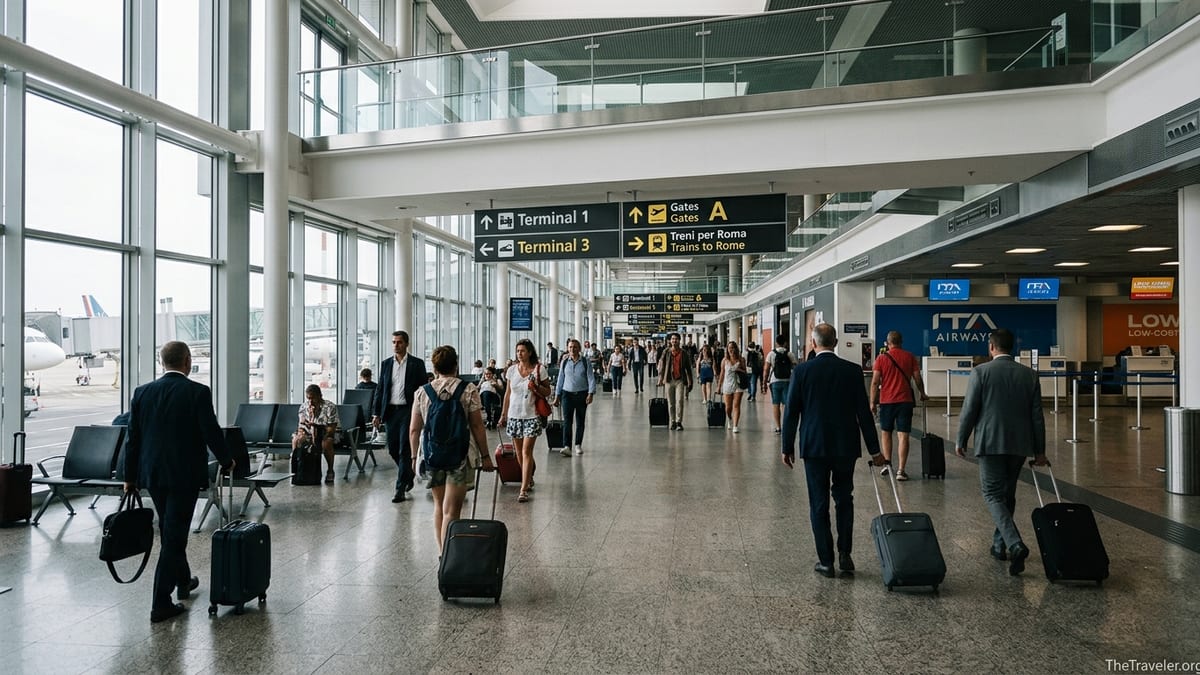
How Rome Fiumicino’s Terminals Work Today
Rome Fiumicino Airport currently relies on two main passenger terminals in daily use: Terminal 1 and Terminal 3. Older designations like Terminal 2 and Terminal 5 still appear in some historic maps or blog posts, but the present day layout is effectively a two terminal system. The structure has been modernized in stages, and many travelers notice that parts of the departures and gate areas feel like a single large building rather than clearly separated terminals.
For most passengers, the key distinction is not so much the physical building but whether their flight is within the Schengen Area or outside it, and which airline they are flying. Terminal 1 is heavily oriented toward domestic Italian flights and short haul European services, especially those of ITA Airways and its SkyTeam partners. Terminal 3 is the main hub for many non Schengen and long haul departures, as well as a base for low cost and leisure carriers serving both Europe and destinations beyond.
A practical way to think about Fiumicino is this: Terminal 1 usually means Italy and nearby Europe, Terminal 3 usually means the rest of the world, plus a number of European services operated by specific airlines. However, there are exceptions, especially as airlines adjust their operations season by season. Always treat what is printed on your boarding pass and in your airline’s app as the final word for your specific flight.
Although they are labeled as separate terminals, Terminal 1 and Terminal 3 are adjacent and interconnected. If you are airside in transit, you can often walk between piers and gate areas in a matter of minutes, following the overhead signs. Landside, the two terminal check in halls are also walkable, connected by covered walkways and well marked pedestrian routes.
Terminal 1: Domestic and Schengen Workhorse
Terminal 1 is the operational heart of ITA Airways, the Italian flag carrier that has replaced Alitalia and now runs a dense network of domestic and European flights from Rome. If you are flying from Fiumicino to cities such as Milan Linate, Venice, Naples, Catania or Bologna, you will almost certainly depart from Terminal 1. Many Schengen services to other European cities such as Paris, Amsterdam or Frankfurt also use this terminal, particularly when operated by ITA Airways or SkyTeam partners.
From a traveler’s point of view, Terminal 1 offers a modern, recently upgraded environment. The departure level contains long rows of ITA check in desks and automated bag drop machines, alongside shared counters for other carriers. Beyond security, the A pier serves numerous Schengen gates with a mix of high street fashion stores, Italian food outlets, and familiar international chains for coffee or fast snacks. Frequent flyers on ITA or SkyTeam often use the Hangar Lounge located in this area, a refurbished space that emphasizes Italian design and local food.
Consider a typical example: a morning ITA Airways flight from Rome to Milan Linate for a business trip. You would arrive at Terminal 1, use the dedicated ITA check in zone or check in online and head straight to the security lanes signposted for domestic and Schengen departures. After security, the departure boards would direct you to an A gate, usually within a 5 to 10 minute walk. If you have status with SkyTeam or a premium ticket, you might plan an extra 30 minutes to use the lounge for breakfast before boarding.
Terminal 1 is also where many regional and European partner airlines operate when feeding traffic into ITA’s Rome hub. For example, a SkyTeam partner running a codeshare service from a smaller European city into Rome may use Terminal 1 so that connecting passengers can stay airside and walk directly to their ITA domestic or European connection. This makes the terminal particularly important for multi flight itineraries within Europe booked on the same ticket.
Terminal 3: Long Haul Hub and Low Cost Stronghold
Terminal 3 is the main gateway for non Schengen flights at Rome Fiumicino and a key base for long haul operations. Many intercontinental services to North America, the Middle East, Asia and parts of Africa use this terminal. When flying from Rome to New York, Dubai or Tokyo, you should generally expect to check in at Terminal 3, even if your boarding gate later turns out to be in one of the connected gate areas reachable from other parts of the complex.
In addition to long haul flights, Terminal 3 is heavily used by a range of carriers that operate both Schengen and non Schengen services. Low cost airlines such as Ryanair, Wizz Air and Vueling have a significant presence here, often listing Terminal 3 as the departure terminal in booking confirmations and mobile apps. For example, a spring weekend trip from Rome to Barcelona on Vueling, or to London on Ryanair, will typically have check in desks and bag drop facilities in Terminal 3, even if the aircraft departs from a gate area connected by internal corridors.
The Terminal 3 departure hall is large and busy, with rows of check in desks broken into island blocks. Signage clearly groups airlines, so you will find, for example, a cluster of counters for a major Gulf carrier’s flights to Dubai and Abu Dhabi, another for North American carriers flying to hubs such as Newark or Atlanta, and separate islands for low cost European carriers that rely heavily on online check in and bag drop machines. Security screening is organized by lane, and you will see a separate fast track entry for eligible frequent flyers or passengers who have prebooked a priority service.
Because Terminal 3 handles such a wide mix of destinations and airline styles, passenger flows can vary significantly by time of day. An early morning wave of departures to European capitals may give way to a late morning lull, then a busy period in the afternoon as long haul flights to North America and evening services to the Middle East and Asia depart. If you are flying on a popular route such as Rome to New York or Rome to Dubai, it is wise to arrive on the earlier side of your airline’s recommended check in window, as queues for security and passport control can build quickly.
What Happened to Terminals 2 and 5
Many older travel guides and even some current blog posts still mention Terminals 2 and 5 at Fiumicino. This can cause confusion when travelers try to match those references against what they see on airport signage today. In practice, the passenger operations that were once associated with those designations have been restructured, and the everyday experience for travelers is that Fiumicino uses Terminal 1 and Terminal 3 as the key reference points.
Historically, Terminal 2 handled some low cost and short haul operations, while Terminal 5 was designed as a dedicated facility for certain high security non Schengen flights, notably services by several US carriers and the Israeli flag carrier. Over time, infrastructure projects, security upgrades and changes in airline strategy led to consolidation of these activities into the main terminal complex. As a result, many airlines that once checked in or boarded from Terminal 2 or 5 are now integrated into Terminal 1 or 3, sometimes with additional security screening at the gate for specific destinations.
For the average passenger in 2026, the important takeaway is that you do not need to search for a separate Terminal 2 or 5 building when you arrive at Fiumicino. If an old itinerary, travel forum thread or printed guide mentions Terminal 5 for a flight to the United States, the up to date information from your airline or from the airport’s own departure displays will instead point you toward Terminal 3 for check in and departures. Following current signage at the airport and cross checking against your boarding pass is the best way to avoid being misled by outdated documents.
Occasionally, you may still see references to these older terminal names in technical documents or equipment labels inside the airport. Treat them as background information rather than actionable guidance. Focusing on the current operational terminals and the zone letters for gates will keep your navigation simple and aligned with present day procedures.
Airline and Route Examples by Terminal
Because airline terminal assignments can change, you should always confirm your exact terminal for the date of travel using your airline’s app or check in email. That said, it is useful to look at typical patterns at Fiumicino so that you have a sense of what to expect. ITA Airways is strongly associated with Terminal 1, especially for domestic and European flights. For instance, ITA flights to Milan, Naples, Catania, Paris Charles de Gaulle or Frankfurt commonly use Terminal 1 for check in and boarding, even when the gate is in an area physically linked to other parts of the complex.
On the other hand, many long haul routes, whether operated by ITA or foreign carriers, use Terminal 3. If you book an ITA Airways or partner flight from Rome to New York, Boston, Los Angeles or Sao Paulo, the departure information usually indicates Terminal 3 because of the need for non Schengen border control and additional screening. Likewise, US carriers, major European network airlines operating long haul flights, and Middle Eastern carriers serving hubs like Doha or Istanbul tend to cluster in Terminal 3, sharing infrastructure such as passport control and security zones designed for high passenger throughput.
Low cost and leisure airlines add another layer. Ryanair, Wizz Air and Vueling, which connect Rome with cities like Berlin, Barcelona, London and Warsaw, generally use Terminal 3 for their check in areas. For example, a Wizz Air flight to Bucharest or a Ryanair flight to London Stansted will typically invite passengers to proceed to Terminal 3 at Fiumicino on their confirmation emails, even if they primarily push online check in and encourage you to arrive with only cabin baggage. From a practical standpoint, this means you should head for Terminal 3 when taking many budget flights out of Rome, unless your latest booking information states otherwise.
As a traveler, the best habit is to look at your booking shortly before departure. If the airline lists a terminal, use that as your guide. If it does not, assume domestic and many Schengen flights on ITA or SkyTeam partners likely use Terminal 1, while long haul services and a large share of low cost carriers use Terminal 3. Then verify this assumption when you arrive at the airport by checking the nearest departure board for your flight number and the terminal and gate it shows.
Connecting Between Terminals and Gates
Many travelers meet Fiumicino for the first time while in transit rather than starting or ending their journey there. A common concern is how difficult it is to change from Terminal 3 to Terminal 1 or vice versa. The reassuring answer is that, for most airside connections on a single ticket, you will remain within the secure zone and walk between gate areas without needing to formally exit one terminal building and enter another. Overhead signs clearly mark “Transfers” and list the gate letters, guiding you step by step.
Imagine you arrive from a long haul overnight flight from South America into a non Schengen gate associated with Terminal 3, with a connection to a domestic flight to Milan that operates from Terminal 1. If your bags are checked through and both flights are on a single ticket, you would typically follow the transfer signs after disembarking, pass through Schengen entry passport control, then reach a central concourse where signs direct you toward the A gates for Schengen departures. The walk between these areas is often in the range of 10 to 20 minutes depending on your arrival gate and walking speed.
Landside transfers between Terminal 1 and Terminal 3, for example when meeting friends arriving in a different terminal or switching from an international flight to a separate low cost ticket, are manageable but require more time. Expect a walk of several minutes between the arrival hall of one terminal and the check in hall of the other, via covered walkways and ground level paths. Airport wayfinding has improved in recent years, but travel during peak times can still feel crowded, so it is wise to build in a comfortable buffer, especially if you need to collect baggage and recheck with another airline.
Passengers with tight connections should pay special attention to minimum connection times suggested by airlines and booking engines. While well practiced travelers sometimes manage short connections of around 60 to 75 minutes between Schengen flights, adding passport control or a terminal change reduces the margin of error. When booking complex itineraries through Fiumicino, particularly those that combine a long haul arrival with a separate ticket on a low cost carrier, consider planning at least three hours between flights to allow for potential delays, queues at passport control and security, and the walk between terminals.
Ground Transport and Where Each Terminal Fits In
Knowing which terminal you are using at Fiumicino helps you plan your arrival and onward travel in Rome. The airport railway station that serves both the Leonardo Express to Roma Termini and the FL1 regional trains to other parts of the city is directly linked to the main terminal complex, with covered walkways that feed most directly into Terminal 3. From there, you can walk to Terminal 1 within a few minutes following the overhead signs. If you land in Terminal 1 and plan to take the Leonardo Express, you simply follow the “Trains” signs back toward Terminal 3 and the station.
Taxis and ride share services use designated ranks and pick up areas outside each terminal. Official white taxis to central Rome operate on a fixed fare system for most central districts, which helps avoid haggling and surprises. When meeting a prebooked car transfer, the company will usually specify whether they will wait at Terminal 1 or Terminal 3 arrivals, so it is important to check your flight’s arrival terminal and share that information. For example, a car service bringing a family from a long haul flight arriving at Terminal 3 will wait just outside the international arrivals area, whereas a local business traveler flying in from Milan and landing at Terminal 1 will be met outside the domestic arrivals doors.
Bus services to central Rome and other Italian cities operate from stops outside the main terminal complex as well. Many budget minded travelers arriving on low cost airlines into Terminal 3 choose one of the shuttle buses to reach Roma Termini or other central points, while those landing in Terminal 1 can either walk over or follow signs to the same bus bays. Because schedules and routes can shift, especially with new operators entering the market, it is sensible to check the latest information before travel and leave extra time if you are catching a specific departure after your flight.
If you are dropping off a rental car, most major international brands and local agencies maintain desks and return areas connected to the terminal complex. These are generally signposted from the main access roads and positioned so that you can walk from the car return area back into the terminal buildings in less than 10 to 15 minutes. When returning a vehicle before a flight, take your departure terminal into account and allow enough time to reach the correct check in hall with your baggage.
The Takeaway
Rome Fiumicino’s terminal setup can look complicated on paper, but for most travelers it boils down to a simple rule of thumb. Terminal 1 is the main base for ITA Airways domestic and many European flights, as well as some partner carriers, while Terminal 3 is the primary hub for long haul services, non Schengen destinations and a large share of low cost and leisure airlines. Although older references to Terminals 2 and 5 still circulate, they are not part of the day to day decisions you need to make when navigating the airport.
Before you travel, confirm your departure and arrival terminals using your airline’s official communication, and make a mental note of whether you will need to move between terminals for any connections. At the airport, trust the large electronic departure and arrival boards and follow the clearly marked signage for your flight number and gate. Build in adequate time for walks between areas, security and passport control, especially if you are arriving from or heading to a non Schengen destination.
By approaching Fiumicino with realistic expectations and up to date information about which terminal you will use, you can turn what might have been a stressful experience into a straightforward step of your journey. Whether you are connecting between continents, hopping down to Sicily, or starting an Italian vacation in Rome, understanding the basic logic of Terminal 1 and Terminal 3 will help you move through Italy’s busiest airport with much greater confidence.
FAQ
Q1. How do I find out which terminal my flight uses at Rome Fiumicino?
Your airline’s booking confirmation, mobile app or online check in page is the most reliable source. It should specify either Terminal 1 or Terminal 3 for both departure and arrival. You can then double check on the airport departure boards when you reach Fiumicino.
Q2. Is there a simple rule for knowing whether I will use Terminal 1 or Terminal 3?
As a rough guide, domestic Italian flights and many Schengen European services, especially on ITA Airways, use Terminal 1. Long haul flights outside the Schengen Area and many low cost carriers typically use Terminal 3. Always verify for your specific flight, as airline allocations can change.
Q3. How long does it take to walk between Terminal 1 and Terminal 3 at Fiumicino?
Airside, many gate areas for Terminal 1 and Terminal 3 are connected and can be reached in around 10 to 20 minutes on foot, depending on where you arrive and where you are departing from. Landside, the walk between the two check in halls usually takes several minutes along signed corridors and walkways.
Q4. Do I have to go through security again when changing terminals?
If you are connecting airside on a single ticket and remain within the secure area, you normally do not repeat full security screening, though you may have to pass through passport control if you are entering or leaving the Schengen Area. If you leave the secure zone to collect baggage or change to a separate ticket, you will need to go through security again before your next departure.
Q5. What should I do if my ticket or app does not show a terminal for my flight?
If no terminal is listed, check closer to your departure date as many airlines finalize details within 24 to 48 hours. You can also look up your flight number on the airport’s departure displays once you arrive. As a backup assumption, expect domestic and many ITA European flights to use Terminal 1 and many long haul or low cost flights to use Terminal 3, then confirm on site.
Q6. Are there lounges in both terminals at Rome Fiumicino?
Yes. There are airline operated and independent lounges in both Terminal 1 and Terminal 3, including ITA Airways lounges for eligible passengers and several pay in options. Access depends on your ticket class, frequent flyer status or lounge membership program, so check the conditions attached to your booking.
Q7. Where is the train station in relation to the terminals?
The airport train station that serves the Leonardo Express and regional trains is linked directly to the main terminal complex, with the most direct access from Terminal 3. From Terminal 1 you follow walkway signs toward Terminal 3 and the station, which usually adds only a few minutes to your walk.
Q8. What happens if I go to the wrong terminal at Fiumicino?
If you arrive at the wrong terminal, you can walk to the correct one using the signed routes in the public area. This will cost you some time, so if you discover the mistake close to departure, move quickly and alert your airline at the correct terminal if you are worried you might miss your flight.
Q9. Do low cost airlines at Rome Fiumicino always use Terminal 3?
Many low cost carriers such as Ryanair, Wizz Air and Vueling commonly use Terminal 3 for check in and departures, but this is not an unbreakable rule. Seasonal changes, operational needs and airline decisions can lead to different allocations, so always consult your latest booking information.
Q10. Is it safe to book a short connection between terminals at FCO?
Short connections can work when flights are on a single ticket and the airline has built in reasonable transfer times, especially for Schengen to Schengen journeys. For self connecting itineraries on separate tickets, particularly when moving between non Schengen and Schengen flights, it is safer to allow at least three hours to cover passport control, baggage, security and any walk between terminals.