


Rome’s Leonardo da Vinci Fiumicino Airport is the main gateway to Italy for millions of travelers each year, and for many of them the question arises somewhere between security and the boarding gate: is paying for lounge access here really worth it? With a growing mix of airline, independent and pay-per-use lounges in both Terminal 1 and Terminal 3, the answer depends heavily on how long you are in transit, how you value comfort versus cost, and what kind of ticket or credit card you already hold. This guide breaks down the main lounges at Fiumicino, what they realistically offer, and which ones are best suited to different types of travelers.
Get the latest updates straight to your inbox!
How Fiumicino’s Terminal Layout Shapes Your Lounge Options
Before deciding whether a lounge at Rome Fiumicino is worth the money, it helps to understand where you will actually be flying from. The airport currently operates mainly from two passenger terminals: Terminal 1 and Terminal 3. Terminal 1 handles domestic and most Schengen flights, with ITA Airways and its SkyTeam partners dominating the check in area and airside gates. Terminal 3 is the larger international hub, especially for non Schengen long haul services operated by European and Gulf carriers, North American airlines, and low cost operators using the E gates.
This split matters because your boarding pass will effectively determine which lounges you can reach. If you are flying ITA Airways from Boarding Area A in Terminal 1, your most convenient options will be the ITA Hangar Lounge and the growing cluster of independent lounges and Plaza Premium spaces in the same terminal. If you are departing on a long haul flight to North America, Asia or the Middle East from the E gates in Terminal 3, you will instead be choosing between airline operated lounges, the Prima Vista lounges and the Plaza Premium Lounge in the extra Schengen area. There is no airside connection that allows you to freely move back and forth between these worlds once you clear security for your specific zone.
Another practical point is timing. Fiumicino’s lounges follow the rhythm of banked departures, so Schengen focused lounges are busiest during morning and late afternoon waves to European cities, while the non Schengen lounges peak in the late morning and evening when transatlantic and long haul flights depart. On a Tuesday midday in low season you may find plenty of seating and a relaxed atmosphere; on a July weekend evening some spaces will be close to standing room only and can even temporarily restrict paid or Priority Pass style access.
For travelers planning a connection, this means that a two hour layover at a peak time may not feel as relaxing as advertised, while the same lounge in mid afternoon could be a quiet oasis. Factoring in the terminal, gate area and typical departure bank for your route is often more important than simply asking whether “Fiumicino lounges” in general are good or bad.
What You Actually Get Inside Fiumicino’s Lounges
Across both terminals, the core promise of lounge access at Rome Fiumicino is fairly consistent: quieter seating than the public areas, complimentary snacks and a light buffet, soft drinks and basic alcoholic beverages, reliable Wi Fi, power outlets and access to flight information screens. Where lounges begin to differ is in how well they deliver on food quality, space and design, and the availability of showers or work areas.
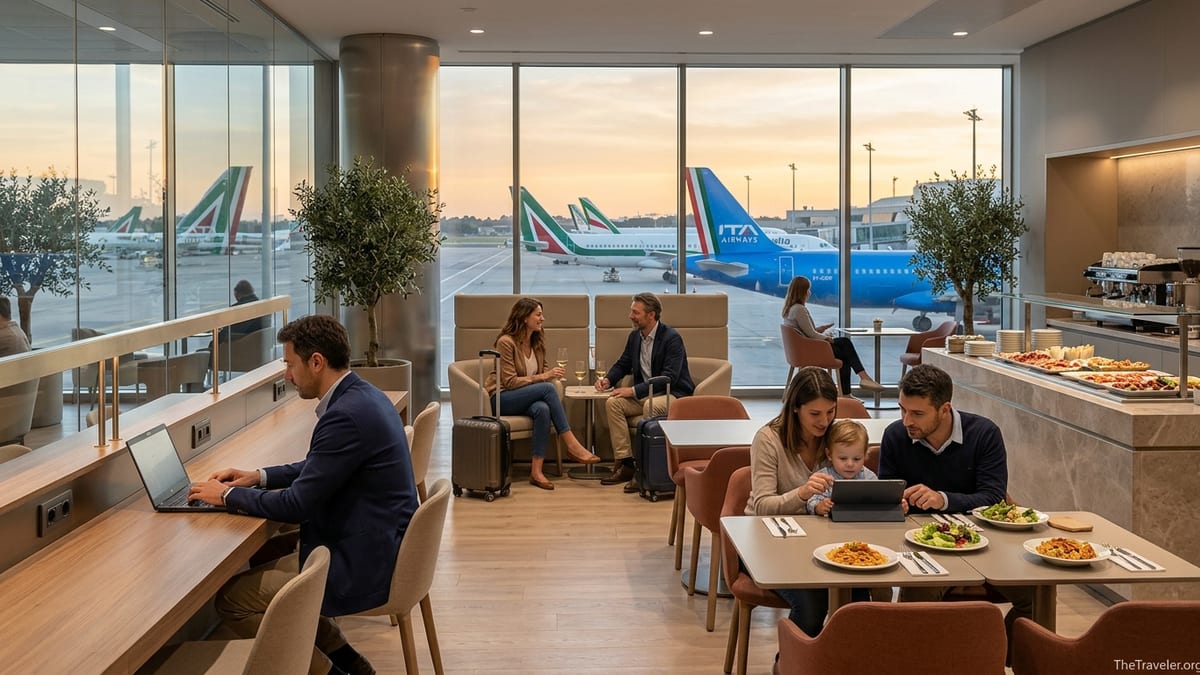
Take Plaza Premium as a reference point. In Terminal 3’s extra Schengen area, the Plaza Premium Lounge near the E gates offers a self service buffet with hot dishes that typically include pasta, a meat or vegetarian option, soups, salads and desserts, along with a staffed bar for wine, beer and simple mixed drinks. Travelers report that the food is similar to what you might get in an upper mid range business hotel rather than a gourmet restaurant: perfectly adequate if you want to avoid paying 20 to 25 euros for a plate of pasta in the terminal, but not a reason on its own to arrive three hours early. Seating ranges from armchairs overlooking the apron to dining style tables and a few semi private booths that can serve as makeshift workspaces.
Carrier lounges, such as ITA Airways’ Hangar Lounge in Terminal 1, layer on a slightly different atmosphere. After a recent refurbishment the Hangar Lounge has around 200 seats, a more design driven interior with industrial touches, and food that leans toward Italian flavors: small plates of pasta, cured meats, cheeses and pastries, plus an espresso bar and self pour wine. Frequent flyers describe it as a solid European business class lounge, with particular praise for the coffee and the amount of natural light, but it can feel crowded during the first wave of morning flights to major European hubs.
Independent lounges like the Prima Vista spaces in Terminal 3 generally aim a bit lower on design but focus on practicality. Expect a cold buffet with sandwiches, pastries and simple salads, basic hot dishes at busier times of day, free Wi Fi, and showers in the non Schengen lounge. These lounges tend to be more transactional in feel: you pay a fee at the door or gain access via a lounge membership, stay for a couple of hours to eat, charge your devices and perhaps shower, and then head to your gate. They are less about luxury and more about escaping the crowds and unpredictable seating of the main departures hall.
What Lounge Access Costs at Fiumicino in 2026
The cost question is where the “Is it worth it?” debate gets concrete. At Fiumicino, you will see three main pricing models: pay per visit day passes sold at the door, access through independent networks like Priority Pass and DragonPass, and complimentary entry tied to your airline ticket or elite status.
Pay per visit pricing for independent lounges at Fiumicino typically ranges from about 30 euros to around 45 euros for a stay of up to two or three hours. The Prima Vista lounges in Terminal 3, for example, have historically charged roughly 30 euros per adult for walk in access and half price for children, although the exact figure may vary slightly by season and any promotions running at the time. Plaza Premium’s standard day pass rates line up broadly with its global pricing, which usually sits somewhere in the equivalent of 40 to 65 US dollars depending on location and length of stay, with Rome falling toward the lower half of that band.
For many long haul economy travelers, though, the more relevant question is whether their existing credit cards or travel memberships already unlock access. Networks like Priority Pass, which claims access to more than 1,800 lounges worldwide, include several of Fiumicino’s independent lounges in both terminals. If you hold a US or European premium credit card that bundles Priority Pass or a similar membership, your marginal cost for using a lounge at FCO may effectively be zero, aside from any guest fees or caps on annual visits your card issuer imposes.
Airline operated lounges at Fiumicino have more restricted door policies. ITA Airways typically admits business class passengers, elite members of its Volare frequent flyer program, and SkyTeam Elite Plus passengers on qualifying itineraries. Some partner airlines sell access to their contract lounges in Terminal 3 for around 40 to 60 euros, especially to premium economy travelers wanting to upgrade their experience without purchasing a full business class ticket. These paid options are usually sold during online check in or at the airport desk rather than as a casual walk up purchase.
When you compare these costs to what you would otherwise spend in the airport, the value equation becomes more tangible. Two simple restaurant meals with a glass of wine in Terminal 3 can easily run 25 to 30 euros per person, and adding a separate coffee and snack near the gate might bring a couple’s total to 60 euros or more. In that context, a 35 to 40 euro lounge visit that includes food, drinks and a reasonably quiet workspace can make good financial sense, especially on a three hour layover.
Best Lounges for Business and Frequent Flyers
If you are a business traveler or someone who flies through Rome several times a year, the quality of working conditions, privacy and reliability may matter more than getting the absolute cheapest day pass. In this segment, ITA Airways’ Hangar Lounge in Terminal 1 and its Piazza di Spagna Lounge in the non Schengen section of Terminal 3 stand out as the most business oriented spaces.
The Hangar Lounge, serving domestic and Schengen flights, was significantly expanded and refreshed in late 2025, adding seating capacity and reworking the entrance and welcome desk to improve flow. Business travelers note the abundance of power outlets, decent sound levels even during peak times, and a variety of seating types, from bar height work counters to more secluded armchairs. The food offering is not lavish but is usually sufficient for a light meal between meetings, and the espresso bar is markedly better than many independent lounges.
For long haul non Schengen flights, the Piazza di Spagna Lounge in Terminal 3 caters to ITA’s intercontinental passengers and Star Alliance elites following the airline’s integration into that alliance. It has more of a flagship lounge character, with a larger footprint, views over the apron and a broader buffet including hot options suitable for a pre flight dinner. On an evening departure to New York, for example, many travelers will eat fully in the lounge, have a glass of Italian wine and then board the aircraft ready to sleep, effectively treating the lounge as the main dining venue.
Beyond ITA’s own spaces, Plaza Premium’s lounges in both Terminal 1 and Terminal 3 have become default options for corporate travelers whose companies issue them Priority Pass or a similar membership but who may not always be flying on ITA or its close partners. These lounges typically offer more predictable service levels than smaller contract lounges, and Plaza Premium’s focus on work friendly seating, reasonably fast Wi Fi and consistent food quality tends to align well with the needs of someone trying to finish a presentation or join a video call before boarding. For a consultant passing through Rome four or five times a year, that predictability often tips the “worth it” calculation in favor of seeking out a Plaza Premium or ITA lounge whenever possible.
Best Options for Holidaymakers and Economy Travelers
Leisure travelers and families at Fiumicino generally care less about desk space and more about stretching out, feeding children without stress and finding a quiet corner away from the terminal’s constant announcements. For this group, the independent pay per use lounges in both terminals often offer the best value.
Imagine a family of four flying from Rome to Toronto on an evening departure. They arrive at Terminal 3 at 17:00, clear security by 17:30, and their gate will not begin boarding until 20:00. Instead of wandering between crowded food courts, they could pay per person for access to a lounge such as Plaza Premium in the extra Schengen area. Inside, the parents can pour a glass of wine, the children can choose from pasta and simple snacks, and everyone can use Wi Fi to download shows for the long flight. With showers available, they could even let older kids rinse off after a hot day of sightseeing before boarding.
Solo economy travelers on low cost carriers from Terminal 3 might instead gravitate toward the Prima Vista lounges, where a roughly 30 euro fee buys two hours of respite, light food and drinks. A backpacker heading to Athens after an overnight train from the south of Italy may find that being able to down an espresso, grab a plate of salad and charge a phone in a quieter environment is worth the cost on that trip, even if they would not normally pay for lounges on very short hops.
At the same time, not every budget traveler will find lounges a compelling buy. If your layover is only 60 to 90 minutes from gate to gate and you already ate in the city, paying for access may feel rushed. Fiumicino’s public areas now offer more charging points and some reasonably comfortable seating in refurbished zones, so on a quick connection it can make sense to skip the lounge, pick up a bottle of water and rely on free airport Wi Fi. Lounges here deliver the most value when you have at least two hours to actually relax, eat and decompress before boarding.
One special case is overnight or very early morning departures. For travelers catching a red eye or an early first wave flight, a lounge with hot drinks, breakfast items and relatively calm surroundings can transform the experience. If you are checking out of a hotel at noon but your intercontinental flight leaves at 22:00, combining a late city dinner with two or three hours in a lounge later that evening may still work out cheaper and more comfortable than spending those hours in airport restaurants and cafes.
How Credit Cards and Memberships Change the Math
For many international travelers, especially from North America and parts of Europe, the most important factor in the lounge value equation at Rome Fiumicino is whether they already hold a card that unlocks access. Premium products from major issuers often bundle memberships to networks like Priority Pass or provide direct access to specific partner lounges, including Plaza Premium. In practice, this means that on arrival at FCO, your smartphone’s digital wallet may be as important as your boarding pass.
If you hold a card that offers unlimited Priority Pass visits and includes guest access, your incremental cost for visiting a Plaza Premium or contract lounge in either terminal can be essentially zero. In that scenario, the question “Is it worth it?” becomes less about money and more about time. With a one hour connection, you might skip the lounge to avoid the risk of a long walk and possible queues at the reception desk. With a three hour layover, it is almost always rational to take advantage of the benefit, even if you only stay an hour, simply to have guaranteed seating, food and quieter surroundings.
Travelers should still be aware of capacity controls. At peak times, some Fiumicino lounges that nominally accept Priority Pass or other memberships may temporarily turn away arriving guests, particularly when a large bank of partner airline flights is departing. This is not unique to Rome, but it does mean you should have a mental backup plan, such as grabbing a snack in the terminal and using a quieter gate area, if a lounge is full when you arrive.
For those without premium cards, buying an annual lounge membership purely with FCO in mind rarely makes sense unless you are a very frequent user of the airport. Instead, most leisure travelers will get better value from occasional day passes on routes where they know they have long layovers or late departures. Where independent card linked offers really shine is for people who pass through a mix of airports multiple times a year, using Fiumicino as only one stop in a broader network of trips.
The Takeaway
So, are Rome Fiumicino airport lounges worth it? For many travelers, the answer is yes, but with important caveats. Lounges at FCO, whether airline operated or independent, generally deliver on the basics: quieter seating than the main terminal, a reliable Wi Fi connection, complimentary snacks and drinks, and a place to charge your devices without hunting for a wall socket. They are not, in most cases, ultra luxurious spaces with restaurant level dining or spa services, but they can significantly improve the experience of a multi hour wait or a late night departure.
The value is highest for three groups. Business and frequent flyers benefit from consistent work friendly environments in ITA’s Hangar and Piazza di Spagna lounges or in Plaza Premium spaces, where the ability to eat, send emails and board ready to sleep can be worth far more than the notional cost of access. Holidaymakers and families on long haul or awkwardly timed flights can also extract good value by consolidating what they would otherwise spend on terminal food and drinks into a single lounge visit that gives everyone space to relax. Finally, travelers whose premium credit cards already include membership in networks covering Fiumicino’s lounges would be wise to use those benefits rather than paying out of pocket in the main terminal.
On the other hand, if you are taking a short Schengen hop with a tight connection, or you already know you prefer exploring airport shops and restaurants, a lounge at FCO may not be necessary. The airport’s public areas have improved in recent years, and for layovers under 90 minutes many travelers will be just as happy finding a quiet gate and a quick espresso. As with most travel decisions, the real key is matching the product to your own habits and schedule. At Rome Fiumicino, lounges are best thought of as a flexible tool: not essential for every flight, but very useful in the right circumstances.
FAQ
Q1: Which lounge is best at Rome Fiumicino for long haul flights?
The ITA Airways Piazza di Spagna Lounge in Terminal 3 and the Plaza Premium Lounge in the extra Schengen E gates are generally the strongest options for non Schengen long haul departures, offering decent food, showers and good seating near many intercontinental gates.
Q2: Are Fiumicino lounges worth paying for if I am flying economy?
They can be, especially if you have a layover of at least two to three hours or a late evening departure. If you would otherwise spend 25 to 30 euros on food and drinks in the terminal, a 30 to 40 euro lounge visit with food, drinks and quieter seating can be good value.
Q3: Can I access Fiumicino lounges with Priority Pass or similar memberships?
Yes, several independent lounges at Rome Fiumicino, including Plaza Premium and contract lounges in both Terminal 1 and Terminal 3, accept Priority Pass or comparable memberships, though access may be restricted at peak times if the lounge is full.
Q4: Do Fiumicino lounges have showers?
Some do. For example, Plaza Premium in the extra Schengen area and certain independent lounges in Terminal 3 provide shower facilities, which can be particularly useful before or after a long haul flight. It is wise to check availability at reception when you enter, as use may be subject to time limits.
Q5: How early should I arrive to make lounge access worthwhile at Rome Fiumicino?
As a rule of thumb, you should have at least two hours between clearing security and boarding to make meaningful use of a lounge. With less than 90 minutes, the time you spend walking to the lounge, checking in and later getting to your gate can leave only a short window to actually relax.
Q6: Are there good lounge options in Terminal 1 for Schengen flights?
Yes. Terminal 1 hosts ITA Airways’ Hangar Lounge for eligible passengers as well as independent spaces and Plaza Premium facilities that serve Schengen departures. These are convenient for flights to other European cities and often quieter outside the main morning and late afternoon peaks.
Q7: Can families with children use Fiumicino lounges?
Most lounges at Rome Fiumicino welcome families and children, and some offer discounted rates for younger guests on pay per use access. While there are usually no dedicated playrooms, having a contained, quieter space with food and Wi Fi is often a big upgrade over the crowded public areas for traveling families.
Q8: Is food in the lounges better than in the main terminal?
Food quality in Fiumicino’s lounges is usually comparable to a decent mid range hotel buffet. It may not surpass the best sit down restaurants in the terminal, but it offers solid value if you plan to eat a full meal and appreciate being able to go back for small plates and snacks without additional charges.
Q9: What happens if a lounge at Fiumicino is full when I arrive?
When lounges reach capacity, staff may temporarily turn away new guests, including those with memberships or premium credit cards. In that case you can either wait and try again later or fall back on the improved seating and dining options in the public terminal areas near your gate.
Q10: Should I buy an annual lounge membership just for trips through Rome?
For most travelers, an annual lounge membership aimed solely at Rome Fiumicino is not cost effective unless you transit the airport very frequently. Occasional day passes or credit cards that bundle wider lounge access across many airports usually offer better overall value.