


Singapore Airlines has long been a favorite of frequent travelers who care about comfort and reliability, particularly on long‑haul routes between Asia, Europe and North America. Its KrisFlyer cobrand credit cards promise an easier way to earn miles toward those coveted award seats in business and premium economy. Yet the reality is that these cards are not a universal fit. Depending on where you live, how you spend, and how often you fly Singapore Airlines and Scoot, a KrisFlyer card can be either a powerful accelerator or an underwhelming piece of plastic. This guide looks at who benefits most from the KrisFlyer cards on the market today and when you may be better off with a flexible points card instead.
Get the latest updates straight to your inbox!
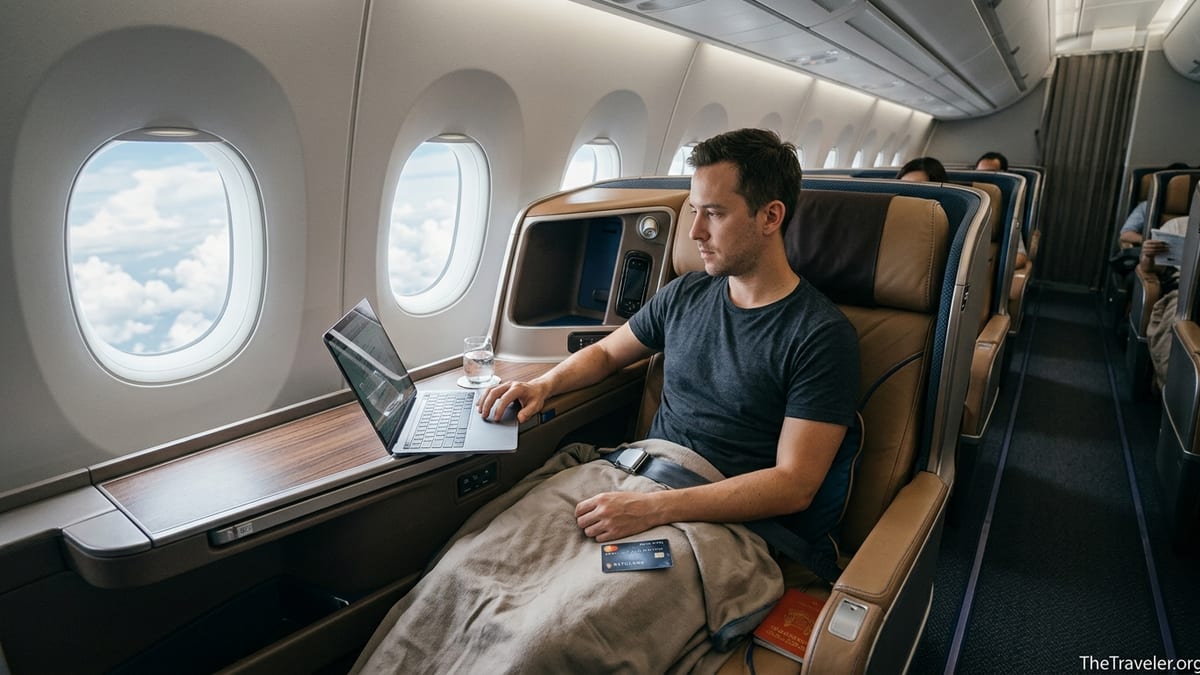
Understanding the KrisFlyer Card Landscape
When people talk about a “KrisFlyer credit card,” they are usually referring to co‑branded products issued with banks in key markets. In Singapore, the flagship product is the KrisFlyer UOB Credit Card, a Mastercard marketed heavily to working professionals who fly the airline at least a few times a year. In India, Singapore Airlines and SBI Card launched the KrisFlyer SBI Card in late 2024 targeting the fast‑growing outbound market. In other countries such as the United States, there is no longer a dedicated KrisFlyer cobrand, so travelers instead rely on transferable bank points that can be converted to KrisFlyer miles.
All of these cards share the same core promise. They earn miles that credit directly to your KrisFlyer frequent flyer account, typically at accelerated rates on Singapore Airlines, Scoot and related lifestyle partners, and at lower base rates on day‑to‑day card spending. They usually also come with airline‑specific perks such as accelerated elite status, bonus miles when you hit annual spend thresholds, and promotions with travel partners such as online travel agencies or ride‑hailing apps. The trade‑off is that they are less flexible than bank rewards cards that allow transfers to multiple airline programs.
For example, as of mid‑2026 the KrisFlyer UOB Credit Card in Singapore earns roughly 3 miles per Singapore dollar on Singapore Airlines Group purchases such as tickets, Scoot add‑ons, KrisShop and Pelago activities, and about 2.4 miles per dollar on popular categories like online food delivery, transport and travel bookings, subject to caps and minimum spends. Everyday uncategorized spend earns around 1.2 miles per dollar. These miles are automatically swept into your KrisFlyer account each month, avoiding the conversion steps and fees that come with some bank rewards programs.
These structures matter, because they dictate which types of travelers genuinely come out ahead. A family that spends heavily on online groceries and ride‑hailing in Singapore will generate miles differently from a consultant who charges long‑haul business tickets from Mumbai to San Francisco, and both will see different value than a U.S.‑based leisure traveler who only flies Singapore Airlines once every few years.
Frequent Singapore Airlines Flyers Based in Asia
The clearest winners from KrisFlyer cobrand cards are travelers who live in Singapore or nearby hubs and already choose Singapore Airlines and Scoot for most of their regional and long‑haul flying. If you are based in Singapore, Jakarta, Kuala Lumpur or Bangkok and fly Singapore Airlines three to five times per year, a card like the KrisFlyer UOB Credit Card can concentrate both your flight and lifestyle spending into a single pool of miles that accrue faster than generic cashback options.
Consider a Singapore‑based consultant who flies Singapore Airlines economy or premium economy from Singapore to Tokyo twice a year and to London once a year, and also takes a couple of Scoot trips to Bali or Phuket. Those tickets alone might cost in the region of S$5,000 to S$7,000 annually. By charging them to a KrisFlyer UOB Credit Card, the traveler could earn around 3 miles per dollar on these airline transactions, producing 15,000 to 21,000 miles from flights before counting the separate miles earned from actually flying.
Layer everyday spend on top of that. If the same consultant spends S$1,500 a month on dining, ride‑hailing and online shopping that mostly qualify for 2.4 miles per dollar, that could add roughly 43,000 miles per year. In a realistic scenario this traveler could generate somewhere between 60,000 and 80,000 KrisFlyer miles annually from card spend alone, enough for a one‑way saver business class ticket on a medium‑haul route such as Singapore to Sydney or a round‑trip in premium economy to North Asia, depending on award availability and season.
For such a profile, the convenience of automatic KrisFlyer crediting, combined with periodic promotions like bonus miles on Kris+ dining or Pelago activity bookings, tends to outweigh the lack of flexibility. These travelers are already “all in” on Singapore Airlines, so a program that makes it easier to reach premium cabins on the same airline is a natural fit.
Casual Flyers Who Spend Heavily on Everyday Categories
There is a second group that can still benefit from KrisFlyer cards even if they only fly Singapore Airlines once or twice a year. These are consumers in markets like Singapore who have generous spending in categories that earn bonus miles on the card and who value the aspirational nature of Singapore Airlines premium cabins. They may not be road warriors, but they are willing to channel a large share of their lifestyle spending through a single product.
Take a dual‑income family in Singapore that takes an annual holiday to Japan or Australia on Singapore Airlines economy and perhaps a quick Scoot weekend to Bangkok. Their direct airline spending might only be S$3,000 to S$4,000 a year. However, they spend about S$3,000 each month on categories such as online groceries, food delivery, streaming subscriptions, domestic transport and overseas shopping when traveling. If most of those expenses hit the 2.4 miles per dollar tier, they are generating around 86,000 miles per year on the card, plus whatever they earn from flying.
Over two years, that could easily build to more than 170,000 miles, enough to book two one‑way business class saver tickets on a long‑haul route such as Singapore to Europe, or to cover four or five regional economy trips during school holidays. In concrete terms, parents who are used to squeezing into economy could strategically time their redemptions so that one big anniversary trip is in business class on the A350 or Boeing 777, while still having enough miles left over for a family visit to Hong Kong in school vacation.
The trade‑off is opportunity cost. Those same families could be earning flexible bank points that transfer not only to Singapore Airlines but also to other Star Alliance partners or hotel programs. If they are sure they want their rewards to stay inside the Singapore Airlines ecosystem, then the KrisFlyer card’s higher earn rates and auto‑crediting can be compelling. If their travel patterns are more fluid, a generic bank rewards card might be safer.
Status Seekers and Elite Perks Hunters
KrisFlyer status still matters, especially for travelers who frequently connect through Changi Airport. The KrisFlyer Elite Silver and Elite Gold tiers offer benefits like extra baggage allowance, priority check‑in and boarding, and in the case of Elite Gold, Star Alliance Gold lounge access when traveling in economy. Some KrisFlyer credit cards are structured specifically to help cardholders move up the elite ladder faster than flying alone would allow.
For example, the KrisFlyer UOB Credit Card offers a fast‑track to KrisFlyer Elite Silver when you spend a qualifying amount on Singapore Airlines Group transactions in your first membership year. Recent card literature has cited triggers around S$5,000 in airline‑related charges, a threshold that a frequent regional business traveler or a family booking a single premium economy trip to Europe could hit without difficulty. Once the Silver badge is earned, flying a couple of additional long‑haul sectors in premium economy or business can put Elite Gold within reach.
This kind of benefit strongly favors travelers in Asia who book revenue tickets rather than award seats. A manager who regularly flies Singapore Airlines from Singapore to Frankfurt on business class might charge S$10,000 to S$15,000 annually in airfare through the card, banking both the 3 miles per dollar earning rate and the elite miles earned from flight segments. Over one or two years, that pattern can maintain Elite Gold without complex mileage runs.
However, elite‑status chasing will be less compelling for U.S.‑based or Europe‑based travelers who only occasionally fly Singapore Airlines on long‑haul trips. They might hold Star Alliance Gold from another program such as United MileagePlus or Lufthansa Miles & More. For them, locking spend into a KrisFlyer cobrand card in Asia makes little sense compared with earning flexible points that can be transferred to whichever airline is most useful for their home hub.
Big Spenders in India and Regional Growth Markets
Outside Singapore, one of the more interesting use cases for KrisFlyer co‑branded cards is emerging in India. The KrisFlyer SBI Card, introduced in 2024, targets Indian travelers who regularly fly from major cities like Delhi, Mumbai, Bengaluru and Chennai to Singapore and onward to the United States, Australia and Southeast Asia. While details vary by version, the general structure mirrors the Singapore card: elevated miles earning on Singapore Airlines tickets and selected categories, plus welcome bonuses and milestone rewards for hitting annual spend targets.
Imagine a Bengaluru‑based software engineer who flies Singapore Airlines economy or premium economy to San Francisco once a year to visit the company headquarters, with a stopover in Singapore, and also takes a leisure trip to Bali via Singapore with family. Those two trips could cost the equivalent of several lakh rupees in airfare, which, when charged to a KrisFlyer SBI Card, generate accelerated miles that immediately go into the KrisFlyer account. Combine that with domestic India spending on international hotels, online shopping and dining that qualifies for elevated earning, and it becomes realistic to accumulate the 80,000 to 120,000 miles needed for a one‑way business class ticket from India to Southeast Asia or the Middle East within a couple of years.
For Indian cardholders who are comfortable planning trips well in advance, this can unlock experiences like flying business class on Singapore Airlines’ A350 from Mumbai to Singapore for a honeymoon, or booking premium economy from Delhi to Los Angeles instead of economy. The psychological appeal is significant. Card marketing in India leans on these aspirational images, showing couples in wide business class seats and families in premium economy cabins with more legroom.
There is a caveat. Award availability on Singapore Airlines business class has tightened on some high‑demand routes, and Indian departure points are no exception. Cardholders who expect to simply swipe their way into last‑minute business class seats on peak‑season flights may be disappointed. The KrisFlyer card works best for planners who book several months ahead and are flexible on dates.
U.S.‑Based Travelers: When a KrisFlyer Card Makes Less Sense
For readers in the United States, the value proposition of a KrisFlyer co‑branded card is more nuanced. As of mid‑2026, there is no widely available U.S.‑issued Singapore Airlines KrisFlyer credit card marketed to consumers. Instead, most points enthusiasts earn transferable currencies such as American Express Membership Rewards, Chase Ultimate Rewards, Citi ThankYou Points or Capital One miles and then convert them to KrisFlyer when they are ready to book. This approach preserves flexibility to use other partners like United, Air Canada or hotel chains if Singapore Airlines award space is limited.
Consider a New York‑based traveler who flies to Singapore and onward to Bali once every two or three years. By putting daily spending on a domestic U.S. travel rewards card that earns, for example, 3 points per dollar on dining and 2 points per dollar on travel, they can accumulate a pool of 150,000 to 200,000 flexible points over a couple of years. When a trip materializes, they transfer the necessary amount to KrisFlyer to book a business class saver ticket from New York to Singapore, and they still have points leftover for other uses.
If a niche U.S. KrisFlyer card appears with direct‑earn miles but no significant multipliers on local categories or outstanding welcome bonus, it may not outweigh the versatility of these domestic cards. U.S. travelers also have robust protections, transfer bonuses and airline fee credits built into their home‑market products, which co‑branded KrisFlyer cards have tended not to match historically. Unless a U.S. product were to offer exceptionally strong value, most Americans will continue to benefit more from flexible bank points and occasional KrisFlyer transfers than from a dedicated airline card.
There is an exception for expatriates who divide their time between the United States and Singapore or India. Someone who spends six months a year in Singapore and six months in California, while consistently flying Singapore Airlines between the two regions, could justify maintaining both a U.S. flexible‑points card and a KrisFlyer cobrand in Asia. In that scenario, the KrisFlyer card is used for Singapore‑based spending and Singapore Airlines tickets, while U.S. spend builds a second reservoir of transferable points as a backup.
Redeemers Who Target Specific KrisFlyer Sweet Spots
The most sophisticated beneficiaries of KrisFlyer credit cards are travelers who already understand where KrisFlyer miles tend to deliver the strongest value. While award charts and surcharges evolve over time, certain patterns continue to attract points enthusiasts. Singapore Airlines’ own premium cabins, especially business class and the famed Suites on select A380 routes, are often cited as prime targets, along with medium‑haul business class between Singapore and destinations like Tokyo, Sydney and Dubai on saver awards.
At a practical level, this means that a Singapore‑based traveler who diligently earns 70,000 to 90,000 miles per year through a KrisFlyer UOB Credit Card and some flying can, every couple of years, treat themselves to a business class trip rather than spending miles on low‑value options like merchandise or short‑haul economy. For instance, a couple might aim specifically for a pair of business class saver seats from Singapore to Zurich or Frankfurt for a long‑planned European vacation, timing their redemption for off‑peak seasons when award seats are more likely to be available.
Another example involves regional sweet spots. Travelers based in Southeast Asia sometimes use KrisFlyer miles to book Star Alliance partner flights within other regions, such as United Airlines transcontinental business class in the United States or domestic flights in Europe on Lufthansa and Swiss, when pricing is favorable. While these redemptions are not always the best deals compared with using a partner’s own miles, they can make sense for a traveler with a large KrisFlyer balance who wants to avoid out‑of‑pocket cash fares on a secondary trip.
For this type of user, a KrisFlyer cobrand card is essentially a miles production tool. Their spending strategy is designed around earning towards known targets rather than vaguely hoping that miles will be useful someday. They keep abreast of devaluations, saver award changes and new aircraft deployments, and they are ready to redeem when an attractive routing appears. The card’s benefits around direct‑earn miles and periodic partner promotions simply help them get there sooner.
The Takeaway
Across all these scenarios, the travelers who benefit most from KrisFlyer co‑branded cards fall into a few clear categories. They live in markets where the cards are strong, such as Singapore and India. They already favor Singapore Airlines and Scoot for a meaningful share of their travel. They spend heavily in the categories that earn bonus miles on the card, and they are willing to plan trips far enough in advance to secure good value redemptions, especially in premium cabins.
In practice, a KrisFlyer card is a powerful fit for a Singapore‑based professional who flies regionally several times a year, a dual‑income family targeting a bucket‑list business class vacation every few years, or an Indian traveler who uses Singapore as a gateway to the United States or Australia. For these travelers, auto‑credited miles, elite fast‑tracks and periodic promotional earn rates can make the difference between another year in economy and a rare upgrade into a flat‑bed seat.
By contrast, occasional Singapore Airlines passengers based in North America or Europe, and travelers who value maximum flexibility across multiple airline alliances, may be better off with general bank rewards cards that allow transfers to KrisFlyer only when needed. The lack of a strong U.S. KrisFlyer card and the reality of tightening award availability on popular routes mean that committing all your card spend to the program is not always the smartest move.
Before applying, take a realistic look at your last 12 months of spending and flying. Estimate how many miles a KrisFlyer card would actually generate for you in a year, and compare that to what a flexible bank card could deliver. If the numbers, your home base and your travel plans all line up with the strengths of Singapore Airlines, a KrisFlyer card can be a valuable tool that brings premium cabin redemptions into reach. If they do not, it may be wiser to keep your options open.
FAQ
Q1. Who is the ideal candidate for a Singapore Airlines KrisFlyer credit card?
The ideal candidate is someone based in Singapore or another Asian hub who flies Singapore Airlines or Scoot several times a year and spends significantly in categories like dining, online shopping, transport and travel that earn bonus miles on the card. They also value redeeming for premium cabins and are prepared to plan trips in advance to secure saver awards.
Q2. I live in the United States. Should I look for a KrisFlyer co‑branded card?
For most U.S.‑based travelers, flexible bank rewards cards are more useful than a dedicated KrisFlyer product. Since there is no widely available U.S. KrisFlyer card at present, you will generally be better off earning transferable points with issuers like American Express or Chase and then converting them to KrisFlyer miles when you are ready to book a Singapore Airlines or Star Alliance flight.
Q3. How many miles can a typical Singapore‑based family earn in a year with a KrisFlyer card?
A dual‑income household that spends around S$3,000 a month on bonus categories such as dining, transport and online shopping could realistically earn more than 80,000 KrisFlyer miles in a year from card spend alone, especially if they also charge an annual Singapore Airlines holiday trip to the card. Exact totals vary based on category mix, promotions and any caps in place.
Q4. Are KrisFlyer miles from co‑branded cards different from miles earned by flying?
No. Miles earned from eligible spending on a KrisFlyer co‑branded card post directly to your KrisFlyer account and can be used in the same way as miles earned from flights. Both count toward redemptions for award tickets, upgrades and other uses, subject to the usual program rules and expiry timelines.
Q5. Can a KrisFlyer card help me reach elite status faster?
Some KrisFlyer cards, such as the KrisFlyer UOB Credit Card, offer fast‑track opportunities or status‑linked bonuses when you spend a certain amount on Singapore Airlines Group purchases within a specified period. These benefits can accelerate your path to KrisFlyer Elite Silver and, indirectly, make Elite Gold more attainable if you also fly regularly on revenue tickets.
Q6. What are the main downsides of holding a KrisFlyer co‑branded card?
The main downsides are reduced flexibility and the risk of tying too much of your rewards strategy to a single airline. If award space on Singapore Airlines or its partners is tight on the routes you want, having a large balance of KrisFlyer miles may be less useful than having bank points that can be transferred to several different programs. Annual fees and any category caps are additional considerations.
Q7. Is it worth getting a KrisFlyer card if I only fly Singapore Airlines once every few years?
Usually not, unless you are based in a market like Singapore and have very high day‑to‑day spending that hits the card’s bonus categories. Infrequent flyers who primarily travel on other airlines or live far from Singapore Airlines’ core network are more likely to benefit from flexible points that can be used with multiple carriers.
Q8. How do Indian travelers benefit from the KrisFlyer SBI Card?
Indian travelers who regularly fly Singapore Airlines from cities like Delhi, Mumbai or Bengaluru to Singapore and beyond can use the KrisFlyer SBI Card to accelerate miles earning on those tickets and on selected lifestyle spending. Over one or two years, this can make premium economy or business class redemptions more achievable for key trips such as honeymoons or long‑haul holidays.
Q9. What types of redemptions give the best value for KrisFlyer miles earned from cards?
Historically, the strongest value tends to come from saver level redemptions in Singapore Airlines business class and, when available, Suites or first class on long‑haul routes. Medium‑haul business class flights between Singapore and destinations like Japan, Australia or the Middle East can also offer good value, as can carefully chosen Star Alliance partner awards in other regions.
Q10. How should I decide between a KrisFlyer card and a general bank rewards card?
Compare how many miles or points each option would earn based on your actual past spending and consider how often you fly Singapore Airlines. If the KrisFlyer card’s bonus categories and airline benefits line up closely with your habits, and you are comfortable focusing your rewards on one program, it can be worthwhile. If your travel patterns are diverse or uncertain, a general bank rewards card will usually provide more flexibility and protection against changes in any single airline program.