


On a map of the French Riviera, Cap Ferrat looks like a small green thumb of land between Nice and Monaco. In reality, this pine-covered peninsula hides some of the Mediterranean’s most coveted villas, palatial hotels and low-key beaches. Long favored by royalty, industrialists and screen legends, it remains one of the Riviera’s most exclusive coastal escapes, yet it is still accessible enough for curious travelers who know where to go and how to plan.
Get the latest updates straight to your inbox!
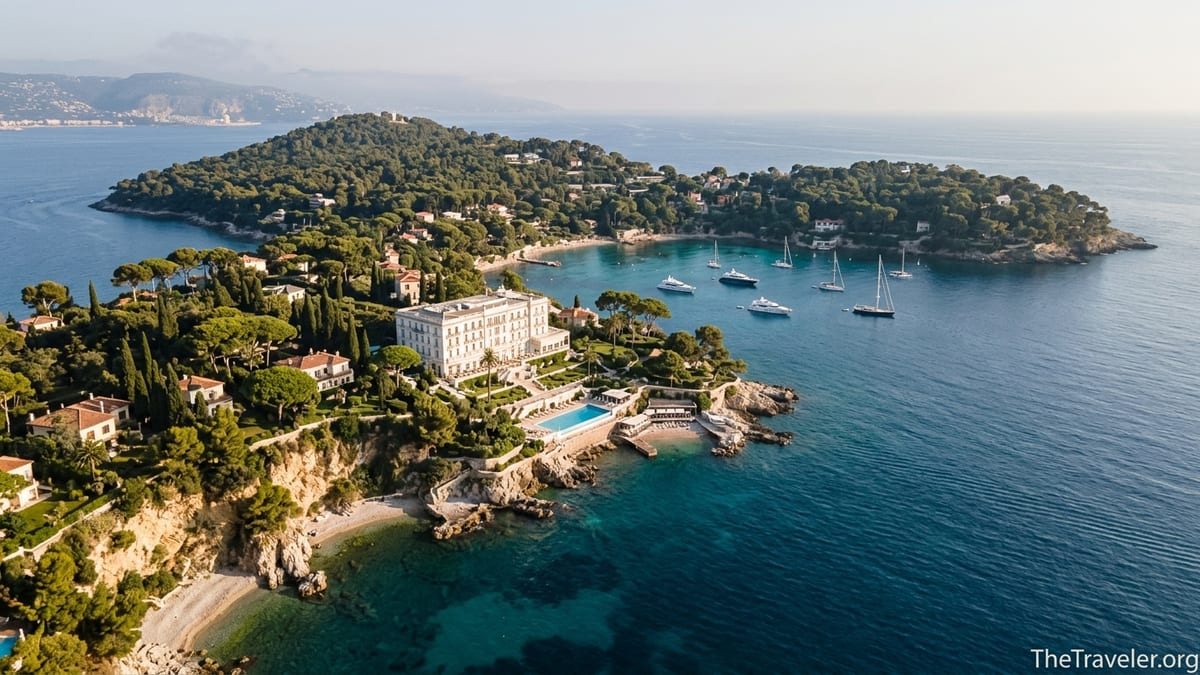
A Peninsula Steeped in Discreet Glamour
Cap Ferrat’s reputation for exclusivity did not happen by accident. Once the domain of King Leopold II of Belgium, the headland became a haven for European aristocracy and industrial magnates in the early 20th century, who built secluded estates among umbrella pines and cypress trees rather than flashy palaces on show. Today, properties such as Villa Ephrussi de Rothschild, with its coral-pink façade and formal gardens, offer a glimpse into that gilded age, yet the overall atmosphere on the peninsula is surprisingly understated. There are no nightclubs pumping music until dawn and few neon signs, just manicured gardens behind stone walls and yachts silently slipping into sheltered bays.
This preference for privacy over spectacle is one reason Cap Ferrat is often mentioned in the same breath as Monaco when it comes to real estate prices. Over the past decade it has regularly ranked among the most expensive residential areas in the world, with clifftop villas changing hands for tens of millions of euros. That does not mean you need a billionaire’s budget to visit, but it explains why the place feels insulated from mass tourism. Coaches rarely arrive in convoys and you are more likely to see a local resident walking a dog than a street vendor selling souvenirs.
Regulations also help preserve the calm. Local authorities tightly control new construction and protect large swathes of greenery, so the peninsula still feels like a piece of countryside at the edge of the sea. Flights heading to and from Nice are routed around Cap Ferrat’s airspace to reduce noise, something regular visitors notice when they compare it with more urban stretches of coastline nearer the airport. The result is a setting where you hear cicadas in summer and waves on rock rather than traffic.
All of this makes Cap Ferrat attractive to travelers seeking the Riviera’s sunshine without the crowds of Cannes or the party scene of Saint Tropez. A typical day might involve breakfast on a shaded terrace, a circular walk along the coastal path and an afternoon at a beach club, followed by a quiet dinner in the harbor. The glamour is there if you look for it, but it rarely shouts.
Iconic Grand Hotels and Ultra-Private Stays
If there is a single address that encapsulates Cap Ferrat’s rarefied appeal, it is the Grand-Hôtel du Cap-Ferrat, A Four Seasons Hotel. Opened in 1908 on the peninsula’s tip and now set in several hectares of terraced gardens above the sea, it has hosted everyone from Winston Churchill to Elizabeth Taylor. Today it consistently appears on lists of the Riviera’s best hotels, with nightly rates in peak summer typically starting around 1,500 to 2,000 euros for standard rooms and rising far higher for suites and villas. Many guests arrive by private transfer from Nice Côte d’Azur Airport, about a 35-minute drive away, and may not leave the property for days.
The hotel’s pool club, Club Dauphin, is a destination in itself. Reached by funicular descending the cliff, it features an Olympic-sized seawater pool perched just above the rocks, with sun loungers, cabanas and a casual restaurant. Non-residents can sometimes book day passes in the shoulder season, though availability is limited and prices often exceed 150 euros per person when access is offered. For those who stay on site, upgraded accommodation categories such as sea-view rooms with plunge pools or the Panoramic Suite with its hot tub terrace offer sweeping views along the coast toward Monaco.
Cap Ferrat’s sense of seclusion extends beyond this grande dame. On the other side of the peninsula, the Royal-Riviera hotel blends Belle Époque architecture with contemporary rooms and one of the area’s rare small private sandy beaches, overlooked by sun loungers and a waterside restaurant. Here, summer room rates typically start a little lower than at the Four Seasons but still comfortably in luxury territory, often around 700 to 1,000 euros per night in July and August. For many travelers, especially families, this hotel offers a more relaxed, resort-style experience with easy access to both the sea and the train station at nearby Beaulieu-sur-Mer.
For maximum privacy, there is also a flourishing villa rental market. Waterfront homes with private pontoons and staff command five- or six-figure weekly rates in peak season, but smaller hillside properties with sea views can sometimes be found for the price of two adjoining hotel rooms. Travelers booking villa stays commonly arrange yacht charters directly from the peninsula’s marinas, creating a bubble where they can move between house, boat and beach without ever entering a crowded town center.
Hidden Beaches and Sea-Sprayed Coastal Paths
Unlike some Riviera destinations known mainly for broad public beaches, Cap Ferrat is defined by its rocky shoreline and small coves. The most famous address is Paloma Beach, a pebble cove on the eastern side of the peninsula with views across the bay to the pastel hillside of Èze. Here a private beach club operates from spring through early autumn, renting sunbeds with mattresses and umbrellas, typically from around 40 to 60 euros per person in high season, with higher prices for first-row loungers. The attached restaurant serves grilled local fish, crisp salads and chilled rosé, drawing a mix of yacht crews, hotel guests and day trippers who arrive via water taxi from nearby harbors.
On the western side, Passable Beach looks across the water toward Villefranche-sur-Mer. This spot catches the evening light, making it a popular choice for late-afternoon swims and early dinners as the sun sinks behind the headlands. Like Paloma, it combines a public area, where you can lay down your towel for free, with a private concession that offers loungers, showers and waiter service. In summer, it pays to reserve at least a day or two ahead, particularly for weekend afternoons when locals from Nice and Monaco join holidaymakers on the sand and shingle.
For those who prefer a wilder feel, the peninsula’s coastal path is a revelation. Waymarked footpaths circle much of Cap Ferrat’s perimeter, hugging low cliffs just above the water. Sections of the trail can be accessed directly from the Grand-Hôtel du Cap-Ferrat or from parking areas nearer the village center, and a full circuit usually takes two to three hours at a leisurely pace. Along the way you pass broom and wild rosemary, slip by narrow stairways that descend to informal rock platforms and watch yachts anchor just offshore in translucent water. It is one of the few places on this stretch of coast where you can walk for more than an hour with almost constant sea views and minimal development in sight.
Swimming from the rocks is common in summer, especially early in the morning when the Mediterranean is calm and clear. Locals bring neoprene shoes to cope with the stony seabed and keep towels rolled in lightweight dry bags. Travelers new to the area quickly learn to alternate between the convenience of serviced beach clubs and the simple pleasure of a quiet cove with no facilities at all, just a ladder bolted into the stone and the open sea ahead.
Art, Villas and the Cultural Side of Cap Ferrat
Cap Ferrat’s cultural draw is anchored by its villas. The standout is Villa Ephrussi de Rothschild, built between 1907 and 1912 by Baroness Béatrice de Rothschild at one of the peninsula’s highest points. The mansion’s salons are filled with tapestries, porcelain and Old Master paintings, but for many visitors the real highlight is the garden, a sequence of themed outdoor rooms ranging from a French formal parterre to a Spanish courtyard and a stone pergola inspired by classical Italy. Musical fountain shows synchronize jets of water to classical pieces, and from several viewpoints you can see the sea on both sides of the peninsula.
Just beyond Cap Ferrat in neighboring Beaulieu-sur-Mer, Villa Kerylos re-creates a luxurious ancient Greek villa, down to mosaics and colonnaded courtyards. Combined tickets with Villa Ephrussi are popular with culture-focused travelers, who might spend a morning touring both properties and then head to a late lunch at the harbor in Saint-Jean-Cap-Ferrat. Schedules and visiting hours vary slightly by season, so it is wise to check opening times shortly before your trip, but as a rule the villas are open most days of the week from late morning through afternoon.
Artistic heritage runs deeper than formal museums. Cap Ferrat and its surroundings have long attracted painters and writers seeking soft Mediterranean light and tranquil working conditions. Jean Cocteau, for instance, decorated the walls of Villa Santo Sospir, just inland from the peninsula’s tip, with a series of murals in the early 1950s, transforming the house into what he called a “tattooed villa.” While access and opening policies for private houses can change, the continued interest from art lovers underscores how much creativity has been drawn to this small corner of the Riviera.
Many visitors build culture into their stay in small, everyday ways. Guests at the Grand-Hôtel du Cap-Ferrat might take an early-morning stroll along the cliff path before breakfast among century-old pines, while those based in the village walk up to the local church square for an espresso and a look at the fishing boats in the tiny port. With Monaco’s casinos and Nice’s museums within an easy 30- to 40-minute drive or bus ride, Cap Ferrat also works well as a quiet base for explorations along the wider Côte d’Azur.
Who Cap Ferrat Is For: Atmosphere, Budget and Seasons
Cap Ferrat is not the right destination for everyone. It lacks the nightlife of Cannes or Saint Tropez, and travelers looking for buzzy beachfront bars open until the early hours may find the peninsula too subdued. What it offers instead is a resort town atmosphere built around long lunches, coastal walks and relaxed dinners on shaded terraces. The harbor area of Saint-Jean-Cap-Ferrat has a string of restaurants where grilled fish, seafood platters and Provençal dishes appear on chalkboard menus, with mains often priced between 25 and 40 euros. Reservation etiquette is relaxed outside August, but in peak season it is normal to book a table a day in advance, especially for waterside spots.
Budget is an important consideration. Even in shoulder months such as May, June and late September, four- and five-star hotels on the peninsula often command nightly rates of 500 euros and up, and a simple coffee on a hotel terrace can cost twice as much as in inland villages. However, savvy travelers reduce costs by basing themselves just outside Cap Ferrat, in Villefranche-sur-Mer or Beaulieu-sur-Mer, where mid-range hotels and apartment rentals are more common. From there, local buses and coastal walking paths provide easy day access to the peninsula’s beaches and villas without the premium price tag.
Seasonality also shapes the experience. July and August bring the warmest sea temperatures and the highest chance of spotting superyachts in the bay, but also the densest crowds and the steepest prices. By contrast, late April to early June and mid-September to mid-October usually offer mild weather and quieter restaurants, with many beach clubs still operating and hotel rates somewhat reduced compared with peak summer. In winter, some seasonal establishments close and sea swimming is reserved for hardy locals, but the coastal paths remain open and days can still be bright and clear, ideal for travelers who prize empty trails over beach time.
In practice, Cap Ferrat tends to appeal most to couples, multigenerational families and small groups of friends who value privacy over spectacle. A family might split their days between the hotel pool, a cultural visit to Villa Ephrussi and a half-day boat charter to snorkel in nearby coves. A couple on a short break might schedule a Michelin-starred lunch in Monaco one day and a sunset walk to the lighthouse the next, returning each evening to the quiet of a peninsula where the loudest sound is cicadas in the pines.
Planning Your Stay: Access, Logistics and Real-World Tips
Reaching Cap Ferrat is straightforward but requires a small amount of planning. Most international visitors fly into Nice Côte d’Azur Airport, from which taxis and ride-hailing services can cover the 18 to 20 kilometers to Saint-Jean-Cap-Ferrat in around 35 minutes, traffic permitting. Fares vary but often fall in the 70 to 100 euro range for a standard taxi in daytime, with surcharges at night or on Sundays. More budget-conscious travelers can take the airport tram into central Nice, then connect with a coastal bus toward Saint-Jean-Cap-Ferrat or Beaulieu-sur-Mer, with total costs of under 10 euros per person at the expense of longer travel time and at least one connection.
Once on the peninsula, many visitors find they do not need a car. The village center, harbor, nearby beaches and several trailheads for coastal walks are all within comfortable walking distance of one another. Local buses link Cap Ferrat with Nice and Monaco, and regional trains from Beaulieu-sur-Mer station provide onward access to Antibes, Cannes and even Italian border towns. That said, families with young children or travelers who plan frequent day trips inland to hilltop villages may appreciate the flexibility of a rental car, particularly in shoulder season when evening bus schedules are less frequent.
Dining and day-to-day budgeting require a bit of forethought. A lunch for two at a beach club such as Paloma, including a shared starter, two main courses and a bottle of mid-range local rosé, can easily reach 150 to 200 euros before sunbed rentals. By contrast, grabbing croissants and coffee at a bakery in the village and picnicking on the rocks involves only a fraction of that cost. Many visitors choose a mix: a few indulgent long lunches and dinners interspersed with simpler meals, especially on travel days or after a heavy restaurant evening in Monaco or Nice.
There are also practical details that enhance the experience. Booking key elements such as hotel stays, restaurant reservations at the harbor in August and sunbeds at Paloma or Passable several days in advance can make the difference between a seamless stay and a frustrating one. Light packing helps, but water shoes, a hat, high-SPF sunscreen and a small dry bag prove particularly useful on rocky beaches and coastal hikes. Finally, travelers should be aware that service culture on the Riviera is professional but can feel brisk compared with more informal Mediterranean destinations; a courteous greeting in French and a little patience go a long way.
FAQ
Q1. Where exactly is Cap Ferrat on the French Riviera?
Cap Ferrat is a small peninsula on the Côte d’Azur between Nice and Monaco, with the village of Saint-Jean-Cap-Ferrat at its center and nearby neighbors like Villefranche-sur-Mer and Beaulieu-sur-Mer.
Q2. Why is Cap Ferrat considered so exclusive?
Cap Ferrat combines ultra-high-end real estate, strict development controls, limited hotel capacity and a long history of aristocratic and celebrity residents, which keeps visitor numbers relatively low and prices high.
Q3. Do I need to stay at a luxury hotel to enjoy Cap Ferrat?
No. While properties like the Grand-Hôtel du Cap-Ferrat and Royal-Riviera define the peninsula’s luxury image, many travelers stay in more affordable accommodations in nearby towns and visit Cap Ferrat for day trips.
Q4. How expensive are the beach clubs such as Paloma Beach?
In peak summer, expect to pay roughly 40 to 60 euros per person for a sunbed and umbrella at Paloma or similar clubs, plus the cost of food and drinks at on-site restaurants.
Q5. Is Cap Ferrat suitable for families with children?
Yes. Families often appreciate the calm atmosphere, protected coves and hotel pools. Royal-Riviera’s small sandy beach and the easy coastal path walks are especially convenient for children.
Q6. What is the best time of year to visit Cap Ferrat?
Late April to June and mid-September to mid-October usually offer pleasant weather, warm enough for coastal walks and beach time, with fewer crowds and somewhat lower hotel rates than in July and August.
Q7. Can I access the coastal paths and rock coves if I am not staying on the peninsula?
Yes. The coastal paths are public, with several access points near parking areas and the village center, and many rock coves along the route can be reached on foot by day visitors.
Q8. Do I need a car to get around Cap Ferrat and the surrounding area?
Not necessarily. The peninsula itself is compact and walkable, and local buses and nearby train stations in Beaulieu-sur-Mer and Villefranche-sur-Mer connect Cap Ferrat to Nice, Monaco and other Riviera towns.
Q9. Are there cultural sights beyond beaches and hotels?
Yes. Highlights include Villa Ephrussi de Rothschild and, just outside the peninsula, Villa Kerylos, both of which offer insight into the region’s artistic and architectural heritage alongside sea views.
Q10. How far in advance should I book for peak summer?
For stays in July and August, it is sensible to book hotels several months ahead and secure key restaurant reservations and beach-club sunbeds at least a few days before you plan to use them.