


On a coastline famous for superyachts, champagne spray and crowded beach clubs, Saint‑Jean‑Cap‑Ferrat occupies a very different niche. This small, pine‑covered peninsula between Nice and Monaco is one of the most expensive pieces of real estate in France, yet it feels more like a discreet garden suburb than a showy resort. For travelers choosing between Cannes, Saint‑Tropez, Monaco and the rest of the Côte d’Azur, understanding what makes Cap Ferrat different is the key to deciding if this rarefied corner of the Riviera is the right fit.
Get the latest updates straight to your inbox!
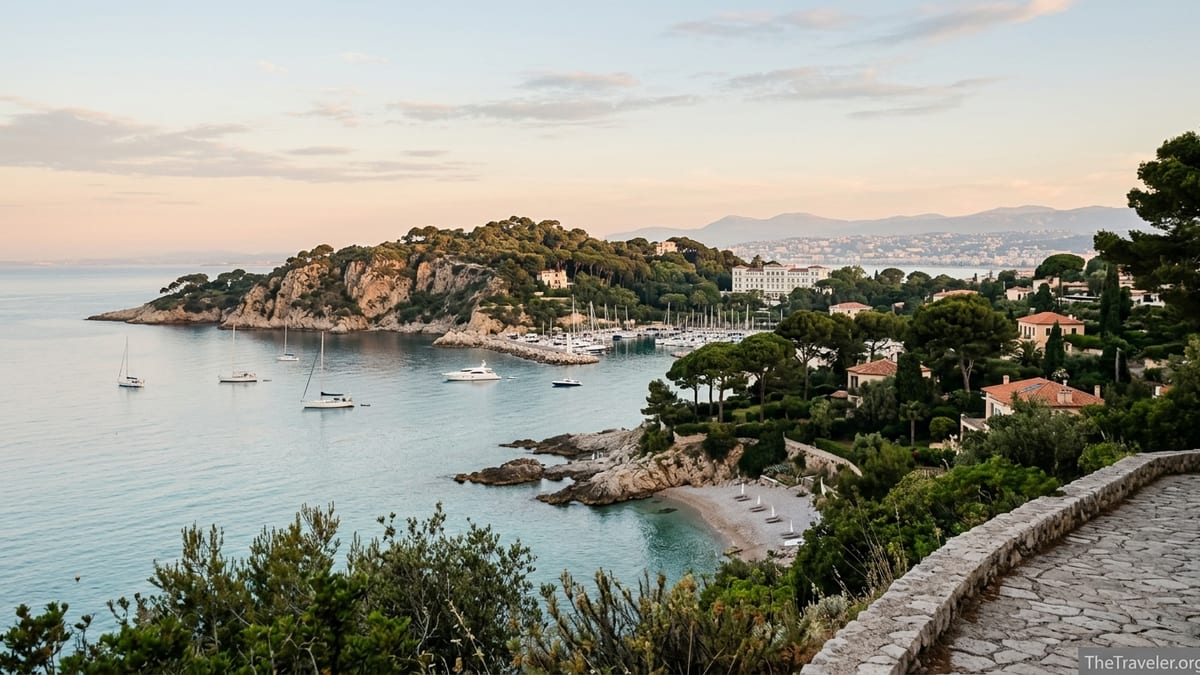
A Peninsula of Privacy in the Middle of the Riviera
Most luxury destinations on the Côte d’Azur are tightly woven into busy urban seafronts. In Cannes, the Croisette is a broad boulevard of hotels and beach clubs backed by apartment blocks. In Monaco, towers stack up the hillsides above the port. Cap Ferrat, by contrast, is a finger of land extending into the Mediterranean, with just one main road in and out, and a ring of coastal paths instead of a continuous strip of bars and shops. That geography alone creates a sense of separation that you do not get in Nice, Antibes or even Cap d’Antibes.
The village of Saint‑Jean‑Cap‑Ferrat itself is compact, centered on a small harbor where fishing boats share space with sleek day‑boats. Behind the quayside restaurants, there are no high‑rises or shopping malls. Instead you find quiet residential streets shaded by umbrella pines and palms, with high gates hiding villas and gardens. It feels more like a wealthy suburb than a resort town. Walk ten minutes from the port and the dominant sounds are cicadas and waves, not traffic and nightclub bass.
That privacy is one reason Cap Ferrat has long attracted owners and guests who could choose anywhere. The peninsula was once part of the domain of King Leopold II of Belgium, and over the decades it has drawn names from the Rothschilds to modern‑day business magnates. Today, real‑estate agents who specialize in ultra‑prime property cite Cap Ferrat alongside a handful of addresses worldwide where demand far exceeds supply. For visitors, this translates into an atmosphere where wealth is assumed rather than advertised, and where the default tone is hushed rather than high‑energy.
Crucially, the peninsula sits only about 25 minutes by car from Nice Côte d’Azur Airport in one direction and Monaco in the other, so guests can dip into the region’s more frenetic scenes and then retreat. A couple staying in a suite at the Grand‑Hôtel du Cap‑Ferrat can spend the afternoon shopping in Monte‑Carlo, have an early dinner in Beaulieu‑sur‑Mer, and still be back by sunset for a quiet walk on the coastal path, all without ever sitting in the notorious Riviera weekend traffic jams around Cannes or Saint‑Tropez.
Old‑World Palace Luxury Rather Than Flashy New Builds
Where many Côte d’Azur resorts compete to unveil the latest rooftop bar or designer collaboration, Cap Ferrat trades on a more old‑world model of luxury. The best example is the Grand‑Hôtel du Cap‑Ferrat, now operated by Four Seasons. Opened in 1908 at the tip of the peninsula, the hotel is very much a classic Riviera palace: a gleaming white facade set in about 17 acres of manicured gardens and pine forest, with a funicular leading down to its celebrated sea‑level pool club.
Instead of towering over a boulevard like the large hotels in Cannes or Nice, the Grand‑Hôtel sits apart on its own grounds at the edge of the cape. There is no casino next door, no traffic circle out front. Guests arriving in high season in 2026 can expect entry‑level rooms frequently to run around the four‑figure mark in dollars per night, with peak periods climbing significantly higher, especially for suites or sea‑view categories. That pricing is comparable to other top‑tier Riviera addresses such as Hôtel du Cap‑Eden‑Roc at Cap d’Antibes or the leading palaces in Monaco, yet the atmosphere at Cap Ferrat is more country‑estate than party hub.
Service culture here leans to the understated. Regular guests often remark that the staff at the Grand‑Hôtel remember preferences year after year, from favorite breakfast orders to preferred sunbed locations by the seawater pool. Instead of bottle‑service theatrics, the showpiece is an elegant dinner terrace where the entertainment is the sunset over the Mediterranean and, perhaps, a pianist in the bar. For many travelers who feel they have outgrown the noise and crowds of places like Saint‑Tropez in August, that quiet, traditional form of luxury is precisely the draw.
At the same time, Cap Ferrat hotels and villas are not museums. The Grand‑Hôtel’s spa and fitness facilities are fully contemporary, and the property has undergone extensive refurbishment under Four Seasons management to add modern comforts, from large terraces in newer suites to updated pool cabanas that feel in line with international luxury standards. The difference is that all of this is integrated into an early 20th‑century palace setting rather than a gleaming glass tower or aggressively branded lifestyle hotel.
Heritage Villas and Gardens Instead of Shopping Streets
One of the clearest ways Cap Ferrat differs from other luxury destinations on the Riviera is in what people come to see. In Monaco, the main draws include the casino, luxury boutiques and Formula One circuit. In Cannes, the Croisette is famous for its designer stores and film‑festival red carpet. On Cap Ferrat, the headline attractions are historic villas and gardens perched above the sea.
The most celebrated of these is Villa Ephrussi de Rothschild, the rose‑and‑white mansion built in the early 20th century for Béatrice de Rothschild. Today it is open to the public as a museum, with a collection that includes Sèvres porcelain, Gobelins tapestries and Old Master paintings. Equally compelling are the gardens. Visitors can wander through themed areas ranging from a formal French parterre with musical fountains to a Japanese garden and a hilltop viewpoint that looks out to both sides of the peninsula. A couple visiting in summer can expect to spend several hours here, paying a moderate admission fee comparable to a mid‑range museum ticket in a major European city, instead of an afternoon’s shopping budget.
Other villas contribute to the peninsula’s discreet glamour. Private properties, often hidden behind high walls and mature pines, range from Belle Époque mansions to striking contemporary glass structures with infinity pools. Realty firms active in Saint‑Jean‑Cap‑Ferrat routinely market homes priced in the tens of millions of euros, with features such as private funiculars to the sea, helipads and in‑house spa suites. Even if you are not house‑hunting, glimpses of these estates from the coastal path or from a rented boat underscore just how concentrated the wealth is here.
What you will not find is a dense commercial core. There are no shopping malls, and the selection of boutiques in the village is limited to a handful of galleries, beachwear shops and everyday services. Travelers for whom luxury is synonymous with strolling past dozens of flagship brands may prefer Nice or Monte‑Carlo. Cap Ferrat is better suited to those who consider a morning in the Rothschild gardens followed by a long lunch at the port the ideal program, without feeling the urge to browse a string of designer windows afterwards.
Low‑Key Beach Culture Instead of High‑Volume Beach Clubs
Beach culture is another area where Cap Ferrat stands apart. Across the Côte d’Azur, private beach clubs are big business. In Cannes, a front‑row sunbed at a well‑known club on La Croisette in peak season can reach well over 100 euros for the day once you factor in towels and umbrella. At some of Monaco’s most exclusive seafront clubs, a cabana for a summer weekend can cost several thousand euros. The tone in many of these venues is unapologetically social, with DJs, bottle parades and a steady stream of people passing behind your lounger.
Cap Ferrat’s main beaches are on a smaller scale. Paloma Beach, tucked into a cove facing the cliffs of Èze, does have a private section with restaurant and hired loungers alongside a free public strip. A pair of sunbeds and parasol in high season will still be an indulgence by most standards, but the mood is different. Swimmers pick their way into the clear water over small pebbles; local families arrive early with umbrellas; and pleasure boats anchor offshore without blasting music. There is more emphasis on the sea and the scenery than on being seen.
The peninsula’s coastal paths create alternatives to the standard beach‑club experience. From the village port, a well‑maintained footpath circles the headlands almost completely, threading past rocky coves where locals spread towels on flat slabs of stone and slip into the water via metal ladders. Access is free, and aside from a few stretches beneath private gardens, the seafront feels open and natural. For travelers used to the heavily privatized shores of parts of the Riviera, it can be a surprise to find so many spots where you can swim without crossing a restaurant terrace or hotel lobby.
Of course, luxury touches are never far away. At the Grand‑Hôtel du Cap‑Ferrat’s Club Dauphin, for instance, guests and paying day‑visitors have access to an Olympic‑size seawater pool cut into the cliff, with staff delivering iced water and cocktails to sunbeds that can cost as much as a good hotel room in many other destinations. Yet even here the soundtrack is more likely to be the soft slap of waves against the rocks than a full‑volume playlist. Compared with the louder, brand‑driven clubs in Cannes or Saint‑Tropez, Cap Ferrat’s beach life feels deliberately restrained.
Ultra‑Prime Real Estate and Discreet Wealth
The economics of Cap Ferrat also shape its character. Survey after survey of French property prices routinely lists Saint‑Jean‑Cap‑Ferrat among the most expensive places in the country on a per‑square‑meter basis, often alongside Paris’s top arrondissements and another small Riviera headland, Cap d’Antibes. While prices move with the market, it is common to see top villas here marketed for sums that would buy entire apartment blocks in Nice or a row of townhouses in a provincial city.
This ultra‑prime status means that many properties are not rented out short‑term at all. Instead they serve as family compounds, often occupied for just a few weeks a year by owners who arrive by chauffeured car or, in some cases, helicopter. Even the villas that do enter the luxury rental market tend to target multi‑week stays at high five‑ or six‑figure weekly rates in euros. For visitors, the practical effect is a quieter residential feel. There are fewer transient crowds of weekenders dragging suitcases, and fewer large group events than in areas geared to rotating conference and incentive business.
Wealth here is real but underplayed. You might see a hypercar glide through the village, but you are just as likely to watch a billionaire in understated linen and deck shoes carrying a baguette back to a villa on an electric bike. Compare that with the overt display in parts of Monaco, where the harbor functions almost like a showroom for superyachts and the terraces above the casino double as catwalks. Cap Ferrat residents and regular guests tend to value being left alone more than being photographed.
For travelers, this has pros and cons. The upside is a relaxed, safe environment where you can stroll late into the evening without the boisterousness that sometimes spills out of bars in busier resorts. The downside is that if you crave buzz, you may feel under‑stimulated after a few days. Many repeat visitors solve this by combining Cap Ferrat with other bases: three nights in a sea‑view room at the peninsula’s palace hotel for decompression, then a few nights in Nice’s city center or in Monaco for nightlife and shows before flying home.
Slow‑Paced Days, Coastal Walks and Nearby Excursions
Daily rhythm in Cap Ferrat is slower than in most luxury Riviera destinations. Rather than building the day around shopping or nightlife, visitors often structure their time around simple routines. A typical July morning might start with an espresso at a café by the port, followed by a walk along the coastal path towards Pointe Saint‑Hospice, where the trail passes a tiny chapel and a memorial overlooking the sea. Later, there might be a few unhurried hours at the beach or by a hotel pool, a late lunch under the pines, and an early evening wander through the gardens of a villa as the day cools.
This contrasts sharply with the event‑driven schedules in Cannes during the film festival or in Monaco during the Grand Prix, when streets are closed and hotel rates surge around headline dates. In Cap Ferrat, even in high summer, the biggest “event” of the day may be the synchronized fountains show in the Rothschild gardens or a jazz evening at a local restaurant. Couples celebrating an anniversary often comment that they can actually hear each other talk over dinner, which is not a given in more high‑octane resorts.
Cap Ferrat’s location, however, makes it easy to add more activity when desired. Nice, with its museums, Old Town markets and extensive restaurant scene, is an easy taxi ride away. Monaco’s casinos and venues such as the Opéra de Monte‑Carlo can be reached in under half an hour by car. A family staying in a villa with a pool above the port could spend one day entirely on the peninsula, the next exploring the hilltop village of Èze, and the third on a yacht charter that drops anchor in front of Beaulieu‑sur‑Mer for lunch before heading back at sunset.
For active travelers, the peninsula’s compact size is a plus. It is entirely feasible to walk from one side to the other in under an hour, or to jog the full coastal loop early in the morning before the sun gets too strong. Some of the most memorable experiences here are free or low‑cost: watching a storm roll in over the sea from the Pointe Saint‑Hospice path in shoulder season, swimming from an almost empty cove in late September, or sitting on a bench above the port with a takeaway coffee as the first rays hit the masts of the moored boats.
The Takeaway
What ultimately sets Cap Ferrat apart from other luxury destinations on the Côte d’Azur is not any single hotel, villa or beach, but the combination of peninsula geography, old‑world palace hospitality and a local culture that prizes discretion over spectacle. This is a place where room rates at the leading hotel can rival or exceed those in Monaco and Cap d’Antibes, yet the primary daytime activity for many guests is a quiet walk along the coastal path or a few hours in a historic garden overlooking the sea.
For travelers choosing between Riviera bases, the key question is whether that low‑key, residential, heritage‑driven version of luxury matches what they want from a trip. If you are seeking high‑end shopping, headline nightlife and a packed events calendar, destinations like Cannes, Monaco or Saint‑Tropez will deliver more obvious thrills. If, however, your idea of indulgence is waking up to birdsong in a pine forest, swimming from rock ledges into clear water, and returning in the evening to a grand hotel where staff greet you by name, Cap Ferrat may feel like the most refined spot on the coast.
In practice, many seasoned Riviera visitors now treat Cap Ferrat as their sanctuary. They use it as a base, dipping into livelier scenes when they wish but always retreating to the quiet of the peninsula at the end of the day. For those travelers, it is precisely the absence of certain things that defines the luxury here: no traffic‑clogged boulevards, no rows of nightclubs, no endless parade of tour buses. On a coastline famous for being seen, Cap Ferrat remains the place you choose when you would rather simply be.
FAQ
Q1. Is Cap Ferrat more expensive than other Côte d’Azur resorts?
Cap Ferrat is among the most expensive areas in France for real estate, and its leading hotel rates are comparable to or higher than top properties in Monaco or Cap d’Antibes, so visitors should budget accordingly.
Q2. How does the atmosphere in Cap Ferrat compare with Cannes or Saint‑Tropez?
The atmosphere in Cap Ferrat is quieter and more residential, with fewer bars and no large nightclub scene, making it feel more like a private garden peninsula than a party resort.
Q3. Can you visit Cap Ferrat on a day trip from Nice or Monaco?
Yes, Cap Ferrat is around 20 to 30 minutes by car from both Nice and Monaco, so it works well for a day of coastal walking, villa visits and lunch in the port.
Q4. Are the beaches in Cap Ferrat private or public?
Cap Ferrat has a mix of public coves and small private beach clubs. Paloma Beach, for example, combines a public section with a paying area that offers sunbeds and restaurant service.
Q5. What is the best time of year to stay in Cap Ferrat?
Late May, June and September are popular for warm weather with fewer crowds than peak August. High summer offers the liveliest scene but also the highest prices and busiest beaches.
Q6. Is Cap Ferrat suitable for families with children?
Yes, families often appreciate the safe, walkable environment, gentle pebble beaches and hotel pools. However, there are fewer organized kids’ attractions than in larger resorts, so it suits children who are happy with swimming and simple outdoor activities.
Q7. Do you need a car to enjoy Cap Ferrat?
A car is helpful for exploring neighboring towns and hill villages, but not essential if you plan to stay mostly on the peninsula. Taxis, car services and boats can cover most transport needs for a short stay.
Q8. How many days should you plan in Cap Ferrat?
Many travelers find three to four nights ideal, allowing time for the coastal paths, beaches and Villa Ephrussi de Rothschild, with perhaps one or two excursions to Nice, Monaco or Èze.
Q9. Is there nightlife in Cap Ferrat?
Nightlife on the peninsula is low‑key, centered on dinners, hotel bars and occasional live music. Those seeking clubs and late‑night venues usually head into Nice or Monaco for the evening and return by taxi.
Q10. How does Cap Ferrat compare to Cap d’Antibes for a luxury stay?
Both headlands offer exclusive villas and famous hotels, but Cap Ferrat generally feels quieter and more residential, while Cap d’Antibes is closer to the busier resort towns of Antibes and Cannes and sees more through‑traffic and event‑driven visitors.