


Florence dazzles with Renaissance art, grand churches and packed aperitivo bars. Yet many travelers discover that their most vivid memories come from the days they escape the city: sipping Chianti in a stone farmhouse, biking past sunflower fields, or walking along the Ligurian coast before catching an evening train back to Santa Maria Novella. Day trips from Florence appeal to those who want more than urban sightseeing, trading queues and crowded piazzas for vineyards, medieval walls and seaside trails within just a couple of hours’ reach.
Get the latest updates straight to your inbox!
Beyond Museums: Why Travelers Crave More Than City Sightseeing
Florence’s historic center is compact, walkable and museum rich, which is exactly why many visitors start to feel saturated after two or three full days. After the Uffizi, the Accademia, the Duomo climb and evenings in the Oltrarno, travelers often report a sense of cultural overload and a growing desire for open space, fresh air and slower encounters. A day among vineyards in Chianti or under the plane trees of Lucca offers a psychological reset that you simply do not get in line outside a gallery.
Day trips also allow visitors to test-drive different sides of Tuscany without constantly packing and unpacking. A couple based in Florence for five nights might spend one day touring Chianti wineries, another exploring Siena’s fan-shaped Piazza del Campo, and a third cycling the Renaissance walls in Lucca, all while returning to the same hotel each night. This hub-and-spoke approach keeps logistics simple yet delivers a surprisingly varied experience of central Italy.
Crucially, time on the road often leads to the chance encounters and unscripted moments that make a trip feel personal. Sharing a table at a farmhouse lunch in Chianti, chatting with an elderly couple on the regional train to Pisa, or joining locals on the promenade in Viareggio at sunset all offer a kind of everyday intimacy with Tuscany that is hard to find in Florence’s most touristy streets.
Easy Escape: How Simple It Is to Get Out of Florence for the Day
One reason day trips are so appealing is pure practicality. Florence’s main station, Santa Maria Novella, is a regional rail hub, with frequent Trenitalia services fanning out toward Pisa, Lucca, Siena, Arezzo and the Ligurian coast. As of mid 2026, regional trains from Florence to Pisa typically take about 50 to 70 minutes and, when booked as base-fare regionale tickets, often cost in the range of 9 to 15 euros each way, depending on the exact train and timing. From Pisa, another short hop brings you to Lucca or to the Tyrrhenian coast, making it realistic to combine two destinations in a single day for travelers who start early.
Reaching Siena is equally straightforward. Direct regional trains and buses connect Florence to Siena in roughly 1.5 to 2 hours, with prices that are usually well under 20 euros each way for standard fares. Many visitors choose the bus because it drops closer to the historic center than the train station, which sits lower in the valley. Either way, the journey is short enough that you can spend a full day wandering Siena’s Gothic streets and still be back in Florence for a late dinner.
For more complex itineraries, like the famed Cinque Terre on the Ligurian coast, independent travel is still feasible. Typical routes involve a train from Florence to La Spezia in about 2 to 2.5 hours, often with a change in Pisa, and a second local train on the Cinque Terre line to villages such as Riomaggiore or Vernazza, adding 5 to 20 minutes. Current fares for the Florence to La Spezia leg generally fall somewhere in the high teens to around 30 euros each way for regional or advance-purchase tickets, plus the cost of the Cinque Terre park and train pass. That makes for a long but manageable day for travelers who value flexibility.
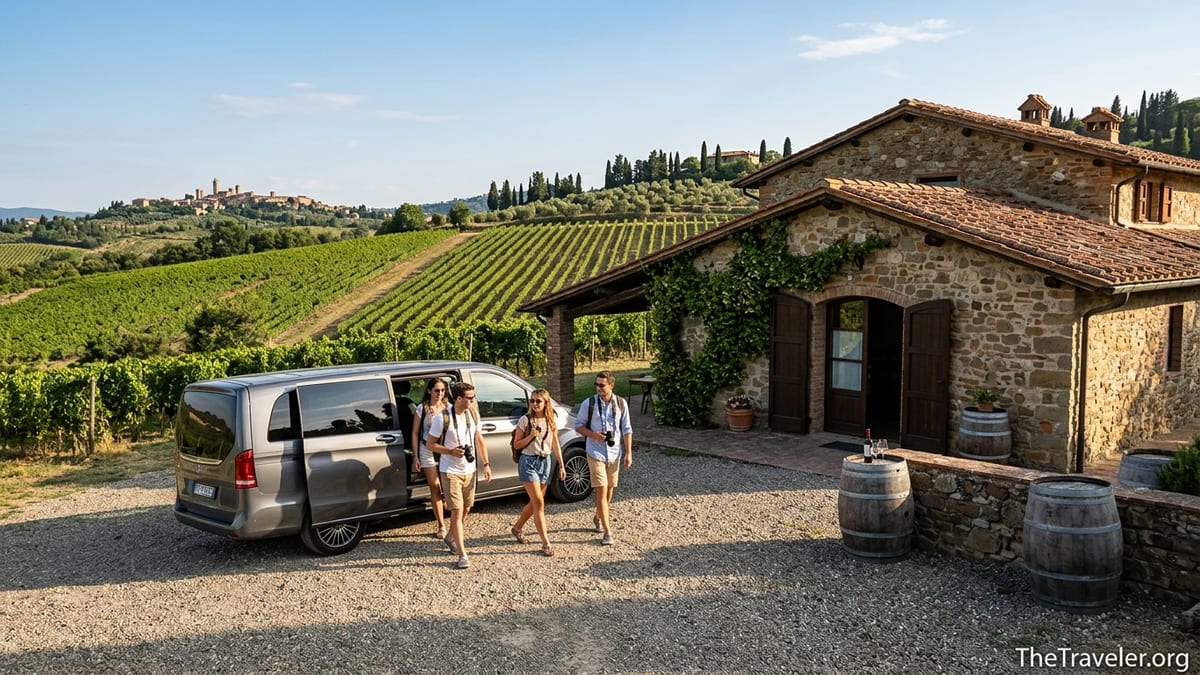
Travelers not keen on interpreting timetables gravitate toward organized small-group tours. In Chianti, for example, many reputable operators offer half-day or full-day outings that include an air-conditioned minivan, a driver-guide, and tastings at two or three wineries. Prices for these shared tours commonly start around 70 to 120 euros per person for a half-day, and between roughly 100 and 180 euros for a full day with lunch, depending on inclusions and season. For many visitors, paying a bit more than the bare cost of public transport is worth it to avoid navigating rural roads or worrying about designated drivers.
Chianti & Tuscan Wine Country: A Different Kind of Cultural Immersion
One of the strongest draws for day trippers from Florence is the nearby wine country. The Chianti Classico zone, stretching between Florence and Siena, is less than an hour’s drive from the city, yet it feels worlds apart. Rolling hills striped with vines, square stone farmhouses and tiny hill villages like Greve or Panzano offer a rural counterpart to Florence’s marble and frescoes. For wine lovers, tasting Sangiovese where it grows completes the story that begins on the wine lists of Florence’s restaurants.
Small-group Chianti tours, which often cap groups at 8 participants, have become a favored option for visitors who want a balance between structure and authenticity. A typical full-day itinerary might include pick-up near Piazza Santa Croce around 9:00 am, visits to two family-run estates, a guided cellar tour, and a seated tasting of several Chianti Classico and Super Tuscan wines at each stop. Many tours include a farmhouse lunch with dishes such as ribollita, pecorino with local honey and grilled meats, all paired with the estate’s own bottles. Recent price surveys for 2026 show these experiences clustering roughly in the 100 to 180 euro range per person for a full day, depending on the level of comfort and the number of wineries visited.
For travelers who value independence, renting a small car for a day opens more remote corners of Chianti, though parking and alcohol limits require discipline. Daily rental rates for compact cars can start somewhere around 50 to 80 euros before fuel and insurance, with extra fees for automatic transmissions. A common real-world pattern is to pick up a car near Florence’s main station after breakfast, visit a morning tasting in the countryside, linger over lunch at a trattoria in Castellina in Chianti, and return the vehicle by early evening to avoid driving in the dark on winding roads.
Crucially, venturing into wine country connects travelers to living traditions rather than museum displays. Visitors often recall conversations with winemakers about late-spring hail or organic farming experiments with more clarity than any panel text in a gallery. Many estates are family operations where grandmothers still supervise the kitchen and younger generations explain how they are adapting to warmer summers. For travelers looking for cultural depth rather than just another pretty view, that human element is part of the appeal.
Medieval Towns & Walled Cities: Walking Through Living History
Beyond vineyards, Florence is encircled by remarkably well-preserved medieval and Renaissance towns that can be reached and explored comfortably in a single day. Siena, with its shell-shaped Piazza del Campo and striped cathedral, is the best known. Travelers commonly board a mid-morning bus from Florence, arrive in Siena before lunch, and spend the afternoon tracing narrow lanes, visiting the Duomo, and sitting in the piazza imagining the Palio horse race before heading back to Florence in time for a late evening stroll along the Arno.
Lucca offers a gentler, more low-key contrast. Trains from Florence generally run at least hourly, and the journey typically takes around 1.5 hours, often with a simple change in Pisa on some services. On arrival, visitors step into a town circled by monumental Renaissance walls that have been transformed into a tree-lined pedestrian path. Renting a bicycle near the station and riding one leisurely loop around the ramparts, stopping for gelato at a café under the plane trees, is a classic Lucca experience. Many travelers combine a short stop at the Leaning Tower of Pisa on the outward or return journey, using the same regional rail line to hop between cities without complex planning.
San Gimignano, nicknamed the “medieval Manhattan” for its cluster of surviving stone towers, is another popular target for day trippers. It is not directly connected to Florence by train, so visitors generally reach it by bus via Poggibonsi or through organized tours that combine it with Chianti wineries. A full-day outing might include a morning winery visit, lunch among the vineyards, and several hours free in San Gimignano to climb a tower, sample Vernaccia white wine, and wander quiet side streets once the main tour groups thin out.
What unites these towns is that they are not staged historic parks but living communities. In Lucca, locals still use the main shopping streets for errands and evening passeggiata. In Siena, university students fill cafés just off the main square. Experiencing these places as day trips from Florence helps visitors understand that Tuscany’s history is embedded in everyday life, not just in Florence’s formal monuments.
Coastlines, Mountains & Trails: Nature Within Easy Reach
For travelers who crave natural landscapes as much as art, Florence’s position between the Apennine mountains and the Tyrrhenian Sea opens up compelling day-trip options. The Cinque Terre, a string of fishing villages along the Ligurian coast, is the most dramatic example. Visitors willing to start early can catch a morning train from Florence to La Spezia, change to the local coastal service and reach villages like Riomaggiore or Monterosso by late morning. Typical independent itineraries allow 5 to 6 hours of daylight for exploring, enough to hike one or two segments of the coastal trail, swim in coves in warm months, and linger over seafood before heading back.
Many travelers describe the contrast as invigorating: one day you are craning your neck at Brunelleschi’s dome, the next you are looking back at pastel villages clinging to cliffs above the sea. Because the Cinque Terre trails are subject to closures due to maintenance or weather, guided day tours from Florence can be appealing. These tours often bundle coach transport, local train tickets, and a guided hike, removing the uncertainty of checking trail conditions in Italian.
Closer to Florence, the rolling hills of the Chianti and Val d’Orcia regions also deliver nature alongside culture. Some tour companies now offer hybrid experiences that combine moderate hiking with wine tastings, such as a full-day Chianti hike that follows vineyard paths between villages, stops at small organic wineries, and includes a farmhouse lunch. These kinds of outings suit travelers who find it hard to sit still on a bus all day, offering a chance to actively move through the landscape rather than just look at it from behind glass.
In cooler months, when coastal swimming loses its appeal, the Apennines northeast of Florence provide alternatives like forest walks and small mountain towns such as Fiesole or Vallombrosa. While these destinations may not be as famous as the Cinque Terre, they are often quieter, and reaching them by bus or regional train lets visitors experience the rhythm of everyday regional travel.
Practical Realities: Time, Budget & How to Choose the Right Day Trip
The appeal of day trips is tempered by practical considerations, and understanding these realities helps travelers choose options that add to their trip rather than exhausting them. Time is the most important factor. Compact excursions like Pisa and Lucca, Siena, or Chianti hill towns usually involve under two hours of travel each way, leaving generous time on the ground. By contrast, Cinque Terre or more distant wine regions like Montalcino can turn into 12 to 14 hour days once connections, walks between stations and villages, and meal breaks are factored in.
Budget also shapes decision-making. Travelers comfortable with regional trains and buses can reach towns such as Pisa, Lucca and Siena for what is, by European standards, modest outlay. A realistic ballpark for a self-planned day by train might be 25 to 50 euros per person, including tickets and simple meals, if you stick to casual cafés. Wine country and coastal trips trend higher once tastings, park passes and restaurant lunches enter the equation. Organized group tours that include transport and tastings often fall into the 70 to 180 euro range per person, with private drivers and bespoke itineraries easily reaching several hundred euros per traveler.
Personal travel style matters just as much as cost. Independent travelers who enjoy solving small logistical puzzles often thrive on do-it-yourself days: buying a cappuccino at the station bar, validating their own tickets, and deciding on the fly whether to linger in Siena’s cathedral or catch an earlier bus to spend more time in a second village. Others find this stressful and feel more relaxed, and more able to focus on the scenery, when someone else handles parking, timetables and reservations. For them, a curated small-group tour from Florence that clearly lists inclusions and maximum group size can be the difference between a tiring day and a memorable one.
Finally, seasonality should not be underestimated. In July and August, trains and coastal trails can be crowded and hot, making closer or higher-altitude destinations more pleasant. In shoulder seasons like April, May, September and early October, wine country and walled towns generally balance good weather with manageable crowds. Winter trips to Siena or Lucca, when Christmas lights glow and fog settles over the countryside, have their own quieter charm, especially for travelers less focused on swimming or long hikes.
The Takeaway
For travelers willing to look beyond Florence’s galleries and piazzas, day trips unlock a richer picture of central Italy. Within a couple of hours, the city’s carved stone gives way to vineyard rows, fortified walls and cliffside villages, each revealing different layers of Tuscan and Ligurian life. Whether you are sipping Chianti in a family-run cantina, pedaling a rented bike along Lucca’s tree-lined walls, or watching the sun sink behind the Cinque Terre from a rocky harbor, the experiences you collect outside Florence can deepen your appreciation of the city itself.
Using Florence as a base, rather than sprinting from hotel to hotel, lets you mix high art with simple daily scenes: commuters on regional trains, bakers arranging morning pastries in small-town cafés, children riding their bikes on old ramparts. These glimpses of ordinary life often linger long after the memory of which Botticelli you saw in which room has faded. For many visitors, that is precisely why day trips from Florence are so compelling: they transform a city break into a multi-layered journey through landscapes, local traditions and the quieter corners of Italian culture.
FAQ
Q1. Is a day trip from Florence to Cinque Terre really worth it, or is it too rushed?
A day trip to Cinque Terre from Florence is long but doable if you start early and accept that you will only see a few villages rather than all five. Expect roughly 2 to 2.5 hours by train each way to La Spezia plus short local train rides between villages. Travelers who want a slower pace sometimes stay overnight on the coast instead, but energetic visitors often report that even a single well-planned day gives them a satisfying taste of the scenery and seaside atmosphere.
Q2. What is the easiest first day trip to take from Florence for nervous travelers?
For those new to Italian trains, Pisa and Lucca together make an excellent first outing. Trains from Florence to Pisa are frequent, the journey is relatively short, and signage is clear. From Pisa, a simple onward ride leads to Lucca, where the historic center is small and easy to navigate on foot. Many travelers visit the Leaning Tower in the morning, then spend the afternoon cycling Lucca’s walls before heading back to Florence in the early evening.
Q3. How much should I budget for a typical Chianti wine tour from Florence?
Prices vary widely, but many well-reviewed small-group Chianti tours that include transport, tastings at two wineries and a light lunch tend to fall somewhere around 100 to 180 euros per person in 2026. More basic half-day bus-based tours without lunch can be cheaper, often in the 70 to 120 euro range, while private driver-guided experiences with premium estates can easily exceed 250 euros per person depending on the itinerary and season.
Q4. Can I visit Siena and San Gimignano in the same day from Florence?
Yes, it is possible, but it makes for a busy day and careful planning is required. Some organized tours combine a morning in Siena with an afternoon in San Gimignano, often adding a winery stop along the way. Independent travelers can do it by bus and train connections, yet they should be realistic about time: each town deserves several hours, and you need to factor in travel and connection buffers. Travelers who prefer a slower pace often dedicate one full day to Siena and another to San Gimignano and nearby countryside.
Q5. Do I need to book train tickets in advance for day trips from Florence?
For regional trains to places like Pisa, Lucca and Siena, advance booking is generally not essential, and tickets can often be bought on the day from machines or ticket offices. For long-distance or fast services that might be used as part of a Cinque Terre trip, such as certain trains toward La Spezia, advance purchase can secure better prices and seat reservations. Regardless of when you buy, be sure to follow current validation rules for your specific ticket type before boarding.
Q6. Are day trips from Florence suitable for families with children?
Many are, provided you choose destinations and activities with kids in mind. Lucca is particularly family friendly thanks to its car-free walls where children can cycle safely. Pisa’s Leaning Tower complex offers open lawns where younger travelers can move around, even if they do not climb the tower itself. In wine country, some estates welcome children and provide outdoor spaces to explore, but it is wise to confirm in advance and avoid overly long days in the car for very young kids.
Q7. What should I wear for a wine country or countryside day trip from Florence?
Comfortable walking shoes are essential, since even winery visits often involve gravel paths, cellar steps and short walks through vines. For spring and autumn, layering is key: mornings can be cool while afternoons in the sun grow warm. In summer, light breathable fabrics, a sun hat and sunscreen are important, especially if your tour includes time outdoors in vineyards or on hilltop town walls. Smart-casual clothing is perfectly acceptable at most wineries; formal attire is rarely necessary.
Q8. Is renting a car for a day trip from Florence a good idea for first-time visitors?
Renting a car can be rewarding for confident drivers who want to reach smaller villages and viewpoints that are not easily accessed by public transport. However, first-time visitors should weigh this against challenges: navigating Florence’s limited-traffic zones, managing Italian parking rules and ensuring a designated driver in wine regions. Many travelers find that for a first trip, trains, buses and small-group tours offer a more relaxed introduction, with driving best left to subsequent visits once they are familiar with the area.
Q9. How many day trips should I plan if I have four full days in Florence?
With four full days, many travelers are happiest planning one or two day trips and dedicating the remaining days to Florence itself. A common pattern is to spend two days focused on the city’s major sights and neighborhoods, and two days on excursions such as a Chianti wine day and a visit to Pisa and Lucca or Siena. Packing in more than two day trips in four days risks leaving you tired and shortchanging both Florence and the places you visit.
Q10. Are guided tours or independent trips better value from Florence?
Value depends on what matters most to you. Independent travel using regional trains often costs less in pure euros and offers maximum flexibility, which appeals to experienced travelers. Guided small-group tours, while more expensive, include transport logistics, local insight and often special access to wineries or farms that are hard to arrange alone. Travelers who prioritize ease, context and social interaction often feel that a well-run tour delivers excellent value, while budget-conscious or highly independent visitors may prefer to craft their own day using public transport.