


More news on this day
Hundreds of passengers were left stranded this week at Cancún International Airport, General Mariano Escobedo International Airport in Monterrey, and Mexico City’s Lic. Benito Juárez International Airport after a wave of operational disruptions led to 212 delayed flights and 21 cancellations affecting major Mexican carriers.
Get the latest news straight to your inbox!
Multiple Mexican Hubs Hit by Widespread Disruptions
Publicly available flight-tracking data and local media coverage indicate that Cancún, Monterrey and Mexico City experienced one of their most turbulent days of summer operations as delays and cancellations rippled across domestic and international routes. The three airports function as critical nodes in Mexico’s air network, meaning schedule problems in one location can quickly cascade through others.
Reports show that a total of 212 flights were delayed and 21 were canceled across the three airports during the disruption period, interrupting travel plans for vacationers, business travelers and those in transit to other destinations. The impact was particularly acute at Mexico City’s Lic. Benito Juárez International Airport, the country’s main hub, where Aeromexico, Viva Aerobus and Volaris operate dense schedules serving cities across Mexico, North America and Latin America.
Cancún International Airport, a major tourism gateway for the Caribbean coast, and General Mariano Escobedo International Airport in Monterrey, an important industrial and business center, also reported significant knock-on effects. Together, the three airports handle tens of millions of passengers per year, so even short periods of disruption can leave large numbers of travelers waiting for answers, food vouchers and alternative connections.
Airlines Most Affected: Aeromexico, Viva Aerobus and Volaris
According to operational summaries and aviation data platforms, the disruption heavily affected flights operated by Aeromexico, low cost carrier Viva Aerobus and budget rival Volaris. These three airlines collectively account for a substantial share of Mexico’s domestic capacity and much of the point to point traffic moving through Cancún, Monterrey and Mexico City.
At Lic. Benito Juárez International Airport, Aeromexico’s tight hub structure means that even modest delays on early morning departures can reverberate through the day’s network. When aircraft and crew arrive late into the capital, onward legs to cities such as Cancún, Monterrey and Tijuana are often pushed back, compounding hold ups for passengers traveling on connecting itineraries.
Viva Aerobus and Volaris, which both rely heavily on fast turnarounds to keep fares low, are particularly vulnerable when congestion, weather or air traffic control restrictions limit the availability of gates and departure slots. Once a series of short haul sectors is disrupted, airlines can struggle to reposition aircraft and crew quickly across a geographically dispersed network, leading to rolling delays and last minute cancellations.
Passenger Experience: Long Queues, Uncertain Information
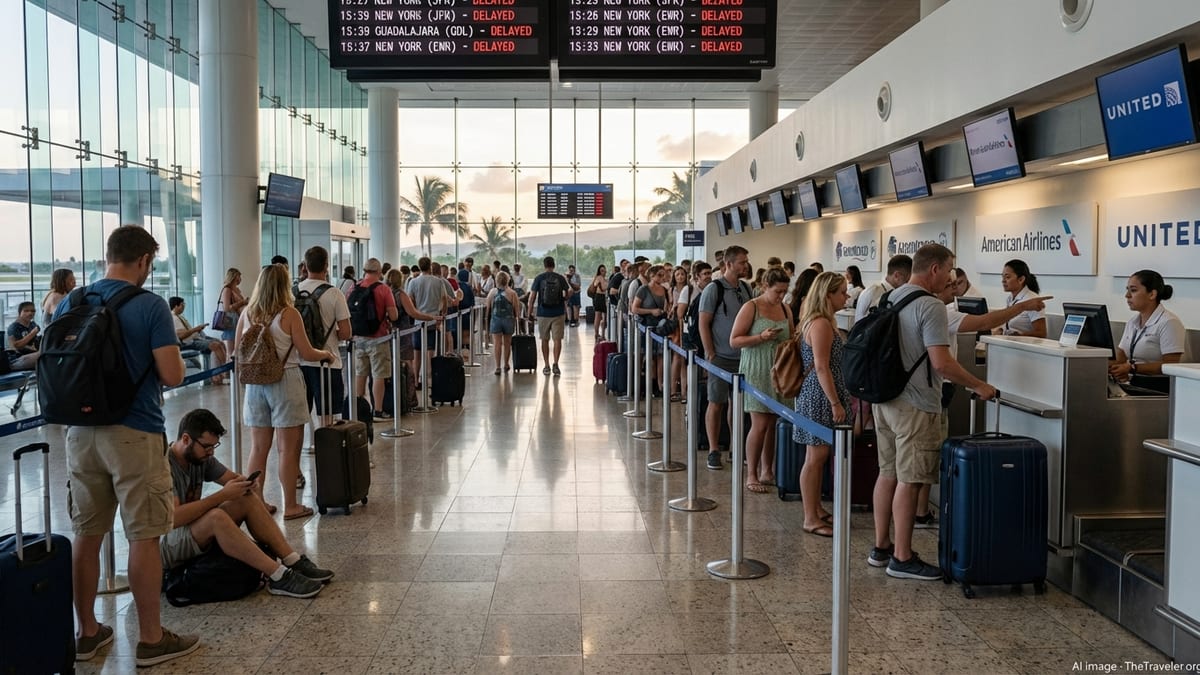
Travelers at the three airports reported scenes typical of large scale disruption: crowded departure halls, long lines at check in counters and customer service desks, and frequent changes to departure times displayed on information screens. In some cases, passengers described waiting for several hours with limited updates on revised schedules.
Mexico City’s main airport has previously been criticized by travelers for late gate changes and inconsistencies between airline mobile apps and terminal displays. Recent traveler accounts suggest that similar issues appeared during this latest disruption, with some passengers learning of new boarding gates or further delays only shortly before scheduled departure, adding to confusion and missed connections.
In Cancún, where many visitors are international tourists unfamiliar with domestic procedures, long lines for rebooking and hotel assistance formed as delayed flights pushed late into the evening. At Monterrey’s General Mariano Escobedo International Airport, home to a significant share of Viva Aerobus operations, travelers on regional routes faced crowded departure areas as aircraft awaited new departure slots and crews.
Operational and Regulatory Context
While precise causes of the 212 delays and 21 cancellations varied by route, industry observers point to a combination of seasonal weather patterns, high summer demand, tight aircraft utilization and broader regional congestion. Summer is one of the busiest travel periods for Mexico’s airports, particularly Cancún, where tourism peaks and every available slot is used to accommodate flights from North America and Europe.
Any combination of thunderstorms, airspace restrictions or staffing constraints can quickly overload an already stretched schedule. When that happens at a hub like Mexico City or a major leisure gateway such as Cancún, the effect is felt nationwide, including at Monterrey, where many travelers connect between northern Mexico and other regions.
Consumer advocates in Mexico frequently remind passengers that local civil aviation rules and passenger protection regulations may entitle them to assistance in cases of extended delays or cancellations, depending on the cause and the airline’s responsibility. Guidance published by Mexican consumer agencies and aviation regulators typically encourages affected travelers to document the disruption, retain boarding passes and request written confirmation of the reason for any cancellation.
What Stranded Travelers Can Do
In the wake of the latest disruptions, travel specialists generally recommend that passengers facing significant delays or cancellations at Cancún, Mexico City or Monterrey first verify their flight status through multiple channels, including airline apps and airport information boards. Because display systems and mobile notifications can occasionally fall out of sync during busy periods, cross checking is often essential to avoid missed rebooked flights or late gate changes.
Travel planning platforms and aviation advisories also highlight the importance of acting quickly once a disruption is confirmed. Rebooking options are typically more plentiful in the first hours after a cancellation is posted, before entire planeloads of passengers begin competing for limited remaining seats on later services.
For future trips, travel risk tools and disruption trackers can offer early warnings of mounting delays at key hubs such as Cancún, Monterrey and Mexico City. While these alerts cannot prevent schedule changes, they can encourage travelers to allow longer connection times, pack essential items in carry on bags in case of overnight stays, and maintain flexible onward plans when flying through Mexico’s busiest airports during peak seasons.