


Just a 15-minute boat ride from the croisette and red carpets of Cannes, the Lérins Islands feel like a different world. Pine forests replace traffic, cicadas drown out car horns, and salt-sprayed paths lead to ruined fortresses and working monasteries. For travelers looking to balance Riviera glamour with nature, history, and genuine calm, a day trip to these two small islands is one of the most rewarding outings you can make from Cannes.
Get the latest updates straight to your inbox!
Where Are the Lérins Islands and What Makes Them Special
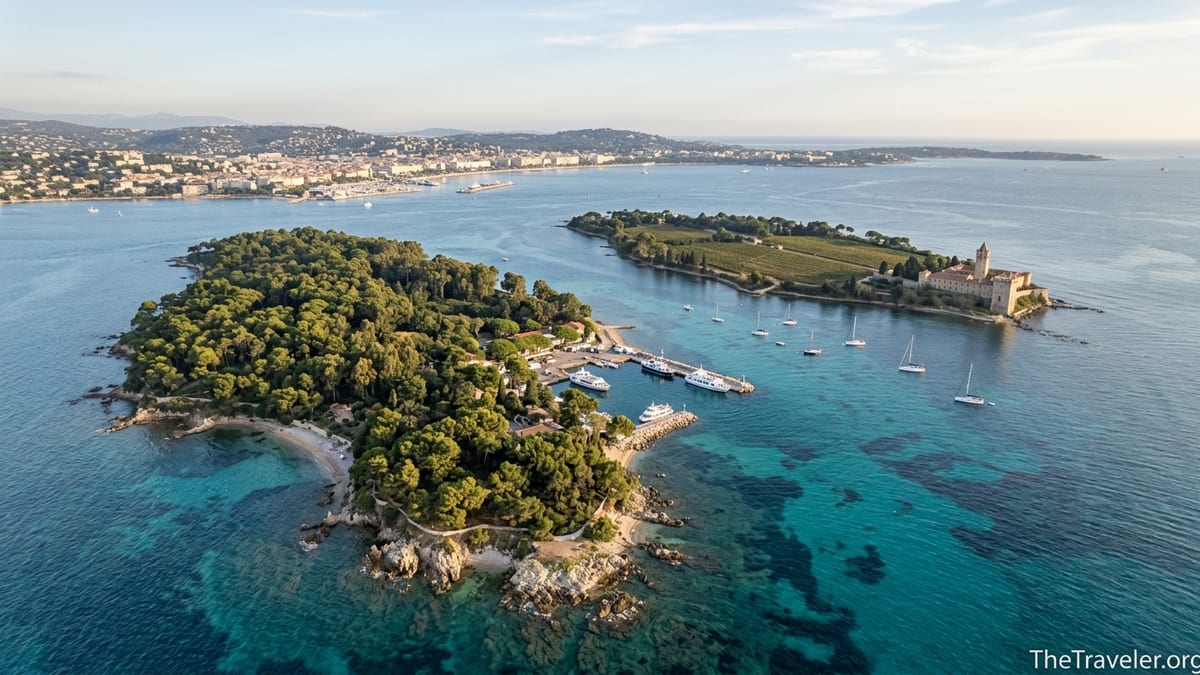
The Lérins archipelago sits in the Bay of Cannes, a short hop by ferry from the Old Port. There are two main islands for visitors. Île Sainte-Marguerite, the larger, is roughly half a mile off the coast and covered in fragrant pine and eucalyptus forest. Île Saint-Honorat, a little farther out, is smaller and privately owned by a community of Cistercian monks who have lived and prayed here for more than 16 centuries. Together they offer a mix of beaches, shaded walking trails, and surprisingly deep history in an area most people associate only with film festivals and beach clubs.
What sets the Lérins Islands apart from many other Riviera excursions is how quickly you can swap city energy for quiet nature. Step off the ferry and there are no cars and no high-rise hotels. Instead you find narrow dirt paths, stone chapels, and simple quays where small fishing boats bob in turquoise water. Even in high season, once you walk five minutes from the main landing pier, you can often find your own slice of shoreline for a picnic or a swim.
For first-time visitors to Cannes, the islands also give a more affordable way to experience the Mediterranean compared with chartering a yacht or paying for a private beach club. Ferries are frequent and reasonably priced, and once on the islands, the main activities are free: walking, swimming, exploring, and lingering over a picnic under the trees.
Getting From Cannes to the Lérins Islands
Reaching the Lérins Islands is straightforward. Passenger ferries leave from the Vieux Port in central Cannes, a few minutes’ walk from the Palais des Festivals and the end of La Croisette. Several companies run the route year-round to at least Île Sainte-Marguerite, with more frequent departures between roughly April and October when visitor numbers peak.
As of 2026, a standard round-trip ticket from Cannes to Île Sainte-Marguerite typically costs in the region of 18 to 20 euros for adults with slightly reduced fares for children. Services to Île Saint-Honorat are similar in price and take only a couple of minutes longer. The crossing itself is short, usually about 15 minutes to Sainte-Marguerite, depending on the operator and boat type. In practice, many visitors simply show up at the ticket kiosk on the quay 20 to 30 minutes before their preferred departure, buy tickets on the spot, and board the next available boat.
In peak summer months, especially on weekends and during the Cannes Film Festival or major conferences, boats can fill up. If you are traveling in July or August with a group, it is worth buying tickets first thing in the morning or reserving online with a ferry company a day or two earlier. Travelers staying elsewhere on the Riviera, such as Nice or Antibes, often take a morning regional train to Cannes, walk down to the port, and connect directly with a late-morning island ferry, making the trip easy to combine with a wider Côte d’Azur itinerary.
Île Sainte-Marguerite: Forest Trails, Fortresses, and Swimming Coves
Île Sainte-Marguerite is usually the first stop for visitors. The island is mostly managed as a protected natural area, so development is very limited. As soon as you land at the small harbor, you see café terraces and a few low-rise stone buildings. Within minutes, though, you can step into a network of sandy and rocky paths that crisscross the forest of Aleppo pines and eucalyptus trees. The island takes roughly an hour to walk around at a relaxed pace, but many travelers spend a full day here, stopping frequently to swim or relax on the rocks.
One of the main sights is Fort Royal, the imposing stone fortress that crowns the northern side of the island. It once served as a state prison and is best known for having held the mysterious “Man in the Iron Mask.” Today, the complex houses a museum where you can wander former cells, climb old staircases to viewpoints across the bay toward Cannes, and see displays on the island’s maritime history. Entry fees are modest, and visiting the fort makes a good mid-morning break from walking the coastal trails.
For swimming, the water around Sainte-Marguerite is notably clear, which is why you will often see local day boats and small yachts anchoring just off shore. Many visitors bring a simple picnic from Cannes, perhaps a baguette, cheese from a market stall, fruit, and a bottle of water, then settle on one of the flat rock shelves along the south coast. There are a handful of simple food options near the landing quay, but choice is limited compared with the mainland, so coming prepared with snacks is wise, particularly for families.
Despite the island’s popularity, it is still relatively easy to find quieter corners. If you turn left from the ferry landing and follow the path along the northern shore, you quickly leave the small cluster of cafés behind. Early morning ferries tend to be used by walkers and swimmers who value the stillness before midday, while afternoon boats bring more casual visitors who stop for a quick dip before heading back to Cannes for dinner.
Île Saint-Honorat: Monastery Life, Chapels, and Vineyard Views
Île Saint-Honorat offers a different atmosphere altogether. Smaller and farther out into the bay, it is owned and inhabited by a community of Cistercian monks who have sustained monastic life here since late antiquity. The island is around 1.5 kilometers long and only a few hundred meters wide. Palm trees, pines, and low vines patchwork the landscape, and simple stone chapels stand beside the sea in various stages of weathered repair.
Visitors typically follow a clearly signed coastal path that circles the island, taking about 45 minutes to an hour at an easy pace. Along the way, you pass several small chapels, a Napoleonic-era cannonball oven, and viewpoints toward Cannes and Sainte-Marguerite. The highlight for most is Lérins Abbey and its fortified monastery tower. The medieval tower, rising from the sea on a low rock, houses chapels and terraces that you can visit on a self-guided circuit, offering atmospheric glimpses into monastic life and sweeping views across the bay.
The monks cultivate about eight hectares of vineyards on the island and produce respected wines and liqueurs. While production is limited and prices are higher than mass-market bottles, many travelers choose to buy a single bottle or small liqueur as a unique souvenir. There is a simple boutique near the abbey where you may find island-made wine, olive oil, and religious items. Tasting is usually very informal and subject to availability, but even simply seeing neat vineyard rows running down to the sea is striking.
Although the island receives day-trippers, it remains a place of prayer. There are clear signs indicating areas that are private to the monastic community, and visitors are encouraged to dress modestly around the abbey itself. Some travelers choose to time their visit so they can quietly sit in the church during a service, gaining a sense of the island’s spiritual rhythm before returning to the bright bustle of Cannes in late afternoon.
Planning the Perfect Lérins Day Trip
A well-planned day trip to the Lérins Islands can be very relaxed and still feel full. A classic pattern is to take a mid-morning ferry from Cannes to Île Sainte-Marguerite, walk across the island, visit Fort Royal, and swim at one of the rocky coves along the southern coast. Around lunchtime, many visitors find a shaded spot under the pines, unpack a picnic, and linger while watching boats come and go in the bay.
In the afternoon, you can either stay on Sainte-Marguerite or, if the season and timetable allow, catch a ferry across to Île Saint-Honorat for a couple of hours. Some operators sell combined tickets or have schedules that make it straightforward to visit both islands in a single day. If you prefer a slower pace, choose just one island and explore it in more depth. Families with small children often appreciate limiting the number of boat rides and spending extra time near the easy-access coves close to each island’s landing quay.
For those staying in Cannes for several days, it can be pleasant to visit the islands more than once. One approach is to spend an entire day on Sainte-Marguerite, focusing on swimming and walking, and a separate half-day on Saint-Honorat, concentrating on the abbey, chapels, and vineyard views. The weather on the Riviera can be very hot in July and August, so spring and early autumn visits often feel more comfortable; May, June, September, and early October usually offer warm seas with slightly fewer crowds.
Comfortable walking shoes or sandals, a refillable water bottle, sun protection, and a light cover-up for visiting religious sites are the essentials. There is little shade along some coastal stretches and only limited drinking water points, so practical details make a real difference. Travelers who forget beach shoes often end up buying simple rubber sandals at shops in Cannes, because many popular swimming spots around the islands are rocky rather than sandy.
How the Lérins Islands Compare to Other Riviera Day Trips
From Cannes, you have several tempting day trip options, from hilltop villages like Saint-Paul-de-Vence to resort towns like Antibes and Juan-les-Pins. Yet the Lérins Islands stand out because they combine three elements that are hard to find in a single excursion: easy access from the city center, car-free nature, and a strong sense of history. You can leave a café on La Croisette at 10:00 in the morning and be walking through pine forest with sea views by 10:30, which is difficult to match with inland excursions that require buses or rental cars.
Compared with glitzier boat outings along the coast, such as full-day yacht trips to Saint-Tropez, visiting the Lérins Islands is also relatively budget friendly. Instead of paying hundreds of euros for a private charter, you can spend a modest amount on a ferry ticket, buy picnic supplies from a Cannes bakery and supermarket, and still enjoy the same translucent water and Mediterranean horizons. For solo travelers and couples, this balance of experience and cost is one of the main reasons the islands are frequently recommended by hotel concierges and seasoned Riviera visitors.
Another point of difference is the atmosphere. Towns like Monaco or Saint-Tropez reward travelers interested in fashion, nightlife, and luxury shopping. The Lérins Islands, on the other hand, appeal to those who want a quieter kind of Riviera day, focused on walking, swimming, and simple meals. It is not unusual to see local residents from Cannes and Antibes boarding early ferries with only a towel, a paperback novel, and a bag of fruit, using the islands as their informal weekend escape.
Because the islands are so close, they also work well as a flexible half-day option. If clouds roll in or the wind picks up, you can simply board an earlier return boat and be back in Cannes in time to visit a museum, stroll the old town of Le Suquet, or enjoy an early evening drink on a terrace overlooking the harbor.
Tips for Respectful and Sustainable Visits
Both Sainte-Marguerite and Saint-Honorat are fragile natural environments, with protected woodland, birdlife, and shallow seagrass meadows in the surrounding waters. To help preserve them, visitors are asked to follow standard Leave No Trace principles: take all rubbish back to Cannes, avoid lighting fires or barbecues, stick to established paths, and respect any signage indicating sensitive zones. On hot, dry days, the fire risk is high, so smoking in the forest is strongly discouraged.
On Saint-Honorat in particular, being considerate of monastic life is important. The monks’ private living and prayer areas are clearly marked, and noise around the abbey church is kept low. Swimwear is fine along the coastline, but modest clothing is expected in and around religious buildings. Travelers often carry a lightweight shirt or dress for this purpose, especially if they plan to step inside the church for a few minutes of quiet reflection.
If you choose to buy local products such as wine, liqueur, or olive oil made on Saint-Honorat, you are directly supporting the upkeep of the island and its historic buildings. The same goes for paying entry to Fort Royal on Sainte-Marguerite, which helps fund conservation and interpretation work. Choosing reusable water bottles and avoiding single-use plastic picnic items is another small but meaningful way to keep the islands clean, especially on busy summer weekends.
Finally, remember that the islands can feel very peaceful outside the main paths. Sound carries over water, so playing loud music on portable speakers or leaving litter in quiet coves can quickly spoil the experience for others. Treating the islands as shared spaces of nature and reflection will help keep them special for future travelers.
The Takeaway
For all the glamour of Cannes, many travelers find their most vivid Riviera memories just offshore, among the pine trees and stone chapels of the Lérins Islands. Within minutes, you move from a city of film screenings and beach clubs to car-free paths, translucent sea, and places that have been inhabited for centuries. Whether you are swimming off the rocks of Sainte-Marguerite, climbing the steps of the fortified monastery on Saint-Honorat, or simply listening to the wind in the trees over a picnic, the islands offer an accessible, quietly beautiful counterpoint to the mainland.
Because the logistics are simple, costs are manageable, and experiences cater to history lovers, walkers, families, and swimmers alike, the Lérins Islands stand out as one of the very best day trips from Cannes. Plan a day here and you are likely to leave with sun-warmed shoulders, sand or salt on your feet, and the feeling that you have discovered a gentler, older side of the Côte d’Azur.
FAQ
Q1. How long does the ferry from Cannes to the Lérins Islands take?
The crossing from Cannes to Île Sainte-Marguerite is usually around 15 minutes, with Île Saint-Honorat only a few minutes farther, depending on the boat and conditions.
Q2. Do I need to book ferry tickets to the Lérins Islands in advance?
Outside the busiest summer weekends and major Cannes events, many travelers simply buy tickets at the port shortly before departure. In July and August or during festivals, advance booking or early morning purchase is wise.
Q3. Can I visit both Île Sainte-Marguerite and Île Saint-Honorat in one day?
Yes, it is possible in season, especially if you take a morning ferry and keep a steady pace. Some operators offer combined options, but many visitors prefer to focus on one island for a more relaxed experience.
Q4. Are there restaurants and shops on the Lérins Islands?
There are a few simple cafés and food stands near the ferry landings, as well as a shop on Saint-Honorat selling products made by the monks. Choice is limited, so bringing a picnic from Cannes is recommended.
Q5. Is swimming allowed around the islands?
Yes, swimming is one of the main reasons people visit. The water is usually very clear, with rocky and some small pebbly coves. Beach shoes can be helpful because many access points are rocky.
Q6. What should I wear when visiting the monastery on Île Saint-Honorat?
Casual, modest clothing is appropriate. Swimwear is fine on the beaches, but shoulders and midriffs should be covered in and around religious buildings. A light scarf or shirt is easy to carry for this purpose.
Q7. Are the Lérins Islands suitable for children and strollers?
The islands are popular with families. Paths near the landing areas are fairly level, but many trails are unpaved. Lightweight strollers can manage the main routes, though baby carriers are often more comfortable.
Q8. Can I stay overnight on the Lérins Islands?
There are no traditional hotels on the islands. Limited retreat accommodation exists within the monastery on Saint-Honorat for those on organized spiritual retreats, but most visitors stay in Cannes and visit on a day trip.
Q9. Is there shade on the islands, or will I be in full sun all day?
Large parts of both islands are wooded with pines and eucalyptus, providing good shade along many paths. However, some coastal stretches and rock shelves are exposed, so sun protection is still important.
Q10. When is the best time of year to visit the Lérins Islands?
Late spring and early autumn are ideal, typically May, June, September, and early October. The sea is usually warm enough for swimming, and the islands are a little quieter than in peak summer.