


Mergellina sits where Naples’ elegant waterfront promenade meets the rising cliffs of Posillipo, a compact district of fishing boats, Art Nouveau villas and late-night cafes that feels very different from the city’s better-known coastal areas. It is still part of the same curving bay, with the same views of Vesuvius and Capri, yet the rhythm here changes. Ferries leave quietly for the islands, locals queue for fried cuoppo at midnight, and joggers weave past fishermen mending nets on the harbor wall. Understanding what sets Mergellina apart helps travelers decide whether this is simply a pleasant stop on the lungomare or the neighborhood where they want to sleep, stroll and watch Naples at work on the water.
Get the latest updates straight to your inbox!
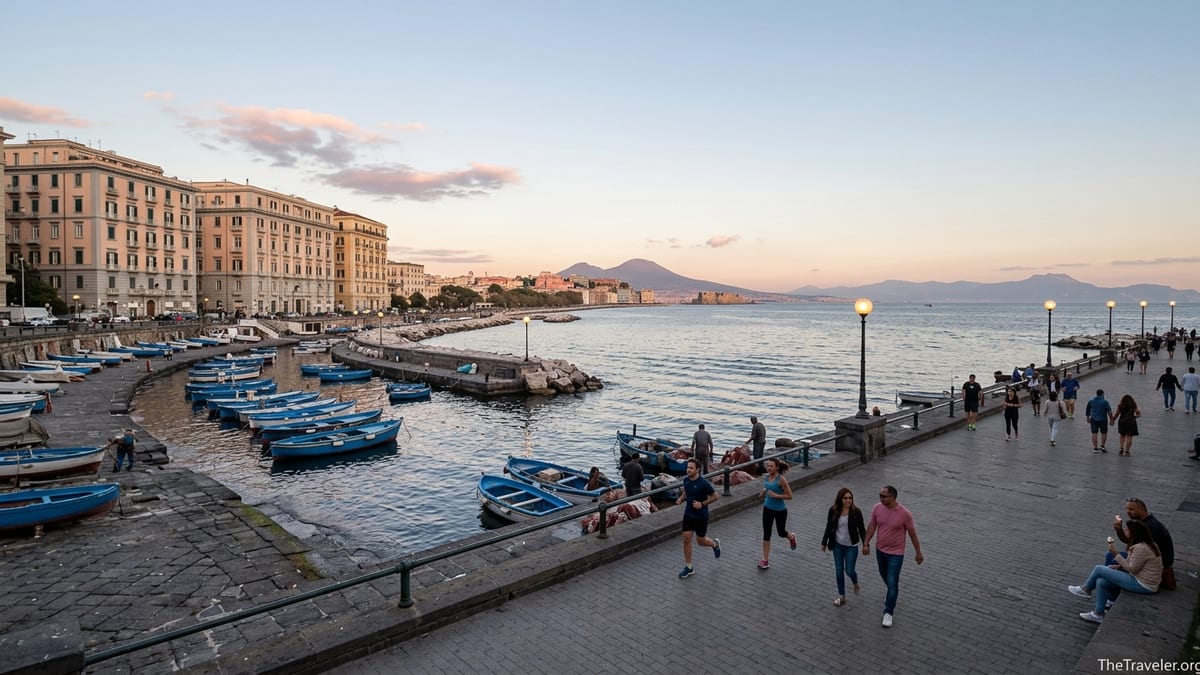
A Waterfront That Is Still a Working Harbor
Many stretches of the Neapolitan coast have become almost purely scenic. The postcard views from Via Partenope near Castel dell’Ovo or the terrace viewpoints in Posillipo are built around the idea of looking at the sea rather than using it. Mergellina, by contrast, remains a working harbor. Along the curved marina you see rows of small wooden fishing boats, local men unloading plastic crates of clams and anchovies at dawn, and mechanics tending to outboard engines in open workshops. It feels less like a promenade built for visitors and more like a neighborhood that still depends on the water day by day.
This working character shapes simple details a traveler will notice immediately. Prices for a quick espresso at a bar on Piazza Sannazzaro often stay close to what locals pay elsewhere in the city, with a coffee at the counter typically a bit over 1 euro and a sfogliatella around 1.50 to 2 euros, compared with noticeably higher prices along the most touristy stretch of Via Partenope. On a weekday morning you are more likely to share the counter with delivery drivers in fluorescent vests and port workers in oil-stained jackets than with fellow visitors clutching guidebooks.
The harbor also attracts a different kind of boating traffic compared with the main port at Molo Beverello closer to the historic center. While most high-speed hydrofoils for Capri, Ischia and Procida now depart from Molo Beverello and Calata Porta di Massa, services from Mergellina have historically catered to faster connections and private craft, and some seasonal hydrofoils still operate from here depending on the year and schedule. Even when scheduled ferries are limited, the marina is busy with small tour boats, private yachts and fishing vessels, which gives the waterfront an intimate, human scale that feels distinct from the industrial quays downtown.
The Quiet Edge of the Lungomare Caracciolo
Mergellina lies on the western edge of the Lungomare Caracciolo, the long seafront promenade that runs from near Castel dell’Ovo through Chiaia and ends by the harbor. The section closer to the castle can feel like a classic city showpiece, with polished hotels, high-end restaurants and crowds out for the evening passeggiata, especially on weekends and during summer. By the time the promenade reaches Mergellina, it has thinned into wider pavements, clusters of beach clubs and a looser, more lived-in atmosphere.
For travelers this has practical advantages. You can still rent a bicycle or simply walk the full length of the lungomare with the same uninterrupted view of Vesuvius, yet Mergellina’s end of the promenade tends to be less crowded. Runners from nearby neighborhoods use it at sunrise, while in the late afternoon parents bring children to ride scooters or play with footballs along the sea wall. Where Via Partenope might be lined with white tablecloth terraces, in Mergellina you are more likely to find a row of chalet-style kiosks selling fried seafood cones for around 6 to 8 euros, grilled calamari, or paper cups of fresh fruit.
Compared with the tight, theatrical feel of the historic center’s Spaccanapoli or the shopping streets in Chiaia, Mergellina’s stretch of the lungomare feels open and horizontal. On one side is the curve of the bay, with ferries and cruise ships visible in the distance. On the other is a mix of early twentieth century apartment buildings, unfinished facades and newer constructions that speak more to everyday Naples than to monumental architecture. Travelers looking for a long, relaxed walk without the constant pressure of souvenir sellers often prefer this end of the waterfront.
Gateway to Posillipo’s Hills Without Losing the Sea
One of Mergellina’s defining differences is the way the district sits at the base of the Posillipo hill. Stand near the harbor and the eye is pulled upwards to a steep slope dotted with terraced villas, gardens and winding roads. In a few minutes you can move from sea level up toward some of the most striking viewpoints in Naples without ever leaving the neighborhood’s orbit. This vertical connection is something the flatter waterfront areas like Chiaia or the port zone do not offer.
Practical transport links make this more than a visual feature. From the Mergellina area, a short walk inland brings you to the lower station of the Mergellina funicular, which climbs toward the higher residential parts of Posillipo. Buses also head up the hill, linking sea-level cafes with residential streets where locals do their shopping and children walk home from school. For a traveler this means you can start the evening with an aperitivo on the marina, ride or drive up to a terrace bar along Via Orazio or Via Petrarca to watch the sunset over the bay, then return to the harbor for dinner without crossing the entire city.
This junction of sea and hillside also affects accommodation choices. Many hotels and guesthouses in the lower Mergellina area offer rooms with partial sea views at prices that are often lower than the premium waterfront options in Chiaia’s most fashionable blocks or directly on Via Partenope. A mid-range hotel on or near Via Caracciolo in Mergellina might quote summer double rooms somewhere in the region of 150 to 220 euros per night, depending on view and date, whereas properties in the most central waterfront stretch closer to Piazza del Plebiscito can climb higher in peak season. For travelers who want both water views and the possibility of escaping uphill to quieter streets, this combination can be appealing.
Local Nightlife and Food With a Neighborhood Feel
While other coastal zones of Naples specialize in either high-end dining or daytime strolling, Mergellina blends both with a strong late-night neighborhood scene. Around Piazza Sannazzaro and along the waterfront roads, small trattorias, pizzerias and bars stay open late, catering as much to local residents and students as to visitors. A simple margherita pizza in a sit-down pizzeria here tends to remain in the 6 to 8 euro range, while a plate of pasta with clams might be around 12 to 16 euros, slightly below prices at the most fashionable waterfront restaurants closer to the historic center.
Street food is a particular strength. The kiosks and small fry shops near the harbor do brisk business until late at night selling cuoppo, the paper cones filled with mixed fried seafood or vegetables, to people sitting on the rocks or along the low walls facing the sea. Nearby gelaterie offer a broad range of flavors, with a cone typically around 3 euros for two scoops. Young Neapolitans use this end of the lungomare as a rendezvous point, especially in summer, which means travelers who come here after dark are surrounded more by groups of friends and couples enjoying the breeze than by organized tour groups.
Compared with the refined cocktail bars of Chiaia or the hilltop terraces of Vomero, nightlife in Mergellina feels more spontaneous. Many bars have small outdoor seating areas facing the sea, where you might pay around 6 to 8 euros for a classic spritz or a glass of local Falanghina wine. The dress code is relaxed, and it is common to see people in casual clothes fresh from the beach clubs or a day out on the water. For travelers, this offers a chance to blend into the evening life of the city without the formality that sometimes accompanies the more upscale parts of the coast.
Beach Clubs and Swimming Spots Inside the City Limits
Although Naples is better known for its harbor than its beaches, the coastal stretch around Mergellina and toward Posillipo includes several lidos and bathing platforms that set it apart from the more urban waterfront east of the district. Between the marina and the base of the cliffs, clusters of pay-to-enter beach clubs offer sun loungers, ladders into the water and small snack bars. In summer, a day access fee for a basic lounger and umbrella can start around 15 to 25 euros per person, rising on weekends and in peak August weeks.
These facilities are modest compared with the broad sand beaches of the Amalfi Coast or Cilento, but for a traveler staying in the city they offer an accessible way to swim in the bay without boarding a train or ferry. Families from other parts of Naples come here on hot days, creating a mixed crowd of locals and visitors. The stony shorelines and concrete platforms feel fundamentally urban, yet the water views toward Capri and the Sorrento Peninsula remind you that you are in one of the world’s most famous bays.
In contrast, the historic center and port districts east of Castel Nuovo have almost no direct access to the sea for swimming, while the chic seafront in Chiaia is more about strolling and park life than bathing. Posillipo has some of the city’s most scenic coves and private lidos, but they are often accessed via stairs and private roads that can be confusing for first-time visitors. Mergellina’s lidos sit effectively on the main bus and taxi routes, with clear signage and a straightforward sea-facing layout, which simplifies things for travelers who want a quick swim between museum visits or day trips.
Transport Connections Without the Chaos of the Main Port
Another feature that distinguishes Mergellina from other coastal areas of Naples is its blend of waterfront calm with solid transport connections. The Mergellina station on Metro Line 2 links the district directly to central Naples and Napoli Centrale, usually in under 10 minutes, which makes it practical for day trips inland or to Pompeii with a change at the main station. Buses and taxis are widely available along the waterfront, but the atmosphere is noticeably less hectic than around the central port terminals or the streets immediately outside the main train station.
The port of Mergellina itself has historically served hydrofoils to Capri and the other islands in the bay, although in recent years many high-speed services have consolidated at Molo Beverello and Calata Porta di Massa near the historic center. Depending on the season, travelers may still find some departures from Mergellina, especially to Ischia or Procida, but schedules change regularly and should always be checked close to the travel date. Even when island departures are limited, the harbor area functions as a hub for smaller tour boats and private charters, which can be attractive for visitors interested in a day cruise along the Posillipo coast or toward the Campi Flegrei.
In comparison, the main port area around Molo Beverello is busier and more confusing, with multiple ticket offices, heavy traffic and constant movement of large ferries. For some travelers this central location is convenient; for others, it can feel overwhelming. Mergellina offers a quieter alternative coastal base while still allowing relatively easy access to ferries via a short metro ride or taxi if needed. This balance of connection and calm is part of what makes the neighborhood distinct among Naples’ waterfront zones.
Comparing Mergellina With Other Coastal Neighborhoods
Seen on a map, Mergellina is just one segment of a continuous ribbon of city along the water, stretching from the port through Chiaia to Posillipo. On the ground, each district has a clear personality. Chiaia, east of Mergellina, is known for luxury shopping streets like Via dei Mille and for the elegant park of the Villa Comunale, where families stroll under palm trees and children ride small bikes along shaded paths. The feel is cosmopolitan and polished, with high-end boutiques and refined cafes behind the waterfront.
Posillipo, to the west and above, is residential and scenically dramatic. Roads like Via Petrarca and Via Orazio offer some of the most famous panoramas of Naples, with sweeping views over the bay and Capri in the distance. Many properties here are private villas or apartment complexes, so while it is wonderful for viewpoints and some hidden coves, it does not always feel as open or walkable for travelers who want to be on the water without negotiating steep climbs or complex bus routes.
Compared with these neighbors, Mergellina sits in the middle both geographically and in character. It is less polished than Chiaia, with more visible everyday life on the streets and occasional pockets of scruffiness along the waterfront, yet it feels more overtly seaside than most of Posillipo. The presence of the harbor and marina, the cluster of late-night food options, and the mix of residents and visitors using the promenade give it a distinctive “city by the sea” energy. For travelers choosing where to stay, this middle ground appeals to those who want water views and local life without the full intensity of the historic center or the premium prices of the most fashionable Chiaia addresses.
The Takeaway
Mergellina is not Naples’ most instantly iconic district. It lacks a single headline monument like Castel dell’Ovo or a theatrical cliffside setting like Posillipo’s highest terraces. What it offers instead is a layered, everyday version of coastal Naples: fishing boats beside private yachts, beach clubs at the foot of apartment blocks, young couples sharing gelato on the seawall, and early-morning joggers weaving between fishermen’s buckets. For travelers willing to look beyond the classic postcards, this mix can be precisely what makes Mergellina compelling.
Choosing Mergellina as a base or as a regular stop on your walks along the lungomare means trading some of the sharpest views and grand hotels for a more local rhythm. You gain a harbor that still works, a promenade that belongs as much to residents as to visitors, easy links up to the Posillipo hills and into the metro network, and simple, well-priced food served late into the night. In a city where the sea is constantly visible yet often just out of reach, Mergellina is one of the places where Naples quite literally steps into the water, and invites you to do the same.
FAQ
Q1. Is Mergellina a good area to stay in Naples for first-time visitors?
Mergellina suits travelers who want sea views, a neighborhood feel and solid transport links, without being in the busiest part of the historic center.
Q2. How does Mergellina compare in price to other waterfront areas like Chiaia?
In general, cafes and mid-range hotels in Mergellina are slightly less expensive than the most fashionable streets and seafront addresses in central Chiaia.
Q3. Can I easily reach Capri, Ischia or Procida from Mergellina?
You can reach the main ferry terminals by metro or taxi from Mergellina. Some seasonal hydrofoils may depart from Mergellina harbor itself, but schedules change.
Q4. Is Mergellina safe to walk around at night?
The waterfront and main squares in Mergellina are usually busy with locals in the evening. Normal big-city precautions apply, but many visitors find it comfortable to walk.
Q5. Are there beaches in Mergellina where I can swim?
Mergellina has several lidos and bathing platforms where you can pay a day fee for loungers and access to the water, though beaches are mostly rocky or concrete.
Q6. How far is Mergellina from the historic center of Naples?
By Metro Line 2, the journey from Mergellina station to central stops near Napoli Centrale typically takes under 10 minutes, plus walking time on each end.
Q7. Is Mergellina noisy because of the harbor and nightlife?
Streets directly on the waterfront and near Piazza Sannazzaro can be lively, especially in summer, but many side streets a block or two back are noticeably quieter.
Q8. Do I need a car to explore from Mergellina?
For most visitors a car is unnecessary. The metro, buses, funicular and taxis connect Mergellina well with other city neighborhoods and major transport hubs.
Q9. What kind of food is Mergellina best known for?
Mergellina is known for casual seafood, street food like fried cuoppo, classic Neapolitan pizzas and waterfront gelato shops that stay open late into the evening.
Q10. Is Mergellina suitable for families with children?
Families often appreciate the wide seafront promenade, nearby parks and accessible lidos, though parents should supervise children closely near the harbor and sea wall.