


Ask New Jersey beach regulars to name the spot that feels least like the stereotypical Jersey Shore, and Long Beach Island almost always comes up. This 18-mile barrier island, known simply as LBI, has no boardwalk packed with rides, no thumping nightclubs lining the sand, and far fewer neon T-shirt shops than its mainland neighbors. Instead, it offers something quieter and more deliberate: walkable pocket towns, sugar-soft beaches, family-owned businesses, and a pace that often feels closer to a New England coastal village than to the party scenes of Seaside Heights or Wildwood.
Get the latest updates straight to your inbox!
No Boardwalk, No Neon, and a Very Different First Impression
The most obvious way Long Beach Island feels different from much of the Jersey Shore is what you will not find: a seaside boardwalk. LBI once had one in Beach Haven, but it was destroyed by a 1944 hurricane and never rebuilt. Today, when you drive over the causeway bridge into Ship Bottom, you are met not by arcades or roller coasters but by modest motels, low-rise homes, and a straight shot of boulevard that runs the island’s length. The effect is immediate. The island feels residential rather than resort-like, more akin to a string of neighborhoods than a commercial strip.
That absence of a boardwalk shapes everything from noise levels to nightlife. Instead of carnival rides and late-night pizza windows stacked side by side, you will find a handful of small mini golf courses, ice cream stands, and family restaurants tucked between beach houses. A night out might mean grabbing a table at a local place like a seafood shack in Ship Bottom or Surf City, then strolling back along quiet side streets lit by porch lights rather than neon signage. For travelers used to the sensory overload of Asbury Park’s boardwalk or Wildwood’s piers, LBI’s first impression can feel almost startlingly calm.
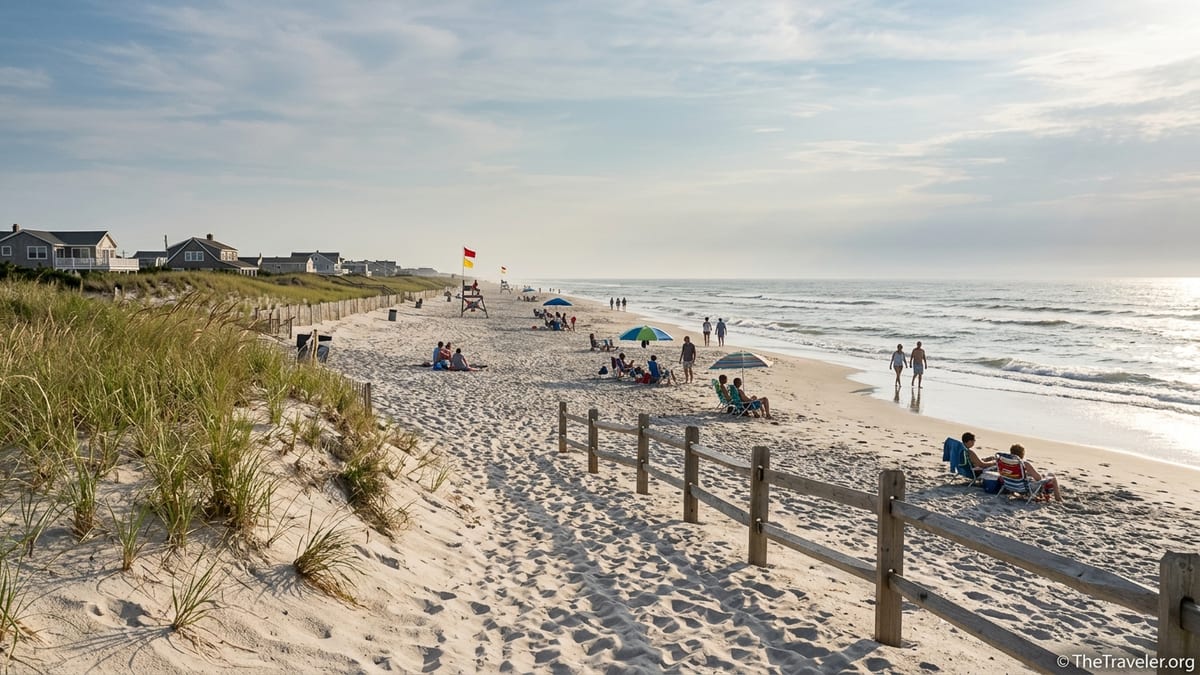
This quieter frontage also keeps the beach itself the main attraction. Walk over any dune line in Barnegat Light, Harvey Cedars, or Holgate and you step directly onto wide open sand. There are no busy promenades separating you from the ocean, just dunes, dune grass, and the rhythmic crash of surf. For many visitors, that simplicity is the point.
Six Distinct Towns Instead of One Homogenous Strip
Another reason LBI feels different from other stretches of the Jersey Shore is the way it breaks into clearly defined, small-scale communities. The island’s six municipalities and several unincorporated sections function like neighboring villages, each with its own rhythm and price point. Beach Haven at the southern end offers the most traditional Jersey Shore energy, with an amusement area, a water park, a historic theater, and clusters of restaurants and bars within walking distance. It is the place many families choose when they want kid-friendly attractions such as a small ride park and arcade without committing to a full-blown boardwalk town.
Drive 10 or 15 minutes north and the feel changes quickly. Surf City and Ship Bottom are classic mid-island hubs, lined with casual motels, takeout windows, surf shops, and small bayside marinas. Travelers who want to park their car and walk to a coffee shop, grocery store, and ice cream after dinner often pick these central towns. A family renting a small duplex here might walk two blocks to the ocean in the morning, then cross over to the bay beach at sunset so toddlers can splash in calmer water.
Continue north into Harvey Cedars, Loveladies, and Barnegat Light and the island grows noticeably quieter. Streets become leafier, lot sizes bigger, and large modern homes sit tucked behind dunes. In Barnegat Light, where the red-and-white lighthouse towers above the pines, the commercial cluster is small enough that you can wander from the dockside fish market to the ice cream stand and back to your rental without ever crossing a highway. Compared with the more continuous wall of hotels and condos you see along some other Jersey Shore destinations, LBI’s patchwork of distinct, village-like zones feels more intimate and easier to navigate.
A Family-First Rhythm, Day and Night
The Jersey Shore is a broad term that covers everything from college party enclaves to quiet retirement towns. LBI sits firmly on the family-focused end of that spectrum. The island’s limited nightlife, absence of large clubs, and emphasis on early-morning beach patrols over late-night bars mean that evenings wind down earlier here than in many other shore towns. In Beach Haven, you might see a crowd at a bayside bar or brewery, but late-night revelry tends to be compact and controlled rather than sprawling into house parties on every block.
Daytime activities mirror that family-first mindset. Instead of funneling visitors into a single entertainment pier, attractions are scattered but low-key: a water park and small amusement area in Beach Haven, several mini golf courses spread from Ship Bottom to Surf City, parasailing and jet ski rentals out of the bay, surf lessons at oceanfront beaches, and children’s programs at places like the Long Beach Island Foundation of the Arts & Sciences in Loveladies. Many of these experiences are simple and walkable. A typical family day might involve buying a few beach badges in the morning, packing a cooler for the sand, grabbing a slice of pizza in the afternoon, and capping things off with ice cream and a round of mini golf rather than a flashy show or club.
This tone shows up at the municipal level too. Lifeguards patrol the oceanfront from late June through Labor Day, bay beaches are designated with shallow swimming zones for children, and towns enforce relatively strict ordinances about noise and beach conduct. Compared with spots like Seaside Heights or parts of Belmar, where the bar scene can spill into the street on peak weekends, LBI’s summer nights tend to sound more like screened-in porch conversations and distant waves than booming speakers.
Pure Beach: Wide Sands, Sugar-Soft Texture, and Bay Access
Ask regulars why they keep returning to LBI and many will mention the sand itself. The island’s ocean beaches are known for their soft, pale, almost sugar-like texture, which feels noticeably different underfoot compared with some coarser sections of the Jersey coast. In Surf City, Harvey Cedars, and much of Long Beach Township, the dune restoration projects of recent years have created deep, wide beaches where even on a busy August Saturday you can usually spread out a bit without crowding your neighbors.
Each town’s access rules reinforce that local feel. Beach badges are required on most guarded beaches for visitors ages 12 and up, with seasonal badge prices typically sitting in the range of roughly 50 to 55 dollars for the full island, and individual towns offering their own mix of daily or weekly options. Travelers who come for just a day often budget for parking, a couple of day badges, and a few simple beach amenities, rather than paying for boardwalk rides or entry to large private clubs. Because there is no central promenade, you often see families wheeling their own beach carts down side streets, coolers and umbrellas stacked high.
The bay side is as much a part of the beach experience here as the ocean. Designated bay beaches in towns like Surf City, Ship Bottom, and Barnegat Light offer roped-off shallow areas where small kids can wade without strong surf, often next to small playgrounds or picnic tables. At sunset, the bayfront turns into an informal gathering place: people carry takeout from local seafood counters to watch the sky change color, paddle boarders glide along the calm water, and sailboats return to their slips. The ability to switch easily between ocean waves and bay stillness in a matter of minutes is one of the more subtle ways LBI distinguishes itself from many boardwalk-driven towns, where the bayfront can feel like an afterthought.
Local Businesses and Low-Rise Streetscapes Instead of Big-Box Shore
Development patterns on Long Beach Island help maintain its distinct mood. Strict height limits and zoning regulations keep most buildings to a modest scale. Even in busier Beach Haven, you will not find high-rise hotels looming over the oceanfront in the way you might in Atlantic City. Instead, the skyline is dominated by dunes, three-story beach houses, church steeples, and the occasional water tower or lighthouse. This keeps the beach in proportion to the townscape and preserves the small-town feeling even in high season.
The commercial mix skews heavily local. Along Long Beach Boulevard you pass independent coffee shops, bakeries turning out morning crumb cake, seafood markets selling freshly landed fluke and scallops, and long-running ice cream parlors where lines curve around the block on hot nights. National chains are present but far from dominant, often set back toward the bay or clustered near the bridge. This contrasts sharply with some other Jersey Shore destinations where big-name hotels, franchise restaurants, and large-scale attractions define the main drag.
That local flavor shows up in the cultural calendar too. Instead of a long list of boardwalk concerts, LBI’s summer lineup leans on community events: a film festival screening independent movies in venues up and down the island, performances at Surflight Theatre in Beach Haven, farmers’ markets where island growers and bakers sell their goods, and small art exhibits at local galleries. For travelers, it means your beach week can include everything from a kids’ theater matinee to an outdoor concert at a bayfront park, all within bike-riding distance of your rental.
An Island That Rewards Slow Travel and Repeat Visits
In many Jersey Shore towns, the main experience can be captured in a single day: stroll the boardwalk, ride the Ferris wheel, eat fried dough, and head home. Long Beach Island tends to reward a slower style of travel. The lack of a single entertainment spine means you end up exploring side streets, discovering pocket parks, and returning to favorite bakeries or surf shops over several days. Many visitors rent the same house year after year on the same street in Surf City or Harvey Cedars, gradually getting to know their neighbors and small variations in the shoreline.
This slower rhythm is especially noticeable outside of July and August. In late spring and early fall, when many boardwalk destinations are either gearing up or shutting down, LBI finds a second life among anglers, birders, and weekenders who come more for quiet than for heat. Barnegat Lighthouse State Park draws people to its trails and jetty, surfers track autumn swells along the sandbars, and local restaurants shift toward a more year-round menu. With far fewer day trippers than busier boardwalk towns, even Beach Haven’s commercial district feels more like a year-round village center than a seasonal amusement zone.
Repeat visitors often plan their days around small personal rituals: a sunrise walk in Holgate, coffee on a rented deck overlooking the bay, evening bike rides to watch the boats return. Over time, these simple routines build a sense of place that feels closer to a second home than to a pure vacation resort. That cumulative familiarity is a big reason many families who might otherwise sample different shore towns keep coming back to LBI instead.
The Takeaway
Long Beach Island’s appeal lies in what it chooses not to be as much as in what it is. By skipping the oceanfront boardwalk, capping building heights, and embracing a patchwork of small, distinct towns, it resists some of the louder, more commercial impulses that define parts of the Jersey Shore. The result is a barrier island where the beach and the bay still feel central, where nights tend to end with ice cream and stargazing instead of club lines, and where independent businesses anchor the main boulevard.
For travelers who equate the Jersey Shore with shoulder-to-shoulder crowds, thumping music, and amusement rides, LBI can come as a surprise. It offers many of the same essentials as its neighbors, from family attractions in Beach Haven to surf breaks along its oceanfront and lively restaurants scattered across its towns. Yet the tone is more measured, the scale more human, and the focus more squarely on simple rhythms: swimming, walking, paddling, and gathering around tables. In a coastline filled with bold, bright personalities, Long Beach Island stands out by being quietly itself.
FAQ
Q1. How is Long Beach Island different from other Jersey Shore towns?
LBI has no oceanfront boardwalk, limited nightlife, low-rise development, and a village-like feel, with six distinct towns that prioritize quiet beaches and family-friendly activities.
Q2. Does Long Beach Island have an amusement pier or big rides?
No. Instead of a traditional amusement pier, LBI offers a compact ride and arcade area in Beach Haven and a water park, along with mini golf and small attractions spread across the island.
Q3. What kind of crowd does LBI attract in summer?
The island primarily draws families, multi-generational groups, and couples looking for a calmer environment, rather than large groups focused on nightlife or clubbing.
Q4. Are the beaches on Long Beach Island less crowded than other shore spots?
On peak August weekends, popular access points get busy, but the beaches are wide and many areas, especially toward the north end, feel more spacious than boardwalk towns.
Q5. How expensive are beach badges on Long Beach Island?
Each municipality sets its own prices, but seasonal badges typically fall in the rough range of around fifty dollars, with daily and weekly options available in most towns.
Q6. Which LBI town should first-time visitors choose?
Beach Haven suits families wanting the most activities in walking distance, while Surf City and Ship Bottom offer central, walkable bases. Harvey Cedars, Loveladies, and Barnegat Light are quieter and more residential.
Q7. Is Long Beach Island good for a day trip, or do you need a full week?
LBI works for both. A day trip can cover a beach visit and a simple meal, but a few days allow time to explore multiple towns, bay beaches, and the lighthouse area at a relaxed pace.
Q8. What is the nightlife like compared with places like Seaside Heights?
LBI has bars, live music, and a brewery or two, but no major clubs. Even in Beach Haven, nightlife feels compact and generally wraps up earlier than in party-focused shore towns.
Q9. Do you need a car once you are on the island?
A car is helpful for exploring all 18 miles, but many visitors park once and rely on walking or biking within their chosen town, especially in the more compact central and southern areas.
Q10. When is the best time to visit for a quieter experience?
Late June before school breaks, early September after Labor Day, and sunny spring weekends offer a quieter version of LBI, with many businesses open but smaller crowds on the sand.