


Travelers often come to Hoboken for one reason: that perfect, wide-open view of the Manhattan skyline across the Hudson River. The waterfront is spectacular, but it can also be misleading. Hoboken’s real character lives a few blocks inland, in its brownstone side streets, neighborhood delis, indie shops, and community festivals that give this one–square–mile city a personality very different from the office towers across the water. Spend a full day wandering away from the piers and you will find a compact, walkable place that feels part college town, part Italian American enclave, and part modern creative hub.
Get the latest updates straight to your inbox!
A Compact City With a True Neighborhood Feel
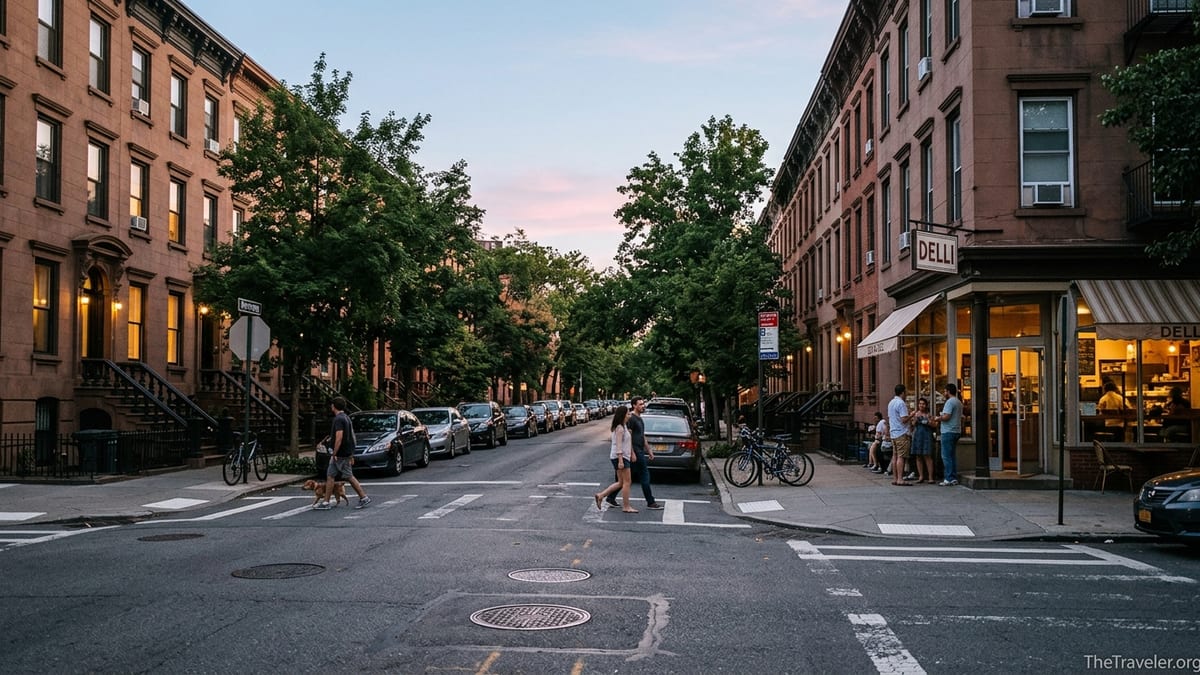
Hoboken is often marketed as the Mile Square City, and that statistic matters when you are on the ground. You can walk from the southern edge near Observer Highway to the northern border by 14th Street in about 20 minutes, and cross from the Hudson River to the western heights in less than 15. That scale gives visitors a rare feeling in the New York region: you can actually get to know most of a city in a weekend, block by block, without ever needing a car. Side streets like Garden Street and Bloomfield Street are lined with 19th century brownstones and stoops where residents still sit out on warm evenings, and it quickly becomes clear why so many people choose to live here rather than just commute through.
Unlike some waterfront districts that feel built mainly for visitors, Hoboken’s core is still a lived-in neighborhood. On weekday mornings you see parents walking kids to school along Clinton Street, dog walkers cutting across pocket parks, and long lines at corner coffee shops. Washington Street, the official main street, is only a few blocks from the river but feels like its own world, with laundromats, hardware stores, bodegas, and barbershops mixed in with trendier cafes and boutiques. It is an easy place to drop into daily life rather than feel like you are passing through a theme park version of a city.
For travelers, that neighborhood density has practical benefits. If you are staying near the PATH station or ferry, you can wander out in the evening and know that dozens of restaurants and bars are within a 10 minute walk, so you never have to plan around train schedules or traffic. You can spend a morning on the waterfront, an afternoon exploring the quieter western avenues, and still be back by the station in time for a late train into Manhattan. Hoboken functions almost like a small European city in this way: compact, walkable, and self-contained.
Washington Street: More Than a Main Street
Most visitors who venture off the waterfront begin on Washington Street, Hoboken’s historic commercial spine that runs north to south for more than a mile. It is an official main street corridor, recognized by urban planners for its row of mostly low-rise 19th and early 20th century buildings, many capped at about four to five stories to preserve the traditional scale. The result is a streetscape that feels human in proportion, with storefronts pressed right up against the sidewalk and cross streets framing glimpses of the river and skyline in the distance.
On a Saturday, Washington Street feels like a continuous street fair even when there is no formal event in progress. You might start near City Hall and Carlo’s Bakery, made famous by reality television, and watch a mix of tourists and long-time locals line up for cannoli and crumb cake. A few blocks north, high school students spill out of slice shops in the afternoon, while commuters pop into small wine stores to grab a bottle for dinner. Locally owned clothing boutiques sit next to long-running diners and Irish bars that are packed on weekend game days, reflecting Hoboken’s nickname as the “square mile of bars.”
What sets Washington Street apart from many comparable downtown strips is how quickly you can step off it into quieter residential pockets. Turn east on almost any side street and you will be back among stoops and sycamores in less than a minute; turn west and you climb toward the old Palisades ridge, where the city narrows and the Manhattan skyline disappears. For travelers, this makes Washington Street an ideal base route: you can follow it end to end, duck into side streets whenever something catches your eye, and never feel more than a few minutes from somewhere to grab a coffee, a snack, or a late-night slice.
Italian Roots and a Serious Food Culture
Hoboken’s Italian American heritage is one of the strongest threads tying the city’s past to its present, and you taste it as soon as you venture inland from the piers. Italian immigrants began settling here in large numbers in the late 19th century, and the legacy survives in a cluster of bakeries, delis, and social clubs that feel more old neighborhood than glossy suburb. Walking up and down Washington Street and the adjacent avenues, you will pass multiple storefronts advertising “mutz,” the local shorthand for fresh mozzarella, in their windows.
Classic Italian delis have become destinations in their own right. At places like Fiore’s on Adams Street or Lisa’s on Park Avenue, regulars still line up for overflowing sandwiches built with house-made mozzarella, imported cured meats, and roasted peppers. It is common to see workers from nearby offices grabbing a hefty sub for around the same price as a chain sandwich shop, but with a far more local feel: the person behind the counter likely has known some of the customers for decades. Newer spots channel the same tradition with a modern twist, offering things like truffle mozzarella or porchetta alongside the more traditional prosciutto and provolone.
Hoboken’s restaurant scene has broadened well beyond red sauce and deli counters, but the Italian influence still sets the tone. You will find wood-fired pizza at contemporary places where the bar might serve natural wines and craft cocktails, yet the base of the menu is still thin-crust pies and pastas. Antique Bar & Bakery, for example, occupies a former bakery space and uses its massive old coal oven as a centerpiece, turning out charred bread, steaks, and vegetables that nod to the building’s history. Elsewhere in town, neighborhood trattorias and pizzerias are matched by casual spots serving everything from Cuban to Japanese, but that original Italian backbone gives Hoboken’s food scene a sense of continuity.
Cafes, Boutiques, and a Small-Town Pace
Beyond restaurants and bars, Hoboken’s charm reveals itself in the everyday businesses that fill its side streets. Independent coffee shops are scattered throughout town, often taking over the ground floor of classic brick row houses with just a handful of tables and a steady flow of laptop workers. A few blocks from the main drag, you might stumble upon a cafe where the barista knows every second customer by name and bikes are locked in a tangle out front. For visitors, these spots provide shelter on a cold day and an easy way to get a sense of how people actually live here.
Retail in Hoboken leans heavily toward the independent rather than chains, especially on the north end of Washington Street and on cross streets like First and Seventh. You will find small bookstores, design studios, and specialty shops selling everything from vinyl records to secondhand designer clothing. Many businesses are owner-operated, and it is common for the person at the cash register to tell you where else in town you should eat or drink that night. This face-to-face culture tempers what could otherwise feel like a bedroom community for Manhattan.
The overall rhythm of life is more small-town than big city, despite the skyline rising just across the water. In the evening you see neighbors stopping for conversations on corners, parents letting kids ride scooters around Church Square Park, and people carrying groceries home on foot. The absence of large shopping malls or big-box stores within the city limits keeps daily errands at a smaller scale, which in turn makes the streets livelier and more interesting for visitors to explore.
Stevens Institute and Hoboken’s Green Hilltop
One of Hoboken’s most striking inland features is not a commercial street at all but the campus of Stevens Institute of Technology. Perched on the eastern slope of the Palisades at the city’s northeastern corner, Stevens occupies a hilltop of lawns, historic brick buildings, and modern glass facilities overlooking the river. The campus is technically private, but its main paths are commonly used by locals, and visitors often walk up from Hudson Street or Castle Point Terrace to enjoy a different angle on the skyline.
From the central lawns near the Howe Center, you can look south to downtown Manhattan, north toward the George Washington Bridge, and down over the rooftops of Hoboken itself. Because you are set back from the water and elevated above street level, the view feels less like a postcard and more like a lived-in panorama, with church steeples, schoolyards, and rooftop decks in the foreground. On spring and fall afternoons, students lounge on the grass or play frisbee while long-time residents walk dogs on the campus paths, making it feel more like a shared town green than an isolated institution.
The presence of a science and engineering university also shapes Hoboken’s cultural landscape in subtle ways. You see student posters for robotics competitions and theater productions taped up in coffee shop windows, and it is not unusual to overhear discussions about coding or design at nearby bars. For travelers, wandering the campus offers a break from the bar-and-restaurant circuit and a reminder that this is also a college town where people are building careers and research projects, not just a nightlife satellite of Manhattan.
Parks, Recreation, and Local Everyday Rituals
While the waterfront parks understandably steal attention, Hoboken has a network of inland green spaces where daily life unfolds far from the Manhattan-facing promenades. Church Square Park, just west of Washington Street, is a good example. Surrounded by brownstones and local shops, it has playgrounds, a central lawn, and a dog run that stays busy from morning until late evening. On summer nights, local concert series and movie screenings turn the park into a neighborhood gathering place where visitors blend in easily with residents sitting on blankets and park benches.
Farther west, small playgrounds and basketball courts are wedged into what once were more industrial blocks, reflecting the city’s shift from a working waterfront to a residential community. These spaces may not look impressive on a map, but when you walk through them you see kids playing pickup soccer, older residents chatting on benches, and food delivery cyclists pausing between runs. For travelers, cutting through these parks on the way from the PATH station to the western edge of town offers a quick crash course in how different generations use the same small amount of space.
Recreation in Hoboken is not limited to formal parks. Pickup games spill onto side-street hoops, and recreational leagues use school fields and indoor gyms that visitors may never notice at first glance. On weeknights you might pass a community center buzzing with youth basketball while a fitness boot camp meets on a nearby corner or schoolyard. Participating in a local yoga class, open gym, or pickup game is one of the fastest ways to experience Hoboken as more than a pretty backdrop for skyline photos.
Festivals, Arts, and the Echo of a Music Scene
Hoboken’s creative side is easy to miss if you only hover along the waterfront, but it comes into focus when you plan a visit around one of the city’s regular festivals and arts events. The Hoboken Arts and Music Festival, typically held on Washington Street in spring and fall, closes a long stretch of the main avenue to vehicles and fills it with art vendors, food stalls, and multiple music stages. Families push strollers past painters and photographers selling their work, local bands play short sets, and restaurants set up outdoor stands offering everything from empanadas to Italian pastries. For a visitor, it is one of the easiest ways to see Hoboken’s diverse communities in the same space.
Beyond headline festivals, art and performance appear in smaller doses throughout the year. Local galleries and studios mount shows featuring regional artists, while bars and cafes host open mic nights, trivia evenings, and low-key live music. After the legendary Maxwell’s music club closed its doors, the formal rock-club scene inside Hoboken shrank, but its spirit lingers in house shows, community events, and the many residents who still talk about seeing now-famous bands in tiny rooms a decade or two ago.
Proximity to larger venues in neighboring Jersey City and Manhattan means that Hoboken residents rarely lack options for bigger shows, but it also keeps smaller gatherings grounded in a neighborhood scale. You might start your evening at a local pub where a solo guitarist plays covers in the corner, then walk to the PATH for a short ride to a major concert hall across the river, returning to a quiet side street by midnight. For travelers, this balance of local intimacy and regional access is part of what makes a Hoboken stay feel layered rather than one-dimensional.
Everyday Nightlife Beyond the Bar Reputation
Hoboken has long carried a reputation as a magnet for twenty-something revelers, thanks to its dense concentration of bars and relatively lenient late-night culture. Washington Street in particular can feel like a continuous party on weekend evenings, with sports bars broadcasting multiple games at once and sidewalk lines forming outside dance-oriented venues. For some visitors that scene is the main attraction. For others it can be a deterrent, but step a block or two off the main drag and the nightlife shifts noticeably.
In quieter corners of town, you find wine bars with candlelit tables, small cocktail lounges in converted row houses, and restaurants where the bar is a place for conversation rather than shouting over a DJ. Many of these spots draw an after-dinner crowd of locals who live within walking distance, including young families getting a brief escape and long-time residents who remember Hoboken before its nightlife boom. Outdoor seating is common in warmer months, so you can sit under string lights on a side street and watch people stroll by with dogs and late-night takeaway.
Even the rowdier parts of Hoboken’s bar scene have their local rituals. On big game days, neighborhood bars fill early with regulars wearing the same jerseys week after week, and staff might greet them by name or have a favorite drink ready. Happy hours often begin earlier than in Manhattan, reflecting the fact that so many patrons live just a few blocks away and can duck out of work remotely. For travelers, this creates a nightlife experience that feels more compact and approachable, whether you are looking for a full bar crawl or simply a quiet glass of wine within a short walk of your hotel.
The Takeaway
Spend an afternoon or a weekend in Hoboken and you quickly realize that the city’s famous waterfront is only one part of its identity. The real appeal lies in how much life is packed into its short blocks: a main street that still feels like a genuine commercial spine, Italian delis serving recipes passed down for generations, a hilltop university green, neighborhood parks, local festivals, and a nightly rhythm that swings from raucous to relaxed in the span of a few intersections.
For travelers who already know Manhattan’s major sights, Hoboken offers a different lens on the region. Here you can have a strong espresso in a family-run cafe, wander through brownstone streets to a community concert in a small park, and end the evening at a corner bar where the bartender recognizes half the room. The skyline views are still there when you want them, but they become the backdrop rather than the main event. That shift in focus is what makes Hoboken special once you step away from the water’s edge.
FAQ
Q1. Is Hoboken worth visiting if I have already seen the Manhattan skyline from other spots?
Yes. The skyline view is only part of the experience. Hoboken’s compact streets, Italian delis, local festivals, and college-town vibe offer a very different feel from Manhattan and make it worth a separate visit.
Q2. How much time do I need to explore Hoboken beyond the waterfront?
You can get a good feel for the city’s neighborhoods in a single afternoon, but a full day or overnight stay lets you experience both the daytime cafe and park scene and the evening restaurant and bar culture.
Q3. What are some good areas to walk that are not right on the river?
Washington Street is the main north–south route, but side streets like Garden, Bloomfield, and Park are great for brownstone architecture. Walking up toward the Stevens Institute campus and looping through Church Square Park or other small parks also shows a quieter side of town.
Q4. Do I need a car to enjoy Hoboken away from the waterfront?
No. Hoboken is compact and very walkable. Most visitors arrive by train or ferry and explore entirely on foot, since nearly all residential areas, parks, shops, and restaurants are within a 10 to 20 minute walk of the transit hubs.
Q5. Are there family-friendly things to do away from the waterfront?
Yes. Neighborhood parks like Church Square Park have playgrounds and lawns, local festivals often include children’s activities, and inland streets are calmer for walking with strollers than the busiest parts of the promenade.
Q6. Is Hoboken only a nightlife destination for young people?
No. While there is a strong bar scene, many side-street restaurants, cafes, and wine bars cater to a broader crowd, including families, couples, and long-time residents who prefer a quieter atmosphere.
Q7. What kinds of food should I look for beyond the waterfront restaurants?
Seek out Italian delis for fresh mozzarella sandwiches, classic bakeries for pastries, and neighborhood spots that serve wood-fired pizza, homemade pasta, and a mix of other cuisines like Cuban or Japanese.
Q8. Can I visit the Stevens Institute of Technology campus as a traveler?
Yes, visitors commonly walk through the main campus paths and lawns, especially around the hilltop areas with views over Hoboken and the river. It is courteous to stick to public paths and respect any posted signs.
Q9. When is a good time of year to experience Hoboken’s local culture?
Spring and fall are especially lively, with outdoor festivals on Washington Street and comfortable weather for walking. Summer brings park events and outdoor dining, while winter is quieter but still active around cafes and neighborhood spots.
Q10. Is Hoboken a good base for exploring New York City while staying somewhere smaller?
Yes. Many visitors choose Hoboken for its small-city feel and easy transit links. You can spend days in Manhattan, then return within minutes to a more relaxed place with walkable streets, local restaurants, and a neighborhood atmosphere.