


North Carolina rarely shouts for attention the way some of its neighbors do, yet it quietly delivers one of the most balanced travel experiences in the Southeast. Within a single state line you can road trip from wild Atlantic barrier islands to cool, spruce-scented mountains, stopping in research-fueled cities and historic small towns along the way. For travelers who want variety without hopping multiple states, North Carolina offers an unusually complete mix of outdoor adventure, culture, food, and affordability.
Get the latest updates straight to your inbox!
Mountains to Sea: A Rare Range of Landscapes
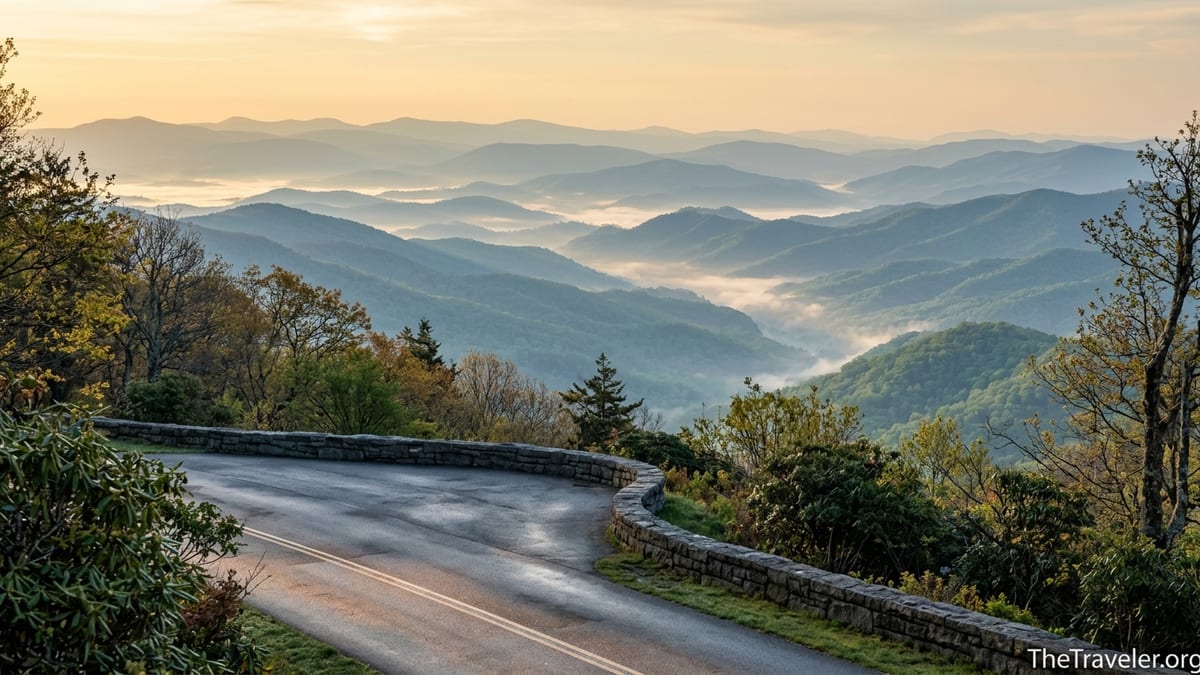
Few places in the Southeast offer the kind of geographic range you find in North Carolina. At one end is the Atlantic Ocean, where the Outer Banks stretch for more than a hundred miles of shifting barrier islands. At the other are the Blue Ridge and Great Smoky Mountains, with high-elevation spruce-fir forests and winding scenic roads. In practical terms, this means a traveler can wake up to a sunrise over the Atlantic in Nags Head and, with a reasonable road trip, end a long day watching the sun set over layers of blue ridgelines near Asheville.
The western side of the state is anchored by Great Smoky Mountains National Park, the most visited national park in the United States, which straddles the border with Tennessee. On the North Carolina side, towns like Cherokee and Bryson City act as quieter gateways to the park’s 520,000 acres of forested ridges, waterfalls, and historic homesteads. Many visitors will drive Newfound Gap Road from Cherokee up to viewpoints above 5,000 feet, then loop back to spend the evening at a local motel or cabin by the Oconaluftee River.
Linking the mountains is the Blue Ridge Parkway, a unit of the National Park Service designed for slow-paced travel with speed limits generally around 45 miles per hour. In practice, that low speed becomes part of the experience: travelers pull into scenic overlooks every few miles, stretch their legs on short trails, and stop at locations like the Folk Art Center near Asheville or the Linn Cove Viaduct near Grandfather Mountain. Because the route is free of commercial traffic, it feels more like a continuous scenic drive than a highway.
On the opposite end of the state, the Outer Banks and Crystal Coast offer a completely different coastal environment. Long stretches of undeveloped shoreline at Cape Hatteras or Cape Lookout can be reached only by ferry or by driving across slim islands with the ocean on one side and sounds on the other. For many visitors, especially families from inland states, this mountains-to-sea contrast is what makes North Carolina feel so complete: there is always another landscape in reach without leaving the state.
Outdoor Adventure Without Losing Comfort
North Carolina’s appeal is not only its scenery but how accessible that scenery feels. In the Smokies, for example, the Oconaluftee Visitor Center outside Cherokee provides level riverside walks where families with strollers can spot elk in the fields at dawn or dusk. A short drive away, the Deep Creek area near Bryson City offers a trio of waterfall hikes that start just minutes from town, where visitors can finish the day with pizza or a local beer before walking back to a rental cabin.
The state’s network of public lands extends far beyond the national park. Pisgah and Nantahala National Forests, both largely in western North Carolina, are full of accessible hikes, roadside overlooks, and campgrounds. Near Asheville, travelers often spend a morning hiking to Looking Glass Rock or Graveyard Fields and be back in the city in time for an afternoon coffee and dinner reservation. This proximity means you rarely have to choose between a wilderness day and basic comforts; you can have both.
At the coast, Cape Hatteras National Seashore maintains miles of undeveloped beach where visitors can walk far beyond the sight of hotels and boardwalks, then return to villages like Buxton or Avon that have small grocery stores, casual seafood restaurants, and simple motels. On a typical summer day, a family might pay a modest fee to drive onto an ORV-accessible beach area with a permit, set up camp chairs and umbrellas, and still be close enough to return to an air-conditioned rental house for lunch.
For travelers watching their budget, this balance is especially important. Public lands with free access, like segments of the Blue Ridge Parkway or state parks such as Hanging Rock and Crowders Mountain, allow for full days of activity with minimal cost beyond gas and snacks. Many campgrounds in the state forests and along the outer coast offer primitive sites that, even when reserved in advance, typically cost less per night than a single restaurant meal in a major city.
Creative Cities With Real Character
What keeps North Carolina from being only a nature destination is the character of its cities and larger towns. The Raleigh, Durham, and Chapel Hill area, often called the Triangle, pairs research universities and a major tech presence with a very local food and arts culture. Travelers can spend a morning visiting the North Carolina Museum of Art in Raleigh, which has an outdoor sculpture park and free general admission, then head to Durham’s American Tobacco District to walk past converted brick warehouses filled with restaurants, coffee shops, and performance venues.
Charlotte, the state’s largest city and a major banking hub, offers a different kind of urban experience. Uptown has a compact core of museums, including the Mint Museum Uptown and the NASCAR Hall of Fame, that make it easy to fill a weekend without a car once you arrive. In neighborhoods like NoDa and South End, visitors find murals, breweries, and food halls housed in old industrial buildings. For many travelers driving along Interstate 77 or 85, Charlotte becomes a convenient urban stop between mountain or beach days.
Asheville, nestled in the mountains, has earned a reputation as one of the Southeast’s most creative small cities. Its walkable downtown mixes Art Deco architecture with independent bookstores, galleries, and a concentration of craft breweries. Visitors might spend a Saturday browsing the River Arts District’s working studios, then head to a brewery with a food truck for live music. The next day could be dedicated to driving mountain sections of the Blue Ridge Parkway or touring Biltmore Estate before returning to town for dinner at a farm-to-table restaurant.
Even smaller cities contribute to the state’s balance. Wilmington, with its historic riverfront downtown and easy access to nearby beaches like Wrightsville and Carolina Beach, is ideal for travelers who want a mix of coastal time and nightlife. Greensboro and Winston-Salem offer minor-league baseball, theater, and historic districts that can serve as low-stress stops on longer road trips. Taken together, these urban centers mean North Carolina can fill an itinerary that alternates between trailheads and museum entrances without long cross-country flights.
History and Culture Woven Into Everyday Travel
North Carolina’s travel experience is deeply tied to its history and living cultures, and it is easy for visitors to engage with that without formal tours. In the west, the Qualla Boundary around Cherokee is home to the Eastern Band of Cherokee Indians. Travelers driving into Great Smoky Mountains National Park from the state’s southern side pass shops with Cherokee artisans’ work, as well as cultural attractions that interpret Cherokee history from pre-contact times through removal and the survival of the local community.
Throughout the mountains, small communities still preserve elements of Appalachian music and craft traditions. It is not unusual to find a late-summer Friday night jam session on a courthouse lawn in towns like Waynesville or Franklin, where local musicians gather to play bluegrass and old-time tunes. For visitors, these are not packaged shows but community events where travelers sit beside locals on folding chairs, sometimes with a plate of barbecue or a scoop of homemade ice cream from a nearby parlor.
Along the coast, history appears in different forms. The Outer Banks is dotted with lighthouses such as Cape Hatteras and Bodie Island, each with its own story of shipwrecks, storms, and coastal navigation. Farther south, the town of Beaufort mixes historic homes with working waterfront docks where fishermen still unload their catch. In Wilmington, guided and self-guided walks through the downtown historic district highlight both the city’s colonial past and its pivotal civil rights history.
Because much of this history is integrated into everyday places, it is easy to pair it with other travel plans. A family might spend the morning walking through the reconstructed farm at the Oconaluftee Mountain Farm Museum just inside the Smokies, then float the Tuckasegee River in the afternoon. At the coast, a morning climbing a lighthouse can lead into an afternoon of kite flying on the wide beaches of Jockey’s Ridge State Park. The result is that cultural understanding grows naturally out of a varied itinerary, rather than feeling like a separate obligation.
Food, Drink, and Local Flavor
For many travelers, the real test of a balanced destination is what happens at mealtimes, and North Carolina performs well here too. Barbecue alone is a regional journey, with vinegar-based pulled pork dominating in the east and a slightly sweeter, tomato-tinged version common around Lexington and the Piedmont. A road-tripper could legitimately plan to sample a small plate of chopped pork with red slaw at a no-frills Lexington-style smokehouse one day, then enjoy smoked whole-hog barbecue near the coast the next.
Beyond barbecue, the state’s farmers and food producers support a growing farm-to-table scene. In Asheville, many mid-range restaurants feature menus that change with the seasons, using vegetables and cheeses from nearby mountain farms. Farmers markets in Raleigh, Durham, and Charlotte operate multiple days a week, giving visitors the chance to buy seasonal fruit, local honey, or baked goods for a picnic before a hike or a beach day.
North Carolina also has one of the most active craft beer scenes in the Southeast. Asheville alone hosts dozens of breweries, from long-established operations with large taprooms to tiny neighborhood spots where the brewer might be behind the bar. In the Triangle, breweries often share space with food trucks, creating casual outdoor gathering spots where children and dogs are welcome. For travelers who do not drink alcohol, the state has its own unique non-alcoholic flavors, including cherry-flavored soft drinks like Cheerwine that appear on many local menus and store shelves.
On the coast, seafood is the star. Independent fish markets and simple dockside restaurants in communities like Hatteras, Ocracoke, and Calabash serve shrimp, flounder, and oysters that often arrived at the dock that same day. A typical evening might involve ordering a platter of lightly fried local seafood with hushpuppies in a family-run restaurant, then grabbing ice cream cones from a nearby stand to eat while walking along a soundside boardwalk.
Value and Ease for Road-Trippers
Compared with some better-known resort areas in the Southeast, North Carolina often feels like a solid value, especially for travelers who are willing to mix lodging types. In mountain towns such as Boone or Brevard, a traveler might combine one night in a chain hotel with a couple of nights at a simple cabin rental or a state park campground. Because many of the region’s biggest draws, like scenic overlooks, river walks, and waterfalls, are free to access or only require a modest parking fee, daily costs can remain relatively low.
At the coast, summer rates for larger homes in popular Outer Banks towns can climb, but there are often more modest options in older motels, small inns, and campgrounds on the sound side rather than directly on the oceanfront. Shoulder seasons in late spring and early fall can offer noticeably lower nightly prices along with milder weather and fewer crowds. For example, visits in May or late September often mean warm-enough water for swimming, lower humidity, and easier restaurant reservations.
The state’s road network also favors exploration. Major interstates like I-40, I-85, and I-95 intersect the state, making it straightforward for road-trippers from the Northeast, Midwest, and Deep South to add North Carolina to a longer route. Once inside the state, smaller highways such as U.S. 64 and U.S. 74 provide scenic, practical east–west connections between coastal towns, the Piedmont, and the mountains. Many travelers plan loops that minimize backtracking, like starting in Wilmington, heading inland through Raleigh and Greensboro, then reaching Asheville and finally dropping south or north out of the state.
For families, the balance of driving times is especially helpful. Routes from Raleigh to the Outer Banks or from Charlotte to the Blue Ridge often fall in the three- to four-hour range, short enough for young children but long enough to feel like distinct legs of a vacation. Frequent roadside attractions, farm stands, and small downtowns along the way break up the drive and give a sense of the state beyond its marquee destinations.
The Takeaway
North Carolina’s strength as a travel destination lies in how many different kinds of trips it can support without demanding complicated planning. Within a single vacation, you can watch wild horses graze in the dunes near the Outer Banks, walk through Cherokee history on the threshold of Great Smoky Mountains National Park, sip a locally roasted coffee in downtown Asheville, and eat vinegar-sauced barbecue under the shade of a Piedmont oak. You can camp on a forested ridge one night and sleep in an art-filled boutique hotel the next.
For first-time visitors to the Southeast, the state offers a wide-angle introduction to the region’s landscapes and cultures. For repeat travelers, it rewards deeper exploration, whether that means venturing onto lesser-known sections of the Blue Ridge Parkway, seeking out small-town music jams, or returning to a favorite stretch of beach year after year. Few states combine ocean, mountains, creative cities, and accessible history in such a compact and affordable way.
In the end, that is why North Carolina offers one of the most balanced travel experiences in the Southeast. It is not just that there is something for nearly everyone. It is that the state makes it easy to move between those somethings, to shift from tidepools to trailheads, museum galleries to mountain overlooks, all within the same journey. For travelers who value variety, authenticity, and a sense of place, North Carolina more than earns a spot at the top of the list.
FAQ
Q1. When is the best time of year to visit North Carolina for a balanced trip?
The most versatile times are spring and fall, typically April to early June and late September through October, when mountain trails are comfortable, coastal temperatures are mild, and cities host many festivals without peak summer crowds.
Q2. Can I realistically visit both the mountains and the coast in one North Carolina trip?
Yes, many travelers plan a week to ten days, flying or driving into a central city like Raleigh or Charlotte, spending a few days in the mountains around Asheville or the Smokies, then driving four to six hours to the coast for beach time before returning inland.
Q3. Are North Carolina’s mountain towns suitable for travelers without hiking experience?
They are. Places like Asheville, Boone, and Bryson City offer short, well-marked walks to waterfalls or overlooks, plus plenty of non-hiking options such as scenic drives, riverfront strolls, breweries, galleries, and historic sites.
Q4. How crowded are the Outer Banks and the Smokies in summer?
July and early August are busy for both, especially on weekends and holidays, but the North Carolina side of Great Smoky Mountains National Park and less developed Outer Banks villages tend to feel calmer than major resort areas in neighboring states.
Q5. Is North Carolina a good option for budget-conscious travelers?
Yes. Public lands like state parks, national forests, and the Blue Ridge Parkway provide low-cost activities, and mixing campgrounds or simple motels with occasional splurge nights keeps overall trip costs moderate compared with many coastal resort destinations.
Q6. Do I need a car to enjoy North Carolina’s variety?
A car makes it much easier to connect mountains, cities, and coast in a single trip. Within cities like Raleigh, Durham, Charlotte, and Asheville you can walk or use rideshares, but the most scenic areas are reached by road.
Q7. What kinds of food should I make a point to try in North Carolina?
Travelers often seek out regional barbecue styles, fresh coastal seafood, seasonal farm-to-table dishes in cities like Asheville and Raleigh, and local specialties such as Cheerwine or traditional North Carolina-style biscuits.
Q8. Are there family-friendly activities beyond the beach in North Carolina?
Absolutely. Families can ride historic trains in the western mountains, visit interactive science museums in Raleigh or Charlotte, climb lighthouses along the coast, or explore easy waterfall trails and riverside walks suitable for young children.
Q9. How many days should I plan for a first visit to North Carolina?
A long weekend works for focusing on a single region, like Asheville and the Blue Ridge Parkway, but seven to ten days allow you to experience at least two regions, such as a mountain-and-coast combination or a city-and-park pairing.
Q10. Is North Carolina suitable for travelers who prefer quieter, less touristy places?
Yes. Beyond the better-known cities and beaches, the state has many quieter mountain towns, small coastal communities, and rural back roads where you can find uncrowded trails, uncrowded beaches, and a slower pace without losing basic services.