


Many visitors arrive in Antibes with a short checklist of must-see stops: the Picasso Museum, the old ramparts, perhaps a detour to glamorous Juan-les-Pins. In the rush, Plage de la Salis can look like “just another town beach” on the map, overshadowed by famous names like Garoupe or the private clubs of Cannes. Skip it, though, and you may miss one of the Côte d’Azur’s most scenic, easygoing stretches of sand, where the Alps, medieval ramparts and the pine forests of Cap d’Antibes all frame a surprisingly tranquil bay.
Get the latest updates straight to your inbox!
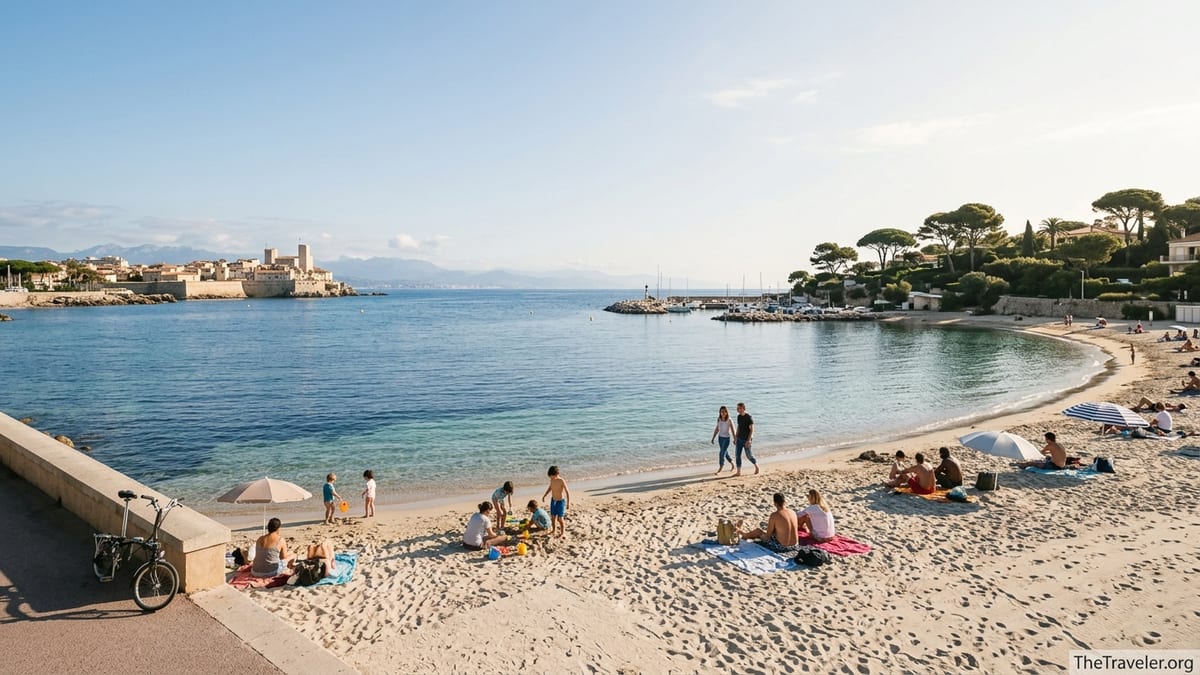
Where La Salis Sits in the Antibes Beach Puzzle
Plage de la Salis occupies a privileged position at the eastern edge of Antibes, right where the medieval town gives way to the pine-covered headland of Cap d’Antibes. From the curve of the bay you see three classic Riviera images at once: the snow-dusted Alps in the distance on clear days, the stone ramparts and towers of Antibes Old Town to the north, and the villas and umbrella pines of the Cap rising to the south. Many beaches along this coast offer one of those elements; La Salis quietly offers all three.
Compared with tiny in-town coves like Plage de la Gravette or the more compact Plage du Ponteil, La Salis stretches for roughly a kilometre along Boulevard James Wyllie, giving a rare sense of space in a region where towels often touch towel. The sand is a mix of soft grains and fine gravel, gentle underfoot, and the beach shelves gradually into calm, protected water. That combination makes it especially attractive for families who might otherwise gravitate straight to Juan-les-Pins without realizing there is a broad, sandy alternative a 15-minute walk from Antibes’ Marché Provençal.
The beach also acts as a bridge between sightseeing and sea time. Many visitors will wander the Old Town, then simply follow the seafront promenade past the Port Vauban marina and the bastion walls. In about 20 minutes on foot, the crowd thins, traffic noise fades and the curve of La Salis comes into view. It is close enough for a spontaneous swim after a museum visit, but far enough from the harbour to feel like a different world.
What Makes Plage de la Salis So Scenic
Part of Plage de la Salis’ charm is the way the bay frames Antibes itself. Facing north and east, you sit with your back to the Cap and look directly at the old skyline: the square tower of the Picasso Museum, the cathedral, and the fortifications glowing honey-gold in late afternoon light. On clear spring and autumn days the Alps rise sharply behind them, dusted in snow even when the beach is warm enough for sunbathing. Photographers often favour this view over glitzier spots, because it compresses history and landscape into a single frame without the clutter of billboards or high-rises.
Unlike some narrow, pebbly stretches along the Riviera, La Salis has a broad, gently curving shoreline that feels open and airy. There is no busy coastal road immediately at your back; instead you have a modest boulevard and a low promenade, so the dominant soundtrack is the slap of small waves and children playing rather than constant engines. On early summer mornings, when locals walk dogs or do gentle stretches by the water, the light turns the sea a soft, silvery blue and throws long shadows of the pine trees along the Cap.
The surrounding landmarks enhance the feeling of place. At the southern end of the beach, the small Port de la Salis marina marks the beginning of Cap d’Antibes, with fishing boats, sailing dinghies and the masts of yachts bobbing in the distance. Behind you, the slopes rise toward the Garoupe lighthouse and chapel, both reachable on foot. These elements make La Salis not just a rectangle of sand but a viewing terrace on Antibes and one of the easiest spots to understand how the town, the peninsula and the bay all fit together.
Swimming Conditions, Safety and Water Quality
For all its views, Plage de la Salis is first and foremost a practical swimming beach. The bay is sheltered by the natural curve of Cap d’Antibes and by offshore breakwaters, so waves typically remain low and the water clear and shallow close to shore. Families with small children often choose a spot near the middle of the bay, where kids can wade out several metres and still stand. Parents who have tried the steeper pebble beaches in Nice often remark that La Salis feels noticeably gentler on both feet and nerves.
In high season, from roughly mid June to mid September, the beach is supervised by lifeguards posted in watchtowers along the sand. This is not universal on the Riviera, where many smaller coves remain unsupervised, and it gives nervous swimmers and solo travelers an extra sense of reassurance. Safety flags indicate conditions, and public notices explain local rules, including the usual French requirements about inflatable devices and swimming outside marked zones.
Water quality here has a solid reputation. Independent beach guides and regional monitoring sites consistently list La Salis among Antibes’ cleaner urban beaches, with regular testing during the summer months. You still share the bay with pleasure craft and the nearby yacht club, so conditions can change after storms or heavy boat traffic, but on typical calm days the water is strikingly clear. Snorkelers sometimes explore near the rocky sections toward the Cap, where they may spot small wrasse and sea bream amid patches of seagrass.
Facilities, Accessibility and What It Actually Costs
One reason La Salis appeals to both locals and long-haul visitors is that it functions as a classic French public beach rather than a line of privatized clubs. The vast majority of the sand is free to use, and you can simply bring a towel and sit where you find space. Along the promenade you will find basic but useful facilities: public showers, municipal toilets near the Antibes Yacht Club end of the beach, and water fountains. These comforts are often overlooked when comparing beaches in guidebooks, yet they make a big difference for families or anyone spending a full day by the sea.
Budget-conscious travelers will appreciate that you are not obliged to rent a lounger here. If you do want extra comfort, nearby private beach restaurants in Antibes typically charge in the region of 25 to 40 euros per day in summer for a sunbed and umbrella, depending on the front-row premium. Many visitors choose a middle ground at La Salis: a foldable travel chair bought in town for around 20 to 30 euros, plus a parasol or beach tent, which quickly pays for itself over a week-long stay compared with renting daily.
Access is reasonably straightforward. A small surface car park sits at the eastern end of the beach, with street parking along the boulevard. In July and August spaces can fill by mid morning, so drivers arriving later often park closer to town and walk 10 to 15 minutes along the seafront. Envibus routes link the centre of Antibes to Port de la Salis and Cap d’Antibes, with single tickets typically around 1 to 2 euros purchased on board. The bus stop on Boulevard James Wyllie leaves you just a short stroll from the sand, which is especially helpful for those carrying gear or travelling with older relatives.
Accessibility has improved in recent years. In peak season, sections of La Salis are equipped with matting or gentle ramps to ease wheelchair and stroller access over the sand, and the city operates a dedicated Handiplage base near the beach, offering adapted facilities and assistance for visitors with reduced mobility. If accessibility is a priority, it is worth checking the current season’s details with the Antibes tourism office or municipal site shortly before your trip, as dates and services can vary year to year.
La Salis vs Other Antibes Beaches
Travelers who skip Plage de la Salis often do so because another name has caught their imagination. Plage de la Garoupe, a small cove further around Cap d’Antibes, is famous for its silky sand and storied past, having once lured literary figures like F. Scott Fitzgerald and Hemingway. Today, much of Garoupe is occupied by private beach clubs charging premium prices for loungers and lunch, with only a small free section. It can be wonderfully atmospheric, but on a busy afternoon you may feel penned in by rows of identical parasols and reservation-only terraces.
Closer to the old town, Plage de la Gravette offers shallow, bathtub-like water inside a protective stone harbour wall. Parents of toddlers adore it, and it is a fantastic spot for a quick dip between museum visits. The trade off is that the enclosed setting lacks the long horizon views and breeze you find at La Salis, and on very hot days it can feel more crowded and airless. Meanwhile, Plage du Ponteil, immediately west of La Salis, has similar sand and a friendly local feel, but is shorter and slightly more hemmed in by buildings and the road behind.
Compared to the pebbly beaches of Nice or the exclusive clubs of Cannes, La Salis occupies a comfortable middle ground. You get that postcard Riviera panorama and easy swimming without paying resort prices or navigating polished-deck glamour. Many visitors staying in Nice, who arrive in Antibes on a day trip by regional train, discover this almost by accident: after walking the ramparts and wandering the market, they follow the coastal path and suddenly find themselves on a surprisingly wide, soft-sand beach that feels a world away from the stones underfoot back in Nice.
When to Go and How to Experience It
Timing matters at Plage de la Salis. The beach faces east and north, which means it catches beautiful morning light and soft midday sun, then gradually slips into shadow behind the Cap in the late afternoon, especially from mid to late summer. Early risers who arrive around 8 or 9 in the morning in July or August find a peaceful scene: joggers cooling down in the shallows, locals reading on beach chairs, and a scattering of umbrellas rather than dense rows. By late morning, families and groups of friends begin to arrive, and at the height of summer the central sections can feel busy from roughly 11:00 to 16:00.
For many travelers, the sweetest time of year is late May to late June, and again in September. Air and sea temperatures are comfortable, lifeguard services are usually in operation from mid June, but the atmosphere is more relaxed than in school holiday weeks. In these shoulder seasons, accommodation prices in Antibes also tend to be lower than in August, and you can more easily combine beach time with day trips to nearby hill towns without oppressive heat.
Consider planning a half day that combines walking and swimming rather than treating La Salis as a stand-alone stop. One popular approach is to start from the Old Town after breakfast, stroll along the ramparts and continue on the flat seafront walkway past Plage du Ponteil. After a morning swim and some time on the sand at La Salis, you can take the path up Chemin du Calvaire behind the beach to the Garoupe lighthouse and chapel, which rewards you with sweeping views of the bay. Returning down to the sea, reward yourself with an ice cream or a cold drink and a second swim in the softer afternoon light.
Food, Drinks and Nearby Walks
Although Plage de la Salis itself has no long line of private clubs, you will not go hungry. Simple beach kiosks and snack bars open in high season, selling items like panini, crêpes, salads and cold drinks for roughly 7 to 12 euros per person for a light meal. Families often bring a picnic from the covered market in Antibes, then supplement it with ice creams or coffees from the beachfront stands. This keeps costs manageable compared with full-service beach restaurants where mains can easily run 20 to 30 euros.
Across the boulevard, you will find casual pizzerias and bistros where you can sit in the shade for a proper lunch. A typical formula du midi in this part of Antibes might include a main course and coffee or dessert for around 18 to 25 euros, depending on the season. If you prefer a smarter setting, it is a short walk back toward town or around the headland to more upscale hotel restaurants and sea-view terraces. Many travelers adopt a simple strategy: beach picnic at midday when the sun is strongest, then an early evening drink on a terrace overlooking the water once the heat eases.
La Salis is also a natural starting point for some of Antibes’ best seaside walks. From the southern end near Port de la Salis, the coastal path continues toward the celebrated Sentier du Littoral that wraps around Cap d’Antibes. Sections of this trail traverse rocky ledges and narrow walkways above the sea, revealing hidden coves, luxury villas behind high walls, and changing views back toward the bay. Even if you only follow it for 30 to 45 minutes and then turn back, it gives a sense of the wildness that still clings to parts of the Cap despite its celebrity reputation.
Practical Tips to Make the Most of Your Visit
To really appreciate Plage de la Salis rather than merely pass through it, a little planning helps. In peak season, arrive early if you are driving, ideally before 9:30 in the morning, to secure parking close to the sand. If your schedule is flexible, consider visiting on weekdays instead of weekends in July and August, when local families and day-trippers from nearby cities swell the crowds. Those staying in Antibes itself can often avoid parking stress altogether by walking or using the local bus, which typically runs every 20 to 30 minutes along the coast during the day.
Sun protection is essential. The breeze from the bay can mask just how strong the Mediterranean sun is, particularly in late spring when the air still feels fresh. Many regulars bring a small pop-up tent or a sturdy parasol because the sand can be firm in places and cheaper beach umbrellas sometimes shift in the wind. If you are arriving by train from Nice or Cannes, it is easy to buy inexpensive beach gear at supermarkets or seaside shops near Antibes station before walking to the beach.
Respect local customs and regulations, and you will blend in easily. Topless sunbathing is generally accepted on public beaches across this stretch of coast, including La Salis, though most people wear standard swimwear. Eating simple snacks on the sand is fine, but glass bottles are discouraged and you should take all rubbish away with you, as municipal cleaning teams work hard to keep the beach tidy. Dogs are usually restricted in high season; signage at the entrances will outline current rules. In the evenings, La Salis becomes a sociable but generally low-key spot where people walk, jog and watch the sky change color rather than a party beach with loud music.
The Takeaway
On paper, Plage de la Salis can look like a transitional zone: the stretch of sand you pass on the way to the postcard headland of Cap d’Antibes. In reality, it is one of the Riviera’s most satisfying places to settle in for a few hours, combining a classic sweep of bay, soft sand and calm swimming water with the convenience of being within walking distance of a historic town centre. Its views toward the old ramparts and the Alps, as well as up to the pine-clad slopes of the Cap, give you a sense of the region in a single glance.
Skipping La Salis means missing that rare blend of accessibility and beauty. You might still enjoy Antibes’ museums and ramparts, or seek out glamorous private clubs around the headland, but you will have overlooked the one beach where the town’s maritime history, natural setting and laid-back day-to-day life meet at the water’s edge. Give it at least a morning or an evening, and it is likely to become the mental image you carry home when you think about Antibes: not only its monuments, but the feeling of soft sand underfoot, clear water at your ankles, and the outline of the old town across the bay.
FAQ
Q1. How do I get to Plage de la Salis from Antibes Old Town?
From the Old Town and the harbour area, follow the seafront promenade south past Port Vauban and Plage du Ponteil; it takes about 15 to 20 minutes on foot, or you can take a local Envibus service toward Port de la Salis and get off near Boulevard James Wyllie.
Q2. Is Plage de la Salis suitable for children and non-confident swimmers?
Yes, the beach has gently shelving sand and usually calm, shallow water close to shore, and in summer it is supervised by lifeguards, which makes it popular with families and less experienced swimmers.
Q3. Are there showers, toilets and changing facilities on the beach?
Plage de la Salis offers basic public facilities, including outdoor freshwater showers along the sand and municipal toilets near the Antibes Yacht Club end of the beach; many visitors change under towels or arrive in swimwear.
Q4. Do I need to pay for a sunbed or can I use the beach for free?
The beach is predominantly public and free, so you can lay your towel anywhere in the designated areas without charge; if you prefer sunbeds and waiter service, nearby private beach clubs and hotel beaches around Antibes typically rent loungers for a daily fee.
Q5. What is the best time of day to visit Plage de la Salis?
Mornings are quieter and beautifully lit, while late afternoons and early evenings outside peak August can be very pleasant; the beach faces east and north, so it gradually falls into shade later in the day, especially in high summer.
Q6. Is the beach accessible for people with reduced mobility?
In high season, the city usually installs access mats or ramps on parts of the sand and operates an adapted Handiplage base nearby, offering assistance and equipment; details can vary by year, so it is wise to check current information with the local tourist office before travelling.
Q7. Can I find food and drinks close to Plage de la Salis?
Yes, seasonal snack bars and kiosks by the beach sell light meals, ice creams and drinks, while pizzerias and casual restaurants across the boulevard and toward town offer sit-down options for lunch or dinner within a few minutes’ walk.
Q8. Are there water sports or activities available at La Salis?
Near the Antibes Yacht Club and Port de la Salis you can often rent kayaks or paddleboards and take sailing lessons, and the clear, calm water along the edges of the bay is suitable for casual snorkeling around rocky sections.
Q9. How crowded does Plage de la Salis get in summer?
In July and August, particularly on weekends and afternoons, the central parts of the beach can become quite busy, with towels close together; arriving early in the morning or visiting in late spring or September usually means more space and a calmer atmosphere.
Q10. Is Plage de la Salis open year-round?
Yes, the beach is accessible throughout the year, though lifeguard services, snack bars and some facilities operate mainly from late spring through early autumn; off-season it is still popular for walks, picnics and sunbathing on mild winter days.