


In 2026, river cruising has shifted from a niche pursuit for seasoned travelers into one of the fastest growing corners of the cruise world. Industry reports point to double digit growth for river itineraries in Europe and North America, with new ships, extended seasons, and fresh brands entering the market to keep up with demand. From the Danube and Rhine to the Mississippi and the Mekong, more travelers are choosing to drift along inland waterways rather than sail on giant ocean vessels. The reasons reach far beyond simple novelty, touching on post pandemic travel behaviors, sustainability concerns, and a renewed appetite for slower, more immersive journeys.
A Growing Cruise Segment Riding a Global Travel Boom
The wider cruise industry is in record breaking territory, and river cruises are riding that wave. According to the 2026 State of the Cruise Industry report from the Cruise Lines International Association, global passenger volume hit a historic high of more than 37 million travelers in 2025, with strong forward bookings into 2026. Within that total, river cruises represent a smaller but rapidly expanding slice, particularly in Europe, which accounts for an estimated 40 percent or more of global river cruise demand.
Analysts tracking river cruise operators describe a market that is capacity constrained, not demand constrained. A 2025 investment bank report singled out European river cruises as an area where more travelers want to book than there are berths available on peak season sailings. That tension is evident on marquee itineraries such as the Romantic Danube or Rhine Getaway, where popular dates in May, June, and September often fill a year or more in advance and rarely appear in last minute sales.
Operators are responding with new ships and longer seasons. Viking, still the most recognizable name in river cruising, has scheduled a wave of additional Longships for delivery in 2026 and beyond, while European specialist VIVA Cruises will for the first time run six ships year round on European rivers in 2026. In North America, American Cruise Lines continues to expand its domestic riverboat fleet, including new vessels on the Mississippi and Columbia Snake systems. The overall result is clear: more berths, more routes, and more visibility for river cruising as a mainstream option.
This growth is not limited to traditional players. Well known tour brands and consortia are increasingly chartering entire vessels for 2026 Danube and Rhine seasons, selling them under their own labels. Trafalgar, for example, is promoting hosted 2026 sailings with bundled savings, while large travel agencies and consortium groups quietly reserve whole departures to package with air and pre cruise touring. For travelers, that means river cruising is showing up in more brochures and online storefronts than ever before, often at competitive bundled prices.
The Appeal of Intimate Ships and Slower Travel
Part of the reason river cruising is thriving in 2026 is that it aligns perfectly with a broader shift toward “slow travel.” After years of crowded airports and fast paced itineraries, many travelers want fewer hotel changes, more time in each destination, and a calmer onboard environment. River ships, typically carrying 100 to 200 guests rather than thousands, fit this preference naturally.
A standard weeklong Rhine or Danube itinerary will usually visit a different town or city every day, but the ship itself remains your floating hotel. There are no midnight luggage pulls or constant airport transfers. On a spring sailing between Budapest and Regensburg, for instance, you can wake to views of the riverfront in Bratislava one morning, then be moored within walking distance of Vienna’s Ringstrasse the next. Travelers who previously stitched these destinations together by rail are finding the simplicity of unpacking once and letting the river carry them to the next stop extremely appealing.
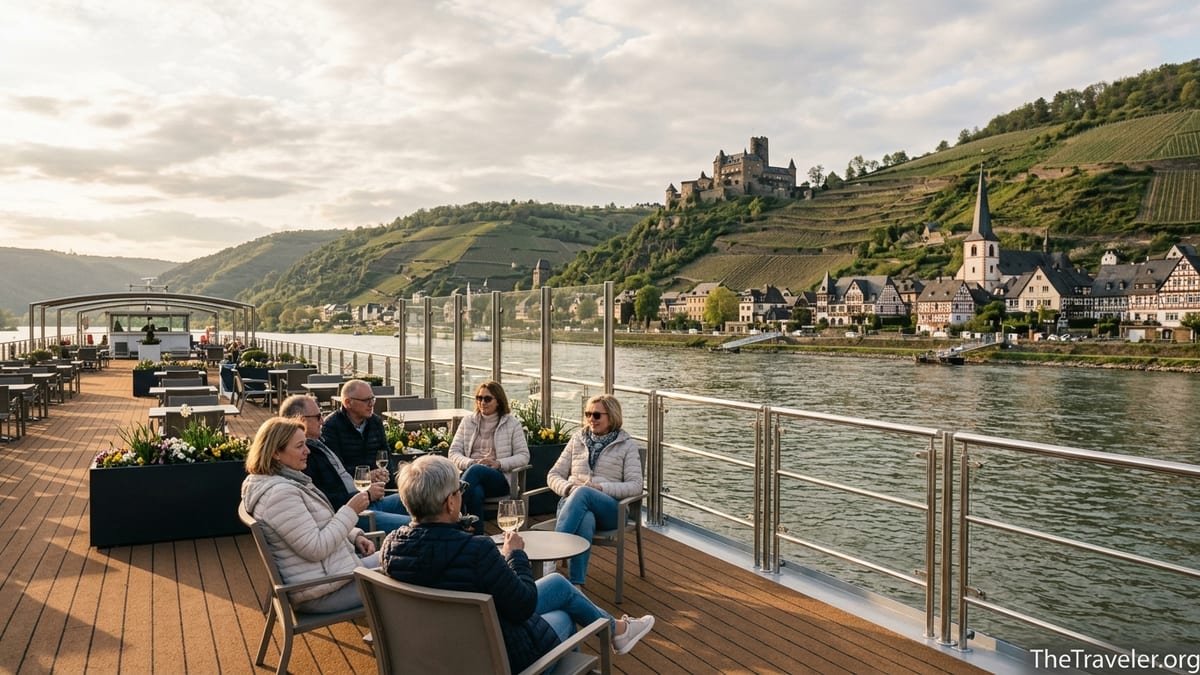
Compared with large ocean vessels, the atmosphere on a river cruise is quieter and more informal. Evening entertainment might be a local string quartet in the lounge rather than a full scale theater production. Dress codes are relaxed, and there is usually just a single main restaurant plus a smaller bistro or terrace venue. Onboard announcements and activities are kept to a minimum, leaving space for conversation, reading, or simply watching the scenery glide past from a sun deck lounger. For many guests, especially couples and multi generational families, this combination of comfort and calm is the primary reason they book a river cruise over a resort stay or big ship voyage.
Crucially, river itineraries often feel less overwhelming for first time cruisers. Travelers who are nervous about open ocean crossings or prone to seasickness tend to find river cruising a gentler introduction. The ships are rarely out of sight of land, and the sensation is more akin to staying in a boutique hotel that occasionally moves than to being at sea. Guest feedback shared on traveler forums in early 2026 repeatedly mentions that a first river cruise “solidified a desire for more” among vacationers who had never considered cruising before.
Rivers as Gateways to Culture and Everyday Life
Another major driver of river cruising’s popularity in 2026 is the access it offers to the heart of historic cities and everyday local life. For centuries, Europe’s great rivers have been commercial and cultural highways. Modern river ships are essentially retracing those routes, docking right beside old town centers or even beneath castle ramparts that once watched over medieval trade.
On a typical Danube sailing, a ship might tie up steps from Budapest’s Chain Bridge one evening, then berth close to Vienna’s historic center the next, followed by Wachau Valley villages where terraced vineyards rise directly above the quay. In France, Seine cruises frequently dock near Paris landmarks or in walking distance of Rouen’s cathedral quarter. On the Rhine, ships moor in storybook towns such as Rüdesheim and Koblenz, allowing guests to stroll ashore without shuttle buses or long transfers.
Beyond Europe, North American rivers are beginning to offer similar immersion. Modern paddlewheel style and contemporary riverboats on the Mississippi now link New Orleans, Memphis, St. Louis, and smaller river towns, often including calls at Civil War sites and blues music landmarks. American Cruise Lines has expanded its extended U.S. river itineraries for 2026, including multi week routes that trace the full length of the Mississippi or combine the Mississippi with tributaries such as the Ohio and Tennessee. These itineraries appeal strongly to travelers who want a deeper understanding of American history without the logistics of a long road trip.
Guided excursions are usually included or at least heavily curated, with English speaking guides and small group formats. Many river lines emphasize partnerships with local historians, chefs, and winemakers, turning a day in port into a series of layered experiences rather than a simple sightseeing dash. Guests might spend the morning on a walking tour of Regensburg’s UNESCO listed old town, the afternoon at a nearby brewery or vineyard, and the evening immersed in a regional tasting menu back on board. This constant, easy access to local culture is a key reason repeat rates are so high on river cruises compared with many land based tours.
New Ships, Better Cabins, and All Inclusive Value
Hardware matters, and 2026 is a strong year for new river vessels. Viking is expanding its European river fleet with additional Longships, including Viking Eldir on the Rhine, while also preparing chartered vessels for future itineraries in India. European operator VIVA Cruises is bringing its new VIVA ENJOY onto Danube routes and rolling out the first of its Viva Boutique vessels on the Seine. These ships showcase how far river cruise design has come from cramped cabins and dark lounges.
On most newbuilds, even entry level cabins are outside facing with large windows or French balconies. Balcony staterooms and suites are increasingly common, sometimes with both a traditional balcony and a French balcony in the same space. For example, VIVA’s 2026 Danube sailings on VIVA ENJOY offer all inclusive one week itineraries from Vienna with French balcony cabins starting around 1,700 euros per person in shoulder season. On the Mississippi, newly built ships for American Cruise Lines offer private balconies across the vast majority of staterooms, with lead in prices for weeklong New Orleans to Memphis sailings commonly starting in the 5,000 to 6,000 dollar range per person, depending on cabin type and date.
At first glance, those prices may seem steep compared with a basic ocean cruise fare. However, the cost comparison shifts when you factor in what is bundled into river fares. Many river cruises include daily shore excursions, wine and beer with lunch and dinner, specialty coffees, Wi Fi, and sometimes airport transfers. Some operators, such as VIVA Cruises, have moved to an all inclusive model, adding open bar and gratuities into the headline price. For travelers used to paying for specialty dining, drinks packages, and excursion bundles on big ocean ships, the simpler, more transparent pricing of river cruises is attractive.
Cabin comfort is another factor. Because there are fewer people on board, public spaces rarely feel crowded, and many ships now include wellness areas with small gyms, spa treatment rooms, or dedicated yoga and stretching spaces. Sun decks are laid out with a mix of loungers, shaded seating, and sometimes even small pools or hot tubs. The overall impression is of a floating boutique hotel, with staff to guest ratios that allow for more personalized service than is typical on large ships.
Culinary Experiences and Themed Itineraries Take Center Stage
Food has quietly become one of the biggest selling points of river cruising, and 2026 is the year that trend moves into the spotlight. Across Europe in particular, culinary branded river itineraries are proliferating. Recent coverage in travel media describes how lines are repositioning some ships as floating culinary destinations, with itineraries that revolve around regional ingredients, vineyard visits, and chef led experiences both on and off the vessel.
On the Rhine and Moselle, for example, guests can now book voyages that coincide with wine harvest season, featuring cellar tours in towns such as Bernkastel Kues and tasting flights of Riesling and Pinot Noir back on board. On the Danube, themed journeys may include market tours in Budapest, pastry classes focusing on Viennese classics, and dinners that highlight the cuisines of Hungary, Austria, and Bavaria across successive nights. In France, Seine and Rhône cruises often work closely with local fromageries, bakers, and chocolatiers to host tastings in port and paired menus on board.
This culinary focus is not limited to Europe. American river cruises along the lower Mississippi increasingly spotlight regional flavors, from New Orleans style Creole and Cajun dishes to Memphis barbecue and Southern farm to table menus. Some sailings feature guest chefs or live cooking demonstrations, while others partner with local restaurants for special onshore dinners. Travelers who once chose city breaks purely for restaurant scenes are discovering that river cruises can deliver a comparable food journey with far less logistical complexity.
Themed itineraries extend beyond food. In 2026, river lines are promoting cruises centered on topics such as classical music, Christmas markets, World War II history, and tulip season in the Netherlands. Emerald Cruises, for example, has expanded its springtime “blooms” departures in 2026 to focus on the flower fields and gardens of the Low Countries and along the Rhine. For niche interest travelers, these specialty sailings offer a way to indulge a passion in a small group environment while also seeing a slice of the region’s broader highlights.
Sustainability, Regulations, and the Eco Conscious Traveler
River cruising is not impact free, but it is increasingly seen as a more sustainable alternative to some forms of mass tourism. Ships are far smaller than ocean megavessels, and their itineraries typically focus on a handful of ports at a time rather than overwhelming single destinations with thousands of guests in a single morning. Many new river vessels are built with modern engines, cleaner fuel systems, advanced wastewater treatment, and shore power capability where local infrastructure allows.
European cities are also tightening regulations to balance tourism with quality of life for residents. Amsterdam, for instance, has announced plans to roughly halve river cruise ship visits by 2027 and require vessels to connect to shore power where available, alongside long term plans to relocate its main seaport terminal away from the historic center. While such measures can complicate logistics for operators, they also push the industry toward cleaner technology and more thoughtful itinerary design, which appeals to eco conscious travelers paying close attention to their footprint.
Many river lines now publish sustainability charters outlining efforts to reduce single use plastics, partner with local suppliers, and support preservation in the regions they visit. Guests on European and North American sailings increasingly encounter water refill stations in lieu of bottled water, energy saving lighting, and menus built around seasonal, locally sourced ingredients. These changes may feel incremental, but together they help align river cruising with the values of travelers who want comfort without ignoring environmental considerations.
At the same time, the compact footprint of river ships enables more targeted community engagement. Some operators arrange small scale visits to family owned wineries, farms, or artisan workshops that would be impractical for larger groups, bringing economic benefit to businesses that sit off the standard tourist trail. Others support local conservation projects or cultural initiatives, and highlight those stories on board. For guests who care where their money is going, this combination of lower impact transport and localized spending is part of the appeal.
North American Rivers and Emerging Regions Step Into the Spotlight
While Europe still accounts for the majority of river cruise itineraries worldwide, 2026 is shaping up as a breakthrough year for North American and emerging river regions. Travelers who might once have flown to Amsterdam or Budapest for their first river cruise are now seriously considering journeys closer to home or in less familiar corners of the world.
In the United States, interest in the Mississippi and its tributaries has been steadily rising. Viking’s modern river ship on the Mississippi continues to run popular itineraries between New Orleans, Memphis, St. Paul, and other river cities, positioning itself with a similar Scandinavian influenced design aesthetic to the line’s European vessels. American Cruise Lines, meanwhile, has leaned into extended journeys that mix iconic stops with smaller river communities and themed itineraries tied to American history. For example, the company’s long duration “Great United States” and “Civil War battlefields” style cruises stitch together multiple waterways and regions for 2025 and 2026 seasons, tapping into pent up demand for deeper domestic exploration.
Beyond North America, the Mekong and lower Ganges regions are seeing renewed attention. Viking has entered charter agreements for river vessels in India from 2027 onward, signaling confidence in the long term potential of the subcontinent’s waterways. Other lines already operate on the Mekong between Vietnam and Cambodia, often pairing river journeys with land extensions in Hanoi, Siem Reap, or Ho Chi Minh City. Travelers who have already cruised Europe’s big name rivers are increasingly looking to these itineraries for a second or third river voyage that feels more adventurous while still offering the comfort of a modern river ship.
Even within Europe, fresh combinations and shoulder season experiments are multiplying. VIVA Cruises is offering winter sailings on the Rhine and Danube with a focus on cozy onboard experiences and festive market visits. Boutique brands are basing ships on the Seine for Paris centric itineraries, or on the Douro in Portugal for vineyard heavy journeys that feel more intimate than the Danube or Rhine at the height of summer. As more capacity comes online through 2026, would be river cruisers are likely to find a broader menu of destinations and price points than ever before.
The Takeaway
The rise of river cruising in 2026 is no accident. It reflects a confluence of traveler preferences, industry investment, and post pandemic sensibilities that all point in the same direction. People want trips that feel meaningful, not rushed. They want to unpack once, wake up to new views each morning, and step off the gangway directly into the heart of historic cities and riverfront towns. They want clear pricing, good food, a relaxed onboard atmosphere, and the sense that their vacation is not at odds with the places they are visiting.
For many, a river cruise checks those boxes more neatly than almost any other style of travel. New ships on the Danube, Rhine, Seine, and Douro; expanding programs on the Mississippi and Columbia Snake; and growing interest in Asia’s great rivers all suggest that the current momentum will not fade quickly. Whether you are a seasoned ocean cruiser looking for something more intimate, a first time cruiser wary of the open sea, or a land traveler tired of constant packing and unpacking, 2026 may be the ideal moment to test the waters of river cruising.
From here, the river cruise story looks set to keep flowing. As more operators embrace cleaner technology, deeper partnerships with local communities, and increasingly creative themed itineraries, riverside voyages are likely to become a standard feature of long term travel wish lists. The only real challenge for would be guests may be deciding which river to sail first, and booking far enough ahead to secure a cabin during the most coveted weeks of the year.
FAQ
Q1. Are river cruises in 2026 more expensive than ocean cruises?
Generally yes, on a per night basis river cruises tend to cost more than mass market ocean sailings, especially when you compare brochure prices. However, river fares usually include more items in the upfront price, such as daily excursions, wine and beer with meals, Wi Fi, and sometimes gratuities and airport transfers. When you factor in those inclusions, many travelers find that the overall value of a river cruise compares favorably with a big ship voyage once onboard spending is considered.
Q2. Which rivers are most popular for first time river cruisers in 2026?
The Danube and the Rhine remain the top choices for first timers, thanks to their mix of iconic cities and scenic stretches. Danube itineraries between Budapest and Passau or Regensburg are perennial favorites, while Rhine Getaway routes between Amsterdam and Basel attract guests with castle lined riverbanks and easy air access. In North America, Mississippi River cruises between New Orleans and Memphis are emerging as a strong alternative for travelers who prefer to stay closer to home.
Q3. How far in advance should I book a 2026 river cruise?
For peak season departures in May, June, September, and during Christmas market periods, it is wise to book at least 9 to 12 months ahead, especially if you want a specific cabin type or a French balcony or suite. Some popular itineraries and dates can sell out even earlier, particularly when large tour brands or agencies charter full ships. Shoulder season departures in March, April, July, or late October are often easier to secure closer in, but good availability cannot be guaranteed.
Q4. What kind of travelers enjoy river cruises the most?
River cruises tend to appeal to travelers who value culture, history, and food over nightlife and high energy entertainment. Many guests are couples in their 50s and above, but the demographic is slowly broadening to include multigenerational families and younger professionals seeking immersive trips. If you enjoy guided walking tours, leisurely meals, and scenic afternoons on deck more than waterslides and casinos, a river cruise is likely to be a good fit.
Q5. Are river cruises suitable for solo travelers?
Yes, and they are becoming more welcoming each year. Several river cruise lines now offer dedicated single cabins or reduced solo supplements on select 2026 departures. The small ship environment and shared excursions make it easy to meet other guests, and hosted tables at dinner help solo travelers avoid feeling isolated. As always, it is worth asking your travel advisor or the cruise line about solo friendly deals and cabin options before you book.
Q6. How do water levels affect river cruises?
Water levels are a real consideration on some rivers, particularly the upper Danube and parts of the Rhine in very dry or very wet seasons. When levels are too low or too high, ships may not be able to pass certain stretches or locks. In practice, cruise lines typically respond by adjusting itineraries, using sister ships on different segments, or arranging coach transfers around affected areas. Disruption is not common enough to deter most travelers, but flexible expectations are helpful.
Q7. What is included in the price of a typical European river cruise?
Inclusions vary by line, but most European river cruises include your cabin, all meals, filtered coffee and tea, at least some wine and beer with lunch and dinner, guided walking tours in many ports, and onboard lectures or briefings. Some brands also bundle gratuities, open bar, and specialty dining into an all inclusive fare, while others charge separately for premium drinks, optional tours, and spa services. Reading the fine print and comparing inclusions is important when evaluating prices.
Q8. Do I need to dress formally on a river cruise?
Dress codes on river cruises are generally relaxed. During the day, comfortable casual wear and good walking shoes are standard, especially for shore excursions on cobblestone streets. In the evening, most guests opt for smart casual outfits, such as collared shirts and dresses or slacks, rather than formal gowns or tuxedos. Even on lines that host a captain’s welcome or farewell dinner, the emphasis is usually on neat attire, not black tie formality.
Q9. Are river cruises accessible for travelers with mobility challenges?
Accessibility varies by ship and destination. Newer river vessels often have elevators between some decks and cabins designed for guests with limited mobility, but the compact size of the ships and older European port infrastructure can present challenges. Many historic towns feature uneven paving, stairs, and steep inclines. Travelers with mobility concerns should discuss specific needs with the cruise line in advance, ask about accessible cabins and excursion options, and consider bringing a companion if extensive assistance is required.
Q10. How can I find a good deal on a 2026 river cruise?
Booking early is often the best way to secure both your preferred cabin and promotional offers such as reduced airfares, early booking discounts, or included upgrades. Wave season, typically from January to March, is a key window when cruise lines and travel agencies release value added deals. Travelers with flexible dates or willing to sail in shoulder seasons may also find lower fares. Working with a specialist travel advisor who regularly books river cruises can help you navigate promotions and find added perks that may not be immediately visible online.