


If you only know Campania for the Amalfi Coast and Capri, you are missing a quieter world just west of Naples. On a stub of peninsula in the volcanic Campi Flegrei, the small seaside town of Bacoli offers swimmable sandy beaches, a drowned Roman city, lakeside royal follies and big‑sky views over the Gulf of Naples. It remains largely off the international radar, which is precisely why skipping Bacoli might mean passing up one of southern Italy’s most underrated coastal escapes.
Get the latest updates straight to your inbox!
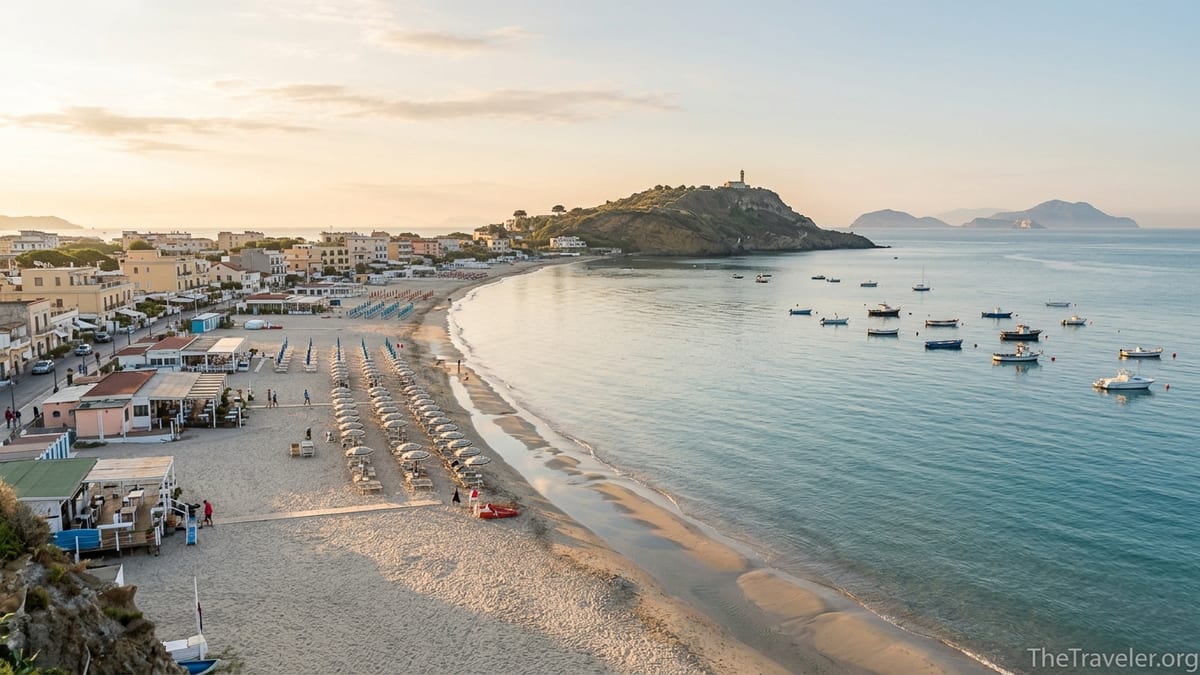
Where Bacoli Sits In Campania’s Coastal Story
Bacoli lies about 15 kilometers west of Naples, on the edge of the Campi Flegrei caldera, a volcanic area that includes Pozzuoli, Monte di Procida and the islands of Procida and Ischia. While most visitors race south toward Sorrento or Positano, the coastal strip around Bacoli, Miseno and Miliscola still feels like holiday country for Neapolitans rather than an international stage. You are more likely to hear local dialect than English on the bus, and beach conversations revolve around football and family, not checklists of must‑see sights.
This low‑key character does not mean a lack of infrastructure. From central Naples, travelers can reach Bacoli in roughly one to one and a half hours using the Cumana or Circumflegrea suburban trains to stations like Fusaro or Baia, then local buses or short taxi rides to the beaches and harbor. In high season there are ferries and water shuttles linking nearby Pozzuoli with the islands, which makes Bacoli a practical base for combining sandy beach days with island excursions without the prices of Capri or Ischia.
Because Bacoli sits within an active volcanic district, visitors will also notice fumaroles in nearby Pozzuoli and reports of small tremors in local news. Authorities monitor the Campi Flegrei closely; for now, volcanic unrest translates less into immediate danger and more into a reminder that this landscape is constantly shifting. Many of the most remarkable sites in and around Bacoli, from submerged villas to crater lakes, exist precisely because of this restless geology.
For trip planners used to clear categories like "city break" or "beach week," Bacoli is best understood as a hybrid: part classic Italian seaside town, part open‑air archaeology park, part nature escape. That mix makes it especially appealing to travelers who find Amalfi’s crowds overwhelming but still want swimmable water, good food and a sense of place rooted in deep history.
Miseno & Miliscola: Sandy Beaches Locals Keep To Themselves
While much of the Bay of Naples coastline is rocky, Bacoli is blessed with a gentle crescent of sand stretching between Capo Miseno and Miliscola. This is where Neapolitan families set up umbrellas for the day, teenagers play beach football and the late‑afternoon ritual of aperitivo unfolds in plastic chairs a few meters from the tide line. On a hot July weekend, a visitor will quickly notice that most cars in the parking lots have local plates, a sign of how underused this area still is by international tourism.
The beaches are divided between free public stretches and stabilimenti, private beach clubs that rent loungers and umbrellas. At Lido Virgilio in Miliscola, for example, a pair of sunbeds and an umbrella in mid‑summer typically costs somewhere in the region of 25 to 35 euros for the day, depending on row and day of the week, while shoulder‑season prices tend to drop. In return you get changing cabins, showers, a bar and often a simple restaurant serving things like spaghetti alle vongole and fried calamari. This kind of set‑up is standard along the coast, but in Bacoli the atmosphere remains more relaxed than in Amalfi or Positano, and you rarely feel rushed off your lounger for the next sitting.
Travelers watching their budget can easily spend the day on the spiaggia libera with a simple beach mat, picking up picnic supplies from bakeries and fruit vendors in town. A common local lunch might be a still‑warm pizza a portafoglio from a neighborhood pizzeria, a bag of ripe apricots or figs in late summer and a cold bottle of peach‑flavored iced tea from the supermarket. The sand shelves gradually into the sea, which makes Miseno and Miliscola gentler options for families with small children compared with the steep, stair‑accessed coves elsewhere in Campania.
Even at the height of August, when umbrellas cluster densely near the water, the wider area around Capo Miseno and the hill above the beach offers space to breathe. Travelers willing to walk ten or fifteen minutes away from the busiest stretches can still find quieter spots to swim in the late afternoon, especially on weekdays. For many visitors, the realization that such accessible, family‑friendly beaches exist so close to Naples without the crush of the Amalfi Coast is the first hint that skipping Bacoli might indeed be a mistake.
Baia’s Sunken City: Snorkeling Over Roman Villas
Just north of Bacoli’s center, the harbor of Baia hides one of the area’s greatest surprises: an underwater archaeological park where much of a Roman luxury resort now lies beneath the waves. Due to centuries of volcanic ground movement, parts of ancient Baiae, once a notorious playground for the Roman elite, gradually slipped below sea level. Today, mosaicked floors, villa walls and sections of paved streets sit a few meters underwater, protected inside a marine park that can be explored by boat or with a mask and snorkel.
For non‑divers, glass‑bottom boat tours from Baia and Bacoli offer an easy way to glimpse this drowned city. Operators typically run one‑ to two‑hour trips during the warmer months, with adult tickets often somewhere in the range of 25 to 40 euros depending on the route and whether commentary or extra stops are included. Through the viewing windows, visitors can make out geometric black‑and‑white mosaics, column bases and the outlines of former thermal baths, while guides point out how the sea level has changed and explain which emperors once vacationed here.
Those comfortable in the water can book guided snorkeling or shallow‑water diving excursions with local centers based in the harbor. A standard snorkeling tour, including mask, fins and guide, might begin around 40 to 60 euros per person, while two‑tank guided dives with full equipment can cost in the region of 100 to 140 euros. Depths near the main sites are modest, which keeps conditions beginner‑friendly and allows long, lingering looks at details like marble inlays or the edges of garden peristyles. On calm summer mornings, visibility is often good enough to feel as if you are hovering over an open‑air museum rather than the seabed.
This combination of seaside holiday and hands‑on archaeology is rare in Italy, and it shifts the character of a stay in Bacoli. A family might spend the morning on Miseno beach, then take an afternoon glass‑bottom boat during the golden hour. A couple with an interest in history could pair a dive over the submerged villas with a visit to the hilltop Aragonese castle above Baia, which houses the Archaeological Museum of the Campi Flegrei with statues and artifacts recovered from the same shoreline. For travelers who have already walked the streets of Pompeii or Herculaneum, the chance to see Rome’s leisure architecture under the sea adds an entirely different dimension.
Lakes, Lookouts and the Walk To Capo Miseno
Bacoli is not only about the open sea. Just inland, Lago Miseno forms a sheltered lagoon connected to the Mediterranean by narrow channels. In ancient times it served as a Roman naval base; today, small boats bob at their moorings and the ring of hills around the lake reflects in the calm water. Travelers strolling the lakefront at sunset will notice how quickly the mood changes from the busy beach road: fishermen mending nets, older residents playing cards under trees, the smell of wood smoke from backyard grills drifting across the water.
Southwest of town, the low but dramatic headland of Capo Miseno offers one of the best viewpoints in the entire Gulf of Naples. A signposted footpath, often referred to as the Sentiero del Faro or Bird Trail, winds up from the neighborhood below toward the lighthouse at the tip. The climb takes roughly 30 to 45 minutes depending on pace, with informal steps, dirt sections and occasional railings. In exchange for the effort, walkers are rewarded with a wraparound panorama that takes in Procida’s pastel houses, the bulk of Ischia, the curve of Naples and, on clear days, even a hint of Capri’s Faraglioni on the horizon.
The trail passes patches of Mediterranean scrub where, in spring and autumn, migratory birds briefly rest on their journeys. Hikers should wear closed shoes and bring water, especially in the heat of July and August, when the sun on the exposed sections can be intense. Time the walk for late afternoon and it is possible to watch the sky turn pink over the sea while lights flicker on along the Bay of Naples below, then descend for a seafood dinner in Bacoli or nearby Monte di Procida.
North of town, another body of water adds to the area’s layered landscape: Lake Fusaro, separated from the sea by a narrow strip of land and lined with reeds and low houses. Here, on a tiny islet reached by a wooden footbridge, stands the Casina Vanvitelliana, an 18th‑century hunting and fishing lodge built for Bourbon kings. Its pale faceted structure and lakeside setting have made it a popular backdrop for wedding photos and occasional cultural events. Visitors can wander the park around the lake, photograph the pavilion from the shore and, when open, pay a modest entry fee to explore its interiors and small exhibitions.
Casina Vanvitelliana & The Quiet Pleasure of Everyday Bacoli
Compared with blockbuster palaces elsewhere in Campania, the Casina Vanvitelliana feels intimate and almost fragile, a reminder of a time when this corner of the coast was managed as a royal hunting reserve rather than a town. Travelers who arrive early in the day may find the park nearly empty, with only joggers and dog walkers circling the water. The reflections of the lodge in the lake create soft mirror images that change with every breeze, and the low murmur of trains passing on a nearby line is often the only sign of modern life intruding on the scene.
In recent years, the municipality has used the lodge not only as a historic monument but also as a venue for small concerts, art shows and civil wedding ceremonies. Checking local listings just before a trip can reveal whether there are evening events scheduled during a visit. Even when nothing special is happening, however, Lake Fusaro offers a simple pleasure that can be hard to find on more developed coastlines: room to walk without crowds, sit on a bench with a gelato and watch herons and egrets pick their way through the shallows at the water’s edge.
Back in Bacoli’s main streets, daily life revolves around a compact center of bars, pastry shops and neighborhood supermarkets. In the morning, customers queue at counters for sfogliatelle, cornetti filled with custard and espresso served quickly and strong. Around lunchtime, small trattorias and pizzerias open their doors, offering dishes that highlight what the sea and volcanic soil provide: linguine with clams from nearby beds, grilled octopus, platters of seasonal vegetables, lemons and tomatoes grown in gardens around the bay.
Prices reflect the town’s working‑class roots rather than an international resort economy. A simple espresso typically costs around 1 to 1.50 euros, a generous slice of local margherita pizza sold al taglio might be a few euros, and a plate of pasta at a neighborhood trattoria often falls in the 12 to 18 euro range, depending on the ingredients. Wine lists frequently feature labels from Campania, including whites from the Falanghina grape grown on nearby slopes. For many visitors, it is this daily rhythm, rather than any single landmark, that lingers in memory after leaving Bacoli.
Practicalities: Where Bacoli Excels Compared With Better‑Known Coasts
When weighed against more famous corners of Campania, Bacoli stands out in several practical ways. Accommodation tends to be in small hotels, guesthouses and holiday apartments rather than large resorts, and prices usually fall noticeably below those in Amalfi or Capri. A clean mid‑range room in high season might start somewhere around 90 to 140 euros per night, with better deals available for longer stays or off‑peak dates in late spring and early autumn. Many properties emphasize proximity to the beach or harbor rather than ostentatious design, which suits travelers who value location and local feel over luxury branding.
Getting around is relatively straightforward for those comfortable with public transport. Buses connect Bacoli with neighboring towns like Pozzuoli and Monte di Procida, and regional trains from nearby stations link to central Naples in about 40 to 60 minutes. That said, services can be less frequent on Sundays and late at night, and schedules may shift seasonally, so it is wise to confirm times locally. Travelers who prefer flexibility often rent a small car at Naples airport and use Bacoli as a hub, but should prepare for narrow streets, limited parking near the beaches in peak summer and the energetic driving style common in the region.
Safety‑wise, visitors encounter the usual southern Italian mix of warmth and bustle. Petty crime such as opportunistic bag theft can occur, especially on crowded public beaches or in parked cars, so standard precautions apply: keep valuables with you, avoid leaving items visible and stay aware of surroundings. On the water, pay attention to lifeguard flags and local advice, especially when winds pick up or afternoon waves build. During especially hot spells, authorities may issue advisories about heat or air quality affecting the broader Campi Flegrei area; staying hydrated, seeking shade at midday and following any local guidance helps ensure a pleasant stay.
One point that sometimes gives travelers pause is news coverage of volcanic studies in the Campi Flegrei, which periodically highlight the potential for future eruptions. Monitoring networks track ground movement and gas emissions, and civil protection plans exist should risk levels change. For now, life in Bacoli goes on with typical coastal rhythms: children learning to swim at Miseno, older residents arguing cheerfully over card games, tour boats nosing out toward the sunken city. Visitors who stay informed through official channels, register contact details with their embassy if advised and remain flexible in their plans can balance awareness with enjoyment.
The Takeaway
Bacoli will likely never have the global name recognition of Capri or Positano, and that is precisely its strength. It offers a version of the Campania coast where the sea is still the backdrop to local life rather than a stage for performance, where ruins and royal follies sit casually alongside apartment blocks and fishing sheds. The beaches of Miseno and Miliscola, the drowned villas of Baia, the views from Capo Miseno and the quiet mirror of Lake Fusaro together create a coastal landscape that feels distinct from anywhere else in southern Italy.
For travelers willing to look slightly off the usual route out of Naples, Bacoli can anchor a trip that mixes swimming, walking, archaeology and simple pleasures at the table. It works as a long weekend escape from the city, a base for exploring the wider Campi Flegrei or a gentler alternative to the hyper‑curated experiences of the Amalfi Coast. Skip it, and you might have a perfectly pleasant tour of Campania’s greatest hits. Include it, and you may find that your strongest memories of the region are not of crowded postcard views, but of a quiet evening breeze over Lake Fusaro or the strange thrill of watching a Roman mosaic pass slowly under a glass boat.
FAQ
Q1. How do I get to Bacoli from central Naples without a car?
You can take the Cumana or Circumflegrea suburban train toward the Campi Flegrei area, get off at stations such as Fusaro or Baia, and then continue by local bus or taxi for the final stretch to the beaches or harbor. The full journey usually takes around one to one and a half hours depending on connections.
Q2. Is Bacoli a good base for visiting Procida and Ischia?
Yes, Bacoli works well as a quieter, more affordable base for day trips to Procida and Ischia. You can reach nearby ports like Pozzuoli by bus or car, then take regular ferries or hydrofoils to the islands, returning to Bacoli in the evening for a calmer atmosphere.
Q3. When is the best time of year to visit Bacoli?
Late May to early July and September to early October are often ideal, with warm sea temperatures, long daylight hours and fewer crowds than in peak August. In high summer, expect hotter weather and busier beaches, especially on weekends, while winter brings a quieter, more local feel but limited beach and boat services.
Q4. Do I need to book Baia underwater park tours in advance?
In the busy summer months and on weekends, it is wise to reserve glass‑bottom boat tours or snorkeling and diving excursions in advance, especially if you have limited days. Outside peak periods, same‑day bookings are often possible, but checking availability the day before helps avoid disappointment.
Q5. Are the beaches at Miseno and Miliscola suitable for children?
Yes, the sandy shorelines and relatively gentle slope into the water make Miseno and Miliscola popular with local families. As always, supervision is important, and parents should pay attention to any lifeguard flags, changing weather and sun exposure during the hottest hours of the day.
Q6. Is Bacoli much cheaper than the Amalfi Coast?
In general, accommodation, beach club services and dining in Bacoli cost noticeably less than in the most famous Amalfi Coast towns. Prices still rise in peak season, but many visitors find that their budget stretches further here, especially for longer stays or for families booking multiple rooms.
Q7. Can I visit Bacoli and Baia as a day trip from Naples?
Yes, a long day trip is possible and can include a beach stop and a glass‑bottom boat tour or visit to the castle and museum at Baia. However, staying one or two nights in Bacoli allows a more relaxed rhythm, with time for sunset walks, multiple swims and an unhurried visit to Lake Fusaro and the Casina Vanvitelliana.
Q8. What should I pack for a visit to Bacoli in summer?
Bring light clothing, swimwear, a hat, sunscreen, and comfortable footwear for walking or the hike up to Capo Miseno. A light cover‑up or shirt is useful for visiting churches or indoor sites, and a reusable water bottle helps in the heat, especially when using public transport or exploring on foot.
Q9. Is Bacoli safe for solo travelers?
Bacoli generally feels welcoming to solo visitors, including solo women travelers, particularly in busy summer months when streets and beaches are active into the evening. Using common‑sense precautions such as avoiding poorly lit areas late at night, watching belongings on the beach and sharing basic itinerary details with someone at home is recommended.
Q10. How many days should I plan for Bacoli?
Two full days are usually enough to experience the main highlights, including beach time, Baia’s underwater park and a visit to Lake Fusaro or Capo Miseno. With three or four days, you can slow the pace, add a side trip to Procida or Ischia and enjoy more of the local food and evening atmosphere.