


Bacoli rarely makes the shortlist when travelers plan a few days in Naples. Yet this small coastal town in the Phlegraean Fields hides a mix of sandy bays, Roman ruins and easygoing local life that feels a world away from Naples’ intensity, while still close enough for a simple day trip. Whether Bacoli is worth your limited time depends on what you want from your stay in Campania. Here is a clear-eyed look at what Bacoli offers, what it lacks, and how to decide if it deserves a spot in your itinerary.
Get the latest updates straight to your inbox!
Where Is Bacoli and What Kind of Place Is It?
Bacoli sits on a peninsula west of Naples in the Campi Flegrei, a volcanic area known for hot springs, craters and sulfur-scented air. It is technically part of the Naples metropolitan area, but once you arrive you are surrounded by low hills, lakes and the sea instead of apartment blocks and scooters. You are still close to the city, roughly 15 kilometers from central Naples, but the atmosphere changes quickly from urban chaos to slow-paced seaside town.
The coastline around Bacoli alternates between marinas, low rocky shores and pockets of sandy beach. Inland you find volcanic lakes such as Fusaro and Miseno, with boardwalks, reed beds and glimpses of distant islands on clear days. Rather than a single landmark drawing big crowds, Bacoli is a cluster of small experiences: a stroll around Lake Fusaro at sunset, an aperitivo in the square overlooking the harbor at Baia, or a quiet swim off a local beach club in shoulder season.
The town itself feels lived in rather than curated for tourism. You will see fishermen repairing nets, local families out for evening walks on the lungomare and small bars serving cheap espresso instead of polished wine bars. If you enjoy places where tourism coexists with everyday life instead of dominating it, this is a strong point in Bacoli’s favor.
At the same time, this local feel means fewer big hotels, slick visitor centers or all-English menus. Independent travelers comfortable with a bit of improvisation and basic Italian will find Bacoli rewarding, but those expecting Amalfi Coast levels of polish may be disappointed.
How Easy Is It to Reach Bacoli From Naples?
From central Naples, the most common way to reach the Bacoli area is by the Cumana commuter railway run by EAV, which connects the Montesanto station in the historic center to Torregaveta, in the municipality of Bacoli, in about 45 minutes. Trains are frequent at peak times, generally every 20 to 30 minutes, and tickets are inexpensive compared with long-distance services. Many visitors pair this with local buses or a short taxi ride for the final stretch to specific sights or beaches.
For Baia and its famous underwater archaeological park, the usual route is Cumana to the Baia stop, then a short walk down to the marina and the castle above. The Baia station and infrastructure have been the subject of upgrades and works in recent years, and timetables can change, so it is wise to check current EAV schedules closer to your travel date and allow a buffer for delays or crowded trains, especially in summer.
Local buses link Bacoli’s neighborhoods, lakes and beaches. Services are affordable, and there is an integrated regional ticket system that covers many buses and commuter lines across Campania, but information can feel patchy to visitors. Many recent travelers report that Google Maps sometimes shows awkward connections or outdated routes. A practical strategy is to confirm bus times at a local bar or newsstand, or to use Bacoli as a place where you walk more and rely less on precision timing. If you prefer certainty and are short on time, a taxi or private driver from Naples, while more expensive, cuts out most of this friction.
If you are renting a car to explore Campania more broadly, reaching Bacoli by road is straightforward, but parking can be tight near beaches and Baia on sunny weekends. Expect to pay for private parking lots near popular spots in July and August, and note that driving in and out of Naples during rush hours can be slow.
The Underwater City of Baia: Bacoli’s Star Attraction
The single most compelling reason many people visit Bacoli is the Submerged Archaeological Park of Baia, often described as an underwater Pompeii. The ancient Roman resort town of Baiae partially sank because of volcanic activity, leaving villa floors, mosaic fragments, columns and statues now lying a few meters under the water. The site is protected as a marine park and widely cited as one of the more unusual diving and snorkeling destinations in Europe.
Experiencing the underwater city does not require you to be a certified diver. Several authorized diving centers based in Baia’s marina run guided snorkeling trips, usually lasting around three hours door to door. A typical outing includes fitting equipment at the dive center, a short boat ride to a protected buoy, then about an hour in the water viewing the ruins from the surface. Many operators accept children around seven years old and up for snorkeling, making this a family-friendly way to connect history and the sea.
For certified divers, half-day tours commonly offer two shallow dives at different sectors of the park. Maximum depths are generally modest, often under 8 meters, which makes the site accessible to beginners, though water clarity and visibility vary with seasons and conditions. Recent itineraries and tour descriptions emphasize that the experience is less about dramatic drop-offs or abundant marine life and more about the surreal sight of Roman walls, columns and marble decorations resting on the seabed in a protected bay.
If you prefer to stay dry, glass-bottom boat tours and small boats with viewing panels operate in season, allowing you to see outlines of mosaics and structures without entering the water. Combined with a visit to the Aragonese Castle of Baia, which houses artifacts recovered from the submerged city as part of the Archaeological Park of the Phlegraean Fields, you can build a full day of exploration focused on this one-of-a-kind blend of archaeology and seascape.
Beaches, Lakes and Swimming: What to Expect
For travelers who want a break from the crowded waterfronts closer to central Naples, Bacoli offers a mix of sandy stretches and quieter corners. The area around Miseno and Miliscola features some of the more popular beaches, with long arcs of sand, rows of umbrellas, and stabilimenti balneari that rent loungers and include showers and changing cabins. In summer, many locals from Naples head here instead of taking the ferry to Capri or Ischia, so it can get lively, especially on Sundays, but the vibe is more neighborhood beach than glossy resort.
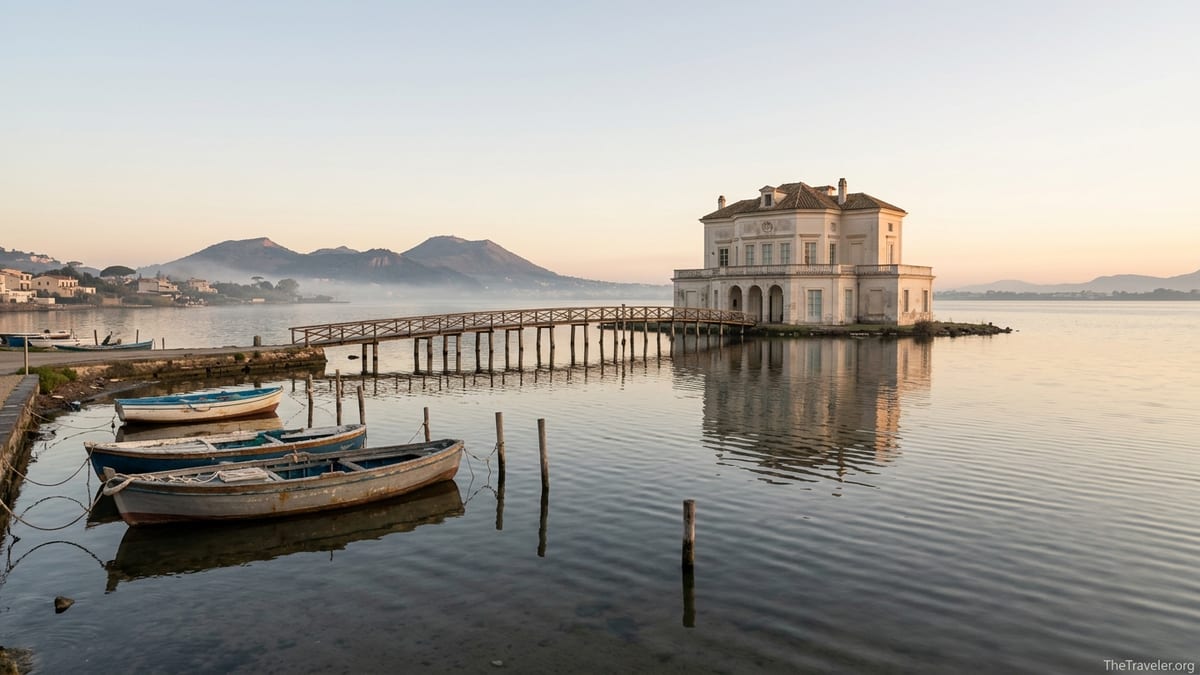
Lake Fusaro and Lake Miseno provide a different kind of waterscape. Swimming is not the main draw here. Instead, visitors come to walk the paths, enjoy birdlife and admire the Casina Vanvitelliana, an 18th century royal hunting lodge perched on a tiny island in Lake Fusaro. This elegant building, reached by a wooden bridge, is one of the most photographed spots in Bacoli, particularly at sunset when the sky reflects in the still water. Current information from local tourist organizations indicates that the Casina is generally open daily, with afternoon-only hours early in the week and longer hours on weekends, and that there is a small entrance fee for adults, with discounts for children.
Water quality along the Campi Flegrei coast can fluctuate, and there are periodic reports of temporary swimming bans after storms or during infrastructure works. Before planning a dedicated beach day in Bacoli at the height of summer, it is worth quickly checking regional bulletins or asking your accommodation in Naples for the most up to date advice on bathing conditions. Outside peak season, especially in late May, June and September, you are more likely to find a pleasant balance of warm water, space on the sand and fewer crowds.
If your main goal is picture-perfect coves and upscale beach clubs, the Amalfi Coast or the islands of Capri and Procida may suit you better. Bacoli’s seaside experience is simpler: plastic chairs at beach bars, teenagers playing football near the shoreline, and families picnicking under rented umbrellas. The charm lies in this ordinariness rather than polished glamour.
Roman Ruins and Volcanic Landscapes Beyond the Water
Although Baia’s underwater park draws headlines, Bacoli and its surroundings offer plenty for travelers interested in ancient history who prefer to stay on land. The region forms part of the wider Archaeological Park of the Phlegraean Fields, which links multiple sites scattered across the volcanic landscape. This means you can design a day in Bacoli that combines sea views with very accessible ruins.
Within Baia itself, above the harbor, the terrace-like remains of an imperial Roman thermal complex stretch up the hillside. Visitors walk past huge brick arches, collapsed domes and bath chambers once used by the Roman elite who came to Baiae for its hot springs and entertainments. From many vantage points you can see modern Bacoli and the sea below, a reminder of how landscape and leisure have layered over each other for two thousand years.
Nearby, other Campi Flegrei highlights such as the Flavian Amphitheater in Pozzuoli, the crater lake of Averno and various fumaroles and thermal pools can be combined with a stop in Bacoli if you are touring by car. Organized day tours marketed from Naples sometimes package several of these sites together, occasionally including a boat or snorkeling stop at Baia as part of a wider exploration of the volcanic area.
What you will not find in Bacoli is a single, blockbuster ruin on the scale of Pompeii or Herculaneum. Instead, think of it as a mosaic of smaller sites: a temple fragment here, sections of ancient walls there, viewpoints over layered Roman and modern structures. For historically minded travelers who enjoy piecing together stories from these fragments, that can be very satisfying, but if you only have one day in the Naples area for ruins, you may prefer to prioritize the larger excavations and treat Bacoli as a second-tier option.
Food, Atmosphere and Practical Travel Trade-offs
One of Bacoli’s underrated strengths is its food scene, especially for seafood at relatively down to earth prices compared with central Naples or major resort towns. Fisherman-owned trattorias near the harbors in Baia and Bacoli often serve the catch of the day grilled or in simple pasta dishes. You might find plates of spaghetti alle vongole, fried local anchovies, or mixed seafood grills, with house wine and an espresso to finish, for prices that feel reasonable given the waterfront settings.
Bars around the lakes and seafront have leaned into the tradition of aperitivo, with outdoor seating that fills up around sunset. Sitting by Lake Fusaro with a spritz and a small plate of snacks after visiting the Casina is a typical local ritual. Compared with parts of Naples’ historic center, you are less likely to encounter aggressive tourist pricing or menus translated into multiple languages, although basic English is usually understood in places used to visitors from nearby Naples and weekenders from elsewhere in Italy.
The trade-off is that Bacoli offers a more limited range of accommodation and nightlife than the city. There are a handful of small hotels, B&Bs and holiday apartments, some with views over the sea or lake, but you will not find the dense choice of boutique hotels or hostel dorms that central Naples provides. Nightlife outside summer weekends tends to revolve around a few busy bars and seasonal beach venues, not a broad spread of clubs or late-opening venues. For most visitors, Bacoli works best as a day trip or lazy overnight rather than a base for an entire week unless you are seeking deliberate quiet.
Another practical point is that services like luggage storage, bike rentals or tourist information offices are thinner on the ground than in more established destinations. Planning your day in advance, with clear ideas of which sites you want to see and how you will move between them, makes the experience smoother. Those who like to arrive somewhere and decide on the spot based purely on tourist signage may find Bacoli a bit opaque.
Who Will Love Bacoli and Who Might Skip It?
Putting all these factors together, Bacoli is particularly worthwhile if you are staying in Naples for several days and enjoy slower, less polished coastal towns with a strong sense of local life. It works well for travelers who have already ticked off central highlights like Pompeii and the classic city museums and are now looking for something different: snorkeling over Roman mosaics, strolling around a volcanic lake at dusk, or discovering where Neapolitans go to the beach on their own weekends.
Families often appreciate the manageable scale and relative calm compared with central Naples. A day that begins with a morning snorkel at the submerged city of Baia, followed by a simple seafood lunch and a couple of hours on a gently shelving beach, can be easier with children than negotiating long queues at major archaeological sites in the heat. The shallow depths at the underwater park and availability of glass-bottom alternatives are also advantages for mixed-ability groups.
On the other hand, if your time in Campania is very short, Bacoli rarely qualifies as essential. Travelers visiting Naples for only one or two days are usually better off focusing on places that are difficult to replicate elsewhere, such as Pompeii, the Naples Archaeological Museum or a quick island day trip. Bacoli’s experiences are memorable but subtle, and they reward those who already have the main highlights covered.
It may also be less appealing for visitors who prioritize high-end shopping, iconic viewpoints recognizable from postcards, or tightly organized tourist infrastructure. Here you trade polished services for authenticity and a certain amount of logistical improvisation. Deciding whether this trade suits you is key to answering whether Bacoli is worth including in your plan.
The Takeaway
Bacoli is not a must see in the way Pompeii or Capri are, but it can be a deeply rewarding addition to a Naples itinerary for the right traveler. Its strengths lie in its combination of ordinary coastal life and one extraordinary archaeological feature: the submerged city of Baia. Add in accessible beaches, the poetic silhouette of the Casina Vanvitelliana on Lake Fusaro, and the broader volcanic landscapes of the Phlegraean Fields, and you have a destination that feels distinctly local yet quietly unique.
If you have at least three full days in Naples and are curious about Roman history, coastal walks and everyday Campanian culture, setting aside a day to explore Bacoli and Baia makes sense. With more limited time, you may decide that the extra transport and lower-profile sights are not worth it compared with higher impact options elsewhere in the region. In the end, Bacoli is most rewarding for travelers who value atmosphere and unusual experiences over famous names, and who are willing to trade a little convenience for the pleasure of discovering a pocket of the Bay of Naples that most visitors still overlook.
FAQ
Q1. How long do I need to visit Bacoli from Naples?
Most travelers find that one full day is enough to visit the underwater park at Baia, explore the castle or hillside ruins, and enjoy a relaxed meal or a couple of hours on the beach. If you want to combine several archaeological sites across the Phlegraean Fields, adding an overnight stay in Bacoli or nearby Pozzuoli can make the pace more comfortable.
Q2. Is Bacoli worth visiting if I only have two days in Naples?
If you have just two days, Bacoli usually should not be your first priority. In that limited time, most visitors get more value from classic sights like Pompeii, the historic center of Naples and the main museums. Bacoli becomes more worthwhile once you have at least a third day and are looking for something different from the standard highlights.
Q3. Can I visit Bacoli and Pompeii on the same day?
Combining both in a single day is technically possible but not ideal. Each destination involves separate transport routes and offers enough to fill most of a day on its own, especially if you include a snorkeling tour in Baia or a long walk through the ruins at Pompeii. Trying to do both often results in rushed visits and a tiring day.
Q4. Do I need to book Baia underwater park tours in advance?
In peak season, especially from June to early September and on weekends, it is wise to book snorkeling or diving tours at the underwater park in advance with an authorized dive center or operator. Outside these periods, you may sometimes find last minute availability, but advance booking still helps secure your preferred time and language support.
Q5. Is Bacoli a good base for exploring the Bay of Naples?
Bacoli can work as a quiet base if you are mainly interested in the Phlegraean Fields, nearby beaches and slower local life. However, for travelers focused on frequent day trips by train to places like Pompeii, Sorrento or the Amalfi Coast, staying in central Naples or along the Circumvesuviana line is usually more practical due to better transport connections.
Q6. What is the best time of year to visit Bacoli?
Late spring and early autumn are often the most pleasant times to visit, with warm weather, swimmable sea temperatures and fewer crowds than in the peak summer holidays. July and August can be very hot and busy, especially on beaches at weekends, while winter visits focus more on archaeology and lake walks than on swimming.
Q7. Is Bacoli suitable for families with children?
Yes, many families find Bacoli a good fit. The shallow snorkeling experiences over the underwater ruins, the availability of glass-bottom boat tours, and the presence of gently shelving beaches make it accessible to children. The town is also smaller and generally calmer than central Naples, though you should still take normal coastal safety precautions.
Q8. How expensive is Bacoli compared with central Naples?
Overall costs in Bacoli are broadly similar to or slightly lower than in central Naples. Public transport to reach the area is inexpensive, and many casual restaurants and beach bars offer fair value seafood and drinks. Prices can climb at the most popular beach clubs in high season, but budget-conscious travelers can still find simple, affordable options.
Q9. Do I need a car to enjoy Bacoli?
You can visit Bacoli without a car by using the Cumana railway and local buses or taxis, especially if your main goals are Baia, the underwater park and a nearby beach. A car becomes more useful if you plan to connect multiple scattered sites across the Phlegraean Fields in a single day, or if you are traveling with a group and want maximum flexibility.
Q10. Is Bacoli safe for tourists?
Bacoli is generally considered safe for visitors, with the usual caveats that apply to any small coastal town. Petty theft is possible around busy beaches or crowded trains, so normal precautions with valuables are sensible. At sea and in the underwater park, following guide instructions, checking conditions and respecting park rules are the main safety priorities.