


Most travelers come to Pozzuoli for its extraordinary archaeological sites, then hurry back to Naples before dark. That is a mistake. Once you have admired the amphitheater and the Roman ruins, this compact port town reveals a different personality: a working fishing harbor, lively waterfront bars, neighborhood festivals, island-hopping ferries and volcanic hills where locals soak in thermal water. Pozzuoli rewards anyone who lingers with experiences that feel authentically Campanian, but less overwhelmed than central Naples.
Get the latest updates straight to your inbox!
Stroll the Working Waterfront and Old Harbor
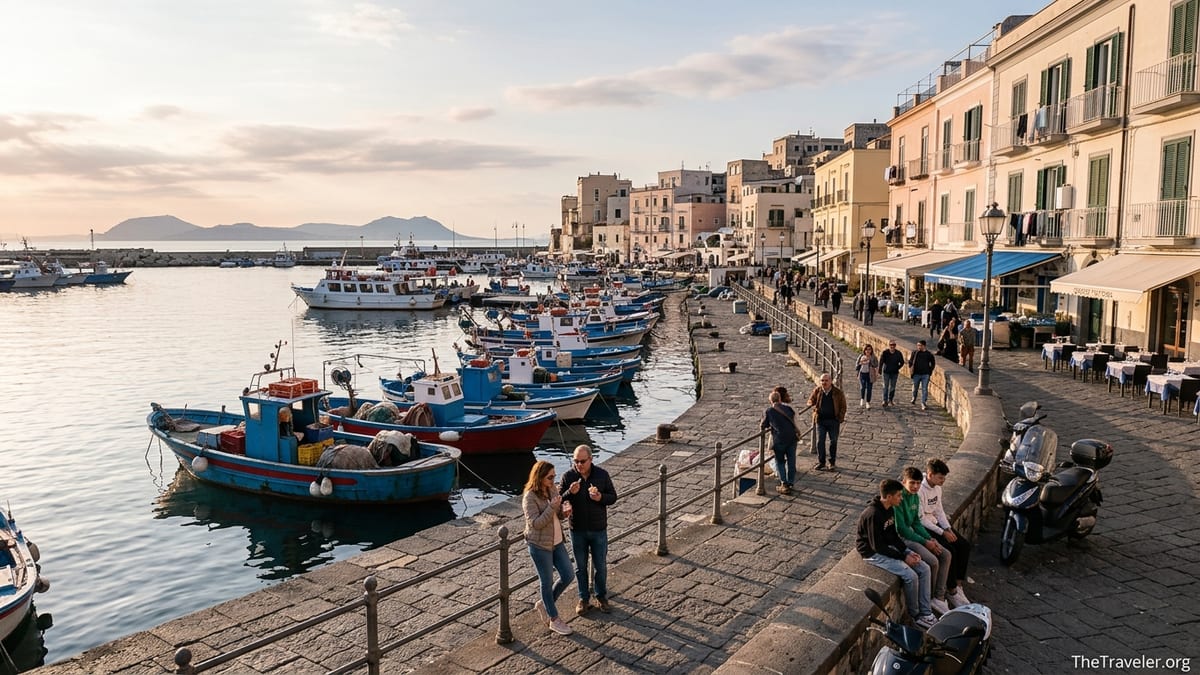
The easiest way to get a feel for modern Pozzuoli is to head straight to the sea. From the port area, where ferries depart for Ischia and Procida, the waterfront curves into a smaller inner basin known locally as the darsena. Here, low fishing boats are moored side by side, nets are piled on the quay, and you are far more likely to hear shouted conversations between fishermen than foreign languages. It is a short, flat walk from the metro and bus stops, which makes it a simple first stop after you arrive.
In the early morning you can often watch the fish auction and see crates of local catch being unloaded for nearby restaurants. Prices vary by season, but you will typically see whole gilthead bream, anchovies and squid destined for menu classics like grilled “spigola” or fried “frittura di paranza.” Even if you are not buying, the atmosphere alone is worth the detour: seabirds circling overhead, the smell of salt and diesel, and locals haggling over a few euros per kilo.
As the day goes on, the same docks turn into an easygoing promenade. Families push strollers, teenagers sit on the low walls eating gelato, and couples lean on the railings watching the ferries back in and out of the harbor. On clear evenings, the silhouette of the island of Ischia appears across the bay, and in summer the sunset over the Phlegraean Fields can be spectacular. Visiting at two different times of day, early morning and around sunset, lets you see the harbor in both its working and leisurely moods.
For a simple local snack between walks, look for tiny bars and friggitorie around the port that sell paper cones of fried seafood. A portion of mixed fried anchovies or tiny fish with a soft drink often costs in the range of 6 to 10 euros, and you can eat it sitting on the sea wall watching the boats.
Experience Pozzuoli’s Food Culture and Neighborhood Festivals
Pozzuoli is a town that lives on and by the sea, and that identity comes through most clearly in its food. Dozens of trattorias cluster around the port and in the streets of the historic center, many with handwritten menus emphasizing the “pescato del giorno,” or daily catch. A typical dinner might start with a shared plate of marinated anchovies, followed by spaghetti with clams and a whole grilled fish, with house wine served in carafes rather than labeled bottles. In many mid-range places you can still put together a full seafood meal for around 25 to 40 euros per person, depending on what you order.
Beyond restaurants, the town has begun to celebrate its maritime traditions through dedicated events. In recent years Pozzuoli has hosted initiatives such as Azzurro Pozzuoli, a festival focused on local fish that has included tastings, cooking demonstrations and “aperifish” evenings where participating venues offer seafood-based aperitivo plates alongside wine or spritzes. Around the same period, a related Fish Fest brought street-style portions of fried seafood, local white wines and live music to the fish market area, turning a working space into an evening party for residents and visitors.
In the inland district of Monteruscello, usually far off most tourist itineraries, another event spotlights the broader regional food scene. Monteruscello Fest has gathered hundreds of food professionals, from pizzaioli to pastry chefs and starred cooks, in a charity event supporting medical research. Visitors buy inexpensive tokens, then exchange them at stands for tasting portions of everything from slow-risen Neapolitan pizza to traditional desserts. If your dates line up with the festival, it is an efficient and convivial way to sample a wide cross-section of Campanian cooking in one evening.
Even outside official festivals, the city calendar is dotted with smaller local feasts and sagre that promote seafood, Campanian wines and nearby agricultural products. Posters appear on notice boards and walls in the weeks before each event, so it is worth asking at your accommodation or checking what is happening during your stay. Many of these celebrations are oriented toward locals, which means prices are usually modest and the mood relaxed rather than touristy.
Relax in Thermal Waters and Volcanic Landscapes
Pozzuoli sits in the heart of the Campi Flegrei, the “burning fields” formed by an ancient caldera. You see this geology not only in famous craters but in everyday details: wisps of steam rising from hillsides after rain, the faint sulfur smell near certain vents, and the warm, mineral-rich springs that have drawn bathers since Roman times. After a day of sightseeing, it can be a relief to lean into this slower, spa-like side of the region.
Several thermal facilities in and around Pozzuoli and neighboring Bacoli use naturally heated waters for pools and wellness circuits. Offerings change over time, but typically you will find complexes with outdoor and indoor pools at different temperatures, saunas and areas where you can book massages or mud treatments. Entrance to basic thermal pools often starts around 25 to 35 euros for a half-day, with higher prices for full wellness packages. When planning, check opening hours carefully, especially in low season, and bring flip-flops and a swim cap, which are sometimes mandatory.
Even without entering a spa, you can enjoy the volcanic landscape in a low-key way. Short bus rides or drives from Pozzuoli lead into hilly areas where hiking trails climb to viewpoints over the bay and across the caldera. Paths vary in difficulty, from relatively gentle tracks suitable for a family stroll to steeper routes that require sturdy shoes and water. On clear days, you can see Naples, Mount Vesuvius and the islands in one sweep, a reminder of how compact the Bay of Naples really is.
For a relaxed half-day, consider combining a morning walk on one of these trails with a long lunch in a countryside agriturismo or vineyard in the wider Campi Flegrei area. Many such venues serve set menus featuring local vegetables, cheeses and wines grown on volcanic soil, and they are particularly popular on Sundays with Neapolitan families who drive out of the city for a slower, greener setting.
Use Pozzuoli as a Quiet Base for Island Escapes
One of Pozzuoli’s most practical advantages is its small but busy port, which connects the mainland to the nearby islands of Procida and Ischia. Ferries and hydrofoils run throughout the year, with more frequent crossings in summer. Fast boats to Procida can take as little as around 20 minutes in good conditions, while slower ferries generally take between 30 and 60 minutes. One-way fares typically start at roughly 8 to 11 euros per person, depending on the company and type of vessel.
Because Pozzuoli is closer to Procida than central Naples, travel times are shorter and sailings can be less exposed to rough conditions. Several operators serve the route, including companies specializing in regional crossings in the Gulf of Naples. Timetables change seasonally, but in peak months it is common to find multiple departures in the morning and evening, allowing for easy day trips. Tickets can usually be bought online in advance or at kiosks in the port, though for popular weekend sailings in July and August it is sensible to plan ahead.
Using Pozzuoli as your base, it becomes straightforward to spend a spontaneous day on Procida’s pastel-colored waterfronts or on Ischia’s beaches and thermal gardens, then return to a quieter mainland town at night. Many visitors appreciate being able to walk from their hotel in Pozzuoli to the ferry terminal in under 15 minutes, avoiding the heavier traffic and larger crowds at Naples’ main ports. If the weather turns or your plans change, it is generally easy to switch to a different sailing or simply stay in Pozzuoli and enjoy an unplanned day by the harbor.
When booking accommodation, look for places within walking distance of both the port and the metro station. This makes it easy to alternate between day trips to the islands and quick rides into central Naples, while still spending your evenings in Pozzuoli’s more compact, coastal environment.
Soak Up Local Life in the Historic Center
A short walk uphill from the port brings you into Pozzuoli’s historic center, where daily life unfolds in narrow streets, small piazzas and arcaded walkways. Even if you have already explored the quarter’s archaeological underpinnings, it is worth returning in the late afternoon or evening simply to watch the town at work and play. Elderly residents sit on doorsteps chatting, children ride bicycles in small squares, and lines form outside popular pastry shops for trays of sfogliatelle and babà.
Piazza della Repubblica and the streets radiating from it anchor much of this activity. Cafés set out tables for espresso and aperitivi, while small clothing shops and household stores stay open into early evening. Prices are generally lower than in the most touristy parts of Naples, and many businesses are geared toward regulars rather than short-term visitors. If you want to pick up simple souvenirs or gifts, such as packets of local pasta, bottles of Campi Flegrei wine or handmade ceramics, browsing these everyday shops can be just as rewarding as the better-known markets in the regional capital.
In the early evening, many residents take a slow paseo-like stroll through the center before dinner. Joining this walk, even if you are only window-shopping, is an easy way to feel part of the town rather than a spectator. Stop for a spritz, a glass of Falanghina from nearby vineyards or a non-alcoholic chinotto at one of the bars with outdoor seating, and simply watch the flow of commuters, schoolchildren and neighbors greeting one another by name.
At night, the streets between the center and the waterfront fill with diners and bar-hoppers moving between seafood restaurants, pizzerias and gelaterie. While weekends in high season can be busy, the overall scale remains manageable compared to larger Italian cities. You can usually walk from a quiet backstreet trattoria to a more energetic bar area in under ten minutes, which makes Pozzuoli a good choice for travelers who like to mix relaxed evenings with a bit of nightlife without long taxi rides.
Tap Into Pozzuoli’s Music, Nightlife and Cultural Calendar
Beyond food and sea views, Pozzuoli has built a modest but appealing cultural calendar that includes music, film and neighborhood events. One of the best-known recurring happenings is the Pozzuoli Jazz Festival, which brings concerts to atmospheric venues in and around the town, sometimes including open-air performances in historic sites or panoramic spots in the Campi Flegrei. The program changes each year, but you can expect a mix of Italian and international artists, with ticketed shows and occasional free events.
The town also hosts a short film festival dedicated to women directors, titled “A Corto di Donne,” which has been running for many years and draws filmmakers and cinephiles for screenings and discussions. Screenings are often held in smaller local venues rather than large multiplexes, which gives the festival a friendly, community-focused feel. If you are interested in contemporary Italian and international short films, checking the festival dates before you travel can add an unexpected cultural dimension to your stay.
On a more informal level, weekends see a lively nightlife scene build up along the waterfront and in nearby neighborhoods. Bars serve aperitivi that often include small plates of snacks, and later in the evening some venues introduce live music or DJs. Younger crowds from Naples are increasingly drawn to Pozzuoli and the nearby coastal strip for nights out, attracted by sea views and a slightly more relaxed setting than the city center. Drinks prices are broadly in line with southern Italy’s big cities, with a standard cocktail or spritz typically in the 6 to 10 euro range in many venues.
Checking local event listings or asking bar staff about upcoming live sets, DJ nights or neighborhood parties can help you tap into this part of the city’s rhythm. Many events are promoted via posters, word of mouth and social media rather than large campaigns, so a casual chat with locals often reveals more up-to-date information than formal brochures.
The Takeaway
Pozzuoli is often reduced to a set of remarkable archaeological sites, but spending even one full day beyond the ruins reveals a living port town with its own tempo. Fishing boats and ferries shape the rhythms of the harbor, while seafood festivals and neighborhood feasts celebrate the town’s maritime roots. Inland, volcanic hills and thermal waters invite slower, more contemplative days, and the port itself opens the door to easy island escapes without the stress of larger terminals.
Using Pozzuoli as a base, you can combine cultural events, relaxed evenings in the historic center, and spontaneous trips to Procida or Ischia, all while staying in a compact, walkable environment. The town feels distinctly local, yet it is well enough connected that you can be in central Naples within the span of a metro ride. For travelers who like their coastal breaks to be grounded in real, everyday life rather than heavily stage-managed tourism, Pozzuoli offers a compelling alternative.
Ultimately, the best things to do in Pozzuoli beyond the famous archaeological sites are simple: walk the harbor at sunrise and sunset, linger over seafood lunches, soak in volcanic landscapes, listen to live music under the evening sky and board a ferry on a whim. None of these experiences require elaborate planning, only a decision to stay a little longer and look beyond the ruins.
FAQ
Q1. How many days should I spend in Pozzuoli if I want to see more than the archaeological sites?
Most visitors who want to combine the harbor, historic center, a nearby thermal spa and at least one island day trip find that two to three full days in Pozzuoli works well. That gives you time to explore at a relaxed pace and still fit in a ferry ride to Procida or Ischia.
Q2. Is Pozzuoli a good base instead of Naples for visiting Procida or Ischia?
Yes, Pozzuoli is a practical and quieter base for island trips. The port is compact, ferry crossings to Procida are shorter than from central Naples, and many accommodations are within walking distance of both the harbor and metro, making it easy to move between the islands and the city.
Q3. What is a realistic budget for eating out in Pozzuoli?
At simple trattorias and pizzerias, a pizza or pasta dish with a drink can cost around 10 to 18 euros. A full seafood dinner with shared starters, a main course and wine typically ranges from 25 to 40 euros per person, depending on your choices. Street food like fried fish cones near the port is usually cheaper.
Q4. Do I need to book Pozzuoli’s island ferries in advance?
Outside peak summer weekends and holidays, you can often buy tickets on the day at the port, especially for slower ferries. In July and August and on busy weekends, it is safer to book ahead for specific departure times, particularly for fast boats and return journeys in the late afternoon or evening.
Q5. Are the thermal spas around Pozzuoli suitable for children?
Policies vary by facility, but many thermal complexes in the wider Campi Flegrei and nearby areas accept families, sometimes with age limits for hotter pools or certain zones. It is important to check the rules of each spa in advance and to supervise children closely around hot water and slippery surfaces.
Q6. How easy is it to get between Pozzuoli and central Naples without a car?
Pozzuoli is linked to Naples by regional trains and the metro Line 2, with journeys often taking around 30 to 40 minutes depending on the service and your starting point. Trains are frequent in daytime, and many visitors find this more convenient than driving and parking in the city center.
Q7. What should I wear when visiting Pozzuoli’s waterfront and volcanic areas?
For the harbor and historic center, casual clothing and comfortable walking shoes are sufficient. If you plan to hike in the surrounding volcanic hills or visit thermal areas, bring sturdy footwear, a light jacket for breezy viewpoints and swimwear, flip-flops and a swim cap for spa visits where those items may be required.
Q8. Is Pozzuoli safe to walk around at night?
The main waterfront and historic center are usually busy in the evening, especially in good weather, with families, couples and groups of friends out for dinner or drinks. As in any town, it is sensible to avoid poorly lit, isolated areas late at night and to keep an eye on your belongings, but most visitors report feeling comfortable walking between restaurants, bars and their accommodation.
Q9. Are there many events outside the summer high season?
While the biggest outdoor festivals and concerts tend to cluster in late spring and summer, Pozzuoli’s calendar includes events spread throughout the year, from food-focused festivals to film and music programs. Even in cooler months you are likely to find local cultural activities and neighborhood celebrations, though they may be less heavily advertised to tourists.
Q10. Can I enjoy Pozzuoli if I am not particularly interested in ancient history?
Yes, the town has plenty to offer beyond its ruins. You can focus on the working port, seafood culture, island day trips, thermal spas, volcanic landscapes and contemporary events, treating the archaeological sites as a bonus rather than the main reason for your visit.