


Scroll through any travel wish list or social feed and the Canadian Rockies show up again and again: turquoise lakes framed by serrated peaks, a highway that threads between glaciers, and small mountain towns that feel lifted from a postcard. From Banff and Jasper to Yoho and Kootenay, this stretch of the North American Cordillera keeps topping bucket lists, not just for its looks but for how easy it is to turn a once-in-a-lifetime landscape into an achievable trip.
Get the latest updates straight to your inbox!
A Mountain Landscape That Lives Up To The Hype
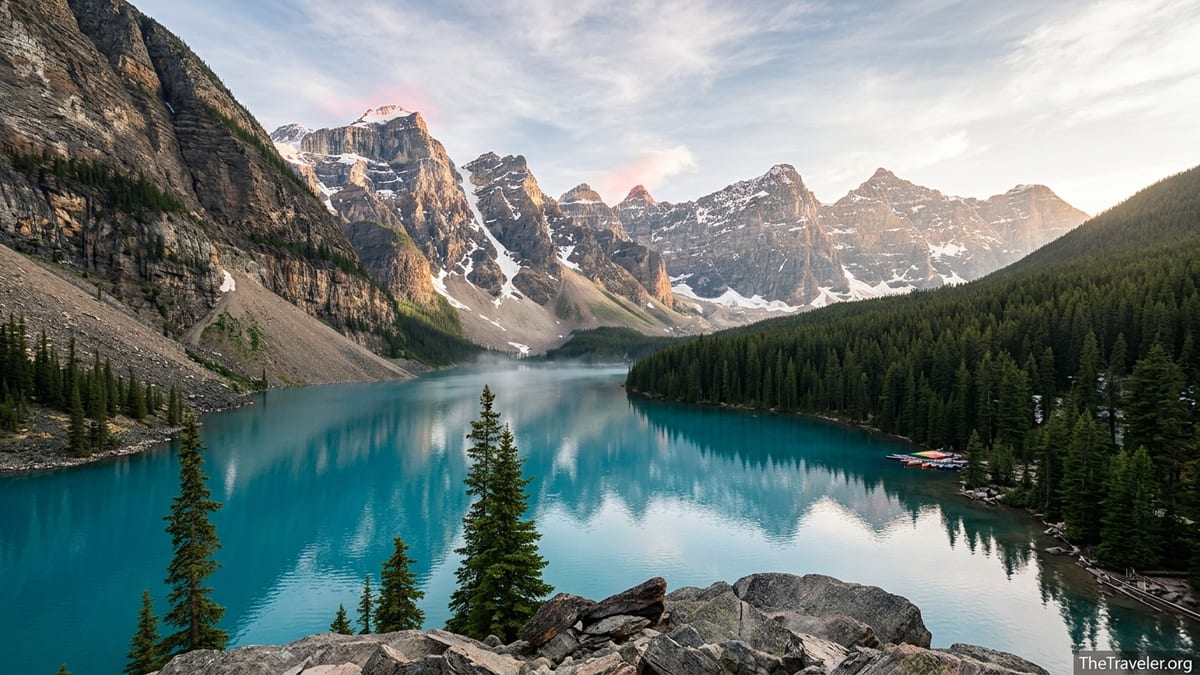
Many destinations look better online than in person. The Canadian Rockies are the rare exception where standing on the shore of Lake Louise or Moraine Lake can be more arresting than any edited image. Moraine Lake’s electric-blue water, framed by the Valley of the Ten Peaks, is so iconic it once appeared on the Canadian twenty-dollar bill. That means when travelers finally arrive after an overnight flight to Calgary and a two-hour drive to Banff, the scene often feels oddly familiar, like stepping into a photograph they have seen their whole lives.
Part of the enduring appeal is the variety of landscapes packed into a relatively compact area. Within a few days you can walk along the pebbled shoreline of Lake Minnewanka, drive into the ice-sculpted Bow Valley, and then crest over the Sunwapta Pass on the Icefields Parkway with views of hanging glaciers on both sides. First-time visitors commonly structure a one-week itinerary with three nights in Banff, two around Lake Louise or Field in Yoho National Park, and two in Jasper, never driving more than a half day between bases yet seeing a succession of very different mountain environments.
Crucially, this is not wilderness visible only to expert mountaineers. Boardwalks at the Columbia Icefield Skywalk, lakeshore paths at Emerald Lake in Yoho, and the short Rockpile Trail above Moraine Lake all allow travelers with average fitness to access sweeping views. That accessibility, especially compared with remote high-altitude ranges like the Himalayas or Patagonia, keeps the Rockies on wish lists for multi-generational families and first-time overseas travelers alike.
Seasonality adds another layer of fascination. In June, late snow lingers on high passes while valley-bottom trails around Banff townsite are bursting with wildflowers. By September, the larch trees above Moraine Lake and along the Icefields Parkway turn a luminous gold that draws visitors from as far as Japan and Germany, even as overnight temperatures start to dip below freezing. Many travelers plan a return visit in a different season precisely because the same viewpoints look like entirely different destinations in summer, fall, and deep winter.
World-Class Icons: Lakes, Highways, And Peaks
Flagship sights give the Canadian Rockies a powerful identity. Banff National Park is often the anchor, known for the milky turquoise of Lake Louise, the chateau hotel on its shore, and the easy summit views from the Banff Gondola on Sulphur Mountain. Nearby Moraine Lake, now reachable only by shuttle or guided tour, has become one of the most shared sunrise images in global travel media, its still surface reflecting the pyramid-like peaks of the Valley of the Ten Peaks.
Stretching north from Lake Louise toward Jasper, the Icefields Parkway has been called one of the most beautiful drives in the world. In practical terms, this 230-kilometer route strings together stops like Peyto Lake, Bow Lake, the Crowfoot Glacier viewpoint, Sunwapta Falls, and Athabasca Falls. Many visitors break the drive into a full day, packing a picnic from the Lake Louise Village grocery store, stopping every 30 to 45 minutes to stand at roadside viewpoints or walk short interpretive trails. There are no gas stations between Lake Louise and the small outpost at Saskatchewan River Crossing, which paradoxically strengthens the sense of leaving everyday life behind.
The Athabasca Glacier at the Columbia Icefield has long been a focal point of this highway. Visitors book coach tours that drive onto the glacier itself or choose a simpler experience by walking up the short but steep path to the glacier viewpoint. Interpretive signs show how far the ice has receded since the mid-20th century, making climate change visible in a way that is both sobering and memorable. Many travelers return home talking as much about the educational impact of that stop as they do about the scenery.
In Jasper National Park, the tone shifts subtly. The town of Jasper feels sleepier than Banff, and the surrounding sights have a wilder character: Maligne Canyon with its deep limestone gorge, Medicine Lake with its fluctuating water levels, and Maligne Lake boat cruises out to Spirit Island, one of the most photographed islets on the continent. Together with lesser-known highlights like the Valley of the Five Lakes and Pyramid Lake, they encourage travelers to stay an extra night or two rather than treating Jasper as a quick add-on.
Easy Logistics: Big Landscapes, Straightforward Planning
One of the reasons the Canadian Rockies keep rising to the top of international wish lists is that they are surprisingly easy to visit for such a dramatic environment. Most travelers fly into Calgary, where car rental agencies cluster at the airport and mountain shuttles line up during the peak season. A direct drive from Calgary International Airport to Banff takes about 90 minutes on well-maintained divided highways, with only a single direction change at the mountain gateway town of Canmore.
For visitors who prefer not to drive, scheduled coach services and local transit have expanded in recent years. In summer, regional buses run between Calgary, Canmore, Banff, and Lake Louise. Within the park, Roam Transit routes connect Banff townsite to Lake Louise and other key spots, while Parks Canada shuttles operate from the Lake Louise Park and Ride to the lakeshore of Lake Louise and to Moraine Lake. These shuttles require reservations during the main season and typically cost under ten Canadian dollars per adult for a round trip, making them an accessible alternative to renting a car.
Accommodation choices also make planning straightforward. In Banff, visitors can choose between internationally recognized brands along Banff Avenue, mid-range motels on Tunnel Mountain Road, and budget-friendly hostels at the edge of town. Lake Louise offers the famous chateau right on the lake, a cluster of simpler hotels in the village five minutes downhill, and a large campground that often fills months in advance for summer dates. Jasper spreads its inventory out more, with downtown hotels, cabin-style lodges on the road to Maligne Lake, and numerous campgrounds along the Athabasca River.
Travelers who do not want to organize anything independently can also rely on established tour operators. Companies run multi-day coach tours from Vancouver to Banff and Jasper, stopping at highlights like Wells Gray Provincial Park and the Icefields Parkway. Rail journeys on the privately operated Rocky Mountaineer continue to draw visitors who prefer to see the mountains from panoramic train cars, with itineraries such as Vancouver to Banff or Jasper that include overnight hotel stays instead of sleeping on board. This wide spectrum of options means the Rockies work equally well for backpackers on a tight budget and for honeymooners willing to splurge on lakefront suites.
Adventure On Your Terms: From Gondolas To Backcountry Lodges
The Canadian Rockies’ staying power on global bucket lists also comes from the sheer range of experiences, from ultra-accessible to deeply adventurous. In Banff and Jasper townsites, it is easy to fill a day without venturing far: ride the Banff Gondola to the boardwalk on Sulphur Mountain, soak in the Banff Upper Hot Springs, or rent a cruiser bike to ride along the Bow River Trail. In Jasper, a morning might involve a Maligne Lake cruise followed by a relaxed evening watching elk graze on the edges of town.
For travelers who want moderate exertion paired with big views, classic day hikes are scattered all along the corridor. The Plain of Six Glaciers walk above Lake Louise offers cafe refreshments in summer at a rustic teahouse near the end of the trail. The Lake Agnes Tea House route climbs through forest to an alpine lake with wooden picnic tables and fresh-baked goods. Around Jasper, the Bald Hills and Opal Hills hikes near Maligne Lake provide sweeping vistas over the water and surrounding peaks, while the Valley of the Five Lakes loop near town is accessible early and late in the season when snow still clings to higher elevations.
At the serious adventure end, multi-day treks and remote lodges shape lifelong memories. Experienced backpackers target routes like the Skyline Trail near Jasper or the Berg Lake area just over the provincial border in Mount Robson Provincial Park when conditions allow. Others choose catered backcountry lodges such as Skoki Lodge, accessed by a long hike or ski from the Lake Louise ski area, where guests arrive to lantern-lit log buildings, communal dinners, and no cellular signal. These experiences demand planning and often sell out seasons ahead, which only increases their mystique among hikers and skiers comparing notes online.
Winter keeps the momentum going, ensuring the Rockies stay present in travel conversations year-round. Banff Sunshine, Lake Louise Ski Resort, and Mount Norquay combine long ski seasons with lift-served terrain for all levels. Ice walks in Johnston Canyon, snowshoe tours around Emerald Lake in Yoho, and dog sledding excursions near Canmore turn the same valleys into a cold-season adventure playground. As a result, travelers who first visited in July for hiking often return in January to see the same waterfalls frozen solid and the lakes buried under meters of snow.
Conservation, Capacity, And A New Style Of Mountain Travel
As the Canadian Rockies grow ever more popular, conservation measures have paradoxically made them more desirable. In 2023, personal vehicles were banned from Moraine Lake Road for the main visiting season, with access now limited to Parks Canada shuttles, licensed commercial shuttles, guided tours, and human-powered travel outside shuttle hours. This has reduced overnight lineups for parking and shifted visitors toward pre-booked shuttles that cost roughly the price of a cafe meal, while also aiming to protect grizzly bear habitat and reduce congestion.
Lake Louise has seen similar steps. The lakeshore parking lot fills quickly through most of the summer, and a daily parking fee applies when spots are available. Travelers are increasingly encouraged to leave their cars in Banff or at the Lake Louise Park and Ride and use transit or shuttles instead. Many first-time visitors now structure their days around timed shuttle slots: a 7:30 a.m. departure to Lake Louise, a mid-morning connector bus over to Moraine Lake, and an afternoon return to the Park and Ride, with a stop at the Samson Mall grocery store in Lake Louise Village for snacks in between.
These systems require more advance planning than simply driving to a viewpoint, yet they are now part of the Rockies’ real-world narrative. Online forums swap tips on securing last-minute shuttle tickets released two days before travel dates, or on choosing early morning departures to avoid crowds. Travelers share screenshots of their confirmed reservations alongside photos of empty lakeshore paths at sunrise, turning good planning into a kind of achievement as satisfying as a summit selfie.
Importantly, restrictions have not eliminated access for those with limited mobility or higher budgets. Registered guests at Moraine Lake Lodge can still access the lake by vehicle. Commercial shuttles offer early departures targeted at photographers and hikers, often with onboard guides explaining local history and safety basics, such as carrying bear spray on backcountry trails. This blend of structured access and interpretive support helps ensure that as visitor numbers climb, the quality of the experience does not decline at the same pace.
Cultural Depth: Mountain Towns, Indigenous Stories, And Local Life
Another reason the Canadian Rockies retain their grip on global imagination is that they offer more than scenery. Banff townsite, established as Canada’s first national park community, combines historic stone buildings with modern cafes, galleries, and outdoor gear shops. Visitors can have espresso on Banff Avenue in the morning, tour the Banff Park Museum’s mounted wildlife exhibits later in the day, and finish with dinner at a restaurant that serves bison or Alberta beef.
Jasper has a distinct personality, with a quieter main street lined with family-run motels, bakeries, and outfitters. Many travelers comment that Jasper feels more like a working mountain town than a resort, with Canadian Pacific Railway freight trains rumbling past and elk wandering along side streets. Even small details, such as chatting with staff at the local grocery store about road conditions on the Yellowhead Highway, contribute to the sense of visiting a real place rather than a staged attraction.
Indigenous perspectives are increasingly visible in interpretation and programming throughout the mountain parks. Guided walks and storytelling evenings introduce visitors to the Stoney Nakoda, Blackfoot, and other First Nations whose traditional territories include what is now Banff and Jasper National Parks. Displays at visitor centers and museums highlight long histories of travel, trade, and spiritual connection to these landscapes, giving travelers additional context beyond the colonial-era tales of railway surveyors and mountaineers that once dominated park narratives.
For many visitors, these cultural encounters deepen their emotional connection to the mountains. Hearing how specific peaks function as landmarks in traditional stories, or how glacial meltwater feeds downstream prairie communities, makes the views from the Icefields Parkway or the summit of Tunnel Mountain feel part of a much larger human and ecological story. That sense of meaning, layered onto the physical beauty, is a powerful driver of repeat visits and enthusiastic word-of-mouth recommendations.
Realistic Costs: A Dream Trip That Can Be Scaled Up Or Down
Unlike ultra-remote dream destinations that require charter flights or expedition-style logistics, a Rockies trip can be tailored to a wide range of budgets. Park entry is via a daily or annual Parks Canada pass that covers roadside viewpoints, most day-use areas, and basic services. Once that pass is purchased, it is entirely possible to spend several days hiking, picnicking, and exploring on foot without paying additional attraction fees, aside from transit or parking.
That said, many of the famous experiences carry price tags that travelers need to factor into their planning. Renting a canoe on Lake Louise or Moraine Lake is a classic splurge, with hourly rates often exceeding one hundred Canadian dollars for a two- or three-person boat. Gondola rides on Sulphur Mountain or at Lake Louise are typically in the tens of dollars per person, and lake cruises on Maligne or Minnewanka add another significant line item to the budget. Savvy travelers often choose one or two marquee paid activities and fill the rest of their time with free or low-cost alternatives, like walking the lakeshores, exploring canyons, or visiting viewpoints at sunrise and sunset.
Accommodation likewise spans a broad spectrum. A peak-summer night in a lakeview room at one of the grand hotels around Lake Louise or Banff can reach into the high hundreds of dollars. At the other end of the scale, a campsite in a national park campground costs a fraction of that, although it requires advance booking as popular campgrounds fill quickly. Mid-range motels in Banff and Jasper, especially those a few blocks off the main streets, provide a middle path for travelers who value comfort but are willing to forgo luxury amenities.
Food and transport costs add up but can be managed with planning. Many visitors stock up at large supermarkets in Calgary or Canmore before driving into the parks, especially if they are staying in cabins or vacation rentals with kitchenettes. In the towns, a cafe breakfast, mid-range restaurant dinner, and occasional craft beer or coffee on a patio are typical daily indulgences. Fuel prices tend to be higher in the parks than in major cities, but distances between sights are relatively short compared with road trips in countries like the United States or Australia, so overall fuel consumption on a one-week itinerary is often less than travelers expect.
The Takeaway
Ask travelers what they most remember from the Canadian Rockies and their answers often mix specific images with a sense of ease. They talk about watching alpenglow creep down the face of Mount Temple from the shore of Moraine Lake, cruising past hanging glaciers on the Icefields Parkway, or sipping coffee on a Jasper patio while elk graze across the street. Just as often, they mention how simple it was to get there, how clearly signed the trails and shuttles were, and how they could adjust each day’s ambitions to match their energy and the weather.
That combination of awe-inspiring landscapes, straightforward logistics, and flexible experiences is why the Canadian Rockies keep climbing to the top of bucket lists worldwide. They offer something that feels both larger than life and practically achievable, whether you visit once on a major anniversary trip or return year after year to see the lakes and peaks in different seasons. For many, a first glimpse of those turquoise waters is not the end of a dream, but the beginning of a lifelong relationship with one of the world’s great mountain ranges.
FAQ
Q1. When is the best time of year to visit the Canadian Rockies?
The main sightseeing season runs from late June to early October, when lakes are thawed, most hiking trails are accessible, and seasonal shuttles and lake cruises operate. July and August offer the warmest temperatures and longest days, while September is popular for fall colors and slightly thinner crowds. Winter, from December to March, is ideal for skiing and snow-based activities but many high-country trails and roads are closed.
Q2. Do I need to rent a car to explore Banff and Jasper?
No, a car is not strictly necessary, although it adds flexibility. Many visitors combine airport coaches between Calgary and Banff or Lake Louise with local services such as Roam Transit and Parks Canada shuttles to reach major sights like Lake Louise, Moraine Lake, Johnston Canyon, and Lake Minnewanka. Travelers focused on town-based activities and popular day trips can manage comfortably without driving, while those wanting to explore quieter trailheads and picnic spots may find a rental car worthwhile.
Q3. How far in advance should I book accommodation and shuttles?
For peak summer dates in July and August, it is wise to book accommodation three to six months ahead, especially for lakefront hotels, backcountry lodges, and popular campgrounds. Shuttle reservations for Lake Louise and Moraine Lake typically open in spring for the upcoming summer and can sell out quickly for prime morning slots. Travelers visiting in shoulder seasons like June or September usually have more flexibility but should still secure key pieces, such as first-night lodging and any must-do tours, well in advance.
Q4. Is visiting the Canadian Rockies very expensive?
Costs vary widely depending on choices. Park passes, fuel, and basic groceries are relatively affordable, and there are many free activities such as hiking, lakeshore walks, and scenic drives. Expenses rise with hotel category, dining style, and paid attractions like gondolas, lake cruises, and guided excursions. A budget-conscious traveler might focus on camping, self-catered meals, and free viewpoints, while others may choose to spend more on iconic experiences like staying at a historic hotel on Lake Louise or taking a glacier tour on the Icefields Parkway.
Q5. How crowded do places like Lake Louise and Moraine Lake get?
In peak season, both lakes can be very busy, especially between mid-morning and late afternoon. Parking at Lake Louise often fills early in the day, and Moraine Lake is now accessible primarily by shuttle or organized tour to manage demand. Booking early-morning shuttle departures, visiting in the shoulder months of June or September, and exploring lesser-known spots such as Bow Lake, Emerald Lake, or the Valley of the Five Lakes are practical ways to enjoy world-class scenery with fewer people around.
Q6. What level of fitness do I need for popular hikes?
There is truly something for every ability level. Many classic viewpoints, such as the Rockpile above Moraine Lake or the lakeshore path at Lake Louise, require only a short, gentle walk. Moderate day hikes like the Lake Agnes Tea House or Plain of Six Glaciers involve several hundred meters of elevation gain but are manageable for reasonably active visitors with sturdy footwear and time to take breaks. More strenuous treks and multi-day routes are best suited to experienced hikers equipped for changing mountain weather and trail conditions.
Q7. How should I prepare for wildlife encounters?
Wildlife sightings are part of the Rockies’ appeal, but they require respect and caution. Visitors should learn basic principles such as keeping well back from animals, never feeding them, and storing food securely at campsites and picnic areas. Hikers in bear country often carry bear spray, make noise on the trail, and travel in small groups when possible. Park staff, visitor centers, and local outfitters can provide up-to-date safety advice tailored to current conditions and the specific areas you plan to explore.
Q8. Can I visit without speaking English or French fluently?
Yes, many international visitors with limited English or French enjoy the Rockies each year. Major hotels, tour companies, and attractions are accustomed to hosting guests from around the world and often employ multilingual staff. Pictogram-rich signage, simple printed maps, and translation apps also help visitors navigate shuttles, trailheads, and services. Booking group tours or shuttle transfers in advance can further reduce language-related stress on arrival.
Q9. What should I pack for a summer trip to the Canadian Rockies?
Even in mid-summer, mountain weather can change quickly, so layered clothing is essential. Most visitors pack a lightweight waterproof jacket, a warm fleece or sweater, quick-drying shirts and trousers, and comfortable walking shoes or light hiking boots. A hat, sunglasses, sunscreen, and refillable water bottle are important for high-altitude sun exposure, while gloves and a warmer layer come in handy on early-morning outings or windy viewpoints on the Icefields Parkway.
Q10. How many days do I need for a first-time visit?
A common first-timer itinerary runs about seven to ten days. This allows for two or three nights in Banff to explore the town and nearby attractions, two nights near Lake Louise or in Yoho National Park for classic lakes and hikes, and two or three nights in Jasper to experience the Icefields Parkway, Maligne Lake, and local trails. Shorter trips of three to five days can still be rewarding by focusing on one park or town, while longer stays allow for rest days, additional hikes, or a mix of summer and winter-style activities in the same trip.