


On an island lined with spectacular stretches of sand, Panormos Beach on Crete’s north coast has quietly become the spot that many repeat visitors whisper about. Set below a traditional village and tucked into a naturally sheltered bay between Heraklion and Rethymno, it combines calm water, easy logistics and a genuine Cretan atmosphere in a way that is increasingly rare in the Mediterranean. Locals from nearby towns and in the know travelers keep coming back here not because it is flashy, but because it works, day after day, year after year.
Get the latest updates straight to your inbox!
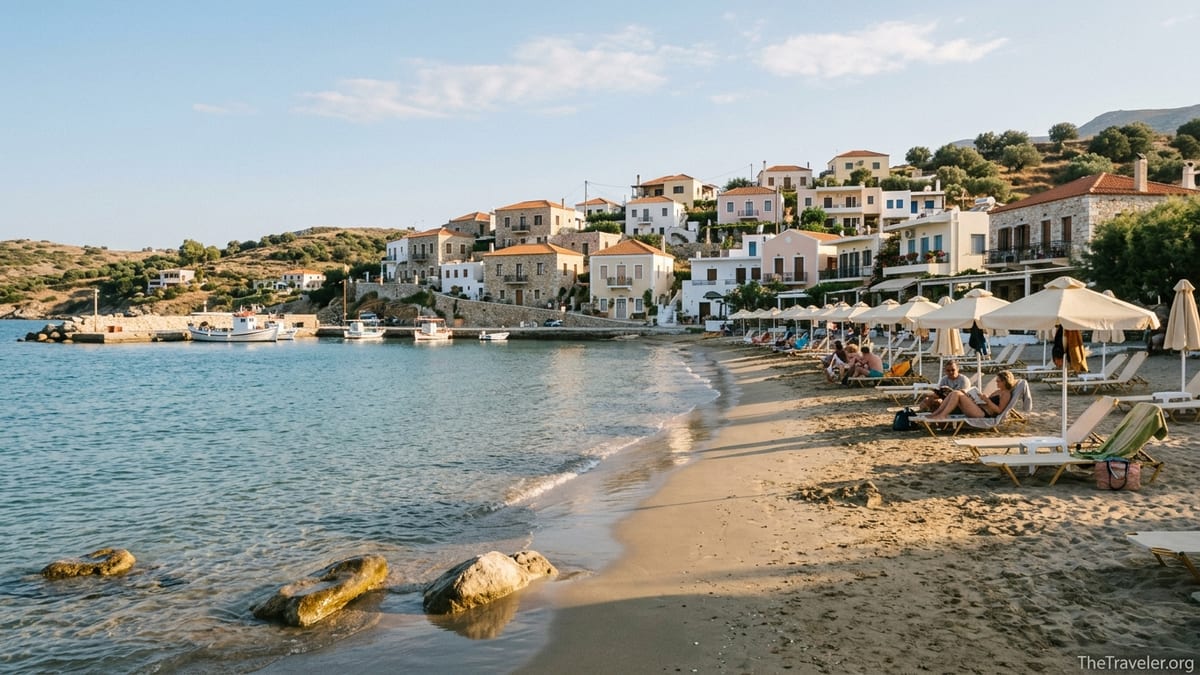
A Sheltered Bay That Feels Made for Swimming
The name Panormos comes from the Greek for natural harbor, and that is exactly what shapes the experience on the beach. The main cove, often referred to locally as Limni, is protected by a low stone pier that breaks the north winds, so the sea here is usually calmer than on many exposed north-coast beaches. Even in July and August, when the meltemi can whip up whitecaps elsewhere, the water in front of the village is more like a gently rippling swimming pool.
Families in particular notice the difference. Parents who have tried taking small children into rougher surf often describe Panormos as a relief: the sandy entry is gradual, and you can wade out a fair distance before the water gets truly deep. On a typical summer morning you will see local kids practicing their first strokes just off the shore while older visitors float further out, looking back at the stone houses of the village. For many, that feeling of safety combined with real sea swimming is reason enough to return the following year.
The clarity of the water is another draw. Because the bay is relatively enclosed and the seabed is mostly sand with a few patches of rock, visibility is good even on busier days. Many regulars bring simple masks and snorkels rather than diving gear: you can spot small schools of fish near the pier and along the rocky sides without venturing far. Travelers who split their time between Panormos and livelier beaches closer to Rethymno often mention that they come back here for a proper swim rather than just a quick dip between beach bar sets.
Easy Access Without Losing the Village Feel
One of the reasons Panormos attracts so many locals on their days off is that it is straightforward to reach yet still feels like a village rather than a resort strip. The settlement sits just off Crete’s main northern highway, roughly a 20 to 25 minute drive from Rethymno and about 50 minutes from Heraklion, depending on traffic. That puts it within comfortable reach for residents of both cities, as well as for travelers staying at larger hotels further along the coast who rent a car for a day out.
Despite this, the center of Panormos is still a compact cluster of stone and pastel-painted houses rather than a row of high-rise hotels. Over the last decade many traditional buildings have been carefully restored rather than replaced, so when you walk down from the upper streets to the waterfront you pass renovated houses, small family-run guesthouses and a few discrete boutique hotels instead of glass towers. People who first discovered Panormos while driving the north coast often talk about pulling off for a coffee and being surprised at how walkable and human-scaled the place feels after the highway.
Practically, this also means you rarely need a car once you arrive. Most accommodation, bakeries and mini markets are within a few minutes’ walk of the sand. Visitors staying in self-catering apartments above the harbor typically stroll down in flip-flops each morning, stop at a bakery for cheese pies and then pick up fruit or water from the corner shop on the way back in the evening. That ease of movement is part of why people who like slow, low-effort holidays tend to book Panormos for longer stays the second time around.
Organized Comfort at a Manageable Scale
Panormos is well organized as a beach, but not in a way that dominates the shoreline. The main sandy cove in front of the village is lined with several organized sections of sunbeds and umbrellas run by cafés, tavernas or small hotels. Prices fluctuate by season, but in recent summers two beds and an umbrella have generally ranged from roughly the cost of a modest taverna lunch in the village, often with a credit back if you order food or drinks. For travelers used to the high minimum spends at some Cycladic beach clubs, that feels refreshingly reasonable.
The key difference here is scale. Instead of a single, oversized beach club, Panormos has a series of modestly sized setups, broken up by free sections where you can lay your own towel. That mix suits a broad range of visitors. Local retirees often head for the quieter free spots at the edges of the bay, carrying fold-up chairs from home, while younger couples and families opt for the organized zones to have shade and table service. You will see both Greek and foreign visitors walking between areas during the day, shifting from full sun by the water in the morning to deeper shade by afternoon.
Even basic amenities are straightforward. Most organized sections offer drink service, simple snacks and fresh showers. Behind the beachfront, you can find small kiosks selling inflatables, sunscreen and beach toys, so there is no panic if someone forgets goggles or a hat. Regulars who stay in Panormos for a week or more often describe falling into a routine with a particular café or taverna that runs the loungers in front of it, greeting the staff by name by day three or four. That sense of familiarity is something big resort complexes rarely achieve.
Food That Keeps People Loyal
Ask repeat visitors why they return to Panormos and food comes up almost immediately. The village may be compact, but it offers a concentration of tavernas and cafés that punch above their size. Seafront places serve grilled fish, Cretan salads with local mizithra cheese, and slow-cooked lamb or goat dishes that reflect the island’s inland traditions. Inland from the sand, you find family-run tavernas on side streets where grandparents still help in the kitchen and recipes have not changed much in decades.
Portions are generally generous, and prices remain more approachable than on the glitziest stretches of the island. A couple can still sit down to a shared salad, a plate of fresh grilled sardines or calamari, a main meat dish and a carafe of local wine for a total that many travelers from northern Europe or North America describe as very fair for a sit-down seaside meal. Locals from Rethymno and nearby villages regularly drive in on summer evenings for dinner even when they are not using the beach, which is often a sign that quality has stayed consistent.
Equally important is the flexibility for different travel styles. Self-catering visitors can pick up fresh bread, cheese, olives and fruit from small markets in the village and treat the main meal on the beach as a late lunch. Parents with young children can grab takeaway gyros or pies for a simple evening meal back on their balcony rather than committing to a long dinner out every night. For many travelers, especially those staying a week or more, that mix of casual and sit-down options is one of the reasons they rebook the same apartment the following summer.
Day Trips and Exploring Without Losing Your Base
Panormos also works well as a base for exploring central Crete, which is one of the reasons seasoned travelers keep it on their itineraries. From the village, the main highway puts Rethymno’s old town within easy reach for an evening walk through its Venetian streets, and you can continue on to Chania or Heraklion for day trips if you are comfortable with longer drives. Inland, roads lead up into the hills of the Milopotamos region, where you can visit traditional villages, monasteries and olive groves before returning to the sea in time for a late-afternoon swim.
Many repeat visitors build a rhythm around this geography. A typical pattern is to devote one or two full days to simple beach time in Panormos, then alternate days with outings to historical sites or mountain villages before unwinding back in the bay. Travelers who have returned for several summers in a row often say they appreciate coming back to the same familiar streets and beach after each excursion rather than checking in and out of different hotels along the way.
For families or groups, this stability is especially appealing. Parents can promise children that no matter where they go during the day, they will be back at “their” beach by late afternoon. Friends traveling together can split up for different morning activities and regroup under the same umbrella section for sunset. Over time, this turns Panormos into more than a place on the map: it becomes the anchor point around which each summer’s trip is organized.
A Softer Kind of Nightlife
Panormos does not compete with Crete’s major resort towns when it comes to late-night entertainment, yet this is part of its charm for many people who return year after year. Even in peak season, the atmosphere in the evening is more about taverna dinners and relaxed bars than loud clubs. You are more likely to hear the clink of plates and snippets of conversation in Greek, German, French or English on the seafront than pounding bass.
There are, however, a few stylish bars and hotel lounges that provide a low-key social scene. Couples might sit on cushioned benches above the harbor sharing a carafe of Cretan white wine or a local craft beer, while families opt for seaside cafés that stay open late enough to enjoy ice creams after dinner. On warm nights, children wander between tables on the pedestrian lanes while parents linger over raki, and the village feels lively without being overwhelming.
For travelers who want the option of a bigger night out, Rethymno is close enough for an evening trip by car or taxi. Some repeat visitors plan one or two nights during their stay when they head into the city for cocktails and music, then retreat back to Panormos for quieter mornings and less crowded beaches. That balance between gentle village evenings and access to urban nightlife is another reason the beach appeals to a broad age range, from young couples to multi-generational families.
Why Locals Keep Coming Back
Locals from Crete and other parts of Greece tend to be discerning about where they spend their free time, and their loyalty to Panormos says a great deal about the beach’s enduring appeal. For many, it offers a rare combination: a family-friendly bay that is easy to reach from larger towns, paired with a village that still feels authentically Cretan. On weekends in July and August you will see cars with local plates parked along the access roads, with several generations of the same family unfolding chairs and umbrellas near the waterline.
Part of the draw is predictability. People who have visited for years know that parking is usually manageable, that they will find at least a few familiar faces among café staff and shop owners, and that the sea conditions in the sheltered bay will rarely disappoint. Parents talk about how the small size of the village allows older children and teenagers a taste of independence, letting them walk to the bakery or the mini market alone while the rest of the family remains on the beach.
Another factor is value. While prices have risen across Greece in recent years, Panormos has remained a relatively good deal compared to the most heavily marketed resort areas. A day by the sea here does not require the level of spending that some islands now associate with organized beaches. Locals who return summer after summer know they can enjoy a full day with sunbeds, drinks and a proper meal without feeling they have stepped into a luxury-only enclave, and many travelers appreciate sharing a beach that residents themselves actively choose.
The Takeaway
Panormos Beach succeeds not because it is the most dramatic stretch of sand in Crete, but because it brings together elements that make a holiday work smoothly. A naturally sheltered bay offers reliable swimming, especially for families and confident lap swimmers who want calm water. A compact village layout means you can move from your accommodation to the sea, to a bakery and to dinner without ever needing to start a car. Thoughtfully organized sunbed areas, fair prices and a strong food scene create a sense of comfort rather than complication.
For in the know travelers and locals alike, these practical advantages combine with something less tangible: a feeling that life in Panormos still moves at a human pace. You can spend a morning exploring central Crete or wandering the alleys of Rethymno, then come back to familiar faces on the seafront and a sunset over the Cretan Sea. It is this blend of ease, authenticity and gentle routine that keeps people returning, sometimes for a few days at the end of a wider island itinerary and sometimes, after that first visit, for a week or more every summer.
FAQ
Q1. Where exactly is Panormos Beach located in Crete?
Panormos Beach sits on the north coast of Crete, roughly halfway between Heraklion and Rethymno. It is just off the main coastal highway, which makes it easy to reach by car or bus from either city.
Q2. Is Panormos Beach suitable for families with young children?
Yes. The main bay is sheltered by a small pier, the water is usually calm, and the entry is gradual and sandy, which makes it well suited to children and less confident swimmers.
Q3. Do I need a car to enjoy Panormos Beach and the village?
You can stay and relax in Panormos without a car because most accommodations, shops and tavernas are within a short walk of the beach. However, renting a car is useful if you want to explore nearby towns, villages and historical sites.
Q4. Are there free areas on the beach, or is everything covered by paid sunbeds?
There are both organized sections with paid sunbeds and umbrellas and free stretches where you can lay your own towel. The mix changes slightly each season, but visitors generally find space for both options.
Q5. What kind of food options can I expect in Panormos?
The village offers seafront tavernas with grilled fish and classic Cretan dishes, family-run restaurants on side streets, cafés for snacks and breakfast, and small markets where you can buy basics for self-catering.
Q6. How crowded does Panormos Beach get in summer?
In July and August the beach is lively, especially on weekends when locals visit from nearby towns, but it rarely feels as intense as the busiest resort strips. Arriving earlier in the morning usually makes it easier to choose your preferred spot.
Q7. Can I visit Panormos as a day trip from Rethymno or Heraklion?
Yes. Many people come for the day from both cities. Driving times are typically around 20 to 25 minutes from Rethymno and about 50 minutes from Heraklion, depending on traffic and exact starting point.
Q8. Is Panormos a good base for exploring central Crete?
It can be. The village’s position on the main north road makes day trips to Rethymno, Heraklion and inland villages straightforward, while still allowing you to return to a quieter beach setting each evening.
Q9. What is the atmosphere like in the evenings?
Evenings in Panormos are relaxed rather than wild. Most people enjoy long taverna dinners, seaside walks and drinks in low-key bars. For a livelier nightlife scene, visitors usually go into Rethymno and then return to Panormos to sleep.
Q10. When is the best time of year to visit Panormos Beach?
Late May, June and September are particularly appealing, with warm weather and sea temperatures suitable for swimming but fewer peak-season crowds. July and August offer the liveliest atmosphere and the warmest water, but also higher occupancy and busier weekends.