


Saint-Tropez is famous worldwide for its champagne-soaked beach clubs on Pampelonne, but that scene is only one narrow slice of what this corner of the Riviera offers. Step a little away from the sun loungers and bottle service and you will find a compact peninsula of fishing-village lanes, hilltop hamlets, vineyards and coastal trails that can easily fill a long weekend, even if you never set foot in a club. Here is how to experience the best of Saint-Tropez beyond the famous beach addresses.
Get the latest updates straight to your inbox!
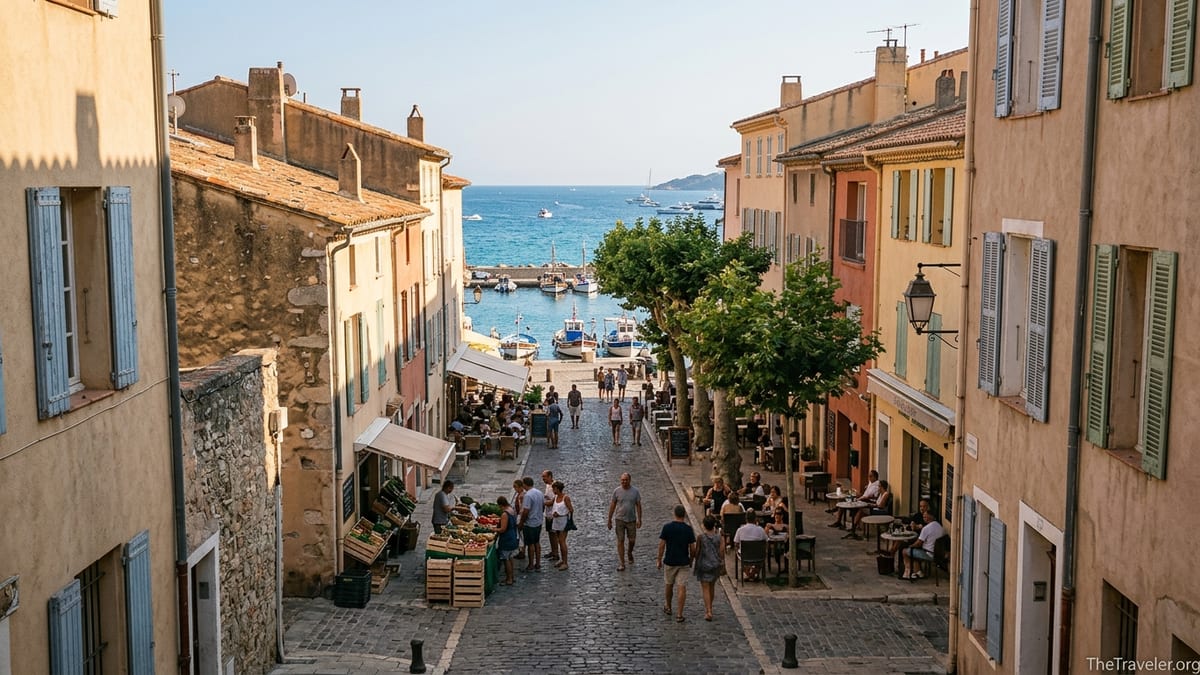
Stroll the Old Port and Get Lost in La Ponche
The most atmospheric way to arrive in Saint-Tropez is still by sea. Even if you come by car or bus, start your visit at the Vieux Port, where working fishing boats bob alongside superyachts. Grab a coffee at one of the harborfront terraces and simply watch the traffic in and out of the marina. Prices are predictably higher here than in backstreets, but lingering over a cappuccino while crew hose down decks and market vendors wheel barrows of flowers past is part of the Saint-Tropez experience. Expect to pay a little more than in inland Provence, especially in high season.
From the quayside, slip into the tangle of lanes that make up La Ponche, the oldest quarter of the village. This small maze of pastel houses, chipped blue shutters and stone stairways feels a world away from the glitz of Pampelonne. You can wander down passages that suddenly open onto tiny coves, like La Glaye and La Ponche beach, where locals still come for an early morning swim. The quarter is compact enough that you can explore it in an hour, but it rewards slow wandering and stopping often just to look up at hanging laundry, bougainvillea and church towers.
Along the way you will pass artisan boutiques, galleries and small bistros that are quieter and more local in feel than the big-name restaurants on the port. Many stay open from roughly April to October, with shorter hours in shoulder seasons, so do not be surprised if doors are closed at midday in early spring. Late afternoon and early evening are ideal, when the light turns golden and the streets fill with residents out for a stroll before dinner.
Climb to the Citadel and Explore Local History
Above the village, the 17th century Citadel of Saint-Tropez rises on a pine-clad hill, its star-shaped ramparts overlooking the bay. The walk up from the port takes about 15 to 20 minutes along steep but paved lanes, or you can drive and park near the entrance if you prefer to save your legs for the ramparts. Entry prices are generally modest compared with big-city museums and are usually reduced for children and students. Check current hours locally, as they tend to extend in summer and shorten in winter.
Inside the fortress you will find the Maritime History Museum, which tells the story of Saint-Tropez long before the celebrities arrived. Displays cover the village’s transformation from a small fishing and trading port into a hub for merchant sailors, then later a yachting center. Even if you are not a museum enthusiast, the models of traditional boats, vintage photographs and logbooks make it easier to picture the town as it was a century or two ago, when families depended directly on the sea.
The biggest reason to come, though, is the view. From the ramparts you look down on the terracotta rooftops of the old town, the bell tower of the Notre-Dame-de-l’Assomption church and the curve of the bay out toward Sainte-Maxime and the distant Estérel hills. Come early in the morning or about an hour before sunset for the softest light and fewer tour groups. Bring water and a hat in summer, as the exposed stone can get very hot.
Discover Saint-Tropez’s Art, Cinema and Culture
Long before Saint-Tropez was a playground for pop stars, it was a magnet for artists. At the Annonciade Museum, set in a former 16th century chapel a few steps from the port, you can see how painters like Paul Signac, Matisse and Bonnard captured the light of the gulf in the late 19th and early 20th centuries. The museum is compact, with well-curated rooms rather than endless galleries, so you can comfortably visit in an hour or two. This makes it an ideal stop during the hottest part of the day when the cobbled streets outside are baking.
Families and film lovers should not miss the Gendarmerie and Cinema Museum, housed in the old police station made famous in the French comedy series about the “Gendarmes de Saint-Tropez.” Inside, interactive exhibits tell the story of the town’s relationship with French cinema and pop culture, from Brigitte Bardot’s 1950s breakthrough to later comedies that cemented the town’s image across France. Kids tend to enjoy the playful displays, and it offers an indoor break when frequent summer heat or an occasional rainy spell makes the beach less appealing.
Smaller cultural stops include the Maison des Papillons, a private collection of thousands of butterfly specimens, and local chapels sprinkled through the lanes. While many visitors rush between beach club reservations, those who carve out a half day for the museums often come away with a much richer sense of why Saint-Tropez became such a symbol of the Riviera in the first place.
Shop and Snack Your Way Through Provençal Markets
On Tuesday and Saturday mornings, Place des Lices, just a few minutes’ walk uphill from the harbor, transforms into one of the liveliest markets on the coast. Under rows of plane trees that double as a pétanque ground in the afternoon, traders set up stalls selling everything from olives and goat cheese to linen dresses, straw baskets and Provençal tablecloths. Prices vary widely, so it is worth comparing a few stands before you commit. You can assemble an entire picnic here for a fraction of what you would pay for lunch at the beach, especially if you focus on fruit, baguettes, cured meats and local tapenade.
The market usually gets going by 8:30 a.m., and by 10:30 or 11 a.m. the square is packed with visitors and locals alike. If you are driving from elsewhere on the peninsula, aim to arrive early to secure parking in the underground lot nearby or in one of the signposted car parks on the approach roads. Some vendors accept cards, but many small producers still prefer cash, so bring euros in small denominations.
Beyond Saint-Tropez itself, the surrounding villages of Ramatuelle and Gassin also host classic Provençal markets on set days, with stalls of seasonal produce, local honey and small-batch rosé. These markets have a more relaxed, village feel compared with the buzzy scene at Place des Lices, and they provide a good excuse to explore beyond the port before retreating to a shaded terrace for a coffee or a glass of wine.
Hike the Coastal Path and Hidden Coves
If your image of the Saint-Tropez peninsula is traffic jams and packed beach beds, the Sentier du Littoral will come as a surprise. This coastal path, waymarked in yellow, winds along the rocky shoreline for many kilometres, linking Saint-Tropez with beaches like Tahiti and Escalet and continuing around toward Cap Camarat. Sections of the trail involve short climbs and uneven rock, so closed shoes with good grip are strongly recommended, especially if the path is damp after rain.
A popular half-day option is to start near the old town and follow the path toward Plage des Graniers or Tahiti beach, watching as the port falls away behind you and the shoreline becomes wilder. Another scenic stretch runs between Plage de l’Escalet and Cap Camarat, passing turquoise coves and fragrant maquis scrub. Walking times on official maps are usually calculated without long photo stops, so add extra time if you plan to swim or linger on the rocks.
In high summer, start early in the morning before the heat builds. Carry plenty of water, sunscreen and a light long-sleeved layer, since some parts of the path are exposed with little shade. There are no kiosks along most stretches, so plan snacks in advance. Outside of July and August, you may find you have whole segments of the trail almost to yourself, with only the sound of waves and cicadas for company.
Visit Hilltop Villages and Vineyard Estates
Within a short drive of Saint-Tropez, the peninsula rises into gentle hills dotted with vineyards and villages that seem far removed from the glamour of the port. Ramatuelle, perched above the Pampelonne plain, is a walled medieval village of stone houses, vaulted alleys and a 15th century church at its highest point. Park in the designated lots below the walls and wander up on foot, pausing at viewpoints that look out over the vineyards toward the sea. Small cafés on the main square serve simple dishes and glasses of local rosé at far more relaxed prices than you will find by the water.
Nearby Gassin, officially classified as one of the “most beautiful villages of France,” sits at around 200 meters above sea level and commands sweeping views over the entire gulf. Terraces on the village edge make ideal spots for sunset drinks. On clear evenings you can often see as far as the Maures hills and the distant Alps. The village lanes are narrow and parking is limited in peak season, so consider visiting in the morning or early evening when day-trippers have thinned out.
The countryside between these villages and the coast is carpeted with vineyards that produce Côtes de Provence rosé. Many estates offer tastings, often by appointment, ranging from small family properties to larger names with polished cellar doors. Tasting fees are usually modest and sometimes waived if you buy bottles. It is entirely acceptable to visit just for a tasting and a stroll among the vines before heading back to the coast. If you plan to sample widely, hiring a driver or arranging a wine tour is sensible, especially in the heat of summer.
Savor Local Cuisine Beyond the Beach Scene
Although many visitors associate Saint-Tropez dining with long, leisurely lunches on the sand, some of the area’s most satisfying meals are found away from the beach. In the old town, small bistros and brasseries serve Provençal staples like stuffed vegetables, grilled sea bream and slow-cooked lamb, often at more reasonable prices than high-profile addresses further out. Menus of the day at lunchtime can offer good value, typically including a starter and main or main and dessert for a set price, particularly outside of peak July and August weeks.
Do not leave without tasting the local specialty, the tarte tropézienne, a brioche-like cake filled with a rich cream. You will see it in bakery windows all over town, sold either as large shareable cakes or small individual portions. Pair it with a coffee for a mid-morning break, or pick up a box to take back to your hotel or rental apartment. Prices vary by bakery, but individual slices tend to be affordable compared with restaurant desserts.
Up in Ramatuelle and Gassin, restaurants lean into countryside charm, with shaded terraces under plane trees or pergolas and views over vines rather than boats. Here, grilled meats, fresh pasta and simple Mediterranean dishes share menu space with more refined plates. Reservations are still advisable for July and August evenings, but outside those weeks you can often secure a table with just a little advance planning, especially on weeknights.
Plan Smart to Enjoy Saint-Tropez Affordably
Saint-Tropez can be an expensive place to make mistakes, but thoughtful planning helps keep costs under control without feeling deprived. Accommodation prices in the old town and along the Pampelonne coast rise steeply from late June through August. Staying slightly inland, in villages like Ramatuelle or Gassin, often provides better value and a calmer base. Many hotels and guesthouses in these villages run shuttles to the beaches or the port in high season, or you can use local taxis or seasonal beach shuttles advertised by the tourism offices.
Transport is another area where choices matter. Traffic on the access roads to Saint-Tropez is notorious on summer weekends and during major events such as regattas and festivals. If you are staying elsewhere on the coast, consider using ferry services from places like Sainte-Maxime to reach the port in around a quarter of an hour, avoiding long queues of vehicles. Once in town, Saint-Tropez is compact and walkable, with most sights within a 10 to 20 minute stroll.
Timing your activities can also improve your experience. Visit the port and old town early for cooler temperatures and quieter streets, then retreat to museums or shaded cafés at midday. Save coastal walks and hilltop viewpoints for late afternoon or early evening, when the light is softer and crowds thin. By building your days around the village, the markets, the hills and the sea rather than anchoring everything to beach clubs, you will come away with a more rounded and memorable sense of the peninsula.
The Takeaway
Saint-Tropez’s international image is dominated by its beach clubs, yet the peninsula’s most rewarding experiences are often the simplest: a morning espresso by the fishing boats, a slow wander through La Ponche, a sunset view from a rampart or a terrace high above the bay. With a bit of planning, you can balance harbor glamour with village quiet, coastal paths and vineyard visits, creating a trip that feels rich and textured rather than one-note.
By looking beyond the champagne buckets and DJ booths, you will discover a small town that still carries the traces of fishermen, artists and sailors in its stones. Come for the sunshine, stay for the markets and museums, and leave with a deeper appreciation of why this little corner of the Riviera has captivated visitors for more than a century.
FAQ
Q1. When is the best time to visit Saint-Tropez if I want to avoid beach club crowds?
The most balanced months are May, early June, September and early October, when most restaurants and museums are open but crowds and prices are softer than in peak summer.
Q2. Do I need a car to explore areas beyond the beaches in Saint-Tropez?
A car offers the most flexibility for visiting hilltop villages and vineyards, but in high season you can combine ferries, local buses, taxis and occasional shuttles to get around.
Q3. Is Saint-Tropez walkable for sightseeing away from the clubs?
Yes. The old port, La Ponche, Place des Lices, the citadel and key museums are all within a 10 to 20 minute walk of each other, though some streets are steep and cobbled.
Q4. How expensive are meals in Saint-Tropez if I skip the beach clubs?
Harborfront restaurants are pricey, but inland bistros, daily lunch menus and market picnics can be much more affordable, especially if you avoid peak July and August.
Q5. Are the coastal hiking paths suitable for children?
Some sections of the Sentier du Littoral work well for active children used to walking, but there are rocks and drops, so sturdy shoes and close supervision are important.
Q6. Can I visit vineyards near Saint-Tropez without joining a tour?
Yes. Many estates welcome independent visitors for tastings, sometimes by appointment. It is polite to call ahead, especially in harvest season or on Sundays.
Q7. What should I wear when visiting hilltop villages like Ramatuelle and Gassin?
Casual, comfortable clothing and flat shoes with good grip work best, as lanes are steep and paved with old stones. In summer, bring a hat and light layers.
Q8. Are local markets open year-round in Saint-Tropez?
The main market at Place des Lices usually runs all year, though the number of stalls grows noticeably from spring through autumn. Smaller village markets may be more seasonal.
Q9. Is Saint-Tropez still enjoyable if the weather turns cloudy or rainy?
Yes. The Annonciade Museum, Gendarmerie and Cinema Museum, small galleries and cafés make it easy to fill a half or full day even without beach weather.
Q10. How far in advance should I book accommodation if I am not interested in beach clubs?
For May, June, September and early October, booking a few months ahead usually secures good options, especially in inland villages. For July and August, plan earlier.