


More news on this day
Vietnam is rapidly emerging as the new favorite for Indian holidaymakers, reshaping long-established travel patterns that have long favored Thailand and Bali and signaling a broader shift in how India’s growing middle class spends on overseas trips.
Get the latest news straight to your inbox!
Surging Indian Arrivals Signal A Shift
Tourism data from Vietnam’s national authorities indicates that Indian visitor numbers have climbed sharply in just a few years, from under 140,000 arrivals in 2022 to more than 500,000 in 2024. India has moved into the top tier of source markets for Vietnam, overtaking several traditional feeder countries and highlighting the momentum behind this new corridor.
This rapid rise contrasts with more mature destinations in the region. Thailand welcomed around 1.6 million Indian visitors in 2023 and roughly 2 million in 2024, according to official statistics, but its growth curve from India is now steadier rather than explosive. Indonesia’s Bali also remains popular for weddings and honeymoons, yet reports suggest Indian visitor growth there has been more incremental.
Analysts say the numbers reflect both pent-up post‑pandemic demand and changing preferences among younger Indian travelers, who are looking beyond familiar resort hubs to new, visually striking and social media friendly destinations. Vietnam’s mix of modern cities, historic sites and rugged coastlines is increasingly seen as fresh compared with well trodden itineraries in Bangkok, Phuket or Kuta.
Industry commentary further points to the country’s growing reputation in India as a value driven destination that still feels relatively undiscovered. Travel agents in major Indian metros are reporting more first time inquiries for Vietnam packages, often from travelers who have already visited Thailand or Bali and now want a different regional experience without significantly higher costs.
Price Advantage And Strong Value For Money
Cost remains one of the most decisive factors for outbound Indian tourism, and publicly available trip comparisons show Vietnam holding a clear edge over Thailand and Bali on several fronts. Airfares from major Indian cities to Ho Chi Minh City or Hanoi are often competitive with Bangkok and can be markedly lower than flights to Denpasar, especially outside peak festival periods.
On the ground, Vietnam’s reputation for budget friendly travel is widespread across Indian social media channels and video blogs. Typical itineraries highlight mid range hotels in Ho Chi Minh City, Da Nang or Hanoi that are priced below comparable properties in prime Thai beach resorts or central Bali, while street food, local transport and short domestic flights are frequently presented as affordable even for student and first jobber travelers.
Package tour pricing reflects this dynamic. Indian tour operators are advertising multi city Vietnam holidays that bundle flights, hotels and guided excursions at rates that can undercut equivalent Thailand or Bali packages by a noticeable margin. For family travelers and large groups, the ability to cover multiple cities and attractions in a single trip without sharply escalating costs is proving to be a strong draw.
At the same time, Vietnam’s emerging luxury segment is attracting higher spending Indian visitors who might once have defaulted to five star stays in Phuket or Nusa Dua. Upscale resorts in Da Nang, Phu Quoc and along the central coast are positioning themselves as quieter, more scenic alternatives at prices that remain competitive with established Southeast Asian luxury hubs.
Visas And Flight Connectivity Tilt The Scales
Visa access and flight options are another part of the story. Vietnam’s nationwide e‑visa system is available to Indian passport holders and allows relatively straightforward online applications without the need for in person submissions in most cases. Travel influencers and advisory content aimed at Indians often underline that the process can be completed in a few steps, with published fees that remain modest by regional standards.
Although Vietnam has not yet implemented full visa free entry for Indian tourists, policy discussions about expanding visa exemptions have been widely reported and are being closely watched by the travel trade. In parallel, the country already allows short stay visa free entry to specific tourist zones such as Phu Quoc for eligible travelers, which can be integrated into multi stop itineraries.
Crucially, direct air links between India and Vietnam have expanded. IndiGo and Vietjet have operated non stop routes from cities such as Delhi, Mumbai, Ahmedabad and Kolkata to Ho Chi Minh City, Hanoi and Da Nang, while Vietnam Airlines has added capacity on key trunk routes. In mid 2024, Air India joined the market with a direct Delhi to Ho Chi Minh City service, giving Indian travelers a full service option alongside low cost carriers.
By comparison, India to Thailand connectivity remains broader in absolute terms, but much of the new capacity growth in recent seasons has been focused on Vietnam. To reach Bali, many Indian travelers still rely on one stop connections through Kuala Lumpur, Singapore or Bangkok, adding time and sometimes cost. For short leisure trips of four to six days, a non stop night flight to Vietnam that lands early in the morning holds increasing appeal.
New Experiences For A Social Media Driven Audience
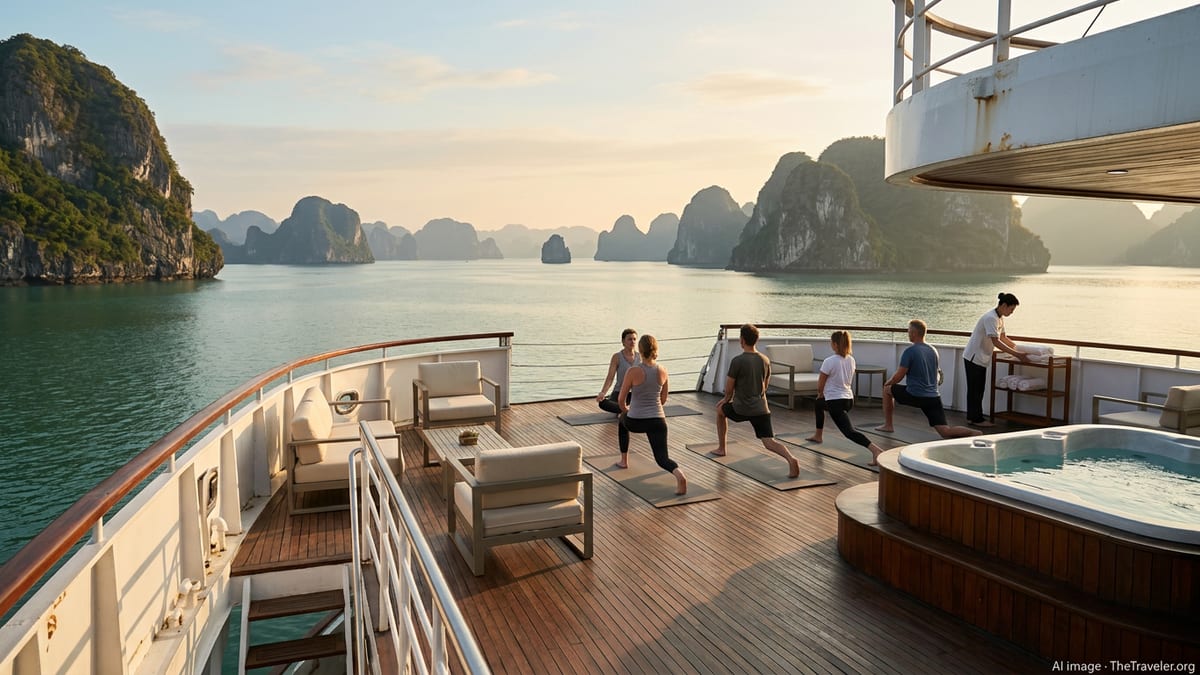
Beyond price and logistics, Vietnam offers experiences that differ noticeably from Thailand’s party beaches and Bali’s heavily marketed wellness retreats. Indian travelers are posting content from lantern lit streets in Hoi An, limestone karsts in Ha Long Bay and coffee shops in Hanoi’s Old Quarter, contributing to a visual narrative of a destination that feels both cinematic and culturally layered.
Food is part of the attraction. While Thai cuisine is already deeply familiar to many Indians, Vietnamese dishes such as pho, banh mi and fresh spring rolls are only now entering mainstream Indian awareness. Travel coverage frequently notes that Vietnam’s lighter flavors and abundant vegetarian options can be surprisingly accessible for Indian palates, reducing the perceived risk of trying a new destination.
The country is also positioning itself as a venue for high profile Indian events. Reports from Vietnamese tourism authorities highlight several large Indian corporate gatherings and extravagant weddings hosted in Da Nang and other coastal cities, sometimes bringing thousands of guests at once. These events have generated extensive coverage in Indian media and on social platforms, promoting Vietnam as a capable host for big ticket celebrations.
At the same time, Vietnam’s war museums, temples and French colonial architecture in cities such as Ho Chi Minh City and Hanoi appeal to Indian travelers who want more than beach time. Combined with motorbike tours, cave excursions in Phong Nha and emerging adventure activities in the northern highlands, the country offers a range of experiences that can be packaged together in a single holiday, appealing to multigenerational families and mixed interest groups.
Targeted Marketing And A Growing Middle Class Match
Vietnam’s tourism authorities and local industry groups have increasingly identified India as a priority market, aligning with the rapid expansion of India’s middle class and its rising overseas travel spend. Promotional campaigns, roadshows and participation in Indian travel fairs have stepped up since borders fully reopened, with a focus on second tier Indian cities where outbound demand is growing quickly.
Published economic analyses note that more than 30 percent of India’s population can now be classified as middle class or affluent, a segment that is both price conscious and eager to explore new destinations in Asia. Vietnam’s strategy of combining competitive pricing with imagery of unspoiled landscapes and modern urban culture appears tailored to this demographic.
Travel trade reports indicate that Indian tour operators are responding in kind, expanding Vietnam product lines, contracting hotel allotments in key cities and working with Vietnamese partners to develop curated itineraries. Some are now offering combined routes that pair Vietnam with nearby Cambodia, creating alternatives to the long familiar Thailand plus Singapore or Thailand plus Malaysia circuits.
As connectivity deepens and visa processes remain predictable, analysts expect Vietnam’s share of the Indian outbound market to continue growing in the medium term. Thailand and Bali are unlikely to lose their status as major favorites, but Vietnam’s rapid ascent suggests that Indian travelers now see the region less as a single familiar route and more as a menu of competing options, with Vietnam increasingly near the top.