


More news on this day
France’s mountain regions are emerging as one of Europe’s most in-demand spring escape options, as fresh data on global safety rankings reinforces traveler confidence in nature-focused, crowd-light alternatives to traditional city breaks.
Get the latest news straight to your inbox!
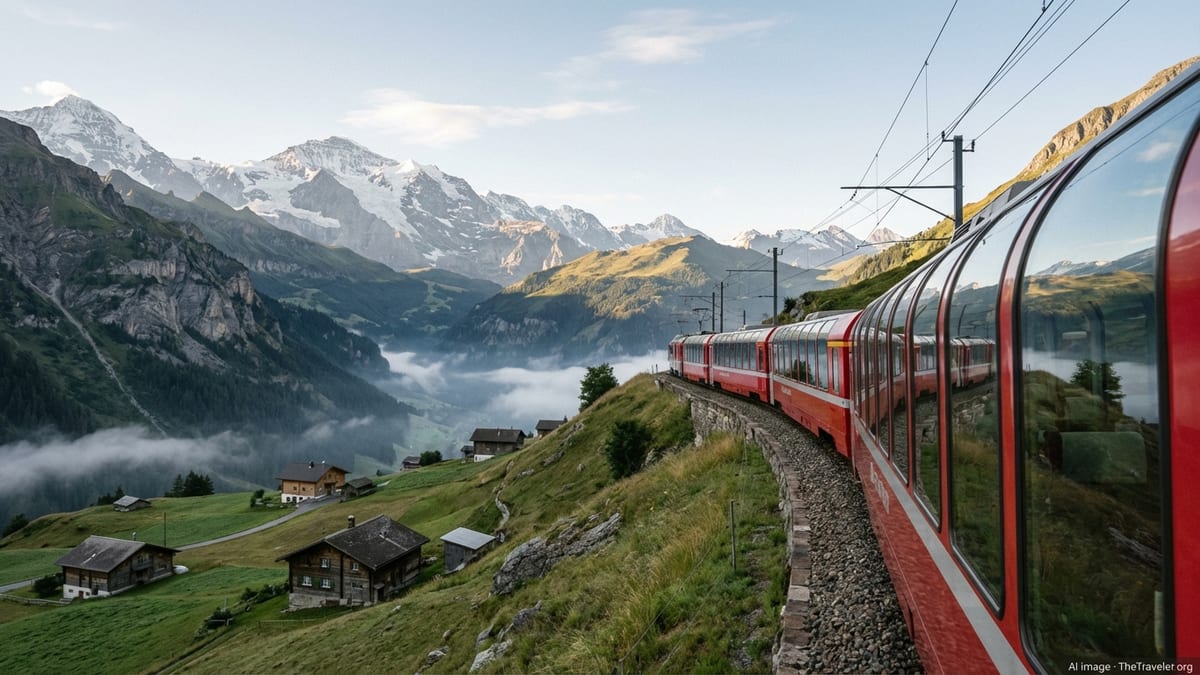
Europe’s Safety Image Lifts Demand for Nature-Focused Trips
Fresh research from European tourism bodies and travel insurers indicates that Europe is currently perceived as the safest global region for leisure travel, a trend that is shaping booking patterns for 2026 spring holidays. Long-haul travel barometer reports show Europe outperforming other world regions across several safety dimensions, from personal security to political stability, strengthening its position among cautious travelers who continue to weigh geopolitical risk when choosing destinations.
This positive safety narrative is feeding directly into demand for nature-rich and low-density environments, according to industry analyses. Regions such as the French Alps and Pyrenees are benefiting as travelers look beyond major capitals to destinations where outdoor activities, slower-paced villages and easy access to healthcare and infrastructure offer reassurance as well as relaxation.
Travel safety indices for 2025 and 2026 highlight that a high share of the world’s safest countries for tourists are located in Europe, reinforcing the idea of the continent as a comparatively predictable and secure choice. Although these rankings do not single out regions within countries, analysts note that strong national performance on safety metrics often supports smaller destinations that can market themselves as part of a stable wider ecosystem.
For tour operators and destination marketing organizations, the combination of strong perceived safety and growing appetite for open-air experiences is prompting more aggressive promotion of spring mountain stays in France. Campaigns increasingly foreground security and predictability alongside landscape imagery, positioning highland escapes as a low-stress alternative to long-haul or urban-heavy itineraries.
Spring in the French Alps and Pyrenees Gains Traction
While France has long been associated with winter ski getaways, recent seasons have seen a pivot toward spring as a distinct draw for its mountain regions. Industry reports describe rising interest in April through June travel to the Alps and Pyrenees, with visitors attracted by quieter slopes, snow-capped scenery, and milder temperatures suited to a mix of late-season snow activities and early hiking.
In the high-altitude resorts of the northern and southern Alps, publicly available booking data and resort communications point to increasingly extended operations into May, particularly at glacier-based areas where snow cover remains reliable later in the season. This allows travelers to combine winter-style experiences on the upper slopes with cycling, spa visits and terrace dining in sun-warmed valley towns on the same trip.
The Pyrenees are also emerging in travel media coverage as a spring alternative for those seeking fewer crowds and a slightly wilder feel. Reports highlight that many French and Spanish Pyrenean communities are diversifying beyond classic ski weeks to promote spring walking festivals, thermal spa circuits and rural gastronomy trails, capturing visitors who might previously have focused exclusively on the Alps.
Local and regional authorities have supported this shift with investments in shoulder-season events, upgraded lift systems and improved public transport connectivity from gateway cities such as Lyon, Grenoble and Toulouse. As a result, spring mountain breaks are appearing more frequently in tour operator catalogues and dynamic packaging tools, often spotlighted as a value proposition compared with peak winter or high summer trips.
From Ski-Only to Multi-Season Adventure and Soft Exploration
Analyses of tourism trends in mid-mountain and alpine areas across Europe suggest a broad move away from single-focus ski economies toward more diversified, year-round tourism models. Academic research on mountain destinations in France notes that climate variability and changing consumer expectations are encouraging resorts to expand hiking, trail running, cycling, wellness and cultural programming in the shoulder seasons.
In practical terms, this means that spring travelers are increasingly offered itineraries that blend soft adventure with accessible experiences rather than concentrating solely on technical sports. Mountain railways reopening after winter maintenance, lift-assisted panoramic viewpoints, guided nature walks and family-friendly via ferrata routes are all being marketed as ways to enjoy the high country without specialist skills.
Adventure travel specialists point out that this repositioning aligns closely with the safety-conscious mindset now evident in many markets. Activities framed as guided, well-marked and managed within modern infrastructure can appeal to first-time visitors who might otherwise associate mountain environments only with expert skiing or mountaineering.
At the same time, the presence of established rescue services, clear signage and regulated operators in France’s major mountain corridors is frequently highlighted in consumer-facing materials. These elements, combined with Europe’s strong health systems and transport networks, are contributing to a perception that alpine and Pyrenean adventures can be both exciting and controlled.
Authentic Villages and Local Culture Appeal to Safety-Minded Travelers
Parallel to the shift toward spring and outdoor-focused breaks, there is a growing emphasis on authentic, small-scale experiences in France’s mountain communities. Survey-based holiday barometers for European travelers consistently show rising interest in local food, cultural immersion and slower itineraries, trends that dovetail with concerns about overtourism and urban crowding.
In regions such as Savoie, Haute-Savoie and the central Pyrenees, refurbished village inns, agritourism stays and family-run guesthouses are now central to spring marketing efforts. Public information released by regional tourism bodies points to an uptick in bookings for rural accommodations that offer direct links to farmers, cheesemakers and artisans, especially during lambing, planting and early pasture seasons.
Travel features in European and North American media have begun to spotlight these villages as places where visitors can experience traditional markets, seasonal transhumance routes and mountain festivals without the congestion of peak ski weeks. The quieter rhythm of spring allows visitors to explore local heritage sites, chapels and small museums at a more measured pace, reinforcing the sense of a restorative escape.
Analysts note that this focus on authenticity also helps mountain destinations differentiate themselves within France’s broader tourism offer, which remains dominated by city and coastal trips. By linking safety and serenity with cultural depth, alpine and Pyrenean communities are positioning themselves to capture travelers who once defaulted to urban city breaks but now prioritize both reassurance and originality.
Value, Accessibility and Future Prospects for Spring Mountain Tourism
Affordability is another factor drawing travelers to France’s mountains in spring. With winter and summer still considered peak seasons for many resorts, accommodation and transport prices in April and May often undercut those at Christmas or in late July. Industry data and price comparison analyses for 2025 and 2026 show competitive package rates for shoulder-season alpine stays, particularly midweek.
Rail connectivity is reinforcing this appeal. European tourism reports underline that rail and multi-country travel are gaining ground as travelers seek lower-carbon and predictable options within a safe region. France’s dense network of high-speed and regional trains, linking Paris and other major cities to mountain gateways, enables visitors to integrate a few days in the Alps or Pyrenees into broader European itineraries without domestic flights.
Looking ahead to upcoming spring seasons, tourism observers expect France’s mountain regions to continue leveraging Europe’s strong safety perception as a core message. With global peace and crime data still favoring much of the continent compared with other regions, destinations that combine reassuring infrastructure with immersive landscapes are likely to remain prominent in marketing campaigns.
At the same time, adaptation to climate and visitor pressure will be central to sustaining this momentum. Research on diversification in ski-dependent territories suggests that investment in non-snow experiences, cultural programming and environmentally sensitive infrastructure can help French mountain destinations keep spring escapes attractive, even as conditions and traveler expectations evolve.