


For many women, the idea of hopping on a plane alone to the other side of the world still feels radical. Yet for more than a decade, Southeast Asia has quietly become one of the most welcoming regions on earth for female travelers. From the lantern-lit streets of Hoi An to the beach cafes of Bali and the night markets of Chiang Mai, it offers a rare combination of affordability, community, cultural richness, and personal freedom that is difficult to find elsewhere. For women looking to test their independence, reset after a life change, or simply see more of the world on a reasonable budget, Southeast Asia remains one of the most rewarding places to start.
Get the latest updates straight to your inbox!
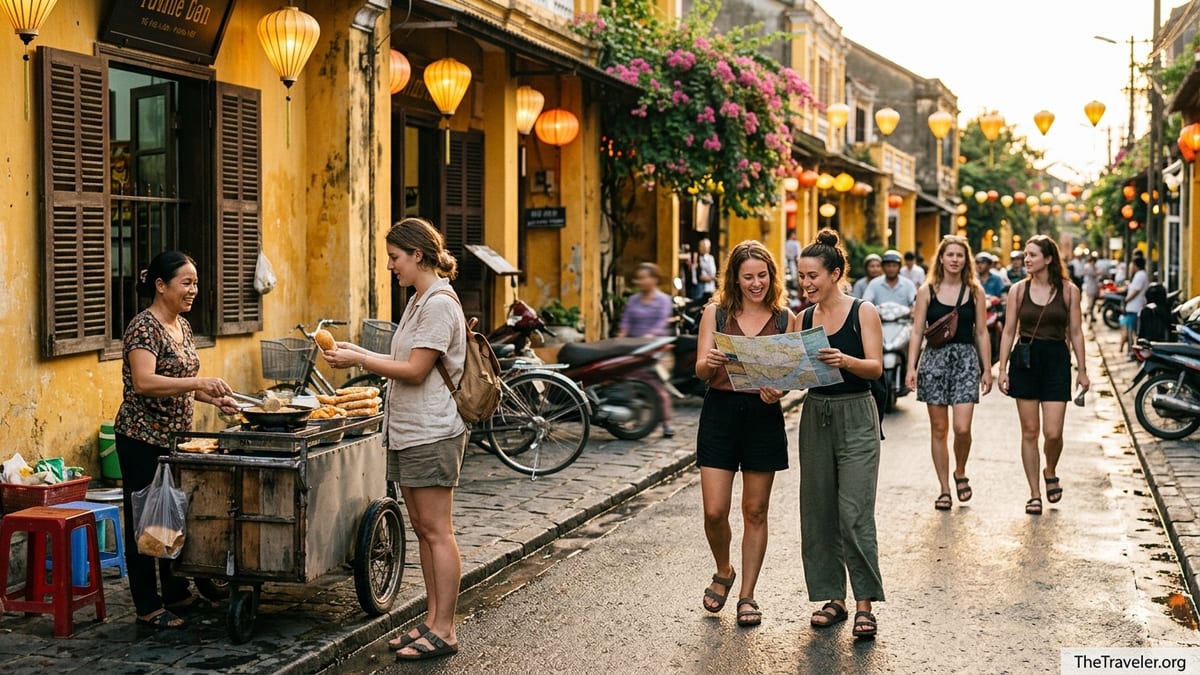
Safety, Comfort and the Reality on the Ground
Women often hear conflicting stories about safety in Southeast Asia. Government advisories can sound alarming, while social media feeds are filled with women describing the region as their favorite place on the planet. The reality for most female travelers in 2026 sits somewhere in between. Violent crime against tourists is relatively rare in major destinations such as Thailand, Vietnam, Malaysia, Singapore and Indonesia, and the most common concerns tend to be petty theft, overcharging, or uncomfortable male attention rather than outright danger. Hostels in Bangkok’s Old Town, boutique hotels in Hoi An or beach bungalows on Koh Lanta are used to hosting solo women and have built routines around late check-ins, 24-hour desk staff and secure luggage storage to make that easier.
Infrastructure for visitors is well developed across the classic backpacker trail. In Thailand, overnight trains between Bangkok and Chiang Mai offer women-only sleeper cars where solo travelers regularly share snacks and stories. In Singapore and Kuala Lumpur, ride-hailing apps are ubiquitous, with many women choosing Grab or Gojek over hailing taxis on the street. Even in places that feel chaotic at first glance, like Hanoi’s Old Quarter or Ho Chi Minh City’s Ben Thanh market, female travelers often report that the bustle is more overwhelming than threatening, especially once they learn to cross the street with the locals and keep valuables out of sight.
Digital communities also help close the gap between perception and reality. Facebook groups and apps dedicated to solo female travel routinely feature first-hand reports from women currently in Bali, Da Nang or Luang Prabang describing what it is actually like that week, from protests to weather, nightlife and areas to avoid. Many women today are planning routes based as much on these real-time updates as on traditional guidebooks, which creates a self-reinforcing loop: destinations where women feel confident attract more solo women, further normalizing their presence and encouraging local businesses to cater to them.
Still, safety for women in Southeast Asia is never a guarantee and should not be romanticized. The same common-sense precautions that apply almost anywhere in the world matter here too. Women who share their live location with family at home, take registered metered taxis or ride-hailing cars at night, and avoid overindulging in alcohol in unfamiliar bars in Kuta or Khao San Road tend to report mostly positive experiences. A simple rubber doorstop or compact door alarm, now sold in many travel stores, can make a budget guesthouse room in Vang Vieng or Sihanoukville feel significantly more secure without adding weight to a backpack.
Exceptional Value: How Far Your Money Goes
One of the strongest arguments for women to travel to Southeast Asia is straightforward: the region still offers remarkable value for money. Recent backpacker budget analyses suggest that travelers can live comfortably on roughly 25 to 40 US dollars per day in countries such as Vietnam and Cambodia, slightly more in parts of Thailand and Indonesia. That daily budget typically covers a dorm bed in a well-reviewed hostel or a simple guesthouse room, three local meals, public transport or a scooter rental, and a modest activity such as a temple visit or boat tour.
Concrete examples bring those numbers to life. In Hanoi, a bowl of steaming pho from a sidewalk stall commonly costs the equivalent of 1 to 2 US dollars, while a local coffee in a traditional egg-coffee café still comes in under 3 dollars. In Chiang Mai, a popular hub for digital nomads and long-stay travelers, a clean hostel dorm bed with air-conditioning can be as low as 8 to 12 dollars per night, often including breakfast and access to a shared kitchen. In Bali’s Canggu or Ubud, a simple “warung” meal of nasi campur or mie goreng often runs 2 to 4 dollars, significantly less than a comparable meal in a North American or European city.
Transport within and between countries is also unusually affordable. Low-cost airlines connect Bangkok to cities like Da Nang, Kuala Lumpur and Singapore, with promotional fares that can drop to the 50 to 80 dollar range for one-way regional flights if booked ahead. Overnight buses and trains, such as the sleeper trains between Bangkok and the islands or the Reunification Express routes up and down Vietnam, double as transport and accommodation, which is particularly attractive for women traveling on extended trips of several weeks or months.
For many women, this cost structure has a psychological impact beyond the immediate savings. Lower daily expenses mean that stretching a sabbatical or career break becomes realistic. A teacher from Canada or a nurse from the United Kingdom might budget 3,000 to 4,000 dollars for several months in Southeast Asia, something that would be impossible in Western Europe or Australia. The ability to say yes to an extra cooking class in Hoi An, an impromptu island-hopping tour in El Nido or a yoga retreat weekend in Ubud without destroying a budget can make travel feel more expansive and less constrained by constant calculations.
Built-in Community and Female-Focused Networks
Another reason Southeast Asia stands out for women is the density of traveler communities and the growing number of women-focused options. The so-called “banana pancake trail” that runs through Thailand, Laos, Cambodia and Vietnam has supported backpackers for decades, and its infrastructure now naturally supports solo women. Hostels in Bangkok’s Sukhumvit area or Siem Reap’s city center typically organize group activities such as street food tours, temple visits, and karaoke nights that make it easy to meet travel companions within hours of arrival.
Women-only dorms and even entire women-only hostels are more common in the region than many first-timers expect. In cities like Kuala Lumpur, Chiang Mai and Bali’s Ubud, properties advertise female-only floors, rooms with extra mirrors and hairdryers, and small touches such as free sanitary products at reception. Some boutique guesthouses in Hoi An or Luang Prabang have informal policies of placing solo women in rooms closer to the reception desk or on higher floors, recognizing the comfort that comes from being in a more visible, monitored part of the building.
Beyond accommodation, organized women-only tours are expanding. International and regional operators now offer itineraries designed specifically for women that combine Vietnam, Cambodia and Thailand over two to three weeks, often including activities like a visit to a women-run social enterprise in Phnom Penh, a cooking class in Chiang Mai with a local female chef, and a sunrise visit to Angkor Wat guided by a Khmer woman. These tours frequently cap group sizes at 10 to 14 participants, which creates an intimate environment where first-time solo travelers can build confidence before branching out on their own.
Less formal networks are flourishing too. Apps where travelers can find nearby companions increasingly include filters for women who want to meet other women for dinner in Hanoi or a day trip to the Mekong Delta. Community-driven meetups advertised on café chalkboards in Da Nang or Bali’s Canggu invite digital nomads and travelers to language exchanges, book clubs, or co-working days. For many women, these casual gatherings are invaluable, transforming what could feel like a lonely solo trip into a string of deep conversations and new friendships.
Culture, Food and Experiences That Center Everyday Life
Southeast Asia’s draw for women is not only about logistics and budgets. The region offers a style of travel that tends to center everyday life rather than only bucket-list attractions. Instead of rushing between museums, many women find themselves lingering in neighborhood markets, joining locals for morning coffee, or spending afternoons in open-air cafes catching up on reading and journaling. This slower rhythm can be especially appealing for women coming from high-pressure work environments looking to decompress.
Food is often the gateway into that daily life. In Vietnam, women can join cooking classes in Hoi An that start with a market visit, where a local guide explains the differences between herbs, sauces and regional styles before leading a hands-on lesson in dishes like fresh spring rolls and caramelized claypot fish. In Chiang Mai, night markets such as the Sunday Walking Street offer dozens of small vendors selling everything from khao soi to coconut ice cream in hollowed-out shells, and travelers often report feeling comfortable grabbing a plastic stool and eating alone among families, students and groups of local friends.
Spiritual and wellness experiences are another major draw. In Bali and parts of Thailand, yoga and meditation retreats range from affordable guesthouse programs to higher-end resorts. Women might spend a week in Ubud attending daily yoga classes, rice-terrace walks and sound-healing sessions, or sign up for a silent meditation retreat at a Thai forest monastery near Chiang Mai. These programs attract a predominantly female audience, which creates a supportive, reflective space that contrasts with the party-heavy image that still dominates some perceptions of Southeast Asia.
The variety of landscapes also encourages women to sample different styles of travel within a single region. A two-month itinerary might include rock climbing on the cliffs of Railay Beach, a homestay in a stilt house in northern Laos, snorkeling off the Gili Islands, and temple-hopping in Bagan or Ayutthaya. Many of these activities are structured with beginners in mind. Dive shops on Koh Tao, for example, are accustomed to training first-time divers and often see more women than men in their entry-level certification courses, while trekking agencies in Sapa or northern Thailand frequently pair solo women together in small groups so no one hikes alone.
Space to Redefine Independence and Identity
Beyond the tangible attractions, one of the most powerful reasons women gravitate toward Southeast Asia is the space it offers to experiment with identity and independence. Far from home and social expectations, many women find they can dress as they like within cultural norms, pursue interests that might feel niche at home, and test their own resilience in unfamiliar situations. Traveling alone on a night bus in Vietnam, negotiating at a market in Phnom Penh, or learning to ride a scooter in Bali are small acts that accumulate into a broader sense of capability.
Conversations with other women on the road often reinforce this effect. It is common to meet a software engineer from Germany working remotely from a co-working space in Da Nang, a yoga teacher from Argentina between retreats in Ubud, or a nurse from the United States taking a long break in Laos after pandemic burnout. In hostel common rooms and café corners, women trade stories of career changes, relationships, and the decision to prioritize their own goals. Many describe Southeast Asia as a place where it feels socially acceptable, even expected, to be in transition.
Local initiatives focused on women’s empowerment can add another layer of meaning. In countries such as Thailand, Cambodia and Myanmar, organizations led by local women provide training and employment to survivors of trafficking or domestic violence, often through cafes, handicraft shops or tour companies. When travelers choose to eat at a small restaurant run as a social enterprise, stay with a family participating in a community-based tourism program, or buy textiles directly from a women’s weaving collective, they are not only experiencing local culture but contributing to a broader ecosystem of female leadership.
This environment can be particularly affirming for women who have felt constrained at home. The act of planning a route through several countries, handling visas, budgeting and logistics builds practical skills. Even small decisions, like deciding whether to take a slow boat between Laos and Thailand or fly, become exercises in self-trust. Many women leave Southeast Asia with a stronger sense of their own judgment and a clearer view of what they want from work, relationships and future travel.
Digital Nomad Hubs and Long-Stay Possibilities
For women who want more than a short holiday, Southeast Asia has emerged as one of the world’s most appealing regions for long stays and remote work. Cities such as Chiang Mai in northern Thailand, Da Nang in central Vietnam and Bali’s Canggu and Ubud in Indonesia are now firmly established on the digital nomad map. These places combine reliable internet, a wide range of accommodation, and a social scene geared toward people who stay for months rather than days.
Da Nang, for instance, has grown rapidly in recent years as a beachside city with a developing tech scene. Modern co-working spaces near My Khe Beach cater to software developers, designers and writers who structure their days around work and surf sessions. Monthly apartment rentals in local neighborhoods remain more affordable than in many Western cities, and women who settle in for a season often describe a lifestyle where morning runs along the waterfront and evening food stalls replace long commutes and office fluorescent lights.
In Bali’s Canggu, the digital nomad and wellness community overlaps. Dozens of co-working spaces and laptop-friendly cafes sit alongside yoga studios and surf schools, which creates a daily rhythm where a woman might join a 7 a.m. yoga session, spend the day on her laptop by a pool, then join a sunset surf lesson or beach cleanup. Chiang Mai, often considered one of the original digital nomad hubs, still draws women with its low living costs, leafy neighborhoods, and abundance of coffee shops where a flat white costs a fraction of what it would in Sydney or San Francisco.
These hubs have their challenges, including rising prices and occasional visa uncertainty, and they do not represent all of Southeast Asia. Yet for women interested in testing a location-independent lifestyle, they offer unusually gentle entry points. Regular meetups focused on women in tech, female entrepreneurs or creative professionals mean newcomers can find mentors and friends quickly. Many long-stay travelers form informal support networks, sharing information on everything from trusted doctors and dentists to scooter mechanics and safe running routes.
Navigating Culture and Respectful Travel as a Woman
While Southeast Asia is broadly welcoming, cultural norms vary significantly from Singapore to rural Laos, and understanding those differences is key to feeling both safe and respectful as a female traveler. Dress codes, for example, are generally relaxed in tourist centers but more conservative in religious or rural areas. In Bangkok’s shopping districts or Bali’s beach towns, shorts and tank tops are common. At temples such as Bangkok’s Grand Palace, Yangon’s Shwedagon Pagoda or Bali’s Tirta Empul, women are expected to cover shoulders and knees. Many travelers carry a lightweight scarf or sarong in their day bag precisely for this reason.
Interactions between genders can also feel different. In some parts of Vietnam and Cambodia, direct eye contact and animated conversation with men in bars may be read as stronger romantic interest than intended. Choosing to sit at the bar in touristy nightlife areas like Kuta’s main strip, Khao San Road in Bangkok or Bui Vien Street in Ho Chi Minh City often brings more attention than sitting at a table with other travelers. Many women find that small adjustments, such as limiting alcohol intake, having a clear exit plan from busy bars, or joining well-reviewed group tours for nightlife, keep evenings fun without compromising safety.
It is also worth noting that while sexism and harassment exist in every society, many women report being treated with a mix of curiosity and respect in Southeast Asia. In markets from Luang Prabang to Penang, female travelers may be addressed as “sister” or “madam” and find that older women in particular look out for them. A fruit vendor in Hanoi might quietly tell a solo woman to keep her phone deep in her bag in crowded areas, or a Bangkok street food seller might wave away a persistent tuk-tuk driver, assuming a protective role. Acknowledging these small gestures can deepen a sense of connection with local women.
Respectful travel also means being aware of how one’s presence affects communities. Dressing modestly in rural villages, asking permission before taking photographs of people, and supporting businesses that hire and pay local staff fairly all contribute to a more balanced exchange. For women, there is an added layer: interactions between foreign women and local men may be scrutinized differently than those between foreign men and local women, particularly in conservative areas. Adapting behavior slightly, without compromising personal values, often leads to smoother, more meaningful encounters.
The Takeaway
Southeast Asia is not a utopia, and it is not free of risks. It is, however, one of the most accessible, affordable and enriching regions in the world for women who want to travel, whether for two weeks or two years. The infrastructure built around decades of backpacking has evolved into a web of hostels, guesthouses, co-working spaces, women-only tours and informal communities that make it easier than ever for women to arrive alone and quickly feel connected.
From a practical perspective, the combination of safety, value and community is compelling. A modest budget can stretch to cover street food, island ferries and overnight trains that would be luxury experiences elsewhere. Wi-Fi is strong enough in major hubs to support remote work, and the constant presence of other travelers means few women ever feel truly isolated unless they choose to seek solitude.
On a deeper level, the region offers women space to step outside familiar roles and routines. Whether you are navigating a chaotic market in Saigon, sharing a bungalow with new friends on Koh Rong, or finding your balance in a Bali yoga studio, Southeast Asia has a way of reflecting back a more capable, more adventurous version of yourself. For many women, that is what makes it special: it is not just a place to see, but a place to change.
FAQ
Q1. Is Southeast Asia safe for solo female travelers right now?
In most major destinations, Southeast Asia remains relatively safe for solo female travelers who use common-sense precautions. Petty theft and scams are more common than violent crime, so focusing on basics like watching your belongings, moderating alcohol use and choosing reputable transport goes a long way.
Q2. Which countries in Southeast Asia are best for a first solo trip as a woman?
Thailand and Vietnam are popular first choices because they have extensive tourist infrastructure, clear transport routes and many other solo travelers. Parts of Indonesia, especially Bali, and cities like Kuala Lumpur or Singapore are also good entry points due to higher levels of English and established hostels and guesthouses.
Q3. How much should I budget per day as a woman traveling in Southeast Asia?
A realistic backpacker-style budget ranges from about 25 to 40 US dollars per day in countries like Vietnam, Laos and Cambodia, and slightly higher in Thailand and Indonesia. This usually covers simple accommodation, local food, basic activities and local transport, but not frequent flights or luxury experiences.
Q4. Are hostels a good idea for women, or should I book private rooms?
Well-reviewed hostels are often a good option for women, especially when they have female-only dorms and secure lockers. Many solo women mix shared dorms in social hubs like Chiang Mai or Hoi An with private rooms in quieter locations when they want more rest and privacy.
Q5. What should I wear to respect local culture and still feel comfortable?
In cities and tourist areas, casual clothing like shorts, T-shirts and sundresses is common, but it is important to cover shoulders and knees in temples and rural communities. A light scarf or sarong in your day bag makes it easy to adapt, and breathable fabrics are best for the tropical climate.
Q6. How can I meet other women while traveling in Southeast Asia?
Staying in social hostels, joining group tours, and attending events at co-working spaces or yoga studios are simple ways to meet other women. Many travelers also use online communities and apps that help connect solo women for shared meals, day trips or longer stretches of travel.
Q7. Is it realistic to work remotely from Southeast Asia as a woman?
Yes, many women work remotely from hubs like Chiang Mai, Da Nang and Bali, where reliable internet, co-working spaces and monthly rentals are common. It is important to check visa rules for each country and to choose accommodation with quiet workspaces and good connectivity.
Q8. How do local women generally view foreign female travelers?
Experiences vary, but many travelers report that local women are curious and often quietly protective. Market vendors, café owners and guesthouse hosts sometimes offer practical advice, such as warning about pickpockets or suggesting safer streets to walk at night.
Q9. Are there specific scams or situations women should watch out for?
Common issues include inflated taxi prices, motorbike rental disputes and high-pressure sales tactics around markets and tourist sites. Women should also be mindful in nightlife areas, watching their drinks and planning safe transport back to their accommodation before going out.
Q10. What makes Southeast Asia special for women compared with other regions?
The combination of affordability, established traveler communities, varied landscapes and strong wellness and cultural offerings makes Southeast Asia unique. For many women, it offers a rare chance to explore, learn and redefine themselves with a supportive network and manageable costs.