


Booking a first solo trip can feel thrilling one moment and terrifying the next. You might find yourself staring at flight prices to Lisbon or Tokyo with your heart racing, imagining everything that could go wrong. You are not alone. Surveys of thousands of women show that personal safety, higher costs and the fear that “something bad might happen” are the top reasons many delay traveling on their own. Yet those same studies also show that once women finally go, most describe solo travel as life changing and wish they had started earlier. This guide is designed to bridge that gap: to walk you through the real fears, the real risks, and the very real tools that can help you feel prepared enough to hit “book” on that first ticket.
Get the latest updates straight to your inbox!
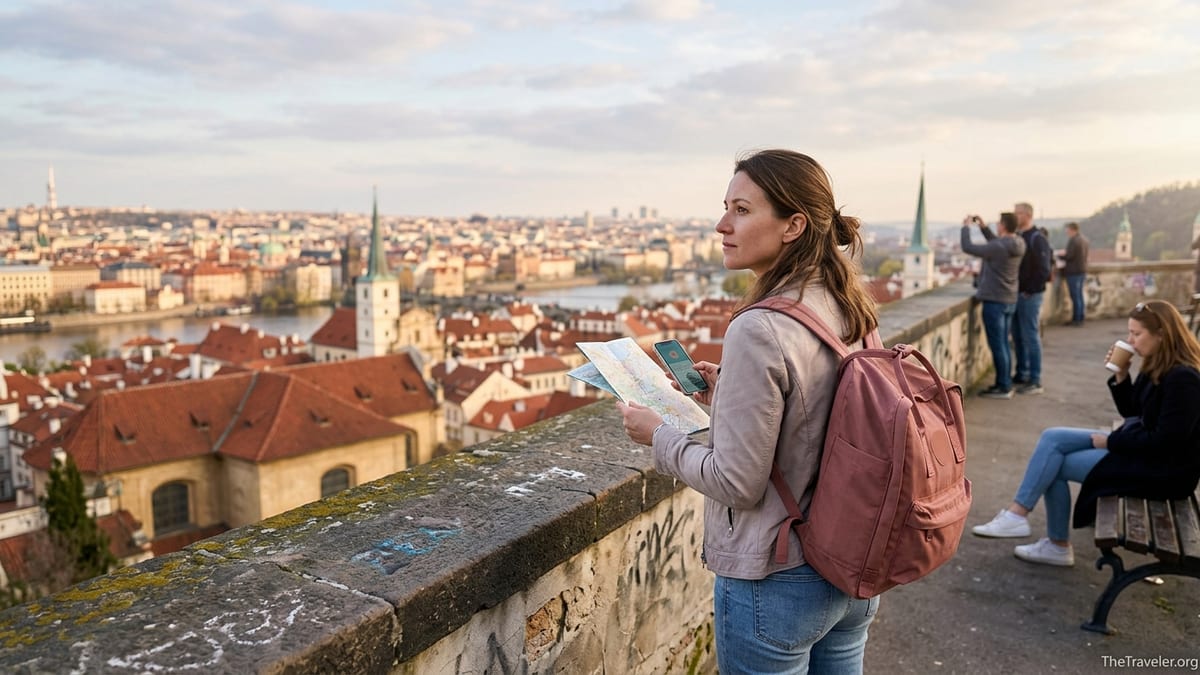
Why Solo Female Travel Feels Scary (And Why That Is Normal)
Fear before a first solo trip is not a sign that you are not cut out for it. It is usually a rational response to stepping outside familiar routines, combined with the reality that women often do shoulder more safety concerns when they travel. A 2024 global survey of solo female travelers found that around seven in ten respondents listed personal safety as their number one worry, followed by higher costs than splitting with a companion and anxiety that something bad might happen. That means if your stomach knots up when you think about arriving at a foreign airport alone at midnight, you are in very good company.
It is also important to separate media narratives from everyday reality. News stories tend to highlight the rare, extreme incidents that happen to travelers, while the millions of uneventful solo trips women take each year go largely unreported. At the same time, glossily curated social media can make solo travel look carefree and risk free, which is not accurate either. The truth lives in between: solo travel as a woman requires more planning and situational awareness, but with reasonable precautions, it can be both safe and deeply rewarding.
Another reason fear looms large is that solo travel confronts more than just safety questions. Many women worry about feeling lonely, getting lost, eating alone in restaurants or dealing with unexpected logistics without a partner to share the mental load. In the same 2024 survey, roughly one third of respondents said they were worried about getting lost or feeling lonely, and one in five admitted they feared the simple act of dining alone. Naming these concerns out loud is the first step to defusing them, and later in this article we will walk through practical strategies and examples for each.
Finally, remember that fear often spikes right before a big change. Many seasoned travelers report that they almost canceled their very first solo trip. One woman who now leads women-only group tours describes holding a refundable ticket to Reykjavik for weeks, certain she would back out. She went, arrived in Iceland to find a clean, well lit airport, clear bus signs into the city, and a hostel packed with other solo women. Her fear did not disappear overnight, but each small success shifted it from paralyzing to manageable. Your first trip is likely to follow a similar pattern.
Choosing a First Destination That Supports Your Confidence
Where you go on your first solo trip can make a huge difference to how safe and confident you feel. While it is true that women travel solo almost everywhere, some places are simply easier for beginners because the basic infrastructure is strong, violent crime rates are relatively low, and there is a visible culture of women moving around independently. In recent years, destinations that consistently rank highly for solo female travelers include Iceland, Japan, many Western European countries such as Portugal, Spain and the Netherlands, and city break favorites like Prague, Copenhagen and Montreal.
If you are based in the United States and do not want to leave the country yet, there are domestic options that offer a gentle introduction to solo travel. Cities like Portland, Maine; Boulder, Colorado; and Honolulu are often recommended because they combine walkable neighborhoods, outdoor activities, and a thriving café culture where solo diners are common. For example, a weekend in Portland might involve staying in a centrally located bed and breakfast for around 180 to 230 dollars a night, walking to the harbor for a lobster roll at a casual counter service spot, and joining a small group whale watching or food tour during the day so you are not sightseeing entirely on your own.
In Europe, first time solo female travelers frequently choose compact, well connected cities that are accustomed to tourism. Lisbon, for instance, offers reasonably priced guesthouses in central neighborhoods such as Baixa and Alfama, with private rooms often starting around 80 to 120 euros per night outside peak summer. The city’s trams and metro are straightforward to use, and there is a visible mix of locals and solo travelers in popular viewpoints like Miradouro de Santa Luzia around sunset. Another classic option is Copenhagen, which scores highly for personal safety and bike friendly infrastructure. Many visiting women feel comfortable cycling to attractions like the Lakes or the harbor baths, something that can be hugely confidence boosting.
If you are more drawn to Asia, countries such as Japan and Singapore often top “safest destinations” lists for solo women. In Tokyo, you will find women only train cars on some commuter lines during rush hour, staff at even small train stations who will walk you to the right platform if you look lost, and convenience stores where it is totally normal to grab an onigiri or bento box and eat alone. Accommodation ranges from capsule hotels with women only floors priced around 40 to 70 dollars per night to business hotels where a simple, clean single room might be 90 to 130 dollars. Starting in such environments, where safety is woven into daily life, can make that first solo step feel less like a leap.
Turning Vague Fear Into a Concrete Plan
One of the most effective ways to reduce pre trip anxiety is to turn a fuzzy sense that “something bad could happen” into specific scenarios and responses. Instead of cycling through worst case images late at night, sit down with a notebook and jot down your top five fears. Common examples include arriving late at night and not knowing how to get to your hotel, losing a passport, dealing with unwanted attention, getting sick, or feeling lonely. Once those are on paper, you can develop simple, realistic backup plans.
Take the fear of arriving in an unfamiliar city after dark. The practical response might be to choose a flight that lands before 7 p.m. local time, book your first two nights in a hotel or hostel with a 24 hour front desk in a well reviewed central area, and arrange a licensed airport transfer in advance. In Prague, for example, many mid range hotels offer private car pick up from Vaclav Havel Airport for around 30 to 40 euros, which can be worth the money on a first trip. In Tokyo, you might opt for the airport limousine bus that drops you directly at major hotels in Shinjuku or Shibuya, avoiding multiple train transfers with luggage.
For concerns about unwanted attention, you can plan small behavior tweaks that tend to reduce hassle. Many solo women swear by wearing a simple metal band on their left hand in more conservative areas, carrying a crossbody bag that keeps valuables in front, and projecting a purposeful walk even when they are still figuring out directions. Some learn a handful of firm phrases in the local language, such as “no, thank you,” “please stop,” or “I am meeting someone,” to shut down pushy conversations. In places like Marrakech or parts of southern Italy where street harassment can be more common, these tactics help you feel less caught off guard.
When it comes to paperwork and money, building redundancy into your plan can dramatically lower anxiety. Before leaving, make digital copies of your passport, visas and travel insurance documents and store them in a secure cloud folder or password manager. Carry two bank cards from different providers and keep them in separate places, for example one in your wallet and one in a money belt in your daypack. Some travelers also keep a back up stash of around 100 to 150 dollars worth of local currency and a small amount of US dollars hidden away in their main luggage. Knowing you have backups if a card is skimmed or a bag goes missing keeps fear from spiraling.
Using Technology and Services That Are Built With Solo Women in Mind
Travel technology has changed the solo experience dramatically in the last decade, and many tools now directly address the most common fears women report. Safety apps are a prime example. Services like Noonlight and bSafe are designed to give you a way to call for help discreetly if you feel unsafe. Noonlight, which is integrated into some rideshare platforms, lets you hold a button on your phone while you walk or sit in a car; if you release it without entering a PIN, the app notifies a dispatch center with your live location. bSafe offers live GPS tracking that friends or family can follow, a fake call feature to help you exit uncomfortable situations, and an SOS function that can record audio and video.
Government backed tools can also reduce uncertainty. The Smart Traveler app from the US State Department offers destination specific advisories, local embassy contact details and a way to enroll your trip in the Smart Traveler Enrollment Program so you can be contacted in case of major incidents. Many first time solo travelers traveling from the US to Europe or Asia find reassurance in knowing where their nearest consulate is and what number to call if they lose a passport or need legal assistance. In practice, very few people ever need to use these services, but having them set up in advance shifts some of the mental burden off your shoulders.
Accommodation platforms and tour companies have evolved in ways that particularly benefit solo women. On booking sites you can now filter for women only hostel dorms, which are common in cities like Barcelona, Berlin and Bangkok. Beds in these dorms may cost only a few dollars more per night than mixed dorms, yet many travelers say the peace of mind and easier conversations with other women are worth the small premium. For those not interested in hostels, guesthouses and boutique hotels that explicitly welcome solo travelers are increasingly easy to find by reading recent reviews that mention solo stays, staff helpfulness, and neighborhood safety after dark.
Group day tours and experiences are another underrated tool for easing into solo travel. Companies that specialize in small group trips, including many women only tour operators, report that older women traveling on their own now make up a significant portion of their clients. Joining a half day walking tour of Lisbon’s historic center, a cooking class in Chiang Mai, or a guided hike near Vancouver lets you have built in social contact and local knowledge during the day while still keeping your evenings and overall itinerary flexible. For a first trip, sprinkling several such activities throughout your stay can keep loneliness and logistics anxiety in check.
Practicing Safety Without Letting It Dominate Your Trip
For many women, one of the hardest parts of preparing for a solo trip is finding a balance between being cautious and not letting fear overshadow the entire experience. Practicing safety is less about memorizing dozens of rules and more about building a handful of habits that become second nature. One foundational habit is staying aware of your surroundings, especially when using your phone. Instead of walking through a quiet street at night with headphones on and your screen inches from your face, take quick glances at your map while holding your bag securely and scanning who is around you. If you need to make a longer route adjustment, step into a café, hotel lobby or busy store to do so.
Transport choices are another area where a few simple rules go a long way. In many cities, licensed taxis or ride hailing apps are safer than accepting unsolicited rides. When you order a rideshare, check that the license plate and driver name match what your app shows before getting in, and sit in the back seat with your bag beside you rather than in the trunk if possible. In places like Mexico City or Istanbul, women often prefer authorized taxi stands at airports and bus terminals, where fares to central neighborhoods are posted on boards and drivers are registered with authorities.
Where you stay matters too, especially on a first solo trip. Choosing accommodation in a central, well lit area with a staffed front desk and good recent reviews is often a better safety investment than chasing the absolute cheapest option on the outskirts of town. A mid range hotel in central Prague or Florence that costs 20 or 30 euros more per night than a remote guesthouse might mean you can walk home from dinner on busy streets instead of navigating a deserted industrial area or relying on late night public transport. Many solo female travelers also mention that they feel safer on upper floors rather than ground level rooms and that they appreciate hotels with peepholes and double locks.
Alcohol is an area where cultural differences and personal boundaries intersect. It is absolutely possible to enjoy a glass of wine in Paris or a craft beer in Portland as a solo woman, but it is wise to set your own limits ahead of time. Some travelers choose to avoid heavy drinking when alone and stick to venues where there are other women present, such as wine bars that attract after work crowds or restaurants with communal tables. If someone offers to buy you a drink, it is reasonable to insist that it be ordered in your sight and handed to you directly by staff. These practices are simple extensions of everyday safety habits at home, but they become more important when you do not have a trusted friend watching your back.
Managing Family Reactions and Internal Doubt
Sometimes the loudest fears you face before a first solo trip are not your own, but those of family members or partners. Parents might forward alarming headlines about tourists being targeted abroad. Friends may ask why you would want to travel alone at all. These reactions usually come from love and concern, but they can amplify your doubts. One way to respond is to share concrete details of your plans. Instead of saying “I am going to Asia for a month,” you might say, “I am flying into Tokyo on a daytime flight, staying in a hotel near Shinjuku station that has 24 hour staff, and I have already booked a seat on the airport bus that stops outside the hotel. I have travel insurance and will message when I land.” Specifics often reassure people more than generalities.
It can also help to involve loved ones proactively in safety measures. Share your live location during key transfers using apps they already know, such as WhatsApp or Apple’s Find My, so they feel included instead of shut out. Create a simple shared document listing your flights, accommodation addresses and emergency contact numbers. Explain that you are following advice from experienced solo travelers who recommend, for example, dressing to blend in, avoiding very remote areas after dark, and booking women only rooms when you feel it is appropriate. When your family sees that you are treating safety as a serious part of your planning, their anxiety is more likely to soften.
Internal doubt works in similar ways. You might find yourself thinking “What if I am not street smart enough?” or “What if I get there and hate being alone?” A practical technique is to run small experiments before your big trip. Take yourself out for dinner alone in your own city at a restaurant you have not tried, leaving your phone in your bag between courses. Do a solo day trip by train to a nearby town, navigating a new station and finding your way to a museum or café. These low stakes experiences teach your brain that you can handle minor challenges on your own, so the leap to a foreign country feels more like a stretch than an impossible jump.
Finally, give yourself permission to adjust the format of your solo travel rather than seeing it as all or nothing. Some women choose to start with a short guided group tour in a region that feels intimidating, such as a week in Morocco or Vietnam, then add a few extra days on their own at the end in a city like Lisbon or Bangkok where they feel more comfortable. Others invite a friend to join them for the first two or three nights of a longer trip, then continue alone once they have found their footing. There is no one correct way to travel solo. The goal is not to prove anything to anyone, but to build a style of travel that lets you explore the world in a way that feels both exciting and sustainable.
Building Confidence Through Small Daily Wins On The Road
Once you actually depart, fear often shifts from hypothetical to very specific moments: finding the right train platform, ordering a meal in a language you do not speak, or walking into a café alone. Treat each of these as a small test rather than a verdict on your ability to travel. In Copenhagen, for example, buying a 24 hour transit card at the airport and successfully using it to reach your hotel by metro and bus is a win. In Chiang Mai, walking into a family run khao soi shop, pointing to a picture on the wall and saying “one please” is a win. Each success, no matter how mundane, builds a bank of evidence that you can draw on when the next challenge appears.
Daily routines can help ground you. Many solo travelers like to start the day in the same café or bakery near their accommodation, where staff begin to recognize them after a couple of visits. In Lisbon, that might mean stopping at a neighborhood pastelaria each morning for a coffee and pastel de nata. In Kyoto, it could be a convenience store where you pick up onigiri and fruit juice. Familiar faces, even if you never exchange more than a few words, create a sense of belonging that counters feelings of isolation.
Seeking out spaces where solo women are explicitly welcome is another way to accelerate confidence. In cities with strong hostel cultures, joining communal dinners or free walking tours organized by your accommodation can quickly connect you with others. In more hotel oriented destinations, look for themed events that attract solo participants, such as language exchange evenings, yoga classes or cooking workshops. For instance, a pasta making class in Rome might draw a mix of couples and solo travelers; by the end of the evening you will likely have swapped tips and maybe even arranged to visit the Colosseum together the next day, if you feel like company.
At the same time, learn to listen to your instincts and adjust plans when something does not feel right. If you arrive at a bar alone and the atmosphere makes you uncomfortable, you are allowed to finish your drink quickly and leave, or even walk out immediately. If a street feels too deserted, take a slightly longer route along a busier avenue or call a taxi instead of walking. Confidence is not the absence of caution. It is the quiet knowledge that you can change course whenever you need to.
The Takeaway
Feeling afraid before your first solo trip is not a sign you should stay home. It is an invitation to prepare thoughtfully. By choosing beginner friendly destinations where infrastructure, safety and a visible culture of women out and about work in your favor, you reduce the baseline risk. By translating vague fears into concrete what ifs and mapping out realistic responses, you reclaim agency. By using technology, services and communities created with solo women in mind, you add layers of support around yourself even when you are physically alone.
Perhaps most importantly, solo travel often reshapes your relationship with fear itself. The same hesitation that keeps you from clicking “book” will likely surface again when you navigate a foreign metro system or sit down for your first solo dinner. Each time you move forward anyway, you prove to yourself that you can feel afraid and act with care and courage at the same time. Years from now, you may look back not at the perfect photos or famous landmarks, but at the moment you stepped out of an arrival hall in a new country, took a deep breath, and trusted that you had prepared enough. That moment is the real beginning of the journey.
FAQ
Q1. Is solo female travel actually safe, or is it too risky for a first trip?
Solo female travel always carries some risk, just as living in your home city does, but for most destinations the risk can be managed to a level many women find acceptable. Choosing places with strong infrastructure and lower violent crime, planning your arrival in daylight, staying in central well reviewed accommodation, and following basic safety habits like watching your drinks and belongings greatly reduces your exposure to common problems such as petty theft or harassment.
Q2. What are some good first destinations for a solo female traveler from the United States?
Many first timers start with cities that are used to visitors and have clear transit systems, such as Reykjavik, Copenhagen, Dublin, Lisbon, Montreal or Tokyo. If you prefer to stay within the United States, consider places like Portland in Maine, Boulder in Colorado or Honolulu, which combine outdoor activities with walkable neighborhoods and plenty of other solo visitors.
Q3. How can I reassure my family that I will be safe when traveling alone?
Share specific details of your plan rather than broad statements. Tell them your flight numbers, where you are staying, how you are getting from the airport to your accommodation, and what safety steps you are taking. Consider setting up location sharing for key travel days, giving them copies of your itinerary, and explaining that you chose your destination and accommodation based on safety research and feedback from other solo women.
Q4. What should I do if I feel unsafe in a taxi or rideshare?
Before getting in, always check that the car’s license plate and driver name match your app or the official taxi stand list. Sit in the back seat, keep your bag with you, and follow the route on your phone. If at any point you feel uncomfortable, you can ask to end the ride in a busy, well lit area such as a gas station or hotel entrance. Safety apps like Noonlight or bSafe can provide an extra layer of support by allowing you to discreetly share your location or trigger an alert.
Q5. How do I handle unwanted attention or harassment when I am alone?
Trust your instincts and prioritize your comfort. Often a firm “no,” avoiding eye contact, and walking purposefully away is enough to end most low level harassment. In more persistent situations, step into a shop, café or hotel lobby and speak to staff, or approach another woman or family and stand near them. Learning a few local phrases such as “please stop” or “I am meeting someone” can also help. Remember that you do not owe politeness to anyone who is making you feel unsafe.
Q6. Will I feel lonely traveling solo, and what can I do about it?
Most solo travelers experience moments of loneliness, especially in the evenings, but there are many ways to connect with others. Staying in social accommodations like hostels with women only dorms or guesthouses with communal areas, joining walking tours, cooking classes or day trips, and returning to the same café each morning can all help you build casual connections. It can also be comforting to schedule regular calls or messages with friends and family back home.
Q7. How can I keep my belongings safe when I am out exploring alone?
Use a crossbody bag that closes securely and keep it in front of you in crowds. Leave passports and spare cards locked in your hotel safe or locker, carrying only one card and a small amount of cash. On trains and buses, keep your daypack at your feet with a strap looped around your leg rather than in overhead racks. Simple anti theft items such as small padlocks for zippers and a cable lock for securing a bag to a fixed object on night trains can add extra peace of mind.
Q8. Is it more expensive to travel solo as a woman, and how can I manage costs?
Traveling solo generally means you cannot split the cost of accommodation and some transport, so a private hotel room will usually be more expensive per person than if you traveled as a pair. To manage costs, look for single rooms in guesthouses or smaller hotels, consider women only hostel dorms, and make use of public transport instead of always taking taxis. Many cities also offer free walking tours, discounted city cards for attractions, and affordable set lunch menus that let you experience local food without high dinner prices.
Q9. What kind of travel insurance should I get for a solo trip?
A comprehensive policy that covers medical care abroad, emergency evacuation, trip cancellation and interruption, lost or delayed baggage and 24 hour assistance is usually a smart choice for solo travelers. Pay attention to coverage limits for medical expenses and whether pre existing conditions are included. Travel insurance can be particularly valuable when you are alone, since it can connect you with local doctors, help replace lost documents and, in serious situations, arrange for you to be transported to an appropriate medical facility.
Q10. How do I know if I am really ready for my first solo trip?
You may never feel completely ready, and that is normal. Signs you are ready enough include having done basic research on your destination, booked accommodation in a safe, central area, planned your arrival from the airport or station, and thought through how you will handle money, communication and emergencies. If you have practiced a few solo outings at home and can picture yourself handling small problems, you are likely more prepared than you feel. At some point, readiness becomes a decision to trust your preparation and take the first step.