


Solo travel is often marketed as one long social adventure: hostel bar crawls, instant new friends, group selfies with strangers. For many introverts, that image is enough to shut the laptop and shelve the idea entirely. Yet in reality, solo travel is quietly becoming a mainstream choice, especially for people who crave independence, reflection and control over their own time. With thoughtful planning and realistic expectations, introverts not only can travel solo successfully, they can actually enjoy the experience far more than a traditional group trip.
Get the latest updates straight to your inbox!
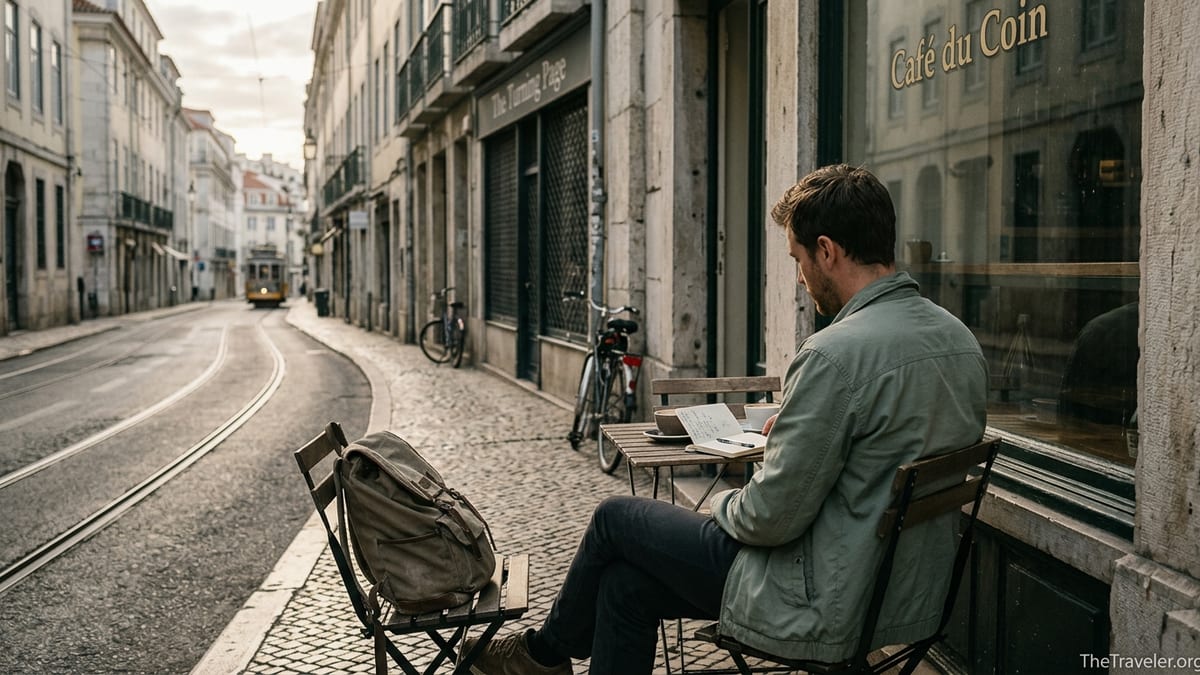
Why Solo Travel Can Suit Introverts Surprisingly Well
Solo travel is no longer a fringe idea. Recent surveys in Europe and North America show that traveling alone is firmly on the rise, with many people describing it as a form of personal freedom and reset rather than a last resort. One US public radio report from March 2026 noted that about a quarter of people who have not yet traveled solo say fear of being alone holds them back, even though most are drawn to the idea. At the same time, travel industry reports describe solo travelers as one of the fastest growing segments, with a large share of them being women in their 30s and 40s who want time to themselves. All of this suggests the mainstream image of solo travel as a non-stop social event is incomplete.
For many introverts, the built-in advantages of solo travel are obvious once you strip away the party-hostel stereotype. You control the social dial. You decide when to talk and when not to. You can choose a quiet afternoon reading in a Copenhagen café over a packed food tour without needing to justify that choice to anyone. In online communities for introverts and solo travelers, many people describe solo trips as the first time they felt fully in charge of their own energy, able to explore a new place without constant compromise or small talk.
Real-world accounts reflect this. On a long-running solo travel forum, one introverted traveler described spending eight months moving between major cities like Rome, London and Seoul while speaking only when necessary for transactions, and still feeling deeply fulfilled by the experience of wandering, observing and learning at their own pace. Others talk about using solo trips to gently stretch their comfort zone: joining a small-group walking tour in Toronto one morning, then retreating to a quiet bookstore for the afternoon. When travel is framed as choosing how you want to move through the world, rather than how many people you should meet, the solo model can fit introverts particularly well.
Common Fears Introverts Have About Solo Travel
When introverts imagine solo travel going badly, the same images tend to appear. One is the fear of being stuck in a relentlessly social environment, such as a party hostel where staff are constantly inviting you to pub crawls, or a beach destination where group games and loud music spill into every public space. Another is the opposite fear: feeling painfully isolated in a foreign country, eating alone every night and worrying that solo travel will simply highlight your loneliness rather than soothe it.
Safety anxieties also loom large. A 2026 radio report in the US highlighted that about a quarter of people who have not tried solo travel cite safety as their main concern, ahead of cost and the fear of loneliness. For introverts, those worries can be amplified by the feeling that they might hesitate to ask for help or draw attention to themselves. Female travelers in particular often describe a double anxiety: wanting solitude while also wanting to stay visible enough to feel safe in public spaces.
Then there is the subtle social pressure that can make introverts feel like they are “doing solo travel wrong.” Online, solo travel is often tied to meeting people: travel brands promote group trips for solo travelers, and social media is full of posts about friendships formed in hostel common rooms. Some introverts report feeling guilty if they spend a day exploring alone instead of bonding with new people. This can create an unnecessary conflict between the way they naturally function and the way they think they are supposed to behave on the road.
The key is recognizing these fears as manageable design problems rather than verdicts on whether you are “cut out” for solo travel. You can choose destinations where quiet is normal, sleep in private rooms instead of dorms, book daylight arrivals for safety and plan one or two low-pressure social outlets so you never feel trapped in either extreme of over-stimulation or isolation.
Designing an Introvert-Friendly Solo Itinerary
For introverts, the most important travel decisions often happen before the flight is booked. The choice between a chaotic party island and a walkable, museum-filled city can determine whether a trip feels draining or restorative. Many travel writers and bloggers who focus on introverts recommend places where calm is part of the culture: Kyoto rather than Tokyo for a first trip to Japan, or Reykjavik and the Icelandic countryside rather than a week in Barcelona’s Gothic Quarter in peak August. A 2025 guide to introvert-friendly destinations highlighted cities like Copenhagen, Stockholm and Vancouver as examples where outdoor spaces, public calm and respect for personal space are built into daily life.
Within the United States, smaller cities with access to nature can work well. Guides to introvert-friendly US destinations often mention places such as Asheville in North Carolina, with its quiet mountain trails and independent bookstores, or Burlington in Vermont, where you can spend a morning walking along Lake Champlain and an afternoon in a café without feeling rushed. These are cities where going for a solo hike or reading alone in a coffee shop is seen as normal, not antisocial.
Structuring your days around low-pressure activities helps. You might plan one anchor activity per day, such as a self-guided museum visit in Vienna, a short coastal hike near Lisbon, or a thermal spa afternoon in Budapest. Around that, you can leave generous blank space for wandering, journaling or simply sitting on a park bench watching local life. In Lisbon, for example, nominal 2026 price guides show hostel dorm beds in central districts starting from roughly 25 to 40 euros per night outside peak summer, with private rooms beginning around 70 to 110 euros. Booking a private room in a quiet neighborhood such as Graça or Campo de Ourique allows you to enjoy the city’s viewpoints and cafés, then retreat to a calm base when you need to recharge.
Transport choices matter as well. Overnight buses and red-eye flights might be cheap, but they can easily drain your mental reserves. Many introvert travelers prefer daytime trains where they can read or look out of the window without constant interaction. In countries with efficient rail networks like Switzerland, Austria or Japan, booking reserved seats in quieter carriages can turn transit days into moving retreats rather than ordeals.
Choosing the Right Kind of Accommodation
Where you sleep can make or break an introvert’s solo trip. The good news is that modern accommodation options offer far more nuance than a simple hostel-versus-hotel decision. In cities like Lisbon, current comparisons of lodging types show that private rooms in hostels now often cost between about 60 and 90 euros per night, while small budget hotels with en-suite bathrooms start around 70 to 100 euros. That narrow price gap means introverts can often afford to prioritize privacy without dramatically increasing their costs.
One effective strategy is to mix accommodation types across a trip. In a quiet town or shoulder season, a well-reviewed hostel with private rooms can be ideal: you get the social infrastructure of common kitchens and lounges if you feel like chatting, plus the ability to shut your door when you are done. In busier cities, a small guesthouse or locally owned hotel on a side street offers a buffer from nightlife and crowds. In some European towns, family-run inns publish 2026 price lists showing discounts for week-long stays, with rates for private rooms around 80 to 90 euros per night when booked in blocks, which can be good value if you are staying put to recharge.
It is worth reading reviews through an introvert’s lens. Instead of only looking at star ratings, scan for phrases like “quiet at night,” “thin walls” or “popular with groups.” Several booking platforms allow you to filter for accommodations that are “peaceful” or “relaxed,” or to see how past solo travelers rated a property. If you see multiple mentions of loud rooftop bars, pub crawls or constant events, that may be a red flag if you are looking for a retreat rather than a ready-made social circle.
Apartment rentals can be a good option for longer stays or for travelers who need predictable downtime. Having your own kitchen makes it easier to avoid crowded restaurants when you are tired; you can pick up fresh bread, cheese and fruit and have a quiet dinner at “home.” Just be aware of local regulations and make sure you choose legal, licensed rentals, especially in European cities where short-term stays have become a political issue. For a first solo trip, many introverts find that a small hotel with a staffed front desk provides the best balance of independence and support.
Socializing on Your Own Terms
Contrary to stereotype, most introverts do not want to avoid people entirely. They simply prefer depth over breadth and control over the start and end of interactions. Solo travel offers several ways to meet people that do not require being “on” all day, and these can transform a trip from quietly pleasant to quietly meaningful.
Small-group tours are one of the most practical tools. In Toronto, for example, some downtown walking tour companies cap their group sizes at around 12 participants. Guests spend a few hours exploring neighborhoods with a guide, swap a few recommendations with fellow travelers, then disperse. In many cities, you can find similar offerings: storytelling walks in Edinburgh limited to eight people, early-morning food tours in Kyoto that keep the group small, or nature walks near Auckland where the emphasis is on the landscape rather than constant chatter. Because the interaction is structured and time-bound, introverts often find these experiences energizing rather than draining.
Another low-pressure option is to choose “third places” that naturally invite light conversation. A small independent bookshop in Portland, a knitting café in Reykjavik, or a co-working day pass in Chiang Mai all offer a chance to talk to people around a shared interest rather than forcing small talk at a hostel bar. Some introverted travelers report that they feel most socially satisfied after a day where they have had two or three warm, short interactions like this: a chat with a barista about local desserts, a quick exchange with a park ranger about a trail, or a conversation with a museum staff member about their favorite exhibit.
If you want a bit more connection without the intensity of a full group tour, consider hobby-based classes. In Italian cities such as Florence or Bologna, half-day pasta-making workshops often welcome solo participants and end with a communal meal. In Bali, yoga studios in towns like Ubud regularly host drop-in classes where you can attend anonymously yet still feel part of a shared rhythm. Language schools around the world offer one-week beginner courses that combine study sessions with gentle cultural activities, giving introverts a predictable schedule and familiar faces without the pressure of constant socializing.
Managing Energy, Safety and Mental Health on the Road
Introverts traveling alone need to think about their social battery and safety in tandem. It is important to plan for days when you will feel braver and days when you will not, and to ensure both are safe. A practical starting point is to schedule arrivals during daylight whenever possible, especially in unfamiliar cities. Landing at midday in Reykjavik or Zurich, for example, gives you time to find your accommodation, get oriented, and buy groceries before dark, which can significantly lower anxiety.
Once on the ground, routines help. Many introverted solo travelers create a simple daily pattern that anchors them: morning coffee at the same quiet café, a midday walk through a nearby park, an afternoon rest at the accommodation, and a short outing in the evening. In cities like Stockholm or Vienna, where public spaces and transit are generally well organized, this rhythm can feel surprisingly similar to a calm day at home, just with different scenery. Building in these predictable elements reduces decision fatigue and leaves more energy for the moments when you do want to stretch yourself.
Digital tools can support both safety and mental health without forcing interaction. Location-sharing with a trusted friend or family member back home lets them see where you are without constant texts. Many banking apps now allow instant card locking and travel alerts, which can ease financial worries. Offline maps mean you can look up directions discreetly in a quiet side street instead of standing in the middle of a square with a paper map. For mental health, some travelers schedule occasional check-in calls with a friend, especially on longer trips, to process emotions out loud in a familiar relationship rather than trying to build that level of connection with someone new.
It is also worth acknowledging that not every moment of a solo trip will feel picturesque. There may be evenings when you feel suddenly sad eating alone, or mornings when you wish there was someone else to figure out the train timetable. Rather than treating these feelings as evidence that you “failed” at solo travel, it helps to see them as part of the learning curve. Many introverts who have done repeated trips say that the second and third journeys feel radically easier: they know what kind of accommodation works, how many social activities they truly enjoy in a week, and which situations they prefer to avoid entirely.
Real Itineraries That Work for Introverted Solo Travelers
Abstract advice becomes clearer with concrete examples. Consider a five-day introvert-friendly trip to Kyoto. You might stay in a small guesthouse in a residential neighborhood like Higashiyama, where quiet evenings are the norm. Mornings could start early with a walk along the Philosopher’s Path before the crowds, followed by a solo visit to a temple garden. After lunch, you might spend a few hours reading in a kissaten, a traditional Japanese coffee shop, then attend a pre-booked tea ceremony class with a group of six. Evenings would be deliberately low-key: a casual dinner at a neighborhood noodle shop and a stroll back through side streets. Social contact is present but contained, and the rhythm balances stimulation with silence.
A different style of introvert-friendly itinerary could be a rail-based trip through Switzerland. You might fly into Zurich, spend two nights acclimatizing in a quiet district near the lake, then take scenic trains to Luzern and Interlaken. Instead of joining large group hikes, you could pick well-marked half-day trails around lakes or up to viewpoints between train stations, returning to town by mid-afternoon. Many Swiss cities have art museums and lakeside promenades where solitude is normal. Accommodation could alternate between small city hotels and mountain guesthouses, some of which publish flat seasonal rates so you know your costs upfront.
Closer to home for US-based travelers, an introvert-friendly solo trip might focus on one small city rather than racing through several. In Asheville, for instance, you could book a locally owned inn or quiet Airbnb on a tree-lined street, spend mornings exploring the Blue Ridge Parkway or short forest trails, and afternoons in galleries and coffee shops. Evenings might involve a single planned social outing, such as a ticketed concert in a small venue, sandwiched between two quiet nights in with a book. Travelers on forums often report that smaller American cities in states like Maine, Colorado or Oregon offer a similar blend of access to nature, walkable centers and low-key culture.
These itineraries share common elements: a stable home base, a small number of planned activities, generous downtime and environments where an adult sitting alone with a notebook or camera does not attract curiosity. Once you recognize this pattern, you can apply it almost anywhere, from coastal Portugal to New Zealand’s South Island, adjusting for season, budget and personal preferences.
The Takeaway
Introverts are not only capable of traveling solo; many are uniquely suited to it. When you remove the expectation that travel must be extroverted to be successful, a different picture emerges: one of quiet streets at dawn, long unhurried afternoons in museums and parks, and the deep satisfaction of moving through the world entirely on your own terms. The skills that serve introverts well at home, such as observation, reflective thinking and comfort with solitude, become real strengths on the road.
Success, however, is rarely accidental. It rests on a set of deliberate choices: destinations where calm is normal, accommodations that protect your sleep and privacy, and a daily rhythm that respects both your curiosity and your limits. It also involves giving yourself permission to travel differently from the glossy images on social media or the loudest stories on hostel message boards. Your version of an unforgettable trip might be a week in a lakeside town with a stack of books and one carefully chosen boat excursion, and that is entirely valid.
Ultimately, the question is less “Can introverts travel solo successfully?” and more “What would a successful solo trip look like for you?” If you can picture a day on the road that feels genuinely nourishing rather than performative, then you already have the beginning of your answer. The rest is logistics, patience and the quiet courage to book that first ticket.
FAQ
Q1. Is solo travel really a good idea for introverts, or will I just feel lonely?
Many introverts find that solo travel feels less lonely than group trips because they are free to manage their energy and social interactions. Occasional lonely moments do happen, but with a comfortable home base, one or two planned activities per day and a few low-pressure ways to meet people, those moments are usually temporary rather than defining.
Q2. How do I choose a first solo destination as an introvert?
For a first trip, look for a place that is relatively safe, walkable and well organized, with a reputation for calm rather than nightlife. Cities such as Copenhagen, Kyoto, Vienna or smaller US towns with access to nature often fit this description. Prioritize destinations with clear public transport, good signage and plenty of quiet spaces like parks, cafés and museums.
Q3. Are hostels always a bad idea for introverts?
Not necessarily. Many modern hostels offer private rooms and quiet hours, and some attract a calmer crowd. If you are introverted, you might avoid large party hostels and instead look for properties described as relaxed or cozy, with options for private or small dorm rooms. Mixing one or two hostel stays with guesthouses or hotels can give you social variety without overwhelming you.
Q4. How can I meet people without feeling forced to socialize all the time?
Choose structured, time-limited activities like small-group walking tours, food tastings, craft workshops or language classes. These naturally create conversation around a shared focus and end after a few hours, so you can return to solitude when you are ready. Spending time in interest-based spaces, such as bookstores, hobby cafés or co-working spots, also invites light interaction without pressure.
Q5. What if I get anxious or overwhelmed while traveling alone?
Plan for that possibility in advance. Build quiet time into every day, so you are not running at maximum stimulation. Learn a few grounding techniques that work for you, such as deep breathing, journaling or a short walk in a green space. Keep a shortlist of safe, comforting places near your accommodation, such as a small park or café, where you can retreat if you feel overloaded.
Q6. How can I stay safe as an introverted solo traveler who does not like drawing attention?
Staying safe does not require you to be loud or outgoing. Arrive in new cities during daylight when possible, choose well-reviewed accommodations in central or well-lit areas, and share your itinerary or location with someone you trust at home. Use common-sense precautions around alcohol, valuables and late-night walking, and trust your instincts if a person or place feels off.
Q7. Is eating alone in restaurants as awkward as it sounds?
It often feels most awkward the first one or two times, then becomes surprisingly normal. Picking restaurants with counter seating, outdoor tables or casual atmospheres can help. Bring a book, journal or offline reading on your phone if that makes you feel more at ease. Many solo travelers come to enjoy these meals as dedicated time to savor food and reflect on the day.
Q8. How do I budget for introvert-friendly solo travel?
Introvert-friendly travel does not have to be luxurious, but it usually makes sense to spend slightly more on accommodation for privacy and quiet. Research typical local prices for modest hotels, guesthouses or hostel private rooms, and plan daily spending for meals, transport and one paid activity. Cooking some of your own food or choosing lunch as your main meal can keep costs down without sacrificing comfort.
Q9. What if my friends or family do not understand why I want to travel alone?
It can help to frame solo travel as a way to recharge and grow rather than as a rejection of their company. Explain that you enjoy time with them but also need space to explore at your own pace. Sharing your plans, showing that you have thought about safety, and agreeing on regular check-ins can reassure skeptical relatives while still honoring your needs.
Q10. How can I tell if solo travel is truly right for me as an introvert?
Start small. Try an overnight trip to a nearby city or a weekend in a quiet town within your own country. Pay attention to how you feel before, during and after the experience. If you come home tired but proud, or already thinking about where you might go next, that is a strong sign that solo travel can play a positive role in your life. If it feels consistently miserable, you can adjust the style of trip or decide that different forms of travel suit you better.