


More news on this day
Air travel across the United States faced another day of severe disruption as major hub airports in Chicago, Los Angeles, Miami, Phoenix and New York reported cascading delays and cancellations, with operational data showing 169 flights cancelled and 2,952 delayed nationwide, affecting passengers on American, United, Southwest, Envoy Air, SkyWest and other carriers.
Get the latest news straight to your inbox!
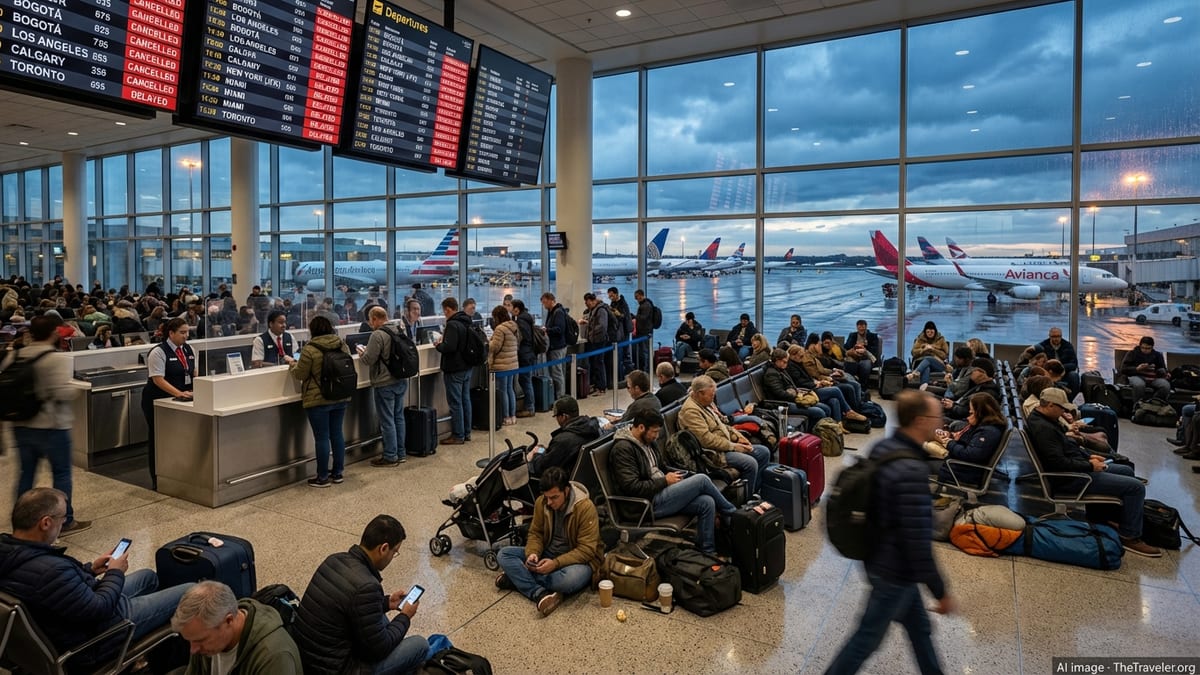
Major Hubs From Chicago to Miami Log Heavy Disruption
Operational dashboards tracking same day performance show that the latest wave of flight problems is concentrated at some of the country’s busiest hubs. Chicago’s O’Hare and Midway airports, Los Angeles International, Miami International, Phoenix Sky Harbor and New York area airports all reported elevated disruption levels, contributing to a national tally of 169 cancelled flights and nearly 3,000 delays.
Chicago, long one of the nation’s most delay prone hubs, again featured prominently, with live tracking services indicating clusters of late departures and arrivals affecting both mainline and regional operations. Similar patterns were visible at Los Angeles and New York, where congested airspace and high traffic volumes make schedules particularly vulnerable once the system starts to slip behind.
In Miami and Phoenix, public airport information highlighted that conditions in other parts of the country were feeding into local disruption, as late inbound aircraft and flow control measures elsewhere translated into missed departure slots, rolling delays and scattered cancellations.
Data from national monitoring platforms indicated that while the overall number of outright cancellations remained lower than during peak holiday meltdowns, the volume of delays was sufficient to snarl connections, extend travel days by several hours and push some evening flights into overnight territory.
American, United, Southwest and Regionals Bear the Brunt
Publicly available airline performance snapshots show that the disruptions swept across the country’s largest carriers as well as their regional partners. American Airlines, United Airlines and Southwest Airlines each logged significant numbers of delayed departures at the impacted hubs, with schedules in and out of Chicago, Los Angeles, Miami, Phoenix and New York particularly affected.
Regional operators that feed traffic into these big networks, including Envoy Air and SkyWest, also appeared high on cancellation and delay charts. Because many of their flights connect smaller cities to major hubs, even a single cancellation can leave travelers with limited alternative options and long waits for rebooking.
Industry performance data released in recent months underscores how fragile on time operations can be at these airports. Reports analyzing 2025 disruption patterns show that hubs such as Chicago O’Hare, Miami and Phoenix already operate with a substantial share of delayed departures in a typical year, increasing the likelihood that any fresh operational strain will ripple quickly through their banks of flights.
Although low cost and niche carriers were less prominent in nationwide disruption totals, travelers booked on multi segment itineraries often felt the knock on effects when a delayed mainline leg caused missed connections onto smaller airlines or later departures from secondary airports.
Weather, Congestion and Staffing Combine to Stress the System
While no single cause explained the day’s disruption, operational notes and recent regulatory guidance point to a familiar combination of factors. Periods of unsettled weather in portions of the country triggered spacing requirements and ground delay programs, limiting the rate at which aircraft could take off and land at already busy hubs.
At the same time, national airspace congestion has left airlines with little room to recover once early flights fall behind schedule. When a morning wave of departures is delayed, aircraft and crew often arrive late into their next cities, pushing subsequent flights further back in the day. By afternoon, one late arrival in Chicago, Los Angeles or New York can cascade into missed connections and overnight disruptions in places far from the original bottleneck.
Federal definitions of delay categories emphasize that disruptions can stem from both airline controlled issues, such as maintenance or crew availability, and system level problems, including weather and air traffic constraints. Recent government and industry reports note that even modest staffing gaps in key roles, when combined with heavy schedules and challenging weather, can be enough to tip operations from manageable slowdowns into widespread delays.
Travel advocacy groups tracking performance trends have observed that the balance of causes often shifts throughout the day. Early cancellations may be linked to weather forecasts, while evening flights more commonly fall victim to rolling knock on effects from issues earlier in the schedule.
Impact on Travelers and What Passengers Can Do
For passengers, the practical impact of 169 cancellations and 2,952 delays is measured in missed events, unexpected overnight stays and hours spent in crowded terminals. Travelers connecting through major hubs reported tight connections evaporating as departure times slid, with some itineraries requiring complete rebooking when misaligned segments could no longer be stitched together.
Consumer guidance from airports and passenger rights organizations consistently stresses the importance of monitoring itineraries directly with airlines on days when national disruption levels are elevated. Many carriers now update estimated departure and arrival times in real time, and same day schedule changes may open alternative routing options that are not apparent from original booking confirmations.
Published advice also encourages travelers to understand the distinction between delays within an airline’s control and those attributed to weather or national system constraints, since this can affect eligibility for meal vouchers, hotel assistance or rebooking flexibility. Although rules vary by carrier and route, knowing which category a disruption falls into can help passengers frame their requests at service desks or through digital channels.
Travel experts often recommend that, when possible, passengers build longer connection windows at congested hubs such as Chicago, New York and Los Angeles during seasons when storms or heat related restrictions are common. Booking earlier flights in the day can also reduce exposure to rolling delays that tend to accumulate toward the evening as aircraft and crews fall further behind schedule.
Ongoing Volatility Keeps Pressure on U.S. Aviation Network
The latest wave of cancellations and delays underscores how sensitive the U.S. aviation network remains to overlapping pressures. Even outside peak holiday periods, high passenger volumes, dense schedules and weather volatility continue to test the resilience of airlines and airports.
Analysts reviewing performance data from the past year note that some hubs have made incremental gains in on time reliability, but that these improvements can be quickly overshadowed during days of widespread national disruption. The presence of multiple large carriers at many of the affected airports means that congestion can build rapidly when several networks encounter problems at once.
For now, travelers planning trips through Chicago, Los Angeles, Miami, Phoenix, New York and other major hubs face an environment where day of travel uncertainty remains common. Industry observers expect airlines and regulators to remain under scrutiny as passengers, advocacy groups and policymakers continue to track how often large scale disruptions like this one unfold, and how effectively carriers manage recovery once schedules begin to unravel.