


More news on this day
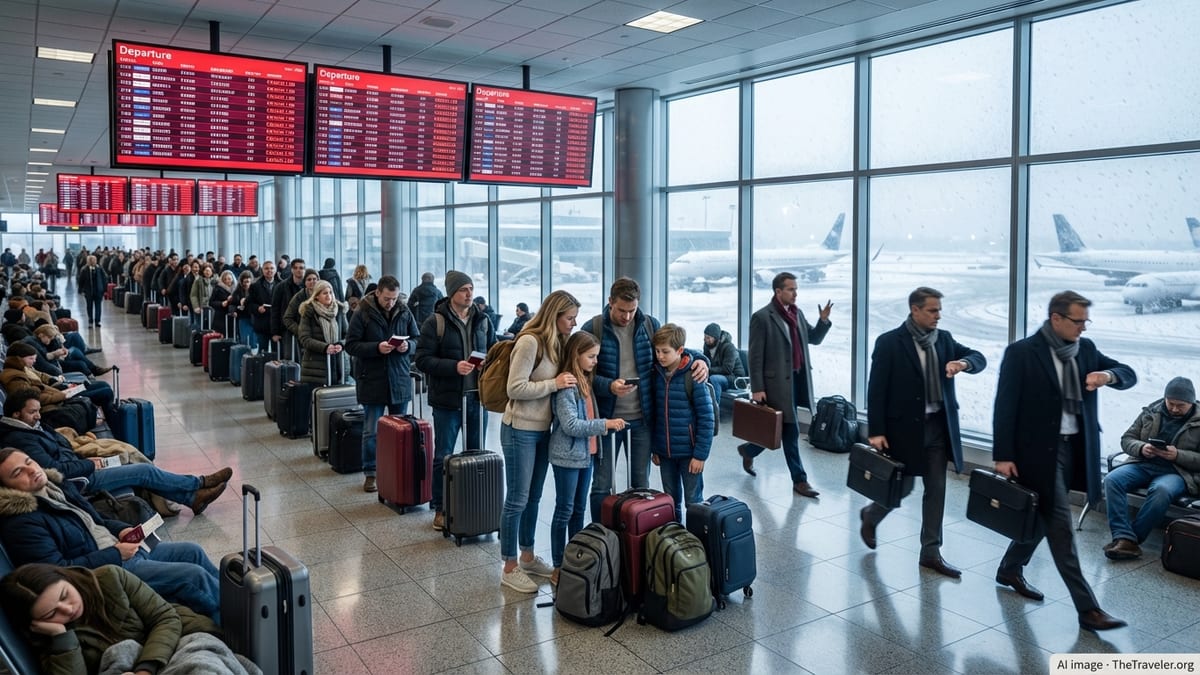
Hundreds of passengers were left stranded at Copenhagen Airport as a fresh wave of disruption caused 189 delays and 13 cancellations, snarling traffic on key routes to London, Amsterdam, Frankfurt and other major European hubs and affecting operations at carriers including SAS, Ryanair and KLM.
Get the latest news straight to your inbox!
Knock-on disruption across Europe’s busiest routes
Publicly available flight-tracking and industry data indicate that the latest disruption at Copenhagen Airport built through the day as delays accumulated on short-haul and medium-haul services. The 189 delayed flights and 13 cancellations translated into missed connections, long queues at transfer desks and crowded gate areas, particularly around banks of departures to London, Amsterdam and Frankfurt.
As Denmark’s main international gateway and a key hub for Scandinavia, Copenhagen Airport connects multiple daily services into London’s airports, Amsterdam Schiphol and Frankfurt. When outbound flights from Copenhagen depart late or are cancelled, aircraft and crews often arrive late into these hubs, creating a cascading effect on subsequent rotations and onward connections.
Reports from recent disruption days at the airport show a similar pattern, with an initially limited number of technical or operational problems quickly magnified by tight turnarounds and peak-hour congestion. Even relatively short delays of 30 to 60 minutes on morning departures can push aircraft and crew rosters out of position for the rest of the day, particularly on high-frequency routes linking major European hubs.
Travel monitoring services note that London, Amsterdam and Frankfurt have already been among Europe’s more delay-prone airports this year, meaning that extra disruption arriving from Copenhagen can tip stretched schedules into wider operational difficulty. Passengers connecting onward to long-haul destinations from these airports are often among the hardest hit when schedules begin to slip.
SAS, Ryanair, KLM and others hit by operational strain
The disruption has affected a broad mix of airlines using Copenhagen as either a primary hub or a key spoke in their European networks. Scandinavian Airlines, which operates one of its main bases at the airport, has faced pressure to rebook large numbers of connecting passengers on intra-European and Nordic routes whenever irregular operations occur.
Low-cost carriers such as Ryanair, which typically run tight schedules and high aircraft utilisation, are also vulnerable when rotations through congested airports like Copenhagen encounter unexpected delays. Industry analysis suggests that a single cancellation or severe delay on a short-haul rotation can ripple into multiple later services, particularly when there is limited slack in the system to absorb disruption.
KLM’s extensive connecting network through Amsterdam Schiphol has similarly been exposed during recent episodes of travel chaos in northern Europe. When flights between Copenhagen and Amsterdam run late or are cancelled, passengers may miss long-haul departures to North America, the Middle East or Asia, placing additional strain on rebooking systems and airport customer service facilities.
Other European and long-haul carriers operating into Copenhagen have also been caught up in the disruption as they rely on timely feeder traffic from regional Scandinavian routes. When those feeder flights arrive late or not at all, airlines must accommodate misconnected customers, rearrange baggage flows and adjust crew duty times, all of which adds to the operational complexity on already busy summer schedules.
Recent pattern of delays raises concern ahead of peak season
The latest wave of 189 delays and 13 cancellations follows a series of difficult days at Copenhagen Airport in recent weeks. Earlier incidents linked to operational issues and baggage-handling problems have already tested the resilience of airlines and ground-handling services, and have highlighted how quickly schedules can unravel under strain.
Across Europe, airports including Amsterdam Schiphol, Frankfurt, London Heathrow and Gatwick have all experienced notable bouts of disruption this year, fed by a combination of high passenger volumes, occasional staffing constraints and infrastructure challenges. The situation at Copenhagen fits into this broader pattern of pressure on Europe’s major hubs at the start of the busy summer period.
Travel industry observers note that the recurrence of disruption at multiple northern European hubs may erode passenger confidence if irregular operations continue into the main holiday weeks. Travellers with complex itineraries involving tight connections through hubs like Copenhagen or Amsterdam are seen as particularly exposed to knock-on effects when a single part of the network encounters problems.
Some passenger-rights organisations and travel commentators suggest that the latest events underline the need for more operational slack, longer planned connection times and clearer contingency planning between airlines, ground handlers and airport operators. However, they also acknowledge the commercial pressures on carriers to maximise aircraft utilisation and maintain competitive schedules.
What stranded passengers are experiencing on the ground
For travellers caught in the disruption at Copenhagen Airport, the impact has been immediate and visible. Reports from recent episodes describe long queues at airline service desks, crowded seating areas near departure gates and noticeable congestion at baggage claim, especially when delayed arrivals coincide with staff shortages.
When flights are delayed or cancelled, passengers often face extended waits for updated information about new departure times or rebooking options. In some cases, travellers heading for London, Amsterdam or Frankfurt have had to choose between accepting significantly later connections or rerouting via alternative hubs, adding many hours to their total journey time.
Families starting holidays, business travellers with fixed meeting schedules and cruise passengers trying to reach onward departures are among those most affected when key European hubs become unreliable. Missed hotel reservations, rearranged ground transfers and lost sightseeing time are common consequences when irregular operations stretch across an entire day.
The situation can be particularly challenging for passengers with reduced mobility or for those travelling with young children, who may struggle with long periods of waiting in crowded terminal spaces. While many airports and airlines provide dedicated assistance services, these can also become overwhelmed during large-scale disruption.
Passenger rights and practical advice for upcoming trips
European air passenger protection rules provide a framework for assistance and, in some cases, financial compensation when flights are heavily delayed or cancelled. Travellers departing from or arriving into Copenhagen, or connecting onward to hubs like London, Amsterdam and Frankfurt, are generally covered by these regulations when flying with European carriers.
Under these rules, airlines are usually required to offer care and assistance during long delays, which can include meals, refreshments and access to communication. If an overnight stay becomes unavoidable, passengers may be entitled to hotel accommodation and transport between the airport and their lodging, depending on the specific circumstances of the disruption and the carrier’s obligations.
For upcoming trips through Copenhagen and other busy European hubs, travel experts commonly advise allowing longer connection times where possible, especially during peak travel periods. Passengers are also encouraged to monitor flight status closely via airline apps or airport information channels and to check in early for departures to reduce the risk of being denied boarding if flights are overbooked after disruptions.
Keeping receipts for unexpected expenses such as meals, ground transport or hotels can be helpful when seeking reimbursement or making insurance claims after severe delays or cancellations. Travellers are further advised to review the terms of their travel insurance policies to understand what coverage, if any, applies to disruption caused by operational issues, strikes or air traffic control problems.