

More news on this day
Icelandair, Austrian Airlines and Air Canada are contending with widespread schedule upheaval after a powerful late January 2026 winter storm battered North America and rippled across seven major hubs from Reykjavik to Vienna, Toronto, Montreal, Vancouver, Frankfurt and Munich.
Get the latest news straight to your inbox!
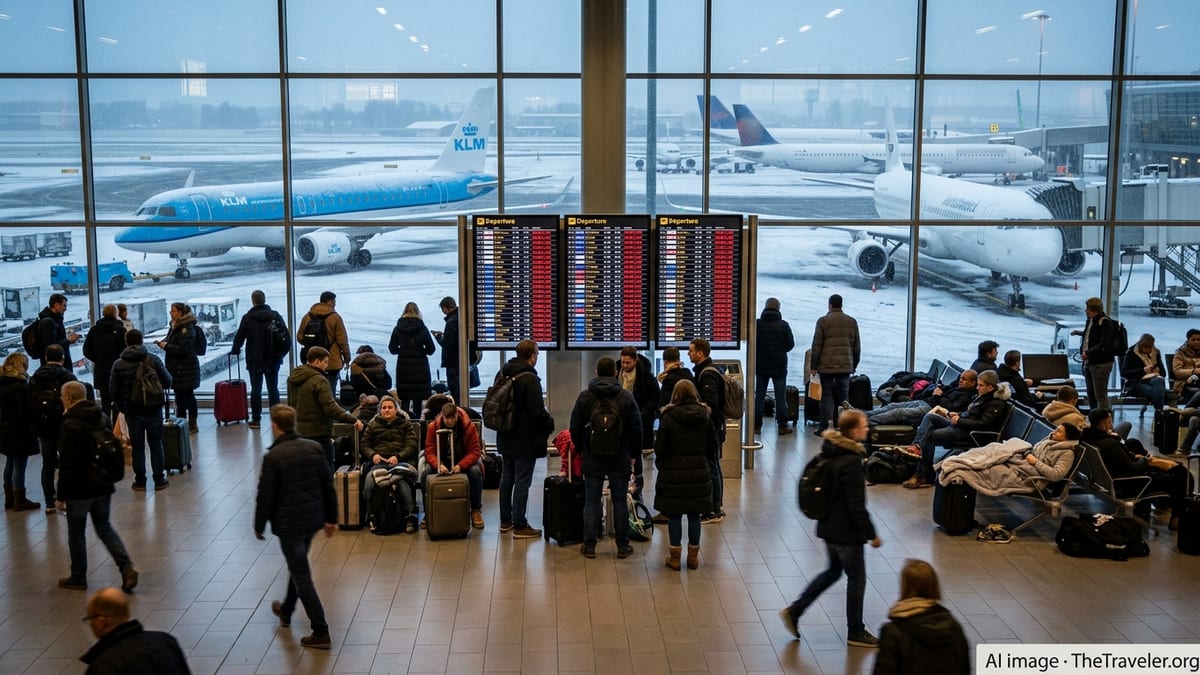
Storm Fern Turns Seven Hubs Into Stress Test for Winter Operations
The January 23 to 27, 2026 North American winter storm, widely referred to as Winter Storm Fern, brought heavy snow, ice and high winds to a broad swath of the continent, disrupting power supplies and grinding ground transport to a halt in several major cities. Publicly available meteorological records describe it as one of the most expansive systems of the 2025 to 2026 season, with impacts stretching from northern Mexico through the southern United States and into eastern Canada.
Toronto and Montreal were among the hardest-hit aviation centers, with historic snow totals and sub-zero temperatures complicating de-icing and runway-clearing operations. According to published coverage, the combination of visibility issues, ramp congestion and crew duty-time limits forced widespread cancellations and diversions at Toronto Pearson and Montreal Trudeau, two of Air Canada’s busiest hubs.
As North American schedules faltered, the effects quickly cascaded across the wider transatlantic network. Flights connecting via Reykjavik Keflavik, Vienna, Frankfurt and Munich faced rolling knock-on delays, missed connections and aircraft re-positioning challenges. The result was several days of sustained disruption across seven interlinked hubs that form core transfer points for Icelandair, Austrian Airlines and Air Canada during the winter season.
The storm arrived at a time when carriers had already shifted more capacity into winter long haul and leisure routes, a strategy that industry statements describe as central to growth plans for the 2025 to 2026 period. That left airlines with fuller aircraft and more complex connection banks to untangle once the weather cleared.
Icelandair Balances Transatlantic Cancellations With Network Focus
Icelandair’s hub at Reykjavik Keflavik serves as a mid-Atlantic bridge between North America and Europe, and its operation is particularly sensitive to disruptions at either end of the transatlantic corridor. During the late January storm, Icelandic media and travel forums reported that the carrier cancelled multiple flights between Keflavik and US gateways because of deteriorating conditions in North America and resulting airfield closures.
The airline’s public customer-care pages emphasize that severe weather and air traffic control restrictions fall under “extraordinary circumstances,” limiting compensation obligations while still requiring rerouting or refunds when flights are cancelled. The same material notes that automatic rebooking is not always possible when a large number of passengers are affected, which aligned with traveler accounts of crowded service desks and long hold times as the storm unfolded.
At the same time, operational data released by the company for early 2026 highlights a strategy of growing winter traffic through Reykjavik by building connecting flows rather than relying solely on summer tourism peaks. That focus on winter connectivity meant that cancellations on US routes quickly affected passengers bound for onward destinations in Europe, concentrating the disruption at Keflavik and amplifying the pressure on available replacement aircraft and crews.
In the weeks after the storm, online discussions and regulator decisions referenced cases where passengers pursued assistance and compensation for short-notice cancellations that were not directly tied to weather, including aircraft availability constraints. These cases underlined the thin operational margin between weather-related disruption and broader schedule fragility during the high-stakes winter season.
Austrian Airlines Manages Knock-On Effects at Vienna and Partner Hubs
While the worst of Storm Fern’s weather stayed on the far side of the Atlantic, Austrian Airlines still saw its Vienna hub tested by the ripple effects of long-haul disruptions. Vienna’s winter 2025 to 2026 schedule, outlined in airport and airline planning documents, featured expanded services and new long haul capacity, including the gradual introduction of Boeing 787 Dreamliners into the Austrian fleet.
These aircraft support Vienna’s role as a transfer point into Central and Eastern Europe, meaning that a delayed or cancelled arrival from North America can affect a web of onward regional departures. During the storm period, publicly available operational reports and timetable changes show multiple adjustments to Vienna-bound flights, as partners on both sides of the Atlantic resynchronized schedules to account for late aircraft and crew rotations.
Industry analysis from Vienna Airport’s investor and traffic outlook materials notes that airlines at the hub are operating against a backdrop of airspace restrictions, more complex routings and elevated fuel prices. These factors reduce schedule flexibility when major weather events strike, making it harder to insert recovery flights or maintain spare capacity.
Austrian has emphasized in its 2026 communications that it is preparing for future winters by modernizing its long haul fleet and optimizing its network structure. However, the events surrounding Storm Fern demonstrated that even well-prepared hubs remain vulnerable when multiple partners experience simultaneous disruption across different continents.
Air Canada Rebuilds Winter Schedule at Toronto, Montreal and Vancouver
As the primary carrier at Toronto Pearson, Montreal Trudeau and Vancouver International, Air Canada sat at the center of the winter storm disruption. Travel advisories and travel-news bulletins issued around January 23 to 27 describe flexible rebooking policies for passengers ticketed to travel through Toronto and Montreal on those dates, allowing changes free of charge within a defined window.
Separate travel advisories for vacation packages highlight a January 24 winter storm warning and direct customers to the airline’s daily operational outlook for real-time information on cancellations and delays. North American media coverage tallied thousands of flights cancelled across the region during the multi-day event, with Air Canada among the carriers forced to trim schedules and suspend certain rotations while ground operations coped with heavy snow and extreme cold.
Beyond the storm itself, Air Canada’s 2026 communications show that the carrier is simultaneously adjusting its broader network to grapple with high jet fuel costs and uneven demand patterns. Company statements and news reports detail earlier-than-planned suspensions of several US routes from Toronto, Montreal and Vancouver, as well as delayed starts for some winter leisure services from secondary Canadian cities.
Yet the airline is also expanding in other areas of its winter program, adding new long haul destinations and increasing service to select Latin American and European cities. This mix of targeted growth and tactical cuts suggests that the disruptions around Storm Fern occurred against a wider backdrop of strategic reshaping of the winter network, leaving some hubs more exposed to operational shocks than in previous years.
Passengers Confront a Patchwork of Rules and Recovery Options
The storm’s impact across seven interconnected hubs highlighted how differing regulatory regimes and airline policies shape the passenger experience during major disruptions. In Iceland and the European Union, compensation rules rooted in EU Regulation 261 provide a structured framework for payments and rerouting rights when cancellations and long delays occur, although extraordinary weather-related circumstances remain exempt from compensation.
In Canada, federal air passenger protection regulations also differentiate between delays within an airline’s control and those tied to safety or external factors such as weather. Air Canada’s publicly available guidance stresses that compensation applies only when disruptions are within its control and not required for safety, using weather-related cancellations as a clear example where financial redress is limited even as rebooking and care obligations continue.
Travel forums and social media posts from January and February 2026 capture frustration among passengers navigating this patchwork of rules across airlines and jurisdictions. Many travelers described rebookings that added long layovers in Frankfurt or Munich, or forced unexpected overnight stays in hub cities when connection banks unraveled.
Consumer advocates cited the winter 2026 storm as another reminder that travelers connecting across multiple carriers and regions should understand the protections available in each segment of their journey. The experiences at Reykjavik, Vienna, Toronto, Montreal, Vancouver, Frankfurt and Munich during Storm Fern underscored that even as airlines refine winter schedules and deploy newer aircraft, the combination of extreme weather, tight networks and high demand continues to make mid-winter travel particularly vulnerable to cascading disruption.