


More news on this day
Fresh investment in human capital and modern control systems on the Tanzania Zambia Railway Authority is moving from planning to construction, in a bid to lift the line’s reliability, safety and commercial performance along one of East and Southern Africa’s key freight corridors.
Get the latest news straight to your inbox!
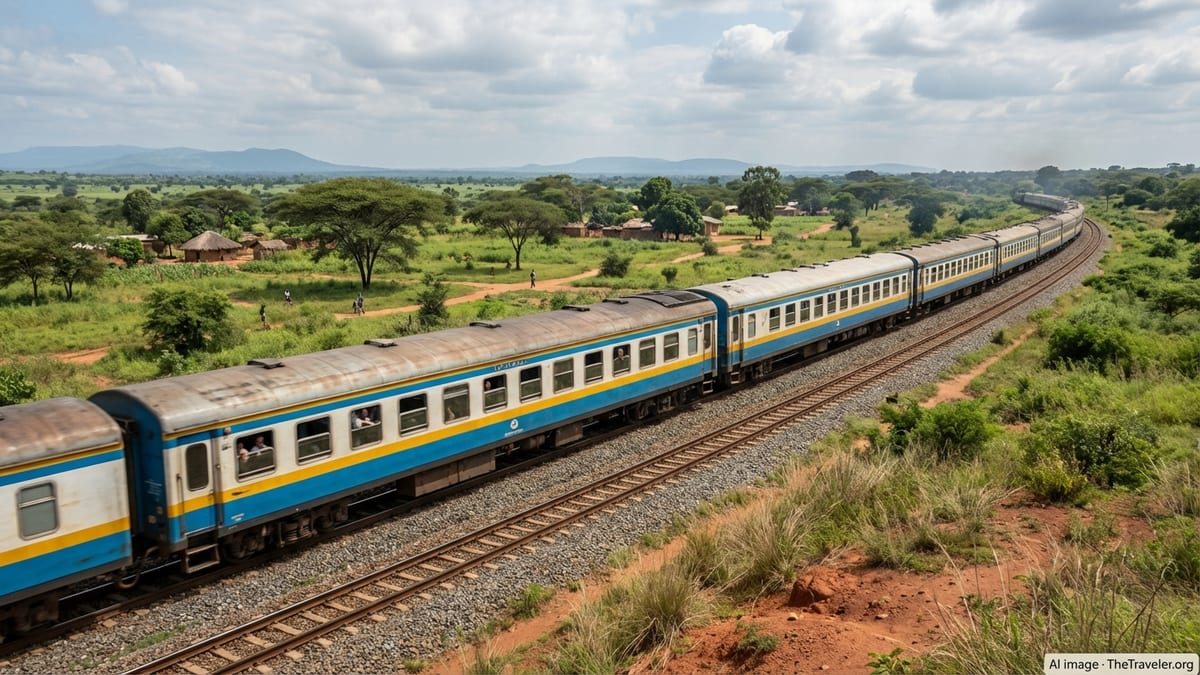
Groundbreaking marks shift from planning to execution
Construction has begun on a new training centre and operations control centre for the Tanzania Zambia Railway Authority in Dar es Salaam, marking a visible step in a multiyear revitalisation effort backed by China Civil Engineering Construction Corporation. Publicly available information indicates that the facilities are among the first major works under a wider programme valued at about 1.4 billion US dollars.
The projects are framed by TAZARA and partner announcements as signalling a transition from years of negotiations and technical studies to on-the-ground implementation. The railway, which links the Zambian town of Kapiri Mposhi with the port of Dar es Salaam over roughly 1,860 kilometres, has long struggled with ageing infrastructure, declining volumes and recurring funding shortfalls.
Recent coverage from regional outlets reports that project teams have now mobilised and that civil works are under way at a site in Dar es Salaam. The facilities are described as foundational building blocks for a safer, more reliable and more competitive corridor that can attract freight back from road transport and support regional trade.
The investments also feed into broader corridor plans highlighted in international financial and policy documents, which list the rehabilitation of TAZARA alongside other flagship transport projects aimed at improving connectivity between mineral-rich inland regions and coastal export gateways.
Training centre puts people at the core of revitalisation
The new TAZARA Training Centre is being promoted as a central pillar of the railway’s human-capital strategy. According to TAZARA’s own descriptions, the complex will cover more than two hectares and provide nearly 10,000 square metres of floor space, hosting laboratories, classrooms, offices and conference rooms designed for intensive technical and managerial instruction.
Existing information on TAZARA’s training activities shows that the authority already runs a long-established training centre in Mpika that offers programmes for locomotive drivers, station masters, permanent way staff, signalling and telecommunications technicians, and a range of business and management disciplines. The new facility in Dar es Salaam is intended to complement and expand this capacity, aligning staff skills with the modern signalling, communications and rolling-stock technologies due to be introduced under the revitalisation project.
Project documents and official statements from partner institutions emphasise objectives such as technology transfer, localisation of specialised skills and continuous professional development. The centre is expected to host both long and short courses, covering frontline operational roles alongside areas such as safety management, customer service and modern logistics practices.
Regional observers note that investing in people is particularly significant for TAZARA, which has been affected in the past by staff shortages, demotivation and constrained funding for training. By institutionalising structured learning and career development, the new centre is being positioned as a way to retain talent and restore operational discipline on a network that spans two countries and multiple regulatory environments.
Modern control centre aims to tighten operations and safety
Parallel to the training hub, TAZARA and its partners are developing a modern operations control centre that will serve as the central command point for train movements across the network. Descriptions released to the public highlight planned large-screen displays, integrated monitoring platforms, train dispatching communication systems and real-time information tools for managing traffic.
The facility is expected to consolidate functions that are currently dispersed, enabling network-wide planning of train paths, allocation of locomotives and wagons, and management of incidents from a single location. Analysts of rail operations note that such centralised control centres are associated globally with improved punctuality, better capacity utilisation and enhanced safety, particularly when combined with upgraded signalling and communications equipment.
Information carried by regional media and TAZARA’s own news channels suggests that the new control centre will be tailored to the authority’s mixed-traffic environment, which must balance freight trains carrying bulk commodities and fuel with cross-border passenger services. By improving situational awareness and standardising procedures, the investment in control systems is intended to reduce delays caused by manual coordination and to limit the risk of accidents on a line that passes through remote terrain.
Industry-focused research on rail safety and cyber security also underscores the growing importance of human factors within advanced control environments. Against this backdrop, the interplay between well-trained dispatchers, controllers and maintenance staff on one side, and sophisticated digital systems on the other, is seen as critical to achieving the performance gains targeted by the TAZARA programme.
Performance targets tied to wider corridor ambitions
The focus on people and control systems comes as Zambia and Tanzania seek to reposition TAZARA within a competitive regional transport landscape that includes new standard gauge projects and road corridors. International financial assessments and national planning documents frequently reference the railway’s potential role in lowering logistics costs for mining exports, agricultural produce and fuel imports.
The revitalisation package supported by China Civil Engineering Construction Corporation and related partners has been linked in public reports to a long-term concession framework, with investment earmarked for track rehabilitation, new locomotives and wagons, and modern communication and signalling technology. The new training and control facilities are being cast as enablers that can help translate this hardware-focused spending into measurable performance improvements.
Specific targets mentioned in official and media reports include higher annual freight volumes, better locomotive availability, improved safety records and more predictable passenger timetables. Achieving these goals is expected to require not only physical upgrades but also reforms in business processes, data-driven decision-making and customer engagement, all of which rely heavily on skilled personnel.
Policy analysts point out that TAZARA’s performance will have implications beyond the two shareholder governments. The corridor serves as an outlet to the sea for several landlocked countries in the region and competes with alternative routes through other ports. If the investments in people and control systems succeed in stabilising and then improving service levels, the railway could regain market share and support broader initiatives aimed at regional industrialisation and trade integration.
Balancing expectations with execution risks
Despite the positive signals, the scale and complexity of the TAZARA revitalisation programme mean that execution risks remain. Historical reviews and parliamentary reports from both shareholder countries have documented recurring challenges, including undercapitalisation, institutional constraints and difficulties in coordinating bi-national decision-making.
Project timelines for major infrastructure upgrades can also be affected by procurement hurdles, cost pressures and external economic conditions. Transport analysts observing TAZARA’s progress note that sustained commitment from all partners, transparent reporting on milestones and adaptive management of training and technology programmes will be important in translating the current momentum into long-term operational gains.
There is also a wider debate in the region over the balance between traditional metre-gauge rehabilitation and investment in new standard gauge corridors. For TAZARA, proponents of the current plan argue that targeted spending on people, control systems and core infrastructure can deliver relatively quick improvements in safety and reliability while longer-term questions about gauge conversion and network integration continue to be examined.
For now, the sight of earthmoving equipment at the Dar es Salaam site and the detailed plans for expanded training and control capabilities are being interpreted as indicators that the railway’s long-discussed transformation has entered a more tangible phase. How effectively these investments in people and systems are embedded into daily operations will likely determine whether TAZARA’s performance can match the ambitions attached to its latest revitalisation drive.