


More news on this day
A witness caught in a violent train collision near Bedford has described scenes of panic and confusion as passengers were “flung” into seats and aisles while people screamed and cried around them.
Get the latest news straight to your inbox!
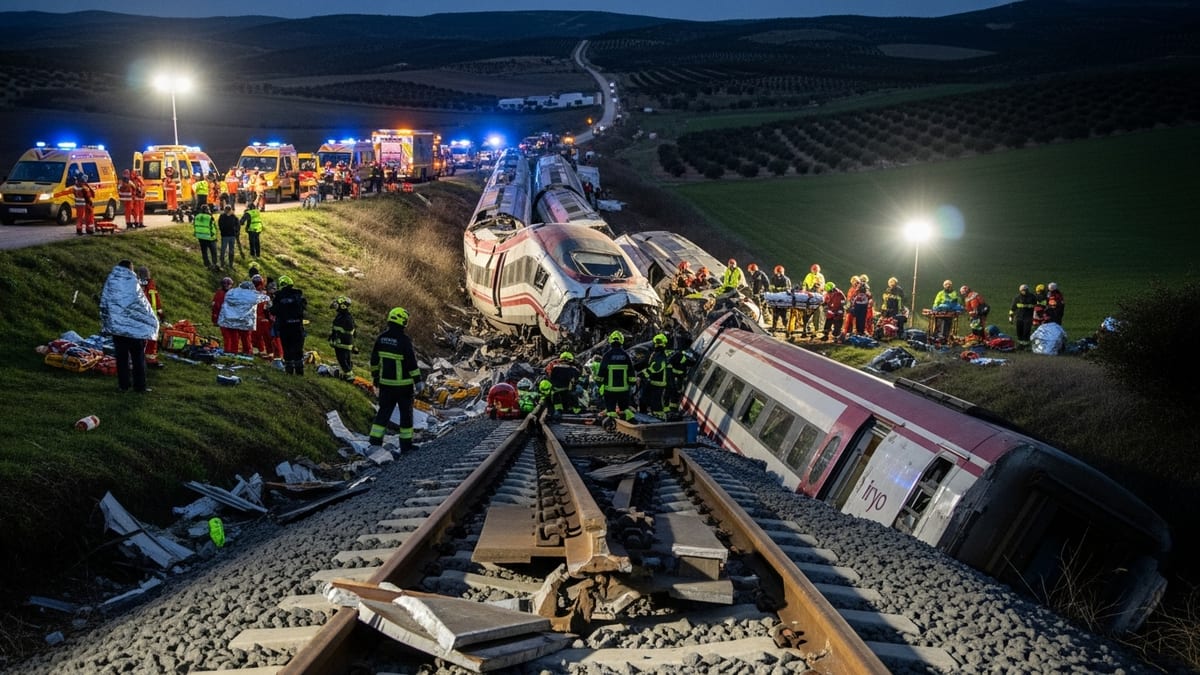
Sudden impact as trains collide outside Bedford
Reports from the scene indicate that a passenger service travelling on a busy route near Bedford collided with another train, leaving carriages jolted off line and passengers thrown from their seats. The incident occurred on a key north south corridor, causing an abrupt halt to services and triggering a large emergency response in the surrounding area.
Witness accounts gathered in early coverage describe how an ordinary journey turned into a chaotic few seconds of noise, movement and confusion. One passenger recalled feeling the train lurch before being pitched sideways into a nearby seat, as luggage and personal items flew through the air. Others described a deafening screech of metal and a shower of shattered glass when the trains made contact.
According to publicly available information, several people on board were injured, with some treated at the scene and others taken to nearby hospitals for further assessment. Early indications suggest that many of the injuries were caused by the force of the impact and by passengers being hurled forward inside the carriages.
Rail operators activated emergency procedures, with staff moving through the affected cars to check on passengers, calm those in distress and direct people away from damaged areas. Initial coverage notes that crew members worked with first responders to identify the most seriously injured passengers and coordinate their evacuation.
Witnesses recall screams, flying luggage and confusion
Those on board have described an atmosphere of shock and fear in the minutes after the collision. Several early reports quote passengers speaking of people screaming and crying as they tried to understand what had happened and whether further danger was imminent.
Travellers reported that the sudden jolt flung some people into the backs of seats or against tables, while standing passengers were knocked to the floor. Overhead racks were shaken hard enough that bags, coats and loose items crashed down, adding to the sense of chaos in already crowded aisles.
Accounts shared with local and national outlets speak of parents trying to reach children across the carriage and of strangers helping each other to stand or to retrieve belongings from under twisted seat frames. Some passengers described seeing small cuts from glass and bruises from the impact, while others spoke of fellow travellers who appeared to be more seriously hurt and were asked to remain still until paramedics arrived.
Outside the train, images and descriptions suggest that emergency lights from ambulances, police vehicles and fire crews quickly surrounded the line, casting a harsh glare through broken windows as responders moved along the track to reach each carriage in turn.
Emergency response and investigation underway
Publicly available information shows that a large multi agency response was launched within minutes of the first calls. Fire and rescue teams reportedly accessed the line on foot, carrying medical equipment along the ballast to reach passengers still inside the carriages, while paramedics established triage points close to the track.
Rail services through the Bedford area were suspended or heavily reduced, with rail operators advising passengers to delay travel or use alternative routes. Some trains were terminated short of their usual destinations, while others were diverted, creating delays across a wider section of the network.
Specialist rail investigators have begun examining both trains and the track layout near the point of impact. Early coverage suggests that they are expected to look closely at signalling records, train data recorders and any reports of technical faults leading up to the collision. Investigators are also likely to review radio communications between crews and control centres to piece together the sequence of events.
Rail operators have issued initial public statements acknowledging the disruption and expressing concern for those affected, while urging passengers who were on the trains to contact customer support lines if they require assistance or wish to provide information about their experience.
Disruption for travellers and local community
The crash has caused significant disruption to travel for commuters, long distance passengers and residents in and around Bedford. Trains that normally pass through at regular intervals have been cancelled or rerouted, affecting journeys across multiple regions and leaving some stations facing crowded platforms and extended waiting times.
Replacement road transport has been organised on some sections of the route, but reports indicate that congestion on local roads and the complexity of moving large numbers of passengers by bus have extended journey times considerably. Travellers have voiced frustration at the delays while also expressing concern for those injured in the collision.
Local residents have described seeing helicopters overhead and lines of emergency vehicles in the hours following the crash, bringing an unusual level of activity to normally quiet areas near the railway. Some community facilities have reportedly been used to support the response, including providing rest areas for passengers who were taken off the trains and needed a safe place to wait before continuing their journeys.
Businesses that rely on rail traffic, including those near Bedford station, are expected to feel the short term impact as footfall drops during the disruption, while hotels and guesthouses may see a temporary rise in demand from stranded travellers needing overnight accommodation.
Questions over safety systems and rail resilience
As the investigation progresses, attention is turning to the performance of safety systems designed to prevent trains from coming into conflict on busy lines. Previous rail incidents in the United Kingdom have led to the introduction and gradual expansion of technology aimed at enforcing speed limits, monitoring signals and automatically stopping trains in some circumstances.
According to technical commentary in early reporting, investigators are likely to examine whether signalling equipment and train borne safety systems operated as intended at the time of the collision, and whether any known issues had been reported on this stretch of line in recent weeks. They may also look at the spacing of signals, the speed profile on approach to Bedford and the visibility of lineside equipment to the crews involved.
Rail industry observers note that serious crashes remain rare events on the modern network, but that even non fatal collisions can have lasting consequences for passengers, staff and local communities. The shock described by those on board near Bedford underscores how quickly a routine journey can change, and how critical it is that emergency plans, communication systems and training work effectively under sudden pressure.
In the coming days, additional details about the sequence of events, the condition of the injured and any interim safety recommendations are expected to emerge through public statements and official updates. For the passengers who recall being flung into seats as fellow travellers screamed and cried around them, the focus now is likely to be on recovery, support and answers about how such a collision could occur on a busy main line.