


More news on this day
North Texas travelers faced significant disruption on Juneteenth as strong storms sweeping across the Dallas area triggered more than 400 combined flight cancellations at Dallas Fort Worth International Airport and Dallas Love Field, stranding passengers and compressing already busy summer schedules.
Get the latest news straight to your inbox!
Hundreds of Flights Wiped From Juneteenth Schedules
Publicly available flight tracking data and local media coverage indicate that airlines operating at Dallas Fort Worth International Airport and Dallas Love Field canceled more than 400 flights in total as storms developed over North Texas on June 19. The disruption affected both inbound and outbound services, with ripple effects across domestic and some international routes.
At DFW, the nation’s second-busiest airport by passenger volume, the majority of cancellations involved mainline and regional flights operated by the airport’s largest tenant and its affiliates. Dallas Love Field, dominated by a single major carrier and its partners, reported a smaller but still substantial number of cancellations and delays as storm cells moved across the metropolitan area and into key approach and departure corridors.
The cancellations intensified through the afternoon and evening as additional thunderstorms formed, prompting ground holds and flow-control measures that slowed operations to a crawl. Flights that did depart often left significantly behind schedule as crews, aircraft and gates fell out of position.
By late evening, data compiled from flight status dashboards showed that North Texas accounted for a disproportionate share of weather-related cancellations nationwide for the Juneteenth holiday period, underscoring the region’s vulnerability to early-summer storm systems.
Stormy Skies Collide With a Peak Travel Holiday
The timing of the storms created a difficult combination for travelers. Juneteenth, observed on June 19 as a federal holiday, has rapidly grown into one of the busier long weekends of the early summer travel season. Airports serving major metropolitan areas like Dallas typically see heavier passenger loads as residents take advantage of the extra day off for short trips and family visits.
In North Texas, that demand coincided with a classic warm-season storm pattern, with high humidity and unstable air supporting clusters of strong thunderstorms. Radar imagery and regional weather discussions showed storm cells repeatedly building and drifting across the Dallas Fort Worth area, at times sitting directly over critical arrival and departure paths.
Convective storms pose particular challenges for air traffic because of lightning, turbulence, wind shear and the risk of hail. Even when a storm does not directly hit an airport, it can close sections of surrounding airspace and force aircraft to reroute, leading to extended flying times and additional congestion. On Juneteenth, those constraints translated into a wave of schedule adjustments and cancellations that left terminals crowded well into the night.
The storms also arrived amid a broader pattern of severe weather affecting parts of the South and central United States this week, further limiting options for rerouting aircraft and passengers through alternative hubs.
Long Lines, Limited Rebooking Options for Stranded Passengers
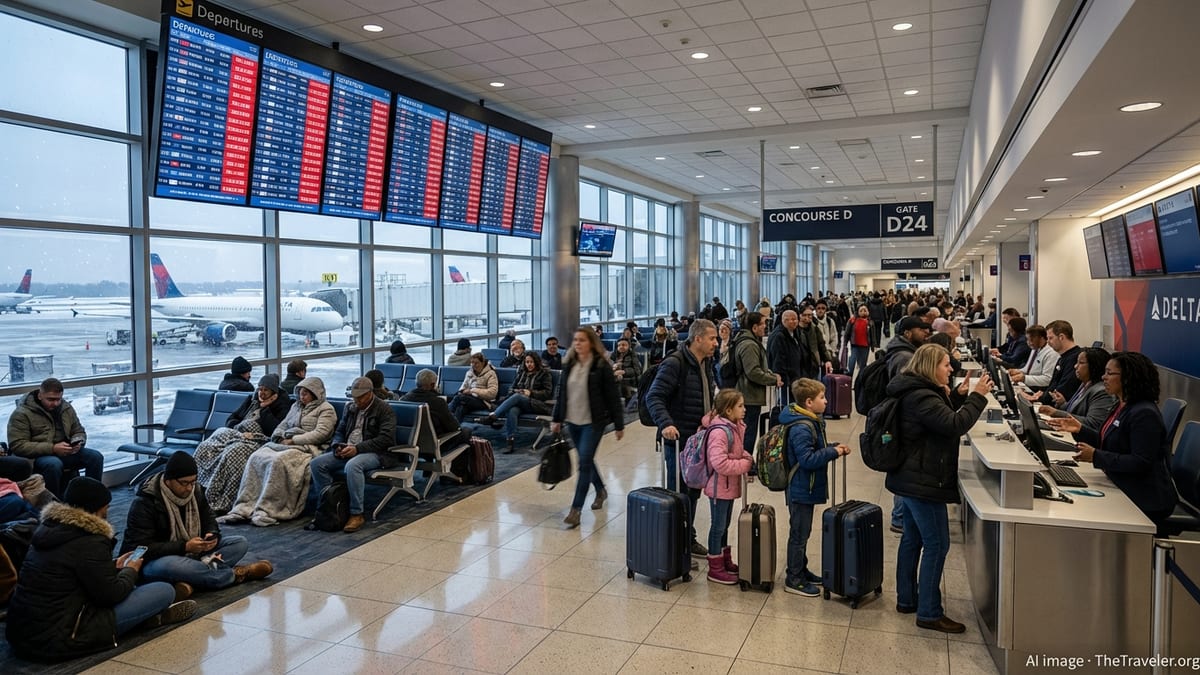
The operational impact at DFW and Love Field quickly spilled into the terminals, where travelers encountered long lines at ticket counters and customer service desks as they sought rebooking options. Social media posts from passengers throughout the day described extended waits, multiple rebookings and difficulty finding available seats on later flights as airlines worked through backlogs.
Because the disruptions were largely attributed to weather, publicly posted policies suggest that most carriers did not offer hotel vouchers or compensation, even for travelers facing overnight delays. Instead, airlines focused on accommodating customers on the next available flights, waiving certain change fees and fare differences where flexible rebooking policies had been activated.
For some travelers, the cancellations resulted in missed holiday gatherings and events, while others opted to rent cars and drive to nearby destinations rather than wait out the storm-induced gridlock. With many flights already near capacity for the holiday period, rebooking in some cases required multi-stop itineraries or travel on later dates.
Observers noted that the cascading effect of storms earlier in June had already strained airline operations at DFW on several days this month, leaving little slack in schedules when another round of severe weather arrived on a major holiday.
Airlines and Airports Emphasize Safety Amid Operational Strain
Public communications from carriers serving North Texas highlighted safety as the overriding priority, with weather-related cancellations framed as necessary to avoid operating flights through hazardous conditions. Industry guidance generally notes that strong thunderstorms around a hub airport can require rapid adjustments to arrival and departure rates, often triggering preemptive cancellations to prevent more severe congestion later in the day.
At DFW, a complex runway and taxiway system supports one of the highest-density operations in the country during normal conditions. When thunderstorms intersect that system, air traffic managers must quickly reduce flow to maintain safe separation between aircraft, which can force airlines to significantly trim their schedules. Dallas Love Field, with fewer runways and a more constrained footprint, is similarly sensitive to crosswinds, lightning in the vicinity and low visibility.
The Juneteenth disruptions also came against the backdrop of ongoing efforts by airlines to balance strong summer demand with finite aircraft and crew resources. Analysts have noted that when a large number of flights is canceled in a short period, it can take days to fully restore normal operations as aircraft and crews are repositioned and passengers are reaccommodated.
While storms are common across North Texas in late spring and early summer, the scale of the Juneteenth cancellations underscored how quickly weather can upend travel plans across one of the country’s key aviation hubs, particularly when it coincides with a growing national holiday.
What Travelers Can Expect in the Days Ahead
Industry observers expect some lingering disruption in the North Texas air travel network following the Juneteenth storms, as airlines work to clear backlogs and reposition aircraft. Early-morning departures on the day after large cancellation events often run close to schedule, but delays can reemerge later in the day as thunderstorms redevelop or as residual congestion builds at busy hubs.
Travel experts monitoring the situation recommend that passengers with upcoming flights into or out of DFW and Love Field closely track their flight status, arrive early at the airport and be prepared for schedule changes when storm chances are in the forecast. Flexible travel plans, including willingness to accept alternative routings or nearby airports, may improve the odds of reaching a destination on the planned day of travel during unsettled weather patterns.
North Texas airports have invested in improved communication tools, from mobile apps to in-terminal messaging, which can help travelers respond more quickly when cancellations or gate changes occur. However, Juneteenth’s storm-related disruptions illustrate the limits of technology when severe weather significantly reduces the number of flights that can operate safely.
As the summer storm season continues, the Juneteenth cancellation wave at DFW and Love Field serves as a reminder that even short-lived thunderstorms can have outsize effects on air travel through a region that plays a central role in the national aviation system.