


More news on this day
Hungary’s Wizz Air is set to become the first European ultra low cost airline to equip its entire fleet with Starlink satellite Wi-Fi from 2027, signaling a major shift in how budget travelers stay connected in the air.
Get the latest news straight to your inbox!
Hungarian Carrier Puts Connectivity at the Heart of Low Cost Travel
The Budapest based airline has confirmed plans to introduce Starlink connectivity progressively across its Airbus fleet from 2027, with the goal of achieving full coverage once installations are complete. Publicly available information indicates that Wizz Air will use the high bandwidth, low latency system to bring in-flight internet to routes spanning its growing Central and Eastern European network and bases in Western Europe and the Middle East.
The decision positions Hungary at the center of a new phase in European budget travel, where digital access becomes part of the value proposition rather than a premium extra reserved for legacy carriers. For a company built around an ultra low cost model, the move suggests that connectivity is now seen as essential infrastructure that can coexist with strict cost discipline.
Industry data shows that Wizz Air has expanded rapidly in recent years, serving tens of millions of passengers annually and operating one of Europe’s youngest fleets. Its decision to adopt Starlink across that fleet gives the satellite provider a significant foothold in the continent’s price sensitive leisure and migrant worker markets, where passengers often rely heavily on messaging apps and social platforms to stay in touch while away from home.
While pricing and access models have not yet been fully detailed, early reports suggest the airline is exploring options that keep Wi-Fi costs in line with its broader low fare strategy. Observers note that any offer perceived as simple, predictable, and relatively affordable could quickly become a differentiator in a crowded market.
Starlink Brings High-Speed Satellite Internet to the Budget Cabin
Starlink, operated by SpaceX, uses a large constellation of low Earth orbit satellites to deliver broadband connectivity with lower latency than many traditional geostationary systems. Aviation analysts say this architecture is particularly attractive for airlines seeking to offer streaming capable connections and fast messaging on shorter European sectors where time in the air is limited.
According to published coverage, Wizz Air joins a small group of global carriers that have already committed to Starlink for in-flight services, including operators in North America and Asia-Pacific. By bringing the technology into the ultra low cost segment in Europe, the Hungarian airline is helping to push satellite connectivity beyond transcontinental business travel into the mainstream of budget tourism.
Technical briefings indicate that Starlink’s aviation terminals are designed to be compact and aerodynamic, enabling installation on single-aisle aircraft without significant impact on fuel burn. For airlines that operate high frequency point-to-point networks, such as Wizz Air, that balance between performance and efficiency is considered crucial.
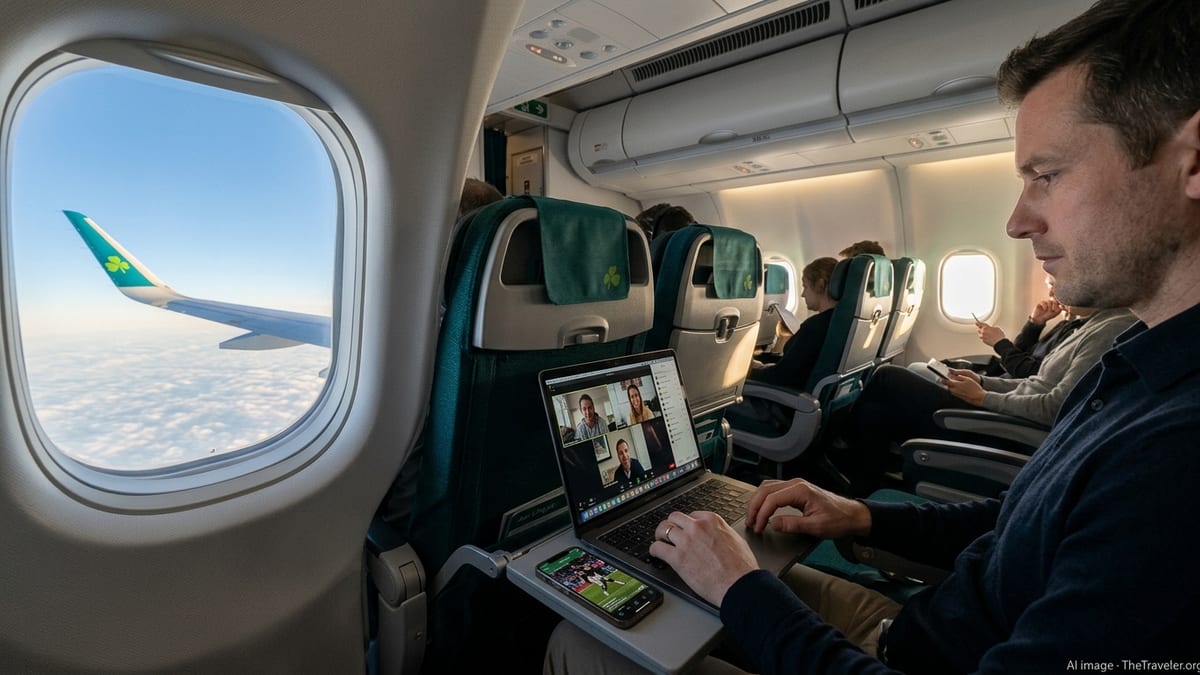
For passengers, the practical impact is expected to be the ability to stream entertainment, work on cloud-based documents, or maintain uninterrupted messaging and social media access throughout most of the flight. Travel commentators point out that this could change how travelers plan their time in transit, especially on busy city pairs where flights increasingly supplement traditional rail and coach options.
Ryanair and easyJet Hold Back as Cost Debate Intensifies
The announcement highlights a growing divide among Europe’s largest low cost players. Reports from European business media indicate that rivals Ryanair and easyJet have so far remained cautious about widespread Wi-Fi rollouts, citing concerns over installation costs, ongoing bandwidth fees, and the risk that passengers may be unwilling to pay enough to justify the investment.
For years, many budget airlines have argued that most short haul customers prefer lower base fares over additional onboard amenities. The emerging connectivity landscape is now testing that assumption, as travelers bring more devices on board and increasingly expect digital continuity across journeys.
By leaning into satellite Wi-Fi, Wizz Air is effectively wagering that the marketing and loyalty benefits of always-on connectivity will outweigh the financial and operational complexity. Aviation analysts suggest that if uptake proves strong, competitive pressures could push other low cost carriers to reconsider their stance, much as they did with allocated seating and flexible fare bundles.
Some sector observers also view the move as part of a broader trend in which Central and Eastern European hubs, from Budapest to Warsaw, are becoming test beds for new airline business strategies. In this reading, Hungary’s flagship budget carrier is not just following global connectivity trends but attempting to shape the expectations of Europe’s most price sensitive travelers.
What Starlink Wi-Fi Could Mean for Passenger Experience
For travelers, the most immediate change is likely to be a shift in what is considered standard on a low cost ticket. If Wizz Air succeeds in offering reliable, high speed Wi-Fi, even at a modest surcharge, passengers could start to view offline flights as an outdated inconvenience rather than a reasonable compromise for a cheaper fare.
Travel technology commentators suggest that always-on connectivity may alter in-flight behavior, with more passengers choosing to work, attend virtual meetings, or manage bookings and transfers in real time. This, in turn, could influence airport dwell times, ancillary sales patterns, and how travelers evaluate different carriers when planning complex itineraries.
From a tourism perspective, better connectivity can also enhance the overall trip experience. Destination marketing content, language tools, and real-time local recommendations become easier to access while still in the air, potentially encouraging more spontaneous spending on arrival. For Hungary and other markets heavily served by Wizz Air, that could translate into incremental gains for local hospitality and attractions.
However, passenger advocates note that the benefits will depend on transparent pricing, robust speeds during peak demand, and clear policies around data privacy. In the budget segment, where travelers are highly sensitive to perceived add-on charges, poorly communicated or inconsistent Wi-Fi offerings could quickly damage trust.
Competitive and Regulatory Questions Ahead
While the Wizz Air Starlink partnership has been broadly framed as a technological milestone, it also raises questions about competition, infrastructure resilience, and regulation. European regulators have in recent years taken a closer look at how airlines market ancillary services, including connectivity, and may extend that scrutiny as satellite Wi-Fi becomes more common.
Industry lawyers point out that cross-border data protection rules and cybersecurity expectations will also apply once passengers begin routing more personal and financial information through airborne networks. As a result, airlines integrating high speed satellite links are expected to work closely with suppliers to demonstrate compliance and maintain robust safeguards.
On the competitive front, Wizz Air’s decision could accelerate timelines for other European carriers that have been evaluating Starlink or rival satellite platforms. If early deployments prove operationally reliable and commercially viable, aviation analysts anticipate a wave of announcements from both traditional network airlines and remaining low cost holdouts.
The next phase of Europe’s budget travel landscape may therefore be shaped as much by connectivity strategies as by aircraft orders or airport expansions. With Hungary’s largest airline now firmly aligned with Starlink, the offline era of ultra low cost flying in the region appears to be entering its final chapter.