


More news on this day
Arriving passengers at Copenhagen Airport faced significant delays in receiving their checked luggage on Friday after baggage handlers employed by ground handling firm Aviator Airport Alliance staged a sudden work stoppage, disrupting unloading operations for multiple flights.
Get the latest news straight to your inbox!
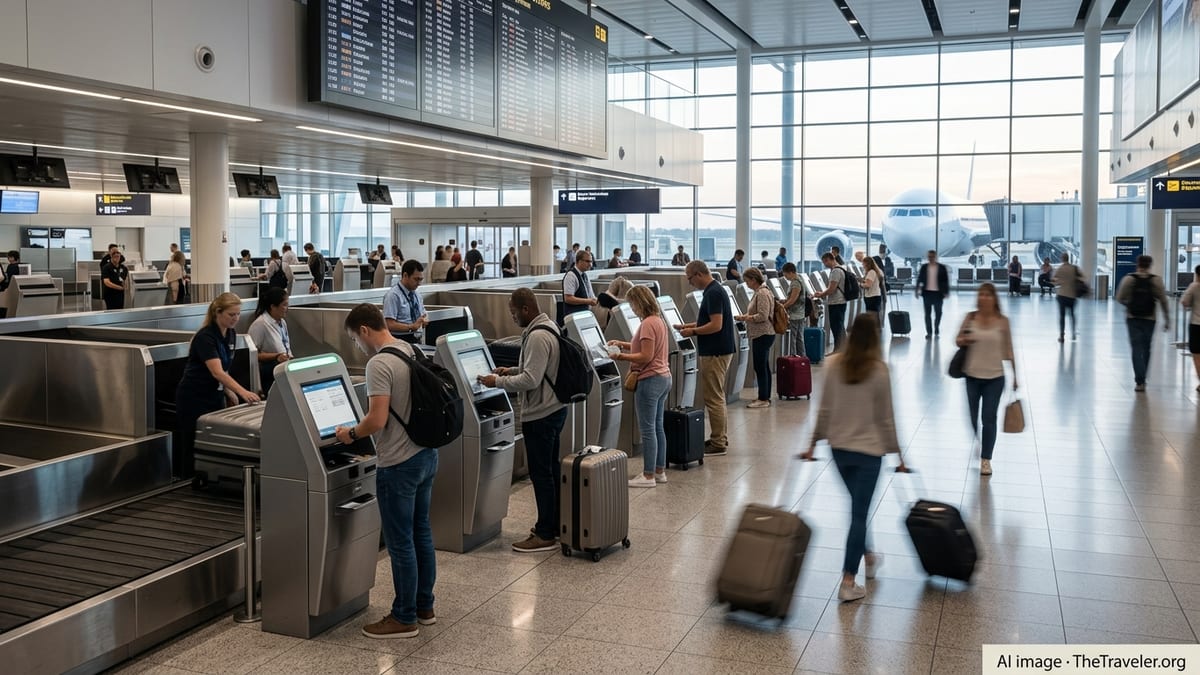
Unloading operations halted after afternoon walkout
According to published coverage from Danish and aviation outlets, the disruption began around 17:00 local time on June 12, when baggage handlers working for Aviator Airport Alliance left their posts to attend a meeting. The stoppage affected aircraft for which Aviator is responsible at Copenhagen Airport, one of northern Europe’s busiest hubs.
Publicly available information indicates that the walkout immediately slowed or halted the unloading of arriving aircraft, leaving containers and baggage still on the tarmac while passengers waited at the carousels inside the terminal. The issue was confined to ground handling activities, and there were no early signs of widespread flight cancellations directly linked to the action.
Reports indicate that the airport did not initially publish a clear estimate for when full baggage operations would resume. The absence of a precise timeline prompted airlines and handling agents to prepare for extended waits and to adjust staffing in arrival halls to manage passenger queries.
Coverage in aviation industry media describes the stoppage as temporary but highly disruptive, particularly for evening arrivals, when long-haul and intra-European flights converge and baggage volumes are typically at their peak.
Extended waits and stranded bags for arriving passengers
Travelers landing in Copenhagen during the work stoppage encountered longer than usual waits at baggage reclaim, with some passengers reportedly advised to remain in the reclaim area until their luggage could be delivered to the belt. Publicly available guidance suggested that those unable to wait should make arrangements directly at Aviator’s service desks before leaving the airport.
Industry reports note that delays were concentrated on flights handled by Aviator, while other ground handling providers at the airport appeared to continue operating normally. This created a mixed picture in the arrivals hall, with some carousels functioning close to schedule and others experiencing substantial backlogs.
The situation at Copenhagen Airport unfolded against a broader backdrop of traveler frustration about baggage reliability in Europe, where staffing and infrastructure issues have periodically led to bottlenecks. Earlier in the year, the airport had already worked through a separate episode of baggage disruption linked to technical challenges in its sorting system, and passengers arriving on June 12 faced renewed uncertainty about when their bags would appear.
For passengers with onward rail or air connections, the lack of predictability around baggage delivery times heightened concerns over missed links and the risk of bags becoming separated from travelers once more complex itineraries were involved.
Airport and handler responses focus on restoring flow
Publicly available information from the airport and industry channels shows that the immediate focus on Friday evening was on encouraging a return to work and clearing the mounting backlog of luggage. The expectation expressed in early reports was that baggage handlers would resume activities as soon as their meeting concluded, allowing operations to stabilize over the course of the evening.
Handling agents were reported to be working on contingency plans to move luggage off stands as quickly as possible once the stoppage ended. These efforts typically involve prioritizing bags from aircraft that have been waiting longest as well as luggage belonging to transfer passengers, whose onward flights may depart before local travelers leave the terminal.
Observers of airport operations noted that even after staff resumed work, it could take several hours for baggage flows to normalize. Once a backlog is created on the apron and in the sorting system, belts and trolleys must cycle through accumulated loads, and missing-baggage reports can temporarily spike as travelers choose to leave the airport rather than wait.
Travel industry commentary also pointed out that recent passenger growth at Copenhagen Airport has put pressure on ground handling capacity. Financial and operational reports show handling revenues and volumes rising alongside traffic, leaving limited room for unexpected stoppages before visible impacts emerge in the terminal.
Context of wider European baggage and labour pressures
The incident at Copenhagen Airport fits into a wider pattern of baggage and ground handling strain across European aviation. Network performance reports compiled in recent months show that overall flight activity and passenger numbers have increased compared with the previous year, while staffing and infrastructure at some airports have struggled to keep pace.
Labour disputes and short-notice meetings among ground handling staff have been reported at several major hubs, where workers have raised concerns over workload, safety, and pay. In some cases, these disputes have led to limited stoppages similar to the one seen in Copenhagen, primarily affecting baggage and ramp services rather than air traffic control or security screening.
Analysts following the industry note that baggage disruptions can damage passenger confidence even when flights operate more or less on time. Reports from earlier disruptions at Copenhagen and other airports showed thousands of unaccompanied bags accumulating in storage areas, sometimes taking days to reunite with their owners, and sparking criticism from travelers and consumer groups.
Published data from European aviation bodies also indicate that while air traffic management delays have fluctuated, airport-related factors such as ground handling and weather continue to play a significant role in overall delay statistics, underscoring the importance of stable staffing and resilient baggage systems.
Advice for travelers transiting Copenhagen Airport
In light of the June 12 work stoppage, travel experts and consumer organizations generally advise passengers to allow extra time for connections involving checked luggage at busy hubs such as Copenhagen. Guidance commonly includes considering longer layovers, packing essential items in carry-on bags, and monitoring airline notifications closely in the hours before departure and after arrival.
Passengers whose bags are delayed are typically encouraged to file a missing baggage report before leaving the airport and to keep boarding passes and baggage tags available. Publicly available information from airlines and handling agents explains that once a report is logged, bags can often be delivered to a passenger’s accommodation address, avoiding the need to return to the airport.
For travelers due to arrive in Copenhagen in the immediate aftermath of the stoppage, airlines and ground handlers may need several hours to clear residual delays. While the June 12 action was described in local coverage as limited in duration, the knock-on effects on baggage delivery times are likely to be felt across the evening arrival peak and potentially into the night.
More broadly, the episode highlights the sensitivity of hub airports to even short interruptions in ground handling. With passenger numbers trending upward and infrastructure operating close to capacity at key times of day, similar work stoppages can quickly translate into visible queues, crowded reclaim halls, and longer waits at the end of a journey.