


For thousands of Wyndham Vacation Resorts Shawnee Village owners, recent closure announcements have turned a familiar Pocono tradition into a source of uncertainty. With Club Wyndham confirming that Shawnee Village is among a group of “legacy” resorts slated for exit and sale, many owners are asking the same questions: What happens to my deed or points, my maintenance fees, and my ability to keep vacationing in the Poconos? This guide walks through what the closure typically means in practice, using real-world scenarios to help you navigate the months ahead.
Get the latest updates straight to your inbox!
What Is Actually Closing at Shawnee Village?
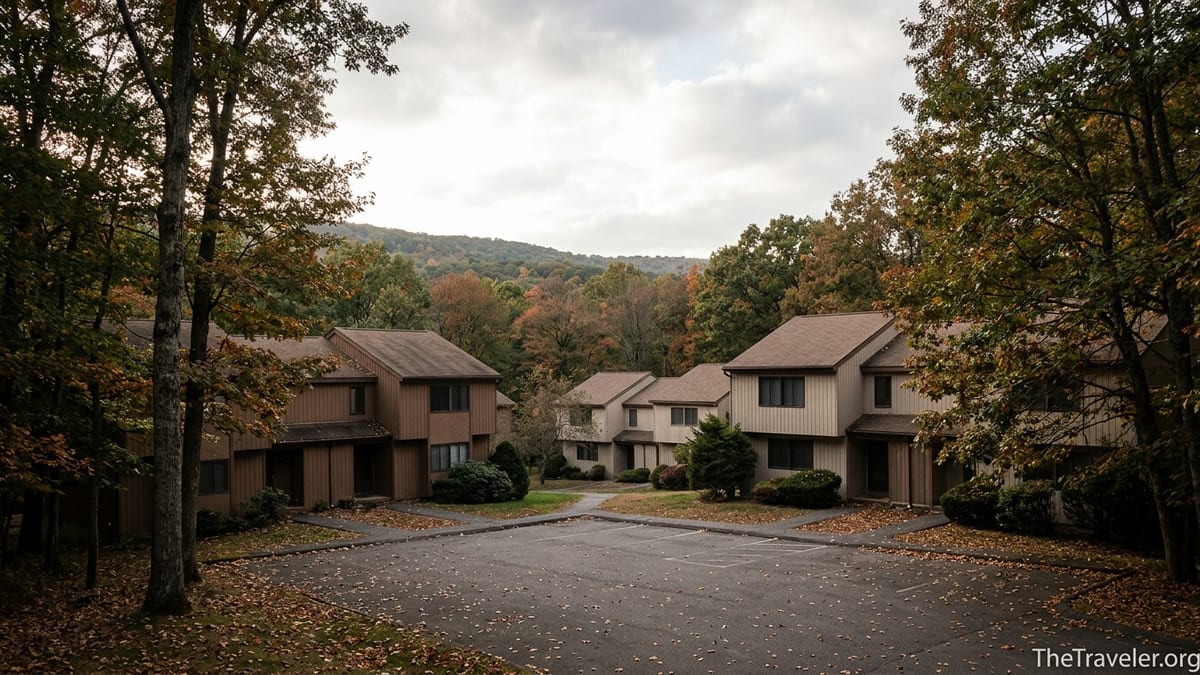
Shawnee Village is a long‑running timeshare complex near Shawnee‑on‑Delaware in Pennsylvania’s Pocono Mountains, developed in the 1970s as one of the first large vacation ownership projects in the state. In late 2025, Wyndham notified owners and employees that Club Wyndham’s operation of Shawnee Village would be wound down and that the site would be prepared for sale. Pennsylvania layoff notices and regional business reports described the resort as closing by the end of 2025 or shortly thereafter to allow marketing and disposition of the property. In simple terms, this means Club Wyndham does not plan to continue operating Shawnee Village as a managed timeshare resort.
It is important to separate Shawnee Village from the nearby Shawnee Inn & Golf Resort across the river, which has publicly emphasized that it is not closing or for sale. The closure discussion is focused on the timeshare townhome clusters such as Depuy, Ridge Top, River Village and similar sections that have been part of Club Wyndham and WorldMark programs. When owners receive letters referencing the “marketing and sale of Shawnee Village” or “resort portfolio refresh,” those communications apply to the timeshare project, not the historic inn or golf course.
Practically, closure for a Wyndham‑managed timeshare usually unfolds in stages. Availability of new reservations gradually tightens, refurbishment projects stop, and an association vote or consent process may authorize the board to pursue a sale of the underlying real estate. During that period, owners may still check in and use their weeks or points, but with the understanding that a hard stop date is coming when the resort will no longer take reservations under Club Wyndham management.
Because this process can stretch over many months, different owners will experience the closure differently. Someone with a fixed summer week reserved for 2026 may still get one last family trip, while a points owner who tends to book on short notice may find 2026 inventory already pulled back or blocked as Wyndham prepares for transition.
How the Closure Affects Deeded Owners at Shawnee Village
Many Shawnee Village contracts are deeded interests: typically a fractional ownership in a unit, often described in your paperwork as a specific week number and unit number, even if you also participate in a points system. When a resort like Shawnee Village is closed and marketed for sale, the underlying real estate that supports those deeds is at the center of the process. In most cases the owners association, with input from a board and the management company, seeks authority to sell the property and terminate the timeshare plan.
Owners often receive a consent package or ballot asking them to approve a plan that allows the association to negotiate a sale on behalf of all deeded owners. For example, an owner with a fully paid‑off fixed week in Depuy Village might receive an explanatory letter and a form to sign. The documents may describe that, if a bulk sale closes, each owner’s deeded interest will be extinguished and replaced with a share of sale proceeds or a negotiated benefit such as a partial credit toward other Wyndham products. The specifics vary by resort and by the terms in the project’s declaration documents filed with Monroe County when Shawnee Village was created.
A key question for many deeded owners is whether staying on the deed until the sale closes could produce a payout that is better than simply trying to offload the week today for free on a resale site. In some previous legacy resort exits in other markets, sale proceeds for individual owners have been modest, sometimes only enough to cover a few years of maintenance fees. In other situations, after transaction costs and any association debts are paid, there may be little or nothing left for individual owners. Because Wyndham and the homeowners association typically cannot promise a specific dollar amount in advance, owners should think in ranges rather than fixed expectations.
Another practical issue is timing. A Shawnee Village owner who is up to date on maintenance fees at the time of a bulk sale stands in a different position from an owner who has defaulted. Associations commonly state that any distribution will be made only to owners in good standing on the date of closing. That means an owner who chooses to stop paying and walks away before the deal is finalized may forfeit any chance at a future check, even if the amount ultimately turns out to be modest.
What Changes for Club Wyndham and WorldMark Points Owners
Not all Shawnee‑related ownerships are simple fixed weeks. Many Club Wyndham members hold a points‑based interest where Shawnee Village is just one of many resorts they can book. In addition, WorldMark by Wyndham has long offered a separate credits‑based program that includes WorldMark Shawnee Village as a destination in its resort directory. For these owners, the question is less about a deed attached to a specific unit in Pennsylvania and more about whether the loss of Shawnee Village changes the value or flexibility of their overall points portfolio.
For Club Wyndham points owners whose deeded interest is at another property, the effect of Shawnee Village’s closure is primarily a reduction in the network’s footprint in the Poconos. If you own Club Wyndham points deeded in Orlando or Las Vegas, your deed itself is not tied to Shawnee. You will, however, lose a popular drive‑to mountain option within a half‑day’s trip of New York City and Philadelphia. A family that traditionally used points to book a two‑bedroom Ridge Top unit for a long ski weekend in January will need to look at other Club Wyndham or affiliate resorts in the Northeast or consider renting outside the system.
For WorldMark credits owners, the impact depends on how closely their credits are tied to Shawnee inventory. WorldMark’s resort directory lists nightly credit costs at Shawnee Village across seasons, from lower blue‑season studio stays to high‑credit three‑bedroom plus units during red‑season summer weeks. Once Shawnee is fully removed from the booking system, those specific credit charts become irrelevant, but your overall credits remain valid. Instead of a red‑season Pocono townhouse, you might apply those same credits to a trip to WorldMark Midtown 45 in New York City, WorldMark Smugglers’ Notch in Vermont, or a coastal option such as WorldMark Ocean Walk in Daytona Beach.
The more difficult gray area involves owners whose points deed is technically tied to Shawnee Village even though they have access to multiple resorts. Those owners may be swept into any bulk sale and termination plan, just like fixed‑week owners, while at the same time having to evaluate what Wyndham offers as an alternative product. Some may be invited to re‑deed into a different Club Wyndham resort or to roll into a newer program tier. Others may simply see their deed extinguished and points access reshaped. Carefully reading any ballot, consent or “portfolio refresh” notice is critical to understand which situation applies to you.
Maintenance Fees, Special Assessments and When Payments Stop
One of the most common questions owners ask when a resort announces closure is whether they can stop paying annual maintenance fees right away. At Shawnee Village, those fees have historically supported day‑to‑day operations across more than 500 units spread over multiple village sections, covering items like housekeeping, snow removal on the Pocono hillside roads, roof repairs on the 1980s townhomes, and utilities. As long as the timeshare plan remains in effect and the association is operating, owners remain contractually obligated to pay their share, closure notice or not.
In a typical wind‑down scenario, maintenance fees continue through the year of closure and sometimes beyond, especially if there are outstanding obligations such as property taxes, insurance, or preparation costs to ready the site for sale. In some legacy resort exits, associations have levied one‑time special assessments to cover legal and consulting expenses tied to negotiating and closing a sale. For example, an owner might see a letter explaining a special assessment of a few hundred dollars per interval to fund survey work, environmental reports, or legal reviews required by a buyer’s lender.
Owners weighing whether to stay current should think through likely timelines. If an association expects to close a sale in late 2026, an owner still using the resort may find it worthwhile to keep paying fees until that date, both to preserve vacation access and to remain in good standing for any eventual distribution. By contrast, an owner who has not visited in years and who is already struggling with a $1,000‑plus annual bill may decide that continued payments through an open‑ended process are simply not sustainable, even if that choice risks collection efforts or a credit report entry.
It is also worth understanding that fees and assessments attached to Shawnee Village are distinct from fees tied to other Club Wyndham products you might own. If you hold a separate points contract deeded in Florida, that ownership will have its own maintenance line items on your bill. The closure of Shawnee does not automatically erase obligations on other contracts, even if everything appears on a single consolidated Wyndham statement.
Selling, Surrendering or Riding Out Your Ownership
Faced with a closing resort, Shawnee Village owners generally have four broad paths: keep paying and ride out the process, attempt to sell on the resale market, explore a deed‑back or surrender option with Wyndham or the association, or simply stop paying and accept potential consequences. Each path carries trade‑offs, and the right choice depends heavily on your specific contract, finances and travel habits.
Some owners choose to ride it out. A retired couple from New Jersey, for instance, might have a fully paid‑off fixed July week they still enjoy with grandchildren every other year. They may decide to keep paying maintenance fees, secure a final few summer visits while Shawnee remains open for bookings, and then see what, if any, proceeds emerge from a sale. If the end result is a modest check that covers two or three years of fees they paid during the wind‑down, they may view that as acceptable, especially if they cherished those last family trips.
Others look to the resale market as a way to exit on their own timeline. Shawnee weeks and Shawnee‑based Club Wyndham points have long been available on resale sites and owner forums for little or no upfront cost, with sellers sometimes offering to pay all closing fees and the current year’s maintenance bill just to transfer the obligation. In a closure context, buyers are understandably cautious, but there are still scenarios where a bargain hunter might pick up a near‑term fixed ski week at a fire‑sale price simply to secure a couple of heavily discounted trips before the resort shutters.
Surrender and deed‑back options are more complex. Wyndham has historically run programs that sometimes accept paid‑off contracts back from owners in good standing, but in recent years many owners have reported that these programs are limited or temporarily on hold, especially as the company restructures its resort portfolio. An owner who calls and asks to surrender a Shawnee week may be referred to one of a handful of approved brokers, or told to wait for communication tied to the closure. If you pursue this route, insist on dealing only with entities recommended directly in official association or Wyndham correspondence and be wary of third‑party “exit companies” that charge thousands of dollars to do paperwork you could often complete yourself.
Planning Upcoming Stays and Finding Alternatives in the Poconos
While the legal and financial side of a resort closure can feel abstract, the immediate question for many owners is simple: Where do we go on our next trip if Shawnee Village is no longer an option? For some, the answer will be to squeeze in one last visit before the lights go off. If inventory remains available, booking a farewell week in a familiar Ridge Top townhouse or River Village unit can provide closure and a chance to say goodbye to a place that has hosted decades of ski weekends and summer barbecues.
Looking beyond Shawnee, the Pocono region still has a broad mix of lodging that can fit the pattern of a week‑long stay. Full‑service resorts like the Shawnee Inn & Golf Resort, Skytop Lodge and Kalahari offer package‑style stays with on‑site dining and activities. Families who liked having a kitchen and multiple bedrooms can look at condo‑style accommodations at properties near Camelback or Lake Harmony, or book multi‑bedroom vacation rentals through major platforms, often at nightly rates in the 200 to 350 dollar range for shoulder seasons, with summer holidays tracking higher.
If you want to stay within a branded vacation club, it may be worth exploring exchanges or alternative Wyndham‑related properties in the broader Northeast. Club Wyndham owners sometimes trade points into partner resorts through external exchange companies, opening up options from upstate New York to coastal New England. WorldMark credits holders may choose to redirect their Poconos plans to destinations like WorldMark Great Smokies Lodge in Tennessee, swapping a Pennsylvania mountain week for a family road trip farther south.
Owners who built their holiday traditions around Shawnee’s specific mix of river views, wooded roads and family‑friendly skiing will not find a perfect one‑for‑one replacement. But the closure can be a prompt to rethink how you structure vacations altogether. Some former timeshare families choose to step back from ownership and instead price out each trip individually, comparing a week in a Pocono cabin rental plus lift tickets to the all‑in cost of ongoing maintenance fees and assessments they would otherwise pay.
Wyndham Alternatives and Strategies for Future Vacations
For owners who still like the general idea of branded vacation lodging but are wary after living through Shawnee Village’s closure, there are several ways to reframe your approach. One is to downshift from deeded timeshare ownership into a lighter‑commitment product such as a hotel chain’s vacation club where you buy points that also work at regular hotels. For instance, some travelers decide to rely on the regular Wyndham Rewards program, booking Poconos‑area hotels or partner properties with points earned through everyday stays and credit card spend, instead of maintaining a separate timeshare contract.
Another strategy is to diversify within the timeshare world itself. Rather than holding a large points contract tied to one resort, some owners distribute their ownership across smaller, lower‑fee products in multiple systems. An example might be keeping a modest WorldMark credits package for West Coast and Hawaii trips while also owning a fixed week at an independent New England resort closer to home. That way, if one resort or brand restructures, you are not left without any options at all in a given region.
Many former Shawnee owners also embrace the flexibility of booking on the open market. Instead of pre‑paying for future vacations through a deed and maintenance fees, they calculate what they typically spent each year on their timeshare and redirect that amount into a dedicated travel savings account. When winter rolls around, they compare options: a Pocono condo for President’s Day week, a condo near Stowe or Killington, or even a city break in Philadelphia or New York with a couple of nights at a mid‑range hotel. This approach trades the comfort of guaranteed access for the freedom to follow airfare deals and new interests.
Finally, there is the option of sticking with Wyndham but updating the kind of ownership you hold. During portfolio refreshes, the company sometimes offers owners at closing resorts the chance to roll into newer contracts focused on “flagship” destinations such as Myrtle Beach, Orlando or Las Vegas, often with bonus points or temporary fee reductions. These offers can be attractive on the surface but usually come with new financing, longer‑term commitments and higher long‑run costs. Before signing anything in a high‑pressure sales setting, take copies of the paperwork home, compare the total payments to simply paying cash for equivalent hotel or vacation rental stays, and, if needed, seek independent advice.
The Takeaway
The closure of Wyndham Vacation Resorts Shawnee Village is both a practical and an emotional turning point. On the practical side, it means a slow unwinding of a complex web of deeds, points and maintenance fees tied to hundreds of townhome units in the Pocono woods. Owners will see consent forms, legal language about termination of the timeshare plan, and, eventually, details about how any sale proceeds or transition benefits will be handled. Those pieces matter, and staying informed through official association communications is essential.
On the emotional side, Shawnee Village represents decades of family histories: first ski trips, rainy‑day board games in wood‑paneled living rooms, kids learning to ride bikes on quiet village roads. A closure notice can feel like a door closing on that chapter. Recognizing that reaction is valid, and taking time to plan one last visit or to create new traditions at a different Pocono resort, can help soften the transition.
From a financial standpoint, there is no one‑size‑fits‑all answer. Some owners will choose to keep paying and ride out the process in hopes of a modest distribution and a clean exit. Others will look for resales, deed‑backs or simple default as a way to stop an annual bill that no longer fits their lives. The best decisions are usually those made calmly, with a clear understanding of your contract and your travel priorities, rather than in reaction to pressure from sales calls or third‑party exit pitches.
Ultimately, what the Shawnee Village closure means for you is a deeply personal calculation: how much you value that specific place, how much you can comfortably afford to spend on vacations, and how much flexibility you want in the years ahead. By stepping back, asking hard questions about costs and benefits, and exploring alternatives inside and outside Wyndham, you can turn a disruptive change into an opportunity to redesign how you travel.
FAQ
Q1. Is Club Wyndham Shawnee Village already closed, or can I still book a stay?
The resort is in a wind‑down phase tied to its planned closure and sale. In many cases, limited reservations remain available during the transition, but availability typically shrinks as the projected closure date approaches. Check your owner portal or call Wyndham to confirm what dates, if any, can still be booked.
Q2. Will I get a payout when Shawnee Village is sold?
Some closure plans at legacy resorts have provided owners with a share of net sale proceeds, but amounts are often modest and depend on many factors, including sale price, debts and legal costs. There is usually no guaranteed minimum, so any payout should be viewed as a possible bonus rather than a certainty.
Q3. Do I have to keep paying maintenance fees if the resort is closing?
Yes, as long as the timeshare plan remains active and your ownership has not been legally terminated, you are contractually obligated to pay maintenance fees and any approved special assessments. Stopping payment can lead to collection activity and negative credit reporting, and may also disqualify you from receiving any future distribution tied to a sale.
Q4. What happens to my deeded week once the timeshare plan is terminated?
In most closure scenarios, the owners association seeks authority to terminate the timeshare plan and sell the underlying property in bulk. When that sale closes, individual deeds linked to specific weeks and units are extinguished, and owners receive whatever benefit, if any, is described in the approved termination plan.
Q5. I own Club Wyndham points, not a fixed week. Does the closure affect my points?
If your points are deeded at another resort, Shawnee’s closure mainly reduces your choice of destinations rather than your underlying points balance. If your points deed is tied to Shawnee Village, your ownership may be part of the termination and sale plan, and you should review any official notice carefully to see how your points will be treated.
Q6. Can I sell my Shawnee Village ownership on the resale market right now?
Resale is possible, but demand is limited, especially once a closure is announced. Many owners find they must give their week or points away for free and pay closing costs to attract a buyer. Some buyers may still be interested in short‑term use if they can secure a year or two of affordable vacations before operations cease.
Q7. Are Wyndham’s deed‑back or exit programs available for Shawnee owners?
Wyndham has operated various exit and deed‑back programs over time, but availability and terms change. Some Shawnee owners report being referred to approved brokers or told to wait for closure‑related communications. If you pursue an exit, deal only with entities identified in official Wyndham or association letters and avoid high‑fee third‑party “relief” firms.
Q8. What are good alternatives in the Poconos if Shawnee Village is no longer an option?
Nearby choices include full‑service resorts such as the Shawnee Inn & Golf Resort, as well as other Pocono properties around Camelback, Lake Harmony and Mount Pocono. You can also consider independently owned condo rentals or vacation homes, which often offer multi‑bedroom layouts and kitchens similar to Shawnee’s townhomes.
Q9. Will the closure hurt my credit score?
Simply owning at a closing resort does not affect credit. Credit issues typically arise only if you stop paying contractual obligations such as maintenance fees or a loan tied to your timeshare. Collections, judgments or charge‑offs related to those unpaid amounts can appear on your credit report like any other delinquent account.
Q10. How can I stay informed about the Shawnee Village closure process?
The most reliable information usually comes from your homeowners association and Wyndham’s official communications. Watch for mailed notices, email bulletins and updates in your owner portal, and consider attending owner or association meetings, in person or virtually, when they are announced.