


More news on this day
Xi'an’s metro network has emerged as one of China’s fastest-expanding urban rail systems, recently surpassing 400 kilometers of track and adding new lines that connect historic districts, business hubs and the international airport more tightly than ever before.
Get the latest news straight to your inbox!
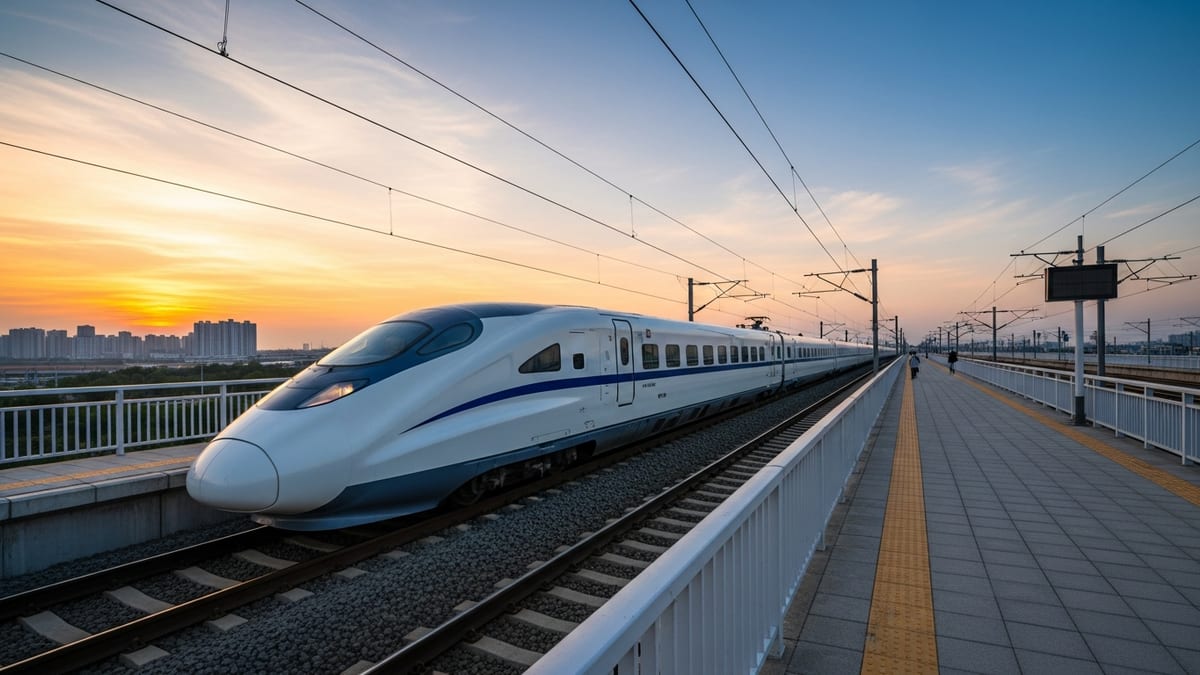
Loop Line 8 Marks a New Phase of Network Maturity
The opening of Xi'an Metro Line 8 at the end of 2024 marked a symbolic milestone for the northwestern city. Publicly available information shows that the 49.9 kilometer route is Xi'an’s first circular metro line and includes 37 underground stations, 18 of them designed as transfer hubs. Reports indicate that the new line pushed the overall metro network beyond the 400 kilometer mark, placing Xi'an among China’s largest urban rail systems by route length.
Line 8 was constructed in just over five years following a late 2019 groundbreaking. Coverage from local outlets and industry bulletins highlights the line’s role as a backbone in the city’s long term rail plan, providing orbital connectivity so that passengers no longer need to travel into the downtown core to change between many radial lines. The circular design is intended to redistribute passenger flows, shorten cross town journeys and reduce crowding on older lines.
Infrastructure reports describe Line 8 as a fully underground, driverless operation with a high level of automation. The combination of advanced signaling and platform facilities is presented as part of a broader nationwide push to standardize smart metro systems in major Chinese cities. For travelers, the technical sophistication is largely invisible but translates into frequent service, consistent headways and shorter recovery times after disruptions.
Beyond engineering, Line 8 has also been framed as a cultural route. Travel guides note that the loop skirts the footprint of ancient Chang’an, passing near city gates, Tang dynasty themed commercial streets and a cluster of museums and public squares. For visitors using the metro to reach well known sites, the new line offers an additional set of options that complement existing east west and north south corridors.
Airport and High Speed Rail Links Strengthen Gateway Role
Xi'an Xianyang International Airport, using the code XIY, sits roughly 35 kilometers northwest of the city center, and the metro has become a primary surface link between the terminals and the urban core. Metro Line 14 functions as an airport rail service, connecting XIY with Xi'an North Railway Station and onward urban districts. Travel advisories and tourism guides indicate that the end to end metro journey between the airport and the north station typically takes around 40 minutes, at a fraction of taxi prices.
The airport link complements the city’s role as a major high speed rail junction, particularly at Xi'an North. With direct metro connections now tying the airport into the broader network, passengers can transfer between long distance trains, flights and urban destinations without relying solely on road transport. This intermodality has been repeatedly highlighted in transport planning documents as essential for handling rising visitor numbers and domestic tourism flows.
Recent line additions further strengthen this gateway function. New routes such as Line 10 and Line 15, opened in 2024 according to project summaries and public databases, extend metro coverage toward the north and northeast of the metropolitan area. While these lines are not dedicated airport shuttles, their integration with existing services broadens the catchment of residents and businesses that can access the airport and main rail hubs with a single transfer.
For international travelers arriving in Xi'an, the growing metro network changes trip planning in practical ways. Travel platforms increasingly recommend purchasing a reloadable transit card upon arrival and using the metro for the first leg into the city, particularly during peak road congestion. Clear bilingual signage and schematic maps at airport and high speed rail stations reflect ongoing efforts to make transfers more intuitive for non Chinese speakers.
Rapid Expansion Reshapes Daily Mobility Across Xi'an
When the first section of Xi'an Metro opened in 2011, the system consisted of only a few dozen stations. Less than fifteen years later, various compilations of transport data suggest that the network now includes more than ten full lines and several suburban or airport focused routes, with over 400 kilometers in operation and hundreds of stations. This rate of expansion has moved Xi'an from a largely bus and car dependent city toward a metro centered model for daily commuting.
Academic studies of ridership patterns up to 2023 indicate steadily rising passenger volumes as each new line comes into service. Analysts point out that the network has not only extended further into peripheral districts but has also increased station density in established neighborhoods, reducing average walking distances to rapid transit. This is particularly evident inside the Second Ring Road and along major commercial corridors where several lines interlace.
For residents, the growing grid of services translates into more direct journeys between residential compounds, universities, industrial zones and office clusters. Reports in local media and specialist rail publications frequently emphasize time savings, with commutes that once required multiple bus transfers and exposure to chronic traffic now shifted underground. The addition of Line 8’s circular alignment is expected to amplify these benefits by offering shorter cross town connections that bypass central bottlenecks.
City planning material links the metro program to broader environmental and economic goals. Reduced private car use, lower emissions per trip and improved access to employment areas are cited as core objectives. At the same time, the clustering of new commercial and residential projects around transfer stations indicates how the metro has become a lever for transit oriented development, shaping where growth takes place across the wider Xi'an region.
What International Visitors Should Know Before Riding
For travelers, Xi'an Metro now functions as a primary tool for navigating both historic and modern districts. Major tourist destinations such as the city wall, the Muslim Quarter, pagodas and large shopping areas are within short walks of metro exits, and network maps are generally available in station halls and on platform walls. Many stations provide English language signage and train announcements, although smaller stops on outer sections may have more limited translations.
Ticketing is relatively straightforward. Single journey tokens can be purchased from vending machines using cash or cards, while contactless payment via domestic mobile apps is widespread among local passengers. Visitors who plan to use the metro several times a day often opt for stored value cards that can be tapped at entry and exit gates, avoiding the need to calculate individual fares each time.
Service frequency on most lines is high during daytime hours, with shorter intervals in the central sections and at major transfer points. Peak travel times coincide with local work hours, and trains can become crowded on routes serving dense residential districts and university areas. Travel guides commonly advise visitors to avoid the heaviest rush periods when carrying large luggage, particularly on the airport link and the lines intersecting Xi'an North Railway Station.
Safety standards on the network are broadly in line with other large Chinese metros, with platform screen doors, visible staff presence in station halls and security screening at entrances. While individual experiences can vary, publicly available information and traveler reports generally describe a system that is clean, efficient and comparatively easy to use for those unfamiliar with the city. For many visitors, Xi'an Metro has become as much a part of the urban experience as the archaeological sites and historic streets at the end of each ride.