


Sandown Bay on the Isle of Wight curves in a long golden arc beneath chalk cliffs, but two stretches of this coastline tend to dominate visitors’ shortlists: quieter, cliff‑backed Yaverland at the northern end of the bay, and classic resort‑style Sandown Beach nearer the town and pier. Both sit within walking distance of each other and share the same sweep of sand, yet they deliver very different days out. If you only have time for one, it is worth looking closely at what each does best.
Setting the Scene: One Bay, Two Very Different Beaches
Yaverland and Sandown Beach share the same broad bay on the Isle of Wight’s east coast, but they feel like two separate worlds. Yaverland Beach stretches northeast from the sailing and yacht club towards the chalk cliffs of Culver Down, with wide sands at low tide and very little beach left at high tide. It is backed mainly by fields, the car park and the Dinosaur Isle area rather than dense development, so the atmosphere is noticeably more open and rural than in town.
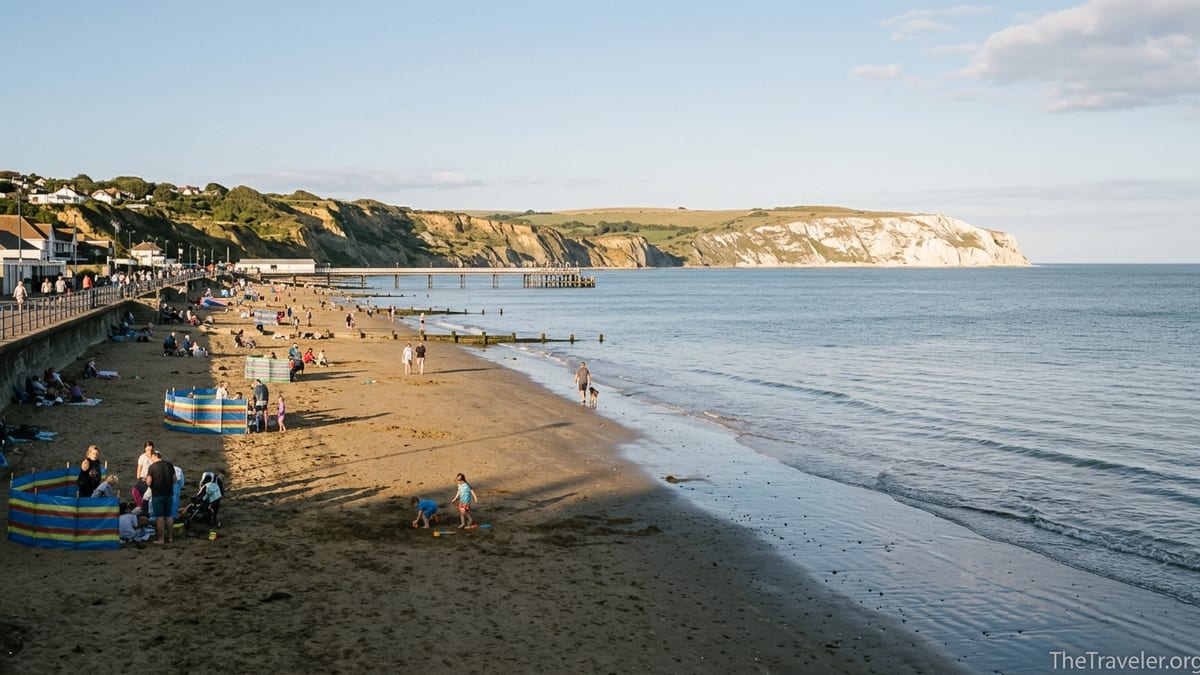
Sandown Beach, by contrast, unfolds directly in front of the resort town. The seafront promenade, rows of guesthouses, the amusement‑packed pier and a run of cafes and ice‑cream kiosks frame the sand. Standing by Sandown Pier on a summer weekend you will hear arcade sounds, smell fish and chips frying and see deckchairs lined up along the esplanade. It is the Isle of Wight’s archetypal bucket‑and‑spade seafront and is treated as one of the island’s most recognisable beaches.
Because the two are only about a 15–20 minute seafront walk apart for most visitors, choosing between them is less about geography and more about mood. Yaverland rewards those who want more sky, more space and stronger links with the surrounding landscape, particularly the cliffs and countryside. Sandown caters to visitors looking for easy entertainment, traditional seaside infrastructure and the feeling of being at the centre of things.
In practice many holidaymakers end up using both in a single day. Families might spend the morning in the arcades and cafes of Sandown, then wander or drive up to Yaverland in the afternoon for calmer paddling and fossil hunting. Understanding the strengths and trade‑offs of each stretch helps you plan that mix intentionally rather than relying on chance.
Sand, Sea and Scenery: Which Beach Feels Better Underfoot?
Both Yaverland and Sandown share similar sand quality, with a gently shelving beach of predominantly soft, golden sand that firms up closer to the waterline. At low tide Yaverland in particular offers a very broad expanse of compacted sand that is easy to walk on and suitable for pushing beach buggies or using beach wheelchairs borrowed locally. Regular visitors often comment that in Yaverland’s central area near the main car park, the sand feels slightly less trampled and cleaner simply because there are fewer sunbeds and kiosks directly on the beach.
Sandown Beach, directly in front of the town and pier, sees more concentrated use. The sand is the same fine, family‑friendly texture, but in high season there are usually rows of rented sun loungers and deckchairs, as well as volleyball nets or water‑sports launch areas, especially near hut operators like West Side Beach further along the bay. That creates a livelier feel. If you want quiet sandcastle‑building room in August, you are often better off walking a few minutes away from the pier towards Yaverland or down towards Lake, where the crowds thin noticeably.
Scenically, Yaverland has the edge for drama. As you walk north‑east, the white chalk cliffs of Culver Down rear up ahead, especially beautiful in late afternoon when they catch the sun. On a clear day you can look across the Channel to passing ships and, if you climb the coastal path later, back down on the whole sweep of the bay. Sandown’s view is softer and more urban: pastel guesthouses and the pier framing long sea horizons. Many visitors enjoy a late‑day stroll along Sandown’s promenade specifically to watch the light change over the water, then head to a seafront restaurant terrace for dinner with a view.
The sea itself is generally calm across the whole bay, thanks to its east‑facing, relatively sheltered orientation. Both beaches are considered suitable for paddling and casual swimming in settled weather. Official bathing water classifications in recent seasons have rated Yaverland as consistently excellent and Sandown as good, reflecting strong but slightly different monitoring results across the bay. In practical terms, for most visitors that translates into clean, inviting water so long as you heed any on‑the‑day advice about conditions.
Facilities, Food and Practicalities: Yaverland’s Simplicity vs Sandown’s Choice
When you break the decision down to facilities, Yaverland and Sandown diverge sharply. Yaverland is intentionally low‑key. At the main Yaverland Council car park behind the beach you will find public toilets that draw some of their power from solar cells and a small wind turbine, plus a simple beach shop and cafe at the southern end of the car park serving staples such as bacon baps, burgers, chips, ice creams and takeaway hot drinks. That is largely it. There are no arcades, no rows of gift shops and no big chain coffee outlets directly at Yaverland itself.
Sandown Beach, by contrast, has a full complement of seaside services. Along the promenade you can pick between multiple independent cafes and bars such as The Beach Cafe near the pier, the Beach Shack along the pedestrian revetment towards Shanklin, and bigger seafront venues like Ocean Deck, which combines pub‑style meals with terraces overlooking the bay. A family of four can feasibly have a sit‑down lunch here for a moderate price, though many budget‑conscious visitors still default to takeaway chips or supermarket picnic supplies from the town’s mini‑markets just behind the front.
Beyond food, Sandown’s promenade offers amusement arcades, mini‑golf on the seafront and further inland at Brown’s, beach gear shops selling everything from towels to inflatable dinghies, and easy access to ATMs and pharmacies in town. For a parent with young children this often reduces stress: if you suddenly need sun cream, Calpol, extra nappies or a quick change of clothes, you are rarely more than a five‑minute walk from what you need.
However, that convenience comes at the cost of quiet. Yaverland’s more limited facilities mean you must plan ahead, perhaps bringing your own beach tent, snacks and buckets and spades, but in return you are rewarded with fewer tannoy announcements and less commercial noise. Many repeat visitors adopt a hybrid approach. They base themselves in Sandown accommodation, use its cafes and supermarkets, then drive or stroll to Yaverland with a well‑packed beach bag when they want a more tranquil few hours.
Access, Parking and Getting Around Without a Car
For many visitors, especially day‑trippers and families lugging beach gear, access can tip the balance between Yaverland and Sandown. The easiest arrival point for both beaches by public transport is Sandown railway station on the Island Line, which links to Ryde and the ferry connections to the mainland. From Sandown station it is roughly a 10–15 minute walk downhill to the seafront. Once on the promenade, Yaverland lies about another 15–20 minutes’ walk northeast, depending on pace and how often you stop to admire the view or let children play on the sand.
Bus users will likely encounter the green Southern Vectis fleet, which forms the backbone of the island’s public transport. At the time of writing, most standard single fares on the network are capped at a modest level due to a national scheme, making it relatively affordable to hop between Ryde, Sandown, Shanklin and Newport in a single day. Services link Sandown and the nearby villages regularly, and route options can bring you to stops within walking distance of both Sandown Esplanade and Yaverland.
For drivers, Yaverland’s main advantage is its dedicated long‑stay car park directly behind the beach, managed by the Isle of Wight Council. On a typical summer day you can park here, unload your chairs and cool box immediately onto the sand and not move your vehicle again until evening. Parking charges apply and can vary seasonally, but many visitors find that paying for a full‑day ticket is economical if you intend to stay for several hours. The car park can fill in the heart of August, so arriving early is sensible.
Sandown also has several car parks and on‑street options, but they are more dispersed and sometimes involve a few minutes’ walk down to the sands, which can feel longer on the way back up with tired children. On the other hand, Sandown has made noticeable investments in accessibility, including a Changing Places facility on the beach opened in spring 2024. Beach wheelchairs can sometimes be arranged locally through community schemes linked with Dinosaur Isle and the seafront, and the esplanade itself is flat and paved, making it easier for wheelchair users and parents with prams to move along the bay and choose a spot.
Safety, Lifeguards and Water Quality Considerations
Safety is a strong point for both Yaverland and Sandown, provided you pay attention to local signage and common‑sense rules. Across the Isle of Wight, bathing water quality is monitored by the Environment Agency, with classifications updated annually. Recent classifications list Yaverland as excellent and Sandown as good, reflecting robust water standards across the bay but with slightly cleaner readings at Yaverland. For most casual swimmers the difference is not something you would notice directly, but environmentally conscious visitors often appreciate knowing that Yaverland consistently hits the top tier.
Sandown’s central stretch generally benefits from seasonal lifeguard presence, especially around the busier months of late spring and summer. Exact dates can vary year to year, but during peak season this gives families extra reassurance when children are paddling or older kids want to try bodyboarding close to shore. In Yaverland, lifeguard coverage is more limited and may not always be present, so parents tend to supervise more closely and keep children within very shallow depths.
The shape of the bay means that conditions are often relatively calm, but like anywhere on the south coast, weather can change quickly. Both beaches can experience short‑term issues after very heavy rain, when combined sewer overflows may affect parts of the coastline. Local authorities publish risk forecasts in season, and on a day with recent downpours it is worth checking the latest information or asking lifeguards or tourist information staff before committing to a long swim.
Beach safety at Yaverland also includes a cliff element. As you walk towards the base of Culver Down the cliffs become more prominent and are subject to erosion. There are signs warning visitors not to sit directly under the cliff face and to be cautious after periods of wet weather. Fossil hunters and dog walkers often explore this end of the beach at low tide, but should keep an eye both on the tide line and the cliff edge above to avoid being cut off or caught under minor rockfalls.
Atmosphere and Activities: Tranquil Nature or Classic Seaside Fun?
Ask island locals which part of Sandown Bay they prefer, and you will often hear Yaverland described as the quieter, more relaxed end that residents favor for a quick swim or an evening walk. The beach is popular with water‑sports enthusiasts, with kayaks, stand‑up paddleboards and small sailing craft regularly launching from the gently shelving shore. Children and parents clamber along the rocks looking for fossils and dinosaur footprints, helped by the fact that the area is considered one of the Isle of Wight’s notable “dinosaur beaches.” Nearby Dinosaur Isle museum strengthens that link, with families commonly pairing a couple of hours of exhibits with guided fossil walks or self‑guided beachcombing.
Sandown’s personality sits firmly in the traditional resort camp. The pier hosts amusement arcades, soft play zones and casual food outlets that keep children busy even if the weather turns. On a drizzly day you might go from playing 2p machines and mini‑bowling on the pier to a round of adventure golf at the seafront course, then retreat to a cafe for milkshakes without ever straying far from the sands. In high summer Sandown occasionally hosts small events and live music along the prom, adding to the sense of bustle.
Water‑sports are also available from Sandown, with local operators hiring out kayaks, paddleboards and sometimes pedalos from marked sections of the beach. These usually operate seasonally and are weather‑dependent. For teenagers and energetic adults, combining a morning on the rides and arcades with an afternoon paddleboard session makes for a well‑rounded day that never feels too sleepy.
Where Yaverland excels is in slower moments. Early in the morning dog walkers spread out along the shore, and outside the main dog‑restriction zones owners appreciate that parts of the beach remain dog‑friendly even in summer. In the shoulder seasons of May, June and September, you can often sit here with a takeaway coffee from the small cafe and hear almost nothing but waves. Birdwatchers appreciate the wilder feel near the cliffs, while photographers love the long sightlines towards Culver Down and back across the bay to Shanklin.
Family‑Friendliness, Dogs and Accessibility On the Sand
From a family perspective, both Yaverland and Sandown are highly usable, but they suit slightly different parenting styles. Sandown’s central strip wins if you want everything within arm’s reach. Public toilets are dotted along the front, baby‑changing facilities are easily found in larger venues and the 2024 Changing Places facility caters to visitors with more complex mobility or care needs. If a toddler melts down or a teenager suddenly needs a different swimsuit, you can duck into nearby shops without packing up your entire beach camp.
Yaverland suits families who prefer to arrive prepared and stay put. With facilities clustered around the car park, it is worth packing a cool box, plenty of water, a sunshade and toys so that you do not need to break the relaxing rhythm by trekking off to the shop every hour. The payoff is that children have far more space to run, dig and splash without crowds pressing in from all sides. Many parents find that Yaverland’s quieter character makes it easier for kids with sensory sensitivities who may struggle with the constant noise and movement along Sandown’s main promenade.
Dog policies at both beaches are governed by local bylaws, which typically restrict access in the busiest designated bathing zones during the core summer months, while allowing dogs in specific sections or outside high season. Yaverland is often highlighted as one of the few Isle of Wight beaches where dogs are permitted on designated stretches even during summer, though a central “Award” section around the main access point remains dog‑free. In practice this means that dog owners can usually walk a little way along the beach away from the award‑winning zone and still enjoy the sand legally with their pets. Sandown has its own clearly signed zones where dogs are either allowed, restricted or banned depending on date and location.
Accessibility on the actual sand varies. Both beaches have sloping access points, and Yaverland in particular is noted for its firm, compacted sand at low tide which can help with pushing off‑road buggies and some wheelchairs. Sandown offers the advantage of more consistent ramped access points from the promenade, plus the possibility of arranging beach wheelchairs through local schemes, though availability can fluctuate and is best checked ahead of time. For many visitors using mobility aids, a practical solution is to base themselves on Sandown’s flat promenade and then choose a specific ramp close to toilets and cafes so that distance on the sand remains manageable.
Prices, Value and When Each Beach Feels at Its Best
There is no entrance fee for either Yaverland or Sandown Beach, so your primary costs will be parking, food, and any paid activities such as amusement arcades, mini‑golf or water‑sports rental. At Yaverland, spending can be kept very low if you bring your own picnic and simply pay for parking and perhaps a round of ice creams from the beach shop. This makes it attractive for budget‑conscious families staying on the island for a week or more who do not want every day to turn into an expensive outing.
In Sandown, temptation is everywhere. A few pounds in change can vanish rapidly in the pier arcades, and it is easy to drift from coffee to lunch to late‑afternoon drinks at a seafront bar. That said, there are also plenty of ways to keep costs down, such as grabbing meal deals from the town’s supermarkets and eating them on the promenade, or limiting paid rides and games to a set time window. Public benches run along much of the front, so you do not need to hire a deckchair unless you particularly want the classic seaside look.
Season and time of day can drastically change how each beach feels. On a peak August Saturday afternoon, Sandown’s central sands will be packed and boisterous, while Yaverland will be busy but still more spacious. On an overcast October weekday, Sandown can look a little tired as shutters come down on seasonal businesses, whereas Yaverland retains much of its charm in all but the wildest weather, appealing to walkers, dog owners and photographers who do not mind wrapping up warm.
Many regular visitors subtly adjust their habits: choosing Sandown in shoulder seasons when crowds are lighter and the infrastructure feels like a bonus rather than a crush, and gravitating towards Yaverland in high summer for breathing room. Sunrise and sunset also play a role. Early risers rave about dawn swims at Yaverland, when the cliffs glow and the bay is almost empty, while late‑evening promenades in Sandown, finishing with ice cream or a drink overlooking the pier lights, are a staple of many family holidays.
The Takeaway
Trying to declare an outright “winner” between Yaverland and Sandown Beach ignores the fact that they are two faces of the same bay, each excelling at different things. Yaverland is the choice for those who prize space, scenery and a slightly wilder atmosphere. Its excellent water quality, long sands beneath Culver Down and low‑key facilities suit swimmers, paddlers, fossil hunters and dog owners who are happy to bring their own gear and let the day unfold quietly.
Sandown Beach, on the other hand, is where you go for the classic British seaside experience. The pier, arcades, cafes, Changing Places facility and easy access to shops make it ideal for families who want variety and convenience. It may not be as tranquil, and its water classification sits a notch below Yaverland’s, but for many visitors the trade‑off is worth it for the sheer amount to see and do within a compact stretch of seafront.
If you have only one day and young children, Sandown probably edges it, especially in good weather, because it gives you rainy‑day back‑ups and a full menu of food and entertainment. If your priority is swimming, walking and escaping the most crowded sections of the resort, then Yaverland is likely to feel more rewarding. The ideal itinerary, of course, is not to choose at all: stay or arrive in Sandown, enjoy its promenade and pier in the morning, then wander or drive up to Yaverland in the afternoon for a calmer swim and a sunset walk beneath the cliffs.
Whichever you pick, remember that both beaches are part of a living coastal environment. Check up‑to‑date local advice on tides, weather and water quality, respect dog and cliff safety signage, and support the independent cafes and businesses that keep this stretch of the Isle of Wight distinctive. Do that, and the question of which beach is “better” becomes less important than the memories you take home from this remarkable bay.
FAQ
Q1. Can I visit both Yaverland and Sandown Beach in one day without a car?
Yes. From Sandown railway station it is about a 10–15 minute walk to Sandown seafront, then a further 15–20 minutes on a flat promenade to Yaverland. Regular buses also connect Sandown with other island towns, so it is realistic to explore both beaches in the same day using only public transport and walking.
Q2. Which beach is better for young children and pushchairs?
Sandown Beach is usually more convenient for families with very young children because toilets, baby‑changing, cafes and shops are close together along a flat promenade, and there is a Changing Places facility on the beach. Yaverland is also suitable but works best if you arrive prepared, as facilities are limited to the car park area and a small cafe.
Q3. Is the water cleaner at Yaverland or Sandown?
Both beaches have good standards of bathing water quality, but recent official classifications rate Yaverland as excellent and Sandown as good. In practical terms the sea usually looks and feels clean at both, though if you are particularly sensitive or prioritise the very highest rating, Yaverland may be the better choice.
Q4. Are there lifeguards on duty at these beaches?
Sandown’s main central stretch typically has seasonal lifeguard cover during the busier months, especially in high summer, although exact dates can change each year. Yaverland’s lifeguard presence is more limited and may not always be available, so it is wise to supervise children closely and stay within shallow water there.
Q5. Which beach is better for dogs?
Yaverland is often regarded as one of the more dog‑friendly options on the island, with stretches where dogs are allowed even in summer outside the central award zone. Sandown has stricter summer restrictions in its busiest bathing areas, although dogs are still permitted in certain signed sections and outside the main season. Always check current local signage, as rules can change.
Q6. Where is parking easier, Yaverland or Sandown?
Parking is usually simpler at Yaverland thanks to the long‑stay council car park directly behind the beach, which makes unloading gear straightforward. Sandown offers several car parks and on‑street options but they can be more scattered, and you may face a short uphill walk back to your vehicle at the end of the day.
Q7. What is the best time of year to visit each beach?
For warm weather and the fullest range of facilities, late June through early September is ideal for both beaches, though it will be busy. Yaverland also shines in the shoulder seasons of May and September when it is quieter but still pleasant for walks and paddling. Sandown can feel a little sleepy outside main holiday periods, but its cafes, promenade and views still make it attractive on bright autumn and spring days.
Q8. Which beach offers more things to do if the weather turns bad?
Sandown Beach is the stronger option in poor weather because you can quickly retreat to indoor attractions such as pier arcades, seafront cafes, mini‑golf, and other town amenities. Yaverland is more exposed and nature‑focused, so if rain or strong winds roll in, there are fewer immediate indoor alternatives right by the sand.
Q9. Is either beach suitable for people with limited mobility?
Sandown has made significant efforts to improve accessibility, with a flat seafront promenade, ramped access points to the sand and a Changing Places facility. Beach wheelchairs may also be available through local schemes. Yaverland has ramps and firm sand at low tide, which helps, but overall its more basic infrastructure means Sandown is usually the better starting point for visitors with limited mobility.
Q10. If I have time for only one beach, which should I choose?
If you want classic seaside atmosphere, easy food options and built‑in entertainment, choose Sandown Beach. If your priority is a quieter, more scenic setting with excellent water quality and space to spread out, pick Yaverland. Both are excellent; the best choice depends on whether you value lively resort energy or tranquil natural surroundings more.